


- Ukraine has a new drone for middle-distance strikes: the B-2
- We don't know much about the drone, but we know what it's doing
- The B-2 is one of several drone types peeling back Russian air defenses as far as 200 km behind the disputed gray zone
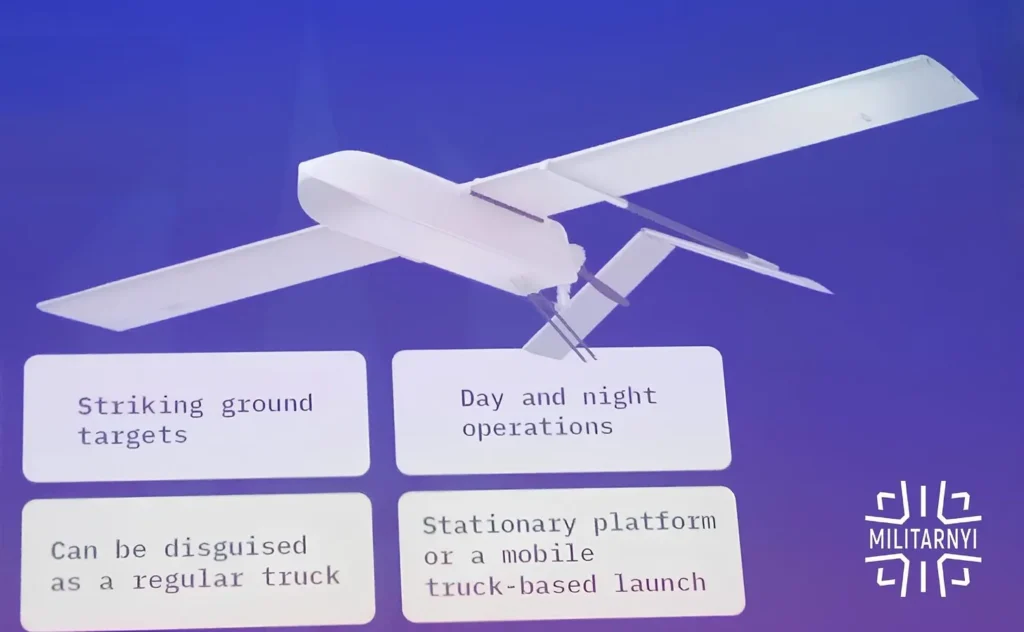
We don't know much about Ukraine's newest attack drone aside from its name: the B-2. We do know what the "middle-strike" B-2 is doing. (Some sources call the B-2 the "V-2.")
It's helping a growing array of Ukrainian drone units strike Russian bases, supply convoys and air defenses in the middle zone stretching as far as 200 km behind the disputed gray zone threading 1,200 km from northern Ukraine to southern Ukraine.
The B-2 broke cover recently, when the new 13th Detachment—a drone unit formed around veteran drone operators from the 414th Brigade—circulated footage of its work.
The footage depicts the B-2s from the drones' points of view as they strike four Russian air defense systems in one night on or just before 23 April: three Tor-M2s and an Osa system. The 13th Detachment hunted down the mobile surface-to-air missile systems in occupied Ukraine as well as in Russia's Bryansk Oblast, just across the border.
The hits on Russian SAM vehicles are a clear indicator that the B-2s are supporting Ukraine's slow-burn effort to suppress Russian air defenses across occupied territories and adjacent Russian oblasts.
The suppression campaign—at least 492 drone strikes on Russian air defenses between June 2025 and early March 2026—is clearing the way for Ukraine's drone teams and fighter regiments to target Russian headquarters, drone teams, supply convoys and, yes, any surviving air defenses in the middle zone.
Drones suppress Russian air defenses, enabling manned and unmanned aircraft to strike harder and more frequently, further degrading those air defenses in the process. It's a beneficial cycle for Ukrainian forces—and a death spiral for Russian forces.
Destroying air defense systems faster than the Russians can replace them has the effect of "facilitating strikes on more critical targets deep within Russian territory," Tochnyi.info explained in a recent study.
Drones and comms
The suppression campaign is only as impactful as the middle-strike drones are effective. There are many different types, including the Hornet, the HF-1 and HF-2, the RAM-2X, and Bulava. They tend to be either first-person-view models that are directly steered by a remote operator, or autonomous models that can select and strike their own targets. Some models combine direct operator control with autonomous targeting assistance.

Trending Now
Some long-range drones support the mid-range suppression effort, in particular the FP-2. With its 158-kg warhead, the FP-2 is an outlier. Most of the middle-strike drones strike with much smaller warheads weighing just 5 kg or so.
Inasmuch as many of the drones rely on a low-lag radio link to their operators, the suppression campaign is also a connectivity campaign. Quietly and without many people noticing, Ukrainian forces have established overlapping communications networks across the gray zone and the middle zone behind it. The comms nets include line-of-sight radios, Starlink satellite terminals and mesh radio nets formed by many interconnected drones.

Critics said Ukraine was losing the mid-range drone war. Russia’s burning trucks disagree.
It's unclear whether the B-2 navigates by GPS or by some self-contained inertial or terrain-following system (which matches the landscape below the drone to a pre-installed digital map). It's evident, from footage of air defense strikes, that the drone can be directly steered by a remote operator for maximum precision in the seconds before impact.
That precision makes the B-2 effective for strikes on mobile targets such as those Tor-M2s and that Osa. One more arrow in the quiver of an expanding drone army, the B-2 is helping to clear the air space over the war zone for follow-on drone, missile and bombing raids on Russian headquarters, drone teams, supply lines and, yes, any surviving air defenses.
Each successful strike is enabled by the strikes that preceded it.


