

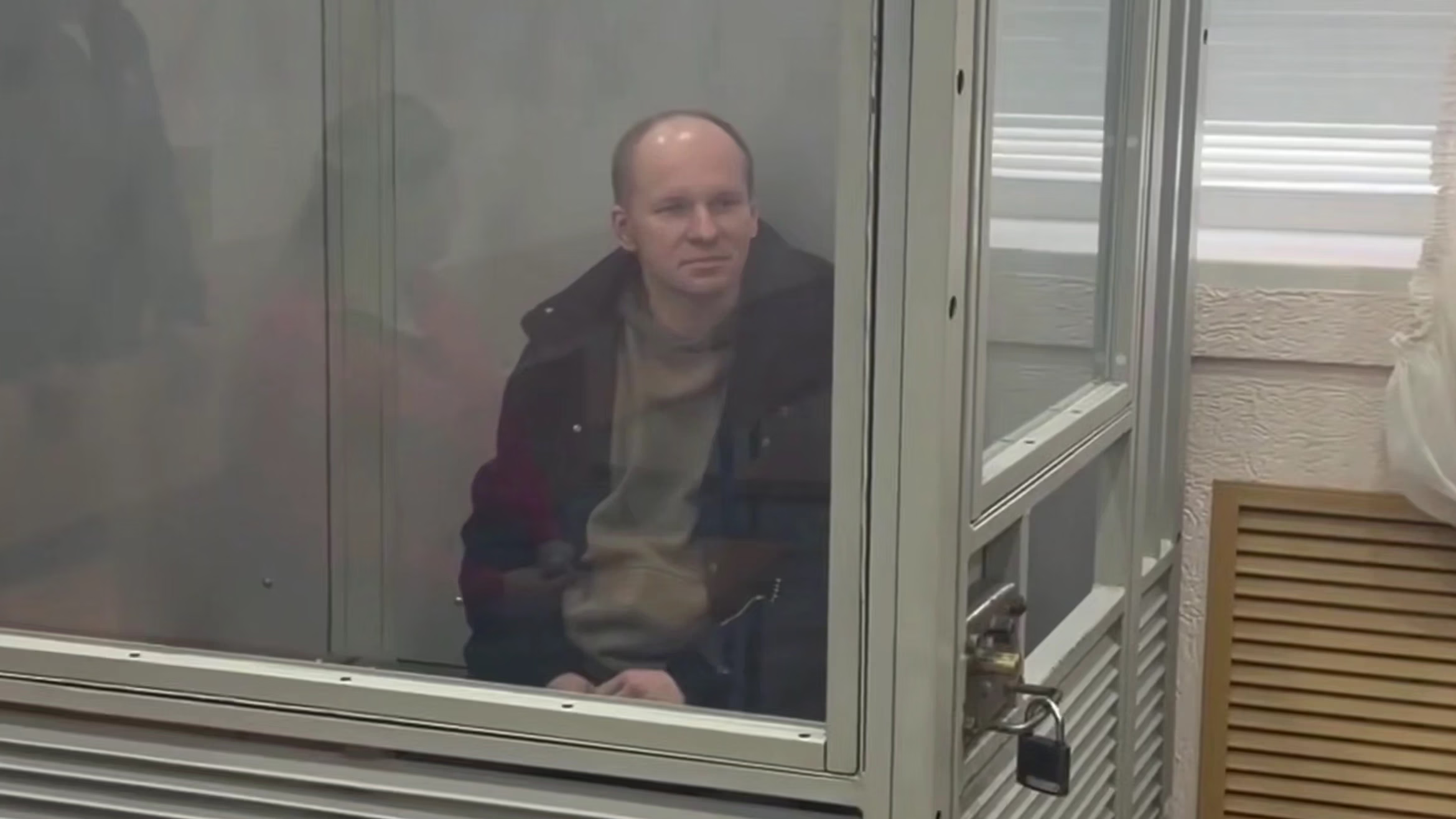
A court in Russian-occupied Luhansk sentenced Polish citizen Krzysztof Flaczek to 13 years in a maximum-security penal colony on 16 April 2026 for fighting on Ukraine's side. This was reported by Russia's Prosecutor General's Office.
The verdict landed without a single reference to Russia's own earlier claim that Flaczek had switched sides and joined a pro-Russian battalion.
The propaganda arc
Flaczek, a native of Mysłowice in southern Poland, arrived in Ukraine in September 2024 and joined the International Legion. Russian forces captured him near Chasiv Yar in Donetsk Oblast in November 2024.
From early 2025 through August of that year, RIA Novosti and Sputnik aired a series of videos featuring Flaczek in captivity. In them, he urged fellow Poles not to fight for Ukraine, complained about inadequate training at the front, and compared Ukraine's territorial recruitment centers to Nazi Germany's forced conscription of Poles in World War II.
Russian media also claimed Flaczek had defected to the so-called Maksim Krivonos battalion — a unit Moscow describes as a "liberation movement" of former Ukrainian soldiers fighting Kyiv.
The story Moscow quietly dropped
Flaczek's last RIA Novosti appearance came in late August 2025. Then he vanished from the propaganda feed. Eight months later, the Supreme Court of the self-proclaimed "Luhansk People's Republic" sentenced him as a mercenary who fought for money "against Russian troops and civilians."
Russia's Prosecutor General's Office statement and the follow-up RIA Novosti coverage of the verdict say nothing about the defection to the pro-Russian battalion — the central claim of the entire 2025 propaganda cycle. Independent Russian outlets Mediazona and The Insider flagged the omission.
Russia has documented cases of using prisoners of war, both Ukrainian and foreign, for staged propaganda appearances. Ukrainian former POW Oleksii Chorpita said he had been offered release on condition he record videos praising Russia and denigrating Ukraine. He refused, and remained in captivity until 2025.
The Polish consul in Moscow has requested formal information from Russian authorities about Flaczek's case. Warsaw is treating the situation as a matter of consular protection.
Warsaw went the other way
The verdict landed three weeks after Poland legally amnestied citizens who volunteered for Ukraine's military.
On 27 March 2026, Polish President Karol Nawrocki signed a law retroactively legalizing service in Ukraine's armed forces dating back to 6 April 2014, when fighting began in Donbas. Polish volunteers had previously faced three months to five years in prison for serving in a foreign military without government authorization.
Polish military news service MilMag has confirmed 23 deaths of Poles fighting on Ukraine's side since 2014.

Warsaw just made it legal to fight for Kyiv. It used to carry five years in Polish prison
The pattern
Krzysztof Flaczek is one of many examples of foreign nationals sentenced by Russia for fighting for Ukraine. British volunteer James Scott Rhys Anderson got 19 years in March 2025 on terrorism and mercenary charges after being captured in Kursk Oblast. British volunteer Hayden Davies received 13 years in December 2025.
Both Moscow and Kyiv have recruited foreign fighters. Russia has officially acknowledged only North Korean troops among its own foreign recruits — though journalists and monitoring groups estimate at least 3,300 foreign fighters from the global south have died fighting for Russia, according to figures cited by AFP.
Read also
-
Sixteen Ukrainian doctors who work near fighting went through three Western trauma programs in one week. American surgeons led drills
-
For the third time this year, Ukrainian drones hit Russia’s rocket-fuel rubber plant in Samara Oblast. This time they reach the raw-material shop feeding it
-
Captured Russians say there is one place on Kupiansk front they will not go: “Orion” safety corridor


