
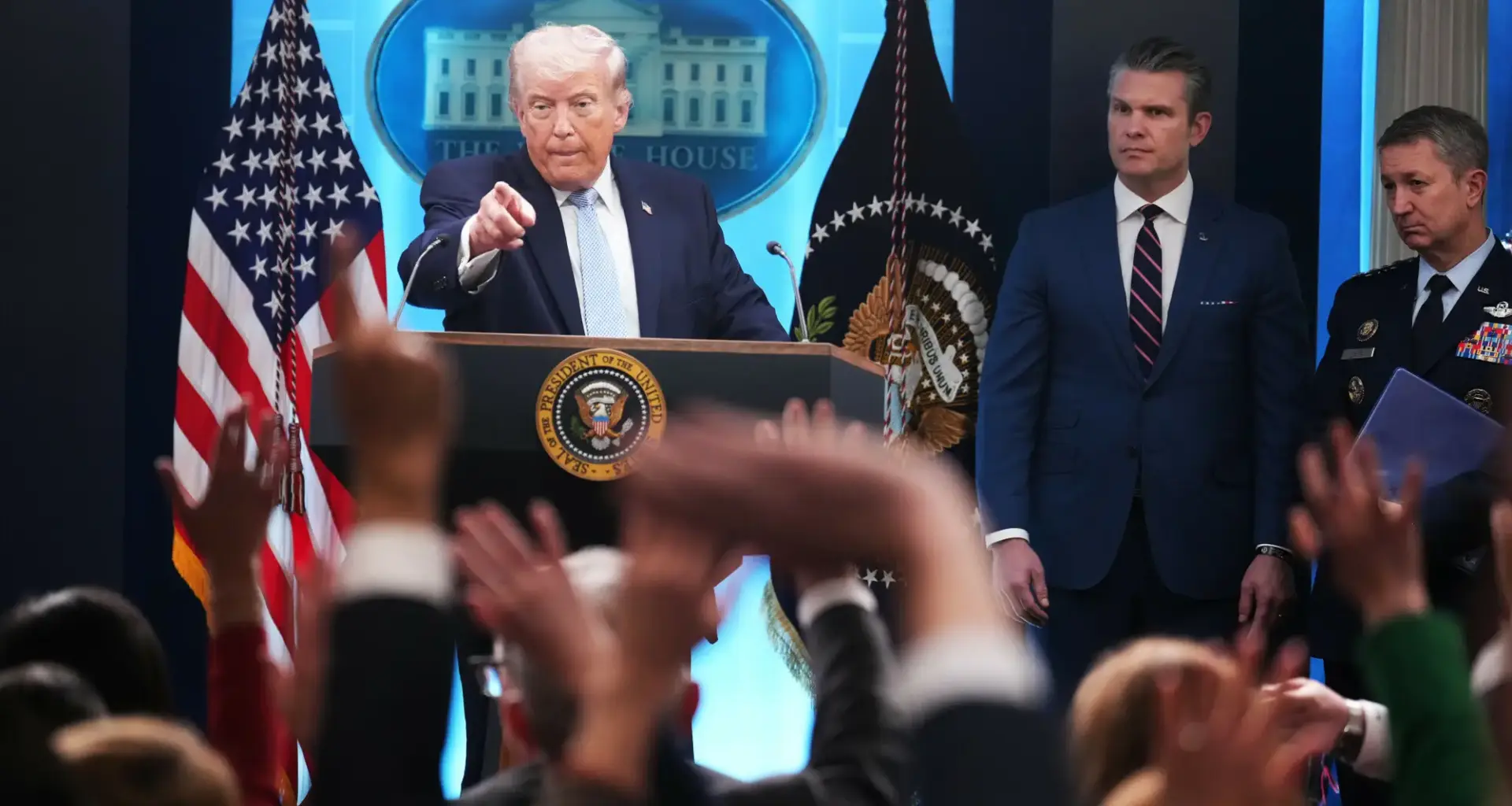


Five weeks ago, a week into the war, we asked three of our most experienced writers to score Trump's war on Iran from a Ukrainian point of view. Their verdict then: 8 out of 10 main factors ran against Kyiv. Today, we asked them to repeat the exercise: Now, 9 of the 12 main factors are against Kyiv.
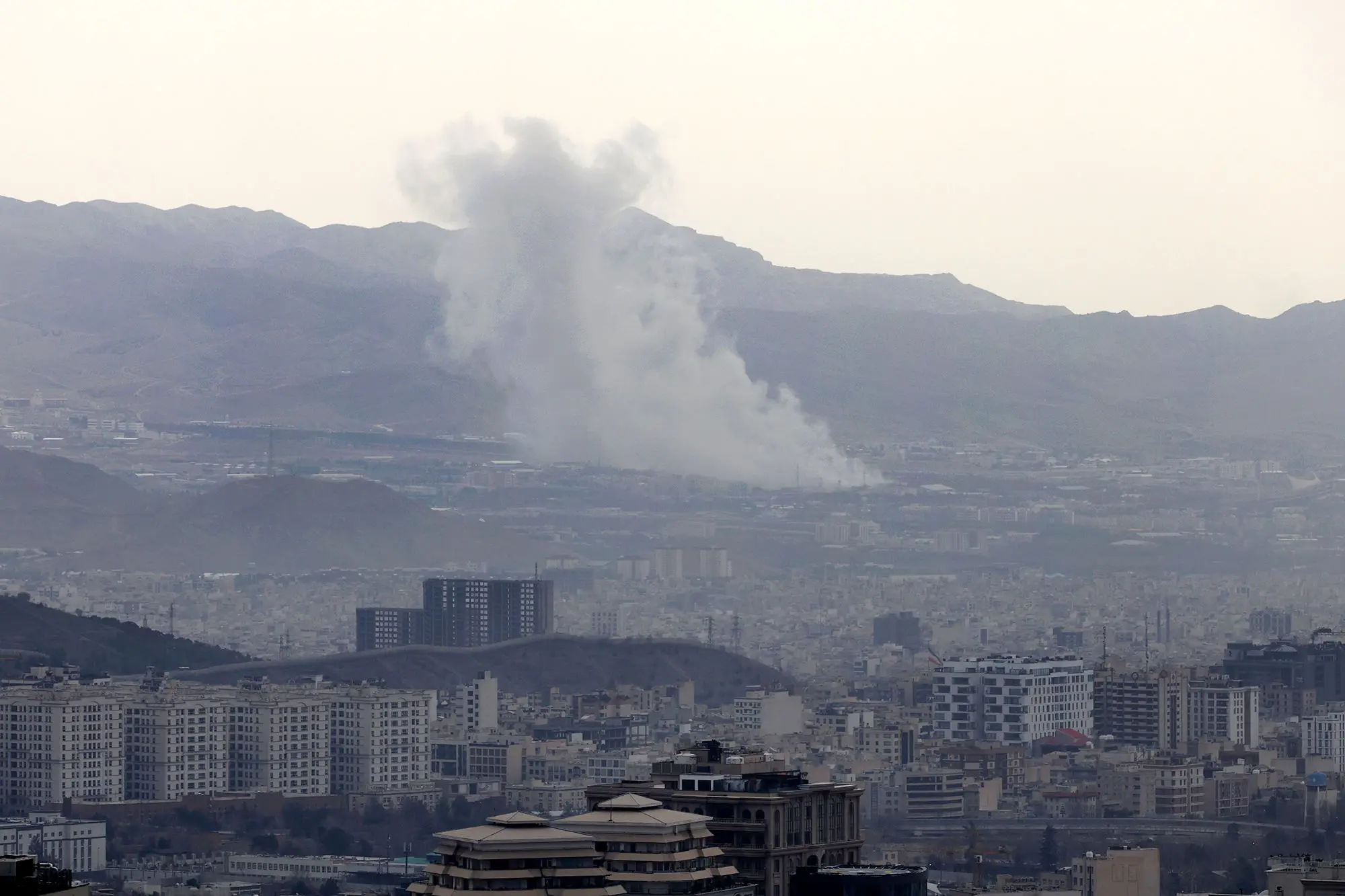
The war lasted 39 days. On Tuesday evening, less than two hours before Trump's deadline to "destroy a whole civilization," Pakistan's Prime Minister Shehbaz Sharif brokered a two-week ceasefire conditional on Iran reopening the Strait of Hormuz. Brent crude crashed from $109 to $94 in hours—still well above the $67 it commanded before the first strikes.
But for Russia, the windfall is in the bank. For Ukraine, the bill arrives in installments—some already paid, some still coming due, and most of them not reversible by a fragile two-week truce.

The military side of things
Ukraine spent five weeks in a nailbiting position—its air defense supply line threatened just as its invader was handed a financial lifeline to build more weapons. The lifeline Ukraine got in return: countries across the Gulf, and to a lesser extent the US, finally saw what modern air war actually looks like.
The war on Iran went about as well as anyone could expect from a leader who did little preparation, dismissed warnings, and boasted that the enemy would fold in days. Washington charged dick-first into the Persian Gulf, having failed to learn from four years of how Russia's invasion transformed warfare in the air and at sea. The US struggled to defend against Iran's counterstrikes, which kept picking off asset after expensive asset. And Russia played an instrumental role in those attacks.

Russia-Iran cooperation deepened on drones and satellites
Russia provided Iran with satellite imagery identifying US and European military bases in Saudi Arabia, Qatar, Jordan, and the UAE—four countries that collectively host tens of thousands of American troops, Ukrainian President Volodymyr Zelenskyy told Axios on 31 March.
Russia's satellites can deliver both overhead pictures (GEOINT) and data on electronic signals from radar, missiles, and aircraft (ELINT). US open source analyst John Ridge said Moscow can likely provide a single high-resolution revisit per day and multiple low-resolution revisits. Russia also has infrared coverage of the Middle East, which could give Iranians real-time information on when American and Israeli jets take off—helping them prep for and avoid US and Israeli attacks.
Intelligence agencies across Europe say Russian support also included drone deliveries, likely featuring upgraded models from the Shahed lineage—which Russia originally acquired from Iran years ago, then improved and iterated through constant waves of assault on Ukrainian territory.
Bizarrely, despite Russia's support for the country with which the US was at war, the Trump administration kept pushing a pro-Russian "peace deal" onto Ukraine throughout the entire conflict.
Ukraine demoted: $750 million in Patriot funding rerouted from Ukraine

On 23 March, the Pentagon formally notified Congress of its intent to redirect roughly $750 million in PURL funding—originally earmarked for Ukraine, paid for by European allies—to replenish American interceptor stockpiles drained by the Gulf campaign, the Washington Post reported. The Iran war burned through more than 800 Patriot and THAAD interceptors in its first three days alone, EU defense commissioner Andrius Kubilius noted—more than Ukraine had used over an entire winter.
Pentagon officials told the Washington Post that PURL deliveries to Ukraine would likely continue, but future shipments "may not contain air defense capabilities" as Washington moves to refill its own stockpiles and those of Gulf allies. PURL has supplied roughly 75% of the missiles used by Ukraine's Patriot batteries since it became operational—the only weapons Ukraine has to intercept Russian ballistic missiles.
Ukrainian foreign minister Andrii Sybiha said he had received assurances from US Secretary of State Marco Rubio that the diversion would not happen. His boss disagreed. Zelenskyy told Axios: "I am not just concerned, I am sure we will have such challenges. Absolutely."
"Unfortunately yes, I do think that's likely as states are conceivably going to prioritize their output of expendables for themselves as opposed to for Ukraine via PURL," Simon Miles, an associate professor at Duke University, wrote in an email.
The ceasefire arrived before any final decision was announced. Whether the $750 million proposal stays paused, gets quietly executed, or gets rolled back depends on whether the Strait of Hormuz reopens cleanly and the truce holds. None of those is guaranteed.
Ukraine signed first-ever defense deals with four Gulf states
The relentless Iranian air campaign was also an opening for Kyiv. President Zelenskyy signed 10-year defense cooperation agreements with Saudi Arabia, Qatar, the UAE, and Syria during his Middle East tour—historical firsts for independent Ukraine. He promised more.
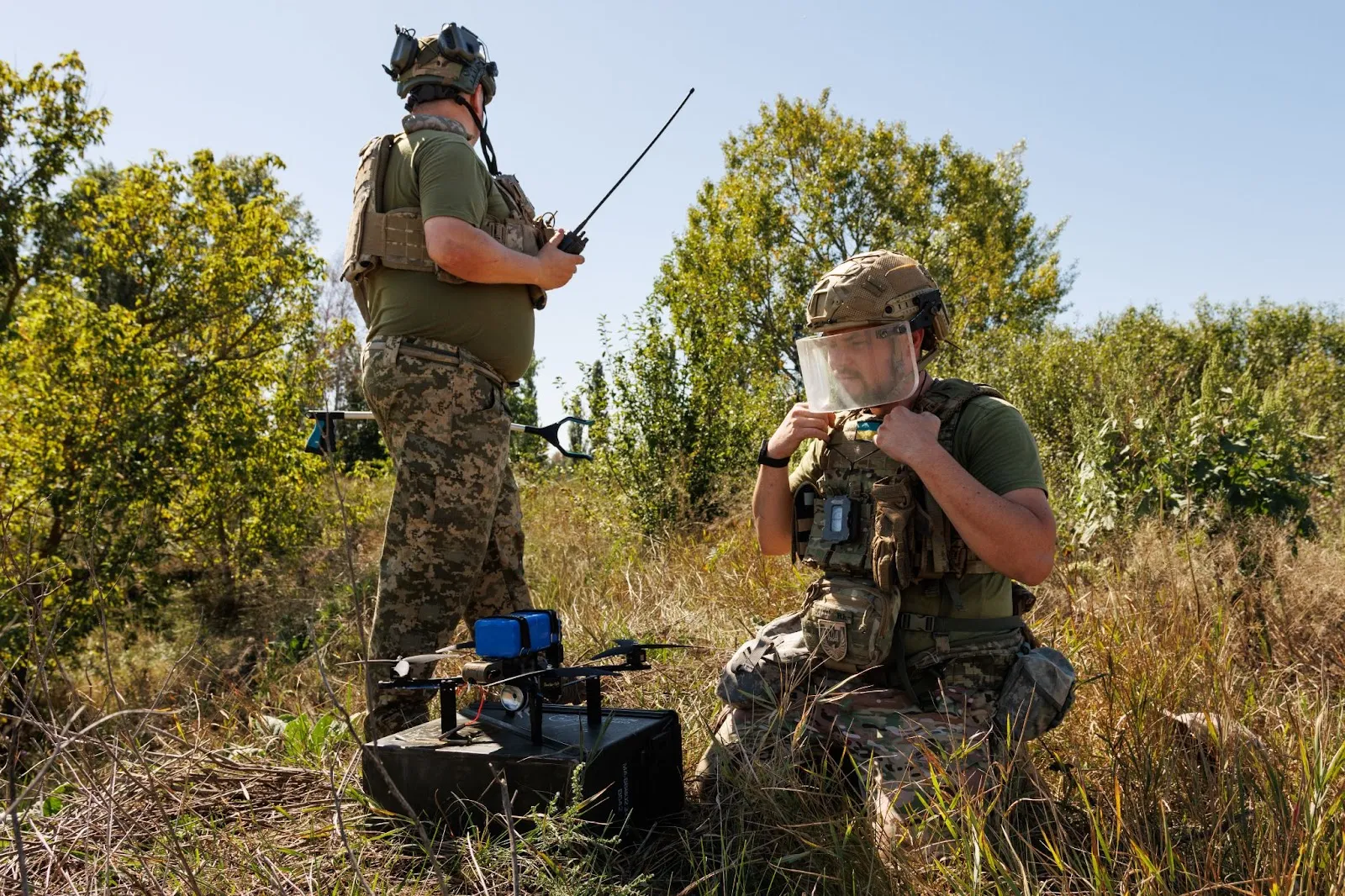
Zelenskyy said the signed agreements involve "strategic cooperation in the military tech direction and other areas." Kyiv had already dispatched its military experts to at least a dozen countries in the region to put on an air defense clinic on how to defend against modern mass strikes with drones and missiles.
Middle Eastern countries are also interested in sea drones, which may be put to work unblocking the Strait of Hormuz—using Ukraine's experience of breaking the Russian Black Sea Fleet's blockade of its maritime exports. In exchange, Ukraine hopes to get its hands on some of their anti-ballistic capabilities, as well as hydrocarbons such as diesel.
Caveat 1: In Ukraine, the legislative and bureaucratic system to allow such arms exports is still moving slowly, sources in the Defense Ministry have told Euromaidan Press.
Caveat 2: Sources also said Kyiv is paranoid about giving away its proprietary tech, military secrets, or hard-won battlefield expertise paid for in blood. This is putting the brakes on both miltech sales and the deployment of veteran war fighters to other countries to serve as instructors.
The money side of things
Five weeks ago, Brent crude was $78. At the war's peak it pushed past $116. On Tuesday evening it crashed back to $94 in hours—still well above the $67 it traded at on 27 February, the day before the strikes began. Ukraine paid every cent of the difference for 39 days. The bigger story since our scorecard isn't in Moscow. The sanctions architecture meant to limit Russia's gains began to unravel in Washington—from a 30-day India waiver to a Russian tanker cleared to dock in Havana. Ukraine's response was to start burning Russia's oil ports.
Russia's windfall is bigger than feared
Five weeks ago, we warned that Russia's oil revenues were running ahead of its own $59-per-barrel budget target for the first time in months. That continued and deepened. With every barrel of Urals crude clearing nearly $51 above its budget target at the war's peak, Moscow was earning almost double its own projections.
Estimates of Russia's total take from the 39-day war range widely. The Financial Times calculated $3.3–4.9 billion in additional revenue through the end of March alone. The Centre for Research on Energy and Clean Air tracked Russia earning around €513 million per day from fossil fuel exports in early March—the highest daily rate of the war. A source in Ukraine's Office of the President estimated the total Russian windfall could reach $10 billion.
The KSE Institute's projection for the full year stands: Russia could pocket between $45 and $151 billion in additional 2026 budget revenues, depending on how the recovery plays out and how much of the discount on Russian crude narrows. Even in the most optimistic six-week-war scenario with fast recovery, Russia gains $84 billion in extra export earnings and $45 billion in extra budget revenues compared to a no-war baseline. The windfall has already let the Kremlin scrap planned 10% cuts to non-security spending and abandon a downward revision of its 2026 growth forecast.
The sharper call was on Washington's posture. A month ago, we wrote that the 30-day waiver allowing Indian refiners to buy stranded Russian crude looked like more than an emergency measure. It was. Treasury Secretary Scott Bessent has since publicly floated lifting broader restrictions on Russian oil to release global supply.
The next step came on 30 March. Donald Trump told reporters at the White House that Russia—and other countries—were free to ship oil to Cuba. "If some country wants to send oil to Cuba, I have no objections," he said. A Russian tanker was cleared by the US Coast Guard to dock in Havana. In three weeks, US enforcement had moved from a temporary waiver to open permission for Russian crude shipments to a sanctioned state.

Petrol prices climbed slower than feared
We projected Ukrainian petrol prices could approach 100 hryvnias per liter if Brent reached $100–140. Brent peaked at $116; A-95 petrol reached 71.60 hryvnias ($1.63). The direction was right; the pace was not. Prices climbed steeply, but the 100-hryvnia threshold did not arrive as fast as feared. The EU shelving its planned reduction of the Russian oil price cap from $60 to $45 didn't help.
The larger miss was about agency. We framed Ukraine's position largely in terms of what was happening to it. We missed what Kyiv would do about it.
Trending Now
Ukraine burned Russia's Baltic oil ports faster than diplomacy could rescue them
Between 22 March and the ceasefire, Ukraine struck Russia's Baltic oil export infrastructure repeatedly, hitting the Ust-Luga terminal, the Primorsk port, and the KINEF Kirishi refinery—one of Russia's largest, processing around 350,000 barrels per day. Ust-Luga kept burning, with shadow-fleet tankers waiting offshore.
Reuters calculated that at least 40% of Russia's total oil export capacity had been halted by 26 March—what it called "the most severe oil supply disruption in the modern history of Russia." Ust-Luga and Primorsk together handle around 2 million barrels of Russian crude exports per day—the arteries of the shadow fleet Russia uses to ship oil despite sanctions.
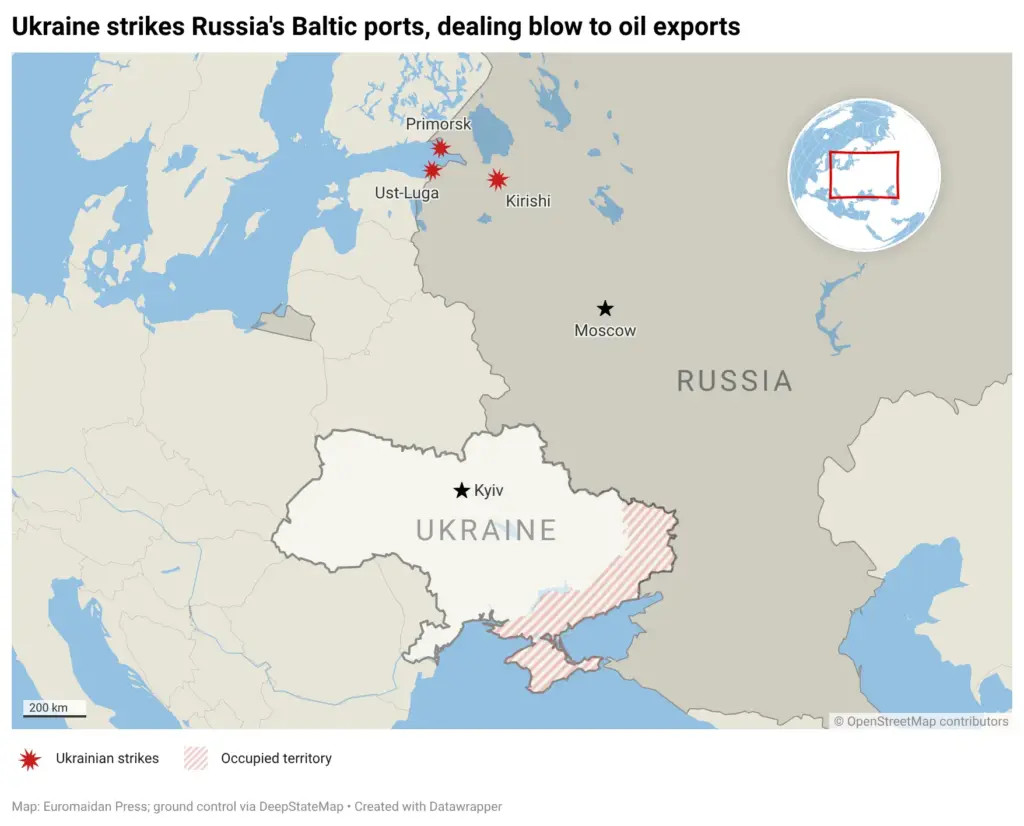
Alan Vaht, a board member at Estonian gas station chain Terminal, estimated daily losses at $50–55 million.
Zelenskyy explained the logic: "The pressure on Russia in the world is decreasing. Therefore, unlike most countries in the world, Ukraine has its own sanctions: its long-range capabilities."
A source in Ukraine's Office of the President estimated Russia stood to earn $2 billion from the US sanctions waiver alone, with the total Iran-crisis windfall reaching as much as $10 billion. The drone campaign was the only mechanism working to close that gap.
The drone campaign on Russia's Baltic ports was the only sanction working in real time. The ceasefire took the oil price down. It didn't take Russia's windfall back.
Ukraine's budget still runs out in June
Ukraine's budget was precarious already before the Iran war. Ukraine's own financial authorities estimate the country needs $52 billion in foreign assistance in 2026. It is not even close to having it.
A €90 billion ($103.5 billion) EU loan is Ukraine's primary financing mechanism for 2026. It remains blocked by Prime Minister Viktor Orbán's veto ahead of Hungary's 12 April elections. Ukraine runs out of funds for civilian expenditures and war financing by June if the loan stays frozen.
Ukraine imports 100% of its fuel at euro and dollar prices. Brent's post-ceasefire crash to $94 helps—but every week Brent traded above $100 added pressure to a budget already counting weeks rather than months. The EU loan and global oil prices weren't two separate problems—they were the same pressure from opposite sides.

The geopolitical side of things
In the 39 days of the Iran war, Trump went from privately doubting NATO to publicly threatening to leave it. Now the strikes have stopped. The threat is still there.
Trump openly threatened to leave NATO—and didn't walk it back
"I am strongly considering pulling the US out of NATO," Trump told the Daily Telegraph at the beginning of April, calling the alliance a paper tiger. What the Soviets did not manage in four decades, Donald J. Trump appeared to achieve in four weeks—at least in pundits' projections. So far, the ceasefire hasn't changed his position.

Mixed: A NATO breakup is a short-term blow, long-term opening for Ukraine
In the short run, a NATO split would obviously weaken Ukraine's situation—but possibly more geopolitically than concretely militarily. The Trump administration has already ended its own military aid to Ukraine, but Ukraine is still receiving weapons bought in the US for European money. With Donald Trump in charge in Washington, it is a fool's errand to predict what would happen with those deliveries if NATO splits.
Longer-term, a NATO breakup would force the Europeans to develop their own defense force of sorts. Zelenskyy has often suggested an EU/European army, with Ukraine as its core—which not only would bring Ukraine "inside", it would, in fact, make the country the cornerstone of European security.
Ukraine may very well be the first victim of a NATO breakup. As The Times of London suggested in a headline: "Europe should prepare for a scenario where the US makes deal with Russia."
And, indeed, the war produced several explicit illustrations of the Trump administration's down-prioritizing of Europe and selling out Ukraine. Marco Rubio threatened that the US might decide—if it thought it necessary—to redirect US weapons, even those already purchased for Ukraine by Europe, to its own war theaters in the Middle East.
In plain language, Rubio was pissed off that Zelenskyy had dared to criticize the Trump administration—and called Zelenskyy a liar after the Ukrainian president had claimed the Americans insisted on Ukraine ceding Donbas. On 25 March, Zelenskyy told Reuters that Washington was conditioning its security guarantees on Kyiv ceding all of Donbas: "The Americans are prepared to finalize these guarantees at a high level once Ukraine is ready to withdraw from Donbas." Two days later in Paris, Rubio called the claim a lie.
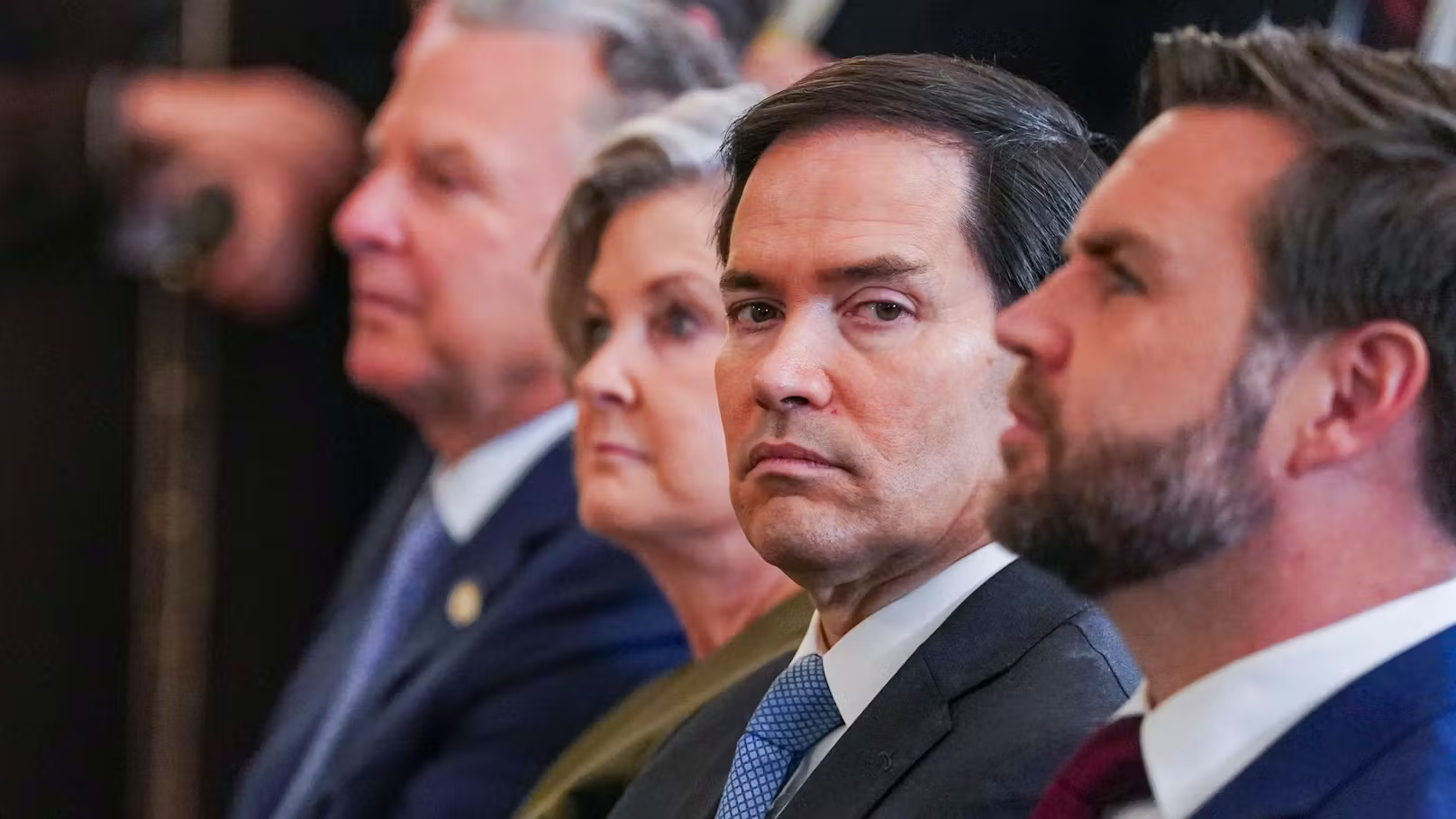
The Iran war, Zelenskyy added in his Axios interview, gave Trump more reason to push Kyiv to give up vital territories. The ceasefire hasn't reversed that either.
The impact, in plain language
Five weeks ago, we wrote that how long the war lasted would determine everything. The war lasted 39 days—on the lower end of analyst projections. By the math of the original scorecard, that should have been the best-case outcome for Kyiv.
It wasn't.
Russia's windfall is in the bank—somewhere between the FT's $5 billion floor and KSE's $45 billion six-week-recovery scenario. The Pentagon's $750 million Patriot diversion is formally proposed to Congress and not yet retracted. Ukraine's budget still runs out in June. Trump's threat to leave NATO is still on the table. The pressure to cede Donbas is still on the table. The two-week ceasefire is conditional and may not hold past 21 April.
What Ukraine has to show for it: four signed defense agreements in the Gulf, a smoking Baltic oil export infrastructure, and a Brent price now low enough to remind everyone how much agency Kyiv's drones actually have.
The original tally was 8-2 against Ukraine. Five weeks later, the math has barely moved—the Gulf deals shifted harder positive, the Patriot diversion shifted harder negative, and most of the rest stayed exactly where we put it. But the line that mattered most—"how long the war lasts will determine everything"—turned out to be exactly right. The war was short. The damage will be long.


