


Russia's sustained strikes on Kyiv's energy infrastructure have broken the capital's "energy ring," leaving the city facing what energy executives call "one of the most difficult periods" since the 2022 invasion. The attacks on 9 and 13 January severely damaged critical substations and thermal power plants, creating a dual crisis: not enough electricity is being generated, and what exists cannot be properly distributed.
"Russia is not achieving its strategic goal, but has tactical successes—creating chronic instability. This is a war of attrition," said Olena Lapenko, general manager for security and resilience at DiXi Group think tank. "Regular strikes during peak cold confirm the goal is pressure on society, not just the economy."
"From one side, we physically don't have enough electricity to cover the city's consumption. But from the other side, the distribution across city districts is uneven due to the attacks," Yasno CEO Serhiy Kovalenko told Gordon. On 13 January, emergency blackouts expanded across the entire capital after a night strike hit a DTEK thermal power plant, just as the city struggled to recover from the 9 January attack.
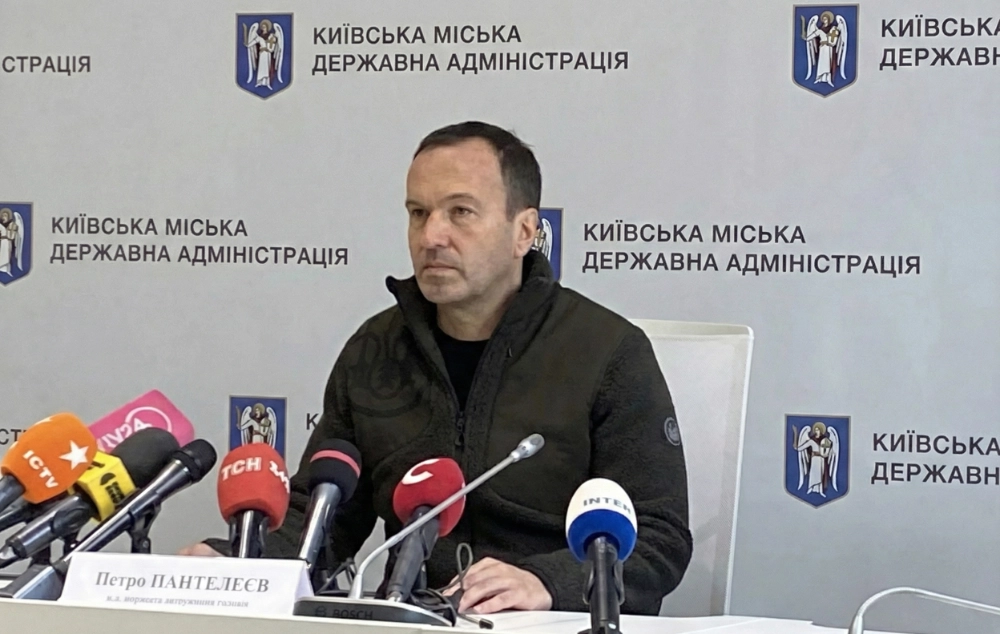
The damage forced an unprecedented response. "We had to stop the heating system in six thousand buildings. Six thousand buildings. We drained the systems at temperatures of minus ten and below," acting first deputy head of Kyiv City State Administration Petro Panteleiev said at a 14 January briefing. "Such a thing has never happened in the history of centralized heating systems." Kyiv has declared a state of emergency.
Why Russian strikes hit Kyiv's energy grid hardest
The capital's energy grid relies on an interconnected ring of substations, power plants, and transmission lines that distribute electricity evenly across districts. That ring is now "significantly broken," according to Yurii Korolchuk, an expert at the Institute for Energy Research.
"The Kyiv energy ring is, unfortunately, factually disrupted. And it's substantially disrupted," Korolchuk told Hromadske Radio. "Even if in Kharkiv and Odesa it continues to exist—though Odesa's was also substantially disrupted—Kyiv's situation is worse because there are more consumers, more load."
The damage creates a paradox: even when electricity is available somewhere in the system, it cannot reach neighborhoods whose local substations are destroyed. Repair crews cannot simply flip a switch. They must rebuild distribution infrastructure while temperatures drop and demand spikes.
Panteleiev confirmed the left bank remains in worse condition than the right bank for electricity supply. The city operates under emergency blackout schedules with no return to hourly rolling outages in sight. "We are not working on hourly disconnection schedules now and there are no such prospects yet," he said.
As of 14 January, about 400 buildings remain without heating—down from 6,000 at the crisis peak—concentrated mainly in Holosiivskyi and Pechersk districts, with some in Solomyanskyi and Shevchenkivskyi. Ground transport on Kyiv's right bank has been suspended, with buses substituting for trams and trolleybuses. The metro continues to operate.
The energy crisis threatens sectors beyond residential heating. Lapenko warned that water utilities, mobile communications, logistics and cold storage, and small businesses without generators face significant risk. Hospitals and schools with backup systems face a different problem: "These systems were built as reserves and are not designed to operate for days and weeks. With prolonged operation, the risk of failure increases significantly."
Scale of damage to Ukraine's power infrastructure
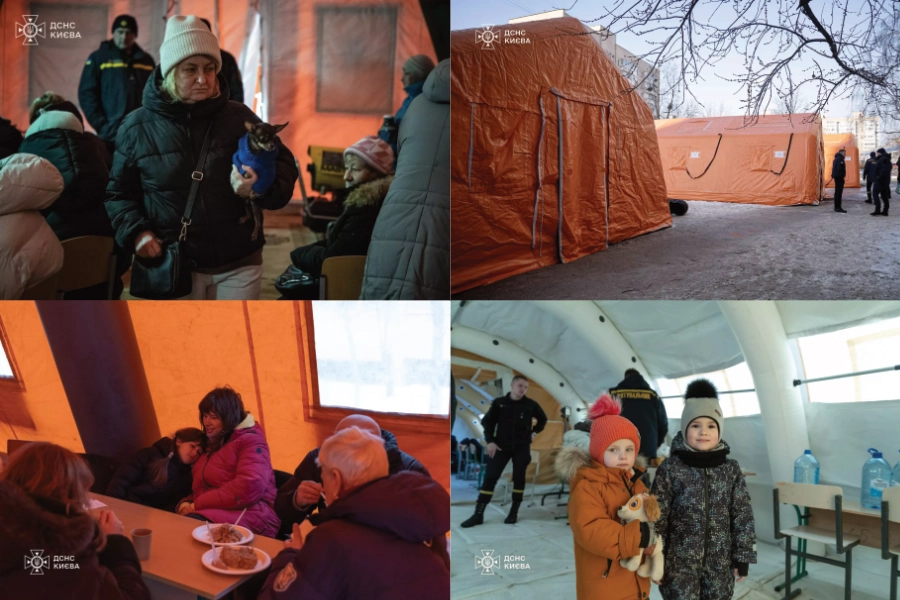
In some Kyiv region communities, residents now have electricity for only five or six hours per day. Others have been without power for two or three days straight. The imbalance is not random—areas with less damage receive power diverted from devastated districts. "This is a physical process; it cannot be avoided," Korolchuk explained.
Ukraine's entire energy sector operates under what Korolchuk called "the first heating season where missile strikes have continued constantly from October through winter." Previous winters saw pauses between major attacks; this year, there have been none.
DTEK, which operates the capital's power plants, has absorbed over 200 attacks on its substations since 2022. By summer 2024, 90% of its thermal power plant capacity had been destroyed, Kovalenko told Gordon. The company has invested 35 billion hryvnias (approximately $860 million) in restoration, with over 600 repair crews working nationwide and about 60 in Kyiv alone. Dozens of workers have died under fire.
Emergency generators deployed across Kyiv
Prime Minister Yulia Svyrydenko announced that emergency services are installing high-capacity generators directly connected to residential buildings in Kyiv's worst-affected districts. Ekonomichna Pravda reported that these generators "reduce strain on the system and ensure the functioning of entire neighborhoods."
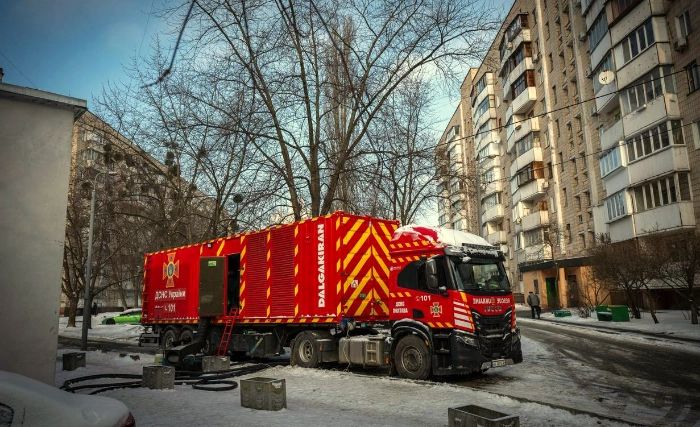
The city has approximately 60 MW of generator capacity, with the State Emergency Service deploying an additional 14 MW and the city adding 7 MW more. About 140 boiler houses now operate on generators independent of centralized power supply.
The government reports adding 1 gigawatt of electrical capacity to the grid and increasing electricity imports from Europe. Korolchuk cautioned that such generators address only point-by-point needs—not the systemic damage. "This is not a solution to the problem; it's absolutely a minimal, targeted solution for specific buildings."
Trending Now
Kyiv's protected cogeneration plants coming online
Kyiv's five new cogeneration plants—a centerpiece of the city's resilience strategy—are partially operational. Two are now working, three are undergoing mandatory commissioning, and two more are scheduled for launch by end of February, Panteleiev said. Total capacity: 66 MW, at a cost of 12 billion hryvnias ($290 million).
The three stations still in commissioning were deliberately built inside "second-level protection" shelters—reinforced structures designed to survive strikes. This delayed their launch but Panteleiev defended the tradeoff.
"Analyzing the strikes, we might already have had a different quantity of this equipment," he said—meaning without protection, some plants might already be destroyed. "All expensive equipment being installed must now be in powerful shelters so we can preserve it."
The city is also ordering a 20 MW diesel-powered station for March, hedging against the risk that gas infrastructure could be targeted next.
Kyiv blackouts outlook: what happens next
"Ukraine's energy system is not broken, but operates in constant degradation and patching mode," Lapenko said. The situation follows a "wave-like regime: escalation, stabilization, new strikes."
If temperatures remain cold, Korolchuk estimated at least another month of crisis conditions. The best Kyiv residents might hope for is a return to twelve-hour rolling blackouts rather than the current unpredictable outages.
"When the head of Ukrenergo said that if the temperature stays at minus ten degrees for a week, it will create substantial problems for the energy system—that's essentially what we're seeing now," Korolchuk said. "Stable functioning, but at a cost."
Panteleiev would not give specific timelines for restoring heating to the remaining 400 buildings. "We've already had situations several times where we simply rolled back due to new damage," he explained. The city is asking residents with backup power options to install them: compensation programs cover 100,000 hryvnias ($2,400) for buildings up to six floors, 200,000 ($4,800) for taller buildings, and 300,000 ($7,200) for those over 16 floors.
Russia's strategy has intensified. "We noticed that the intensity and quantity of weapons used during strikes on energy infrastructure of the city and oblast is unprecedented compared to previous months and years," Panteleiev said. The enemy no longer differentiates between generation and transmission targets—both are under sustained attack.
Kovalenko offered blunt advice: "I always favor realism—prepare for the worst."
The crisis exposes a structural vulnerability that cannot be repaired quickly. Kyiv missed its December deadline for installing protected cogeneration units, while smaller cities like Zhytomyr built distributed generation that survived the same attacks without citywide blackouts.
"Measures implemented by local authorities proved insufficient to cover basic energy needs," Lapenko assessed. A return to pre-war normalcy "is not a matter of weeks, but rather months and years."
Russia's strikes have transformed an engineering problem into a question of whether Ukraine's largest city can survive the winter on improvised measures and depleted reserves.
Related:
-
Ukraine is working down the short list of ships that shell its cities with cruise missiles. A Neptune reached one of them tied up at its own pier
-
Desperate to save Sloviansk and Kramatorsk, Ukrainian forces counterattack and reinforce
-
Ukraine has five ways to stop Russia’s Iskanders. Only one arrives before the strikes on the grid begin


