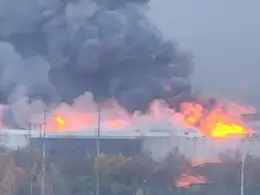
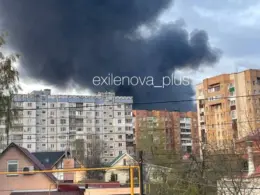
Ukrainian drones struck Russia's Ust-Luga port overnight on 14 August, sparking a fire at the Baltic Sea terminal — the sixth attack on the facility since March, according to Russian and Ukrainian reporting.
Leningrad Oblast Governor Alexander Drozdenko said air defenses shot down 51 drones over the region and that "damage was recorded" at the port, with a fire breaking out and firefighters responding. By morning he raised the regional tally to 54 drones destroyed. Moscow Mayor Sergei Sobyanin separately claimed 10 drones downed approaching the Russian capital overnight, with no casualties reported in either city. Drozdenko did not specify which facility inside the sprawling port complex was hit or the scale of the damage.

Ust-Luga is Russia's largest Baltic Sea port and, as of January 2026, handled nearly half — 47.4% — of the Baltic basin's total cargo turnover, according to industry data cited by Censor.NET. Its oil terminals ship crude and refined products, including naphtha, fuel oil, and jet fuel, and serve as the endpoint of the Baltic Pipeline System-II.
Sixth strike since March
Ukrainian forces have hit Ust-Luga repeatedly through 2026. The first major strike came overnight on 24–25 March, when long-range drones hit the NOVATEK gas condensate complex; Euromaidan Press reported the SBU and Special Operations Forces both claimed the operation. Follow-up strikes hit the port again on 27 and 29 March, and a fourth wave on 31 March damaged a mazut storage tank and two NOVATEK fuel tanks, according to Euromaidan Press's own coverage. A fifth strike reached the wider St. Petersburg port area on 3–4 July.
Drone strikes on Ust-Luga forced the terminal to cut oil-export operations by roughly half in September, Reuters reported at the time, dropping throughput to about 350,000 barrels per day after Ukraine also struck the Unecha pumping station that feeds the port.
Wednesday's strike came two days after Ukrainian drones hit Russia's Sheskharis terminal at Novorossiysk on the Black Sea — the country's largest oil-export hub after Primorsk and Ust-Luga — and follows a late-July strike on the Caspian Pipeline Consortium terminal, also on the Black Sea. Combined, Ust-Luga and Primorsk normally move about 40% of Russia's seaborne oil exports, according to Reuters figures cited by The Moscow Times.
Read also
-
Russia kept sneaking troops through gas pipes behind Ukrainian lines. Now Ukraine has gone more than 15 km underground to do the same to Russia
-
Ukrainian OSINT analyst: Russia’s Yandex data center in Sasovo burned out inside, though its roof shows almost no significant holes
-
Drones reportedly hit a Russian weapons plant near Moscow that Washington and Kyiv sanctioned