


- Ukrainian industry is working hard on new ballistic missiles
- Lobbing ballistics at Moscow and other Russian cities, Ukrainian forces would force Russian commanders to choose
- The choice: deploy their best S-400 air defense batteries to defend against ballistics, or keep aiming them at Ukrainian cities
It's possible Ukrainian forces launched a new type of ballistic missile at Moscow on 1 July. The apparent Ukrainian missile, which air defenses reportedly shot down over the Russian capital, is a harbinger of things to come.
Ukraine is developing several new ballistic missiles with the range to reach Moscow, 500 km from the border with Ukraine. If and when they begin raining down on Russian cities, gas facilities, factories and refineries, Russia may have to change the way it fights.
The Russians might have to aim their best S-400 air defense batteries into the sky, instead of aiming them at the ground. For Ukraine, that could mean some respite from relentless Russian missile strikes. After all, S-400s doubling as surface-to-surface munitions are in the mix most nights when Russia bombards Ukraine.
"Ballistic missiles force a different problem on Russia," wrote Michael Bohnert, an analyst for California think tank RAND.
The coming shift comes down to speed. Where one-way attack drones and many cruise missiles are slow—often motoring along at just a few hundred kilometers an hour—and are thus fairly easy to shoot down, ballistic missiles are fast.

They're all supersonic, traveling at least the speed of sound. Heavier ballistic missiles may even be hypersonic. That is, capable of reaching five times the speed of sound.
The same air defenses that swat down incoming drones can't stop ballistic missiles. Only the best air defenses stand any chance of hitting an incoming ballistic missile. Ukraine's main defense against Russian ballistic missiles is its six or so US-made Patriot batteries; for Russia, the main defense against the coming Ukrainian ballistics will be the roughly 50 S-400 batteries.
Keenly aware of the deep strike dynamics, the Russians are pivoting away from easy-to-kill drones toward hard-to-kill ballistics. This is a serious problem for Ukrainian air defenses, which are desperately short of missiles for their Patriot batteries owing to the Americans' reluctance to sell or donate missiles. US forces are struggling with their own air defense shortfalls resulting from the on-again, off-again war with Iran.
In one wave of Russian attacks on 6 July, Ukrainian air defenses shot down 326 out of 351 incoming Geran drones and 37 of 39 incoming subsonic cruise missiles. But the Russians also launched six supersonic anti-ship missiles and 23 ballistic missiles. Every single one got through, wreaking havoc across Kyiv. At least 22 people died in the capital and the surrounding oblast, and 90 more were injured.

Deep strike disparity
At present, Ukraine can't match these strikes. Yes, the Ukrainians can launch lots of one-way attack drones. In fact, far more drones than Russia can launch. And the Ukrainians also have a reliable subsonic cruise missile in the form of the Fire Point FP-5. But Ukraine doesn't yet have a fully operational ballistic missile in the class of the Russian Iskander or S-400 (in its surface strike mode).
Trending Now
That's about to change, of course. The apparent 1 July ballistic missile strike targeting Moscow was just a preview of a wider Ukrainian campaign. Fire Point co-founder and chief engineer Denys Shtilierman has circulated what he claimed was test footage of a new ballistic missile, possibly the 855-km FP-9, and hinted that strikes on Russian soil could begin soon.
Soon has a season attached to it now. Fire Point CEO Iryna Terekh told The War Zone the company is casting the FP-9's solid-fuel engine—4.6 tons of propellant, more than four times what the smaller FP-7 carries—and that everything else on the missile is finished. "It's the last touch on the engine, and we are ready to start," she said, putting the first test launch in the autumn. Shtilierman told interviewer Dmytro Gordon on 27 July that strikes on Russia could begin as early as this autumn, too.
If FP-9s begin bombarding Moscow, Russian commanders might not have the luxury of using many, or any, of their S-400s for surface strikes.
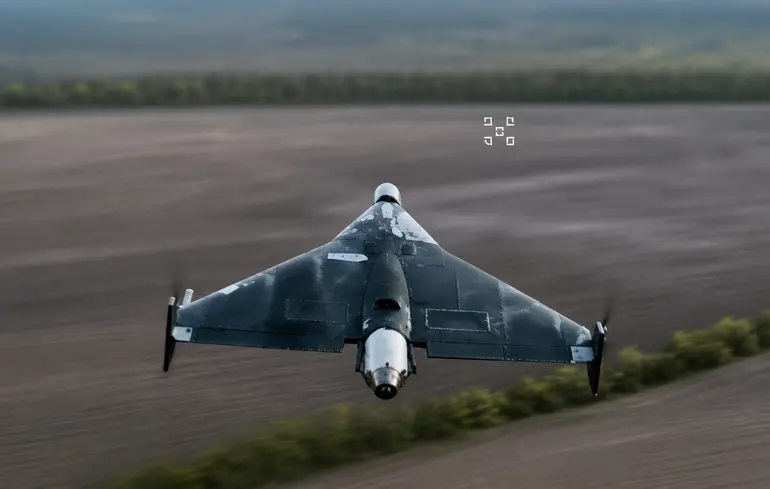
A $50 computer just flew Russia’s newest jet drone into a Ukrainian grain ship—and jamming couldn’t stop it
Every month, Russian industry produces approximately 40 missiles for S-400s batteries. If Ukraine can fling a few dozen FP-9s or similar missiles at Russian targets every month, Russia would have to devote its entire S-400 capability to air defense just to blunt the bombardment. After all, it usually takes several missiles in the class of a Patriot or S-400 to hit one incoming ballistic missile.
"Russia would have to choose," Bohnert wrote. Either "keep using the S-400 as a strike weapon and accept that hardened targets get hit, or return the system to its designed air-defense role."
If the Russians choose protection, they'll have somewhat fewer ballistic missiles to fling at Kyiv and other Ukrainian cities. That should take some pressure off Ukraine's own overstretched air defenses.
Read Also
-
Ukraine’s Swedish radar planes have flown inside Russian missile range for six months. None has been shot down.
-
Ukraine is running short of its best missiles for hunting Russia’s jet drones. Now MiG-29s are firing 1970s weapons
-
Ukraine is taking 1980s Leopards from across Europe and giving them radar-guided anti-drone guns and gunner-less turrets


