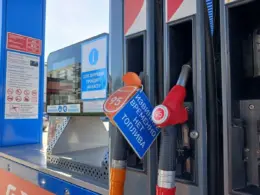
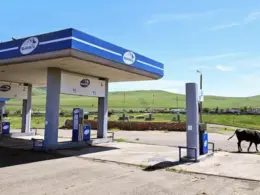
Russia is drawing down gasoline reserves, has banned gasoline and jet fuel exports, and is weighing a ban on diesel exports as well, after Vladimir Putin admitted for the first time that shortages and queues persist at filling stations across the country.
The gasoline has to be the right grade, in the right region, and moved through a distribution network already strained by refinery outages.
A reserve figure is not the same as fuel at the pump. The gasoline has to be the right grade, in the right region, and moved through a distribution network already strained by refinery outages—and a ban on diesel, Russia’s largest fuel export, would reach far beyond its borders.
Putin told Kremlin officials on 28 June that “problems for drivers and for businesses persist” and that “there are still queues at gas stations too.” He said Russia had begun using gasoline reserves, which he put at 1.7 million tons, predicted that July production would exceed June’s level, and confirmed that Moscow was considering a complete diesel export ban while a government task force worked around the clock to stabilize supplies and prices.
Reserves do not automatically reach the pump
Russia’s gasoline output has fallen about 25% from a year earlier after Ukrainian drone strikes, Reuters reported. The International Energy Agency called the disruption unprecedented in the war, RFE/RL reported.
Stored fuel is a buffer, not a guarantee: it cannot immediately replace refinery output.
That helps explain why a country can cite substantial stocks while drivers still face queues and purchase limits. Stored fuel is a buffer, not a guarantee: it cannot immediately replace refinery output, conjure a missing gasoline grade, or clear bottlenecks in rail, road, and regional distribution.
The day after Putin’s meeting, Deputy Prime Minister Alexander Novak, who oversees Russia’s energy sector, told regional heads to use fuel more efficiently and take a “balanced approach” to distribution, and ordered continued monitoring of prices, supply, and logistics, the Russian government said.

Rationing spreads across Russia
Reuters documented sales restrictions in central Russia, the Volga area, Siberia, the Far East, occupied Crimea, and Sevastopol, with at least 15 regions limiting sales by 23 June. Caps ranged from set volumes per vehicle to bans on filling portable containers, while some regions reserved fuel for emergency services and critical infrastructure.
The shortages have moved far beyond the refineries Ukrainian drones hit. In Siberia, thousands of kilometers from Ukraine, Irkutsk Oblast governor Igor Kobzev declared a high-alert regime, capped fuel at state Rosneft stations at 50 liters per vehicle a day with other stations free to set lower limits, banned sales into any container other than a vehicle tank, and urged employers in non-essential sectors to move as many staff as possible to remote work, Kobzev wrote on Telegram.
Ukrainian drones struck Russian refineries 16 times in May, Euromaidan Press reported earlier, and kept up the pace into June, hitting the Moscow refinery in Kapotnya twice in a week.

A diesel ban would reach beyond Russia
Trending Now
A diesel export ban would not stay a Russian problem. Russia supplied about 11% of the world’s diesel last year and sends roughly 40% of its diesel output abroad, Bloomberg reported.
The diesel ban is not decided: Novak said on 29 June that as of Friday’s task-force meeting the Energy Ministry still recommended against it.
So cutting those exports would tighten a global market already disrupted by the Iran war. The diesel ban is not decided: Novak said on 29 June that as of Friday’s task-force meeting the Energy Ministry still recommended against it, with another review set for Monday, Novak told journalists.
An oil exporter starts looking abroad
Alexander Novak said on 29 June that importing fuel was one of the government’s key stabilization measures and was already being implemented under preferential tax terms, Novak said—a rare step for one of the world’s largest exporters of oil and refined products.
The option had surfaced a week earlier: after a 22 June fuel-market meeting Novak chaired, the government was weighing fuel imports and a Finance Ministry tweak to let the budget subsidize them, Vedomosti reported.
Moscow is also in talks with Kazakhstan over about 50,000 tons of AI-92 gasoline.
Gasoline from Belarus runs an estimated 100,000 to 150,000 tons a month, roughly 3,000 to 5,000 tons a day, against a shortfall of about 25,000 tons a day, traders told The Insider.
Moscow is also in talks with Kazakhstan over about 50,000 tons of AI-92 gasoline, Reuters reported on Kazakhstan, though available volumes may be limited: maintenance at the Atyrau refinery could constrain supply, and one potential supplier, the Kondensat refinery, lost feedstock after a Ukrainian strike disrupted the TANECO plant.
Russia shipped out around 5 million tons of gasoline in 2025, Reuters reported in March, even as it repeatedly curbed exports to contain domestic shortages and rising prices.

Ukraine’s refinery campaign reaches the consumers
Ukraine has spent months striking Russian refineries, fuel depots, and pipelines to cut the revenue and fuel that sustain Moscow’s war. Overnight on 28 June, Ukrainian drones hit refineries in Krasnodar Krai and Yaroslavl Oblast; the Slavyansk-na-Kubani plant alone processes about 100,000 barrels per day.
That refinery is a key Crimean supplier, which ties the strikes straight to the pump.
The response now runs well beyond the refineries themselves.
Reserve drawdowns, delayed refinery work, lower-quality blends, rationing, export bans, talks to import fuel: the response now runs well beyond the refineries themselves.
Putin insisted that Ukrainian strikes do not affect the front line. He also said occupied Crimea had fuel for only a few days, Putin told the Kremlin meeting, promising more deliveries by land and sea.