

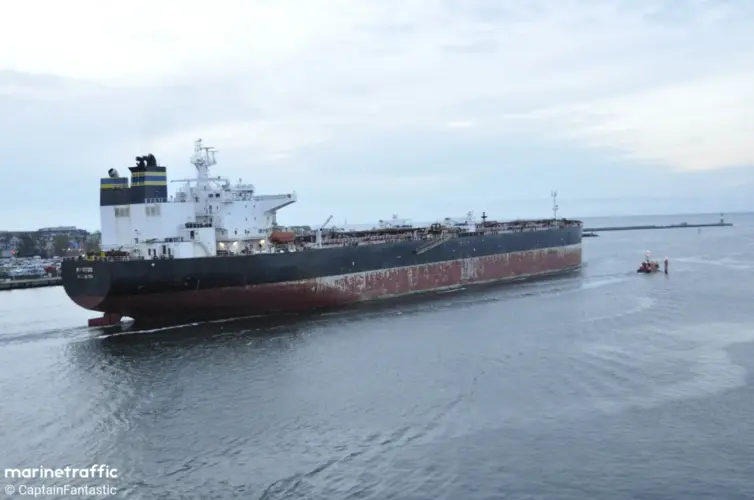
Britain is weighing whether to sell a cargo of Russian oil seized from a shadow-fleet tanker and put the proceeds toward Ukraine, the Telegraph reported. The crude was taken from the Smyrtos, a tanker Royal Marines boarded in the English Channel this month. Officials now treat the cargo as British property.
What Britain seized
Royal Marines and crime-agency officers boarded the Cameroon-flagged Smyrtos in the Channel on 14 June, the first British-led seizure of its kind. The ship, part of Russia's shadow fleet, was breaking UK sanctions law by carrying illicit oil, the Telegraph reported. It has since sat anchored off Weymouth under Britain's Defense Ministry.

UK forces board the Russian shadow-fleet’s oil tanker in the English Channel for the first time
The Smyrtos appears on EU, UK, Swiss, Canadian, and Ukrainian sanctions lists, Ukraine's military intelligence records show.
Its captain, Ajay Pant, an Indian national, faces a charge of sanctions evasion and remains in custody before a court hearing on 16 July. His lawyers said he was "simply following orders" and had no control over the cargo or its destination.
The £35m question
Officials believe the 98,000 tons of Urals crude on board now legally belong to the UK, the report said. The oil has a market value of about £35 million or more than $46 million. One proposal would sell it and send the money to Ukraine, or use it to fund equipment for the front. A second would refine the crude in Britain to power homes, though it is unclear how it would pass from state hands to an energy firm.

EU leaders agree to renew Russia sanctions for a full year for the first time as Bulgaria’s pro-Russian leader vows to veto the next batch
The plan is at an early stage. Whitehall sources said the Smyrtos itself would eventually be allowed to sail back toward Russia once the National Crime Agency finishes its investigation.
A fleet Britain keeps chasing
The seizure fits a widening Western campaign against the shadow fleet, the network of aging tankers Moscow uses to move oil past sanctions and bankroll its war on Ukraine. The fleet runs more than 1,000 vessels, flying flags of convenience to dodge UK, US, and EU restrictions, and Russia's illicit oil trade moves around 3.7 million barrels a day. Britain authorized its navy to board sanctioned tankers in its waters in March. Government sources said the Smyrtos raid was "just the beginning."

A ship linked to stolen grain from occupied Ukraine was seized in Sweden. A court says Kyiv can have it.
A warship in the Channel
Some tankers are harder to touch. A Russian Black Sea frigate, the Admiral Grigorovich, has escorted shadow-fleet ships through the Channel, the Telegraph revealed in April. The same warship fired warning shots at a British couple's yacht earlier this month.
Where Western law stops, drones start
Kyiv has not waited for Western navies. Ukraine has pounded the fleet itself and Russia's oil infrastructure with what it calls kinetic sanctions—drone strikes that reach the tankers, oil depots and refineries, where Western legal frameworks cannot. Sea drones struck the sanctioned tanker FINA A in the Black Sea in mid-June, one of a run of hits stretching from the Mediterranean to the Senegal coast. The attacks have tripled war-risk insurance on the ships and pushed at least one shipping firm to walk away from Russian business. Meanwhile, Russian oil depots and refineries now take hits every few days.
Read also
-
Drones flew 1,300 km to Russia’s Ufa—then struck Bashneft refineries
-
Oil storage site burns in Russia’s Rostov Oblast after Ukrainian strike on key fuel logistics hub behind occupied territory
-
UK to fund 150,000 Ukrainian-made drones and 350 air defense missiles in £752 million package funded by Russian assets


