

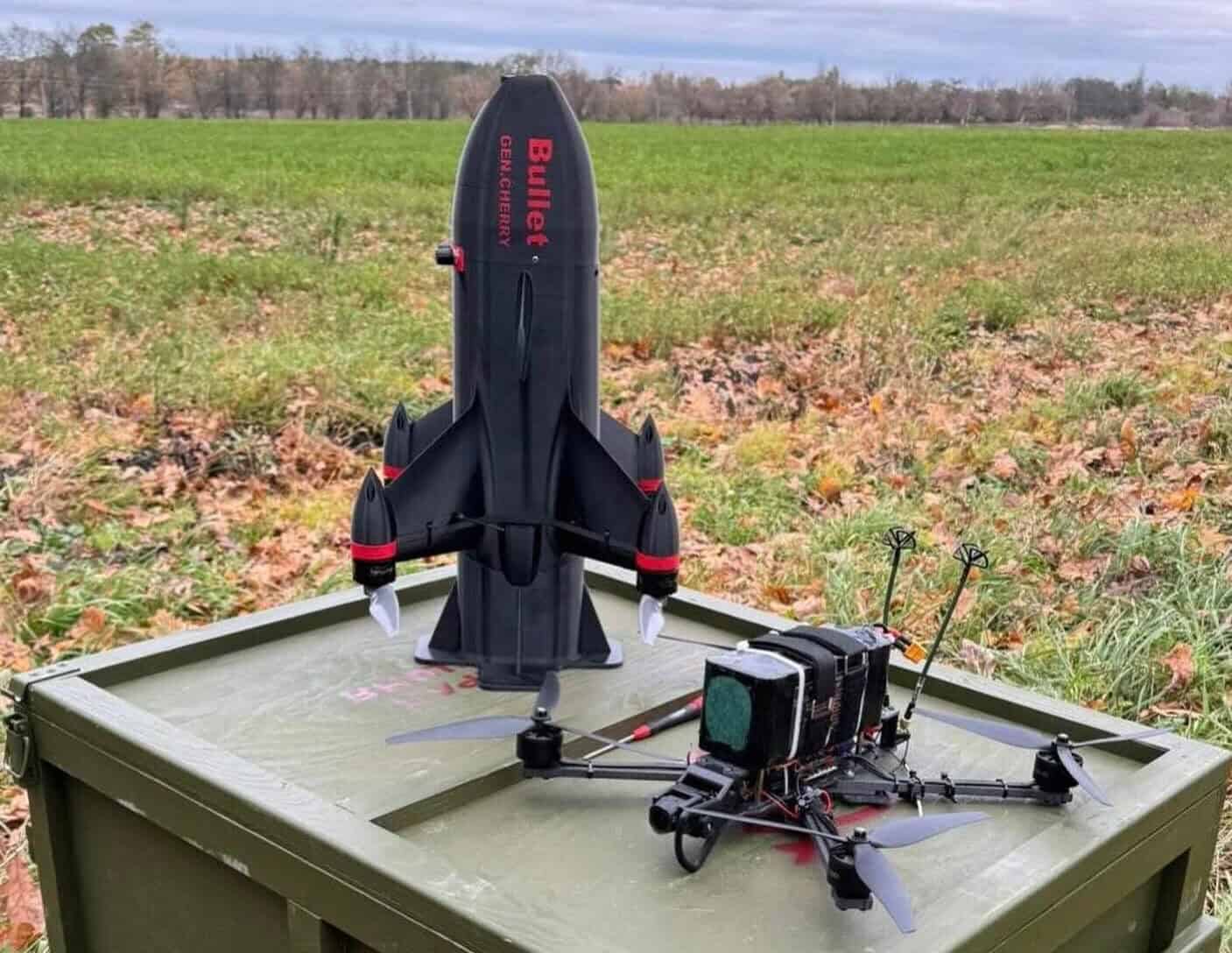
Ukrainian defense companies entering the US market face draconian US protectionist conditions, including the formation of a US legal entity and partial disclosure of technical documentation, Defense Express analyzes. The analysis comes as two Ukrainian companies — F-Drones, via the US-registered Ukrainian Defense Drones Tech Corporation (UDD), and General Cherry Corp — compete in the Pentagon's $1.1 billion Drone Dominance Program.
Bureaucratic and ownership requirements
US defense procurement requires that the contractor be a US legal entity. To register, that entity must be registered with the US Defense Counterintelligence and Security Agency (DCSA) as a defense manufacturer, demonstrate non-use of prohibited Chinese components, satisfy cybersecurity requirements, and meet classified-information access standards.
Foreign ownership thresholds shape what's possible. A 100%-foreign-owned entity faces approval timelines measured in years and is unlikely to receive DCSA approval for classified contracts.
A foreign-ownership share below 50% triggers a Security Control Agreement (SCA) regime, under which the company must be officially led by a US citizen, foreigners are barred from classified information, and registration takes months. The only foreign-ownership level that avoids these additional procedures is below 5%.
What Ukrainian companies must accept
For Ukrainian drone makers targeting US government contracts, the practical implications are stark. The right to sign contracts and conduct correspondence with the US Department of Defense may pass to US-citizen executives.
The "no Chinese components" verification requires at least partial disclosure of technical documentation to US authorities. Production must be relocated or duplicated on US soil, creating American jobs.
And, critically, none of this happens without significant lobbying, often through partnership with a large US prime.
Kongsberg-Raytheon working model, and its Drone Dominance Program echo
Norway's Kongsberg has faced the same procedure. The weapon producer used the partnership model to sell its Naval Strike Missile in the US. Rather than entering the US market directly, Kongsberg paired with Raytheon.
Raytheon handled the procurement promotion, particularly positioning NSM as the armament for the Littoral Combat Ship (LCS) class, in exchange for technology transfer, US localization, and final assembly on American soil.
Read also
-
Russia kept sneaking troops through gas pipes behind Ukrainian lines. Now Ukraine has gone more than 15 km underground to do the same to Russia
-
Ukrainian OSINT analyst: Russia’s Yandex data center in Sasovo burned out inside, though its roof shows almost no significant holes
-
Drones reportedly hit a Russian weapons plant near Moscow that Washington and Kyiv sanctioned


