

Ukraine on 8 May marks the Day of Remembrance and Victory over Nazism in World War II 1939–1945. The date was established as a state holiday in 2023, replacing the Soviet-format 9 May Victory Day. The same day is observed across most of Europe as the symbolic end of the war: the Act of Unconditional Surrender of Nazi Germany came into force at 23:01 on 8 May 1945.
The day will become a public day off only after the end of martial law.
How Ukraine moved the date
Until 2023, Ukraine kept two dates in parallel: 8 May as the Day of Remembrance and Reconciliation, and 9 May as the Day of Victory over Nazism. In May 2023, President Volodymyr Zelenskyy submitted to the Verkhovna Rada a bill establishing 8 May as the Day of Remembrance and Victory over Nazism in the Second World War. Parliament approved the measure on 29 May 2023.
That year, Zelenskyy also signed a decree designating 9 May as Day of Europe in Ukraine, in line with the European Union.
The shift was not abrupt. Civic organisations began marking 8 May in the early 2000s. The format was adopted at state level in 2014 by the Ukrainian Institute of National Remembrance and the Ministry of Culture. In 2015, a presidential decree and subsequent decommunisation laws introduced 8 May as the Day of Remembrance and Reconciliation — a public holiday but not a day off — while 9 May remained the Day of Victory over Nazism, "as society was not yet ready to abandon the established date."
Soviet "Victory Day" and its rejection
In the USSR, 9 May was gradually transformed into a state cult of "victory," particularly from the 1960s onwards. Russia subsequently built a state ideology around it.
The Ukrainian Institute of National Remembrance takes the position that memory of the Second World War should not serve as justification for new wars or aggression. The contemporary Ukrainian model accordingly emphasises human losses and the tragedy of the war rather than triumph.
The broader transition to the European tradition of remembrance began after the Revolution of Dignity. It involves not only a change of date but a shift in emphasis — from the cult of arms and victory toward acknowledging the contribution of different communities to the defeat of Nazism, and toward attention to the individual, suffering and loss.
Symbol of remembrance
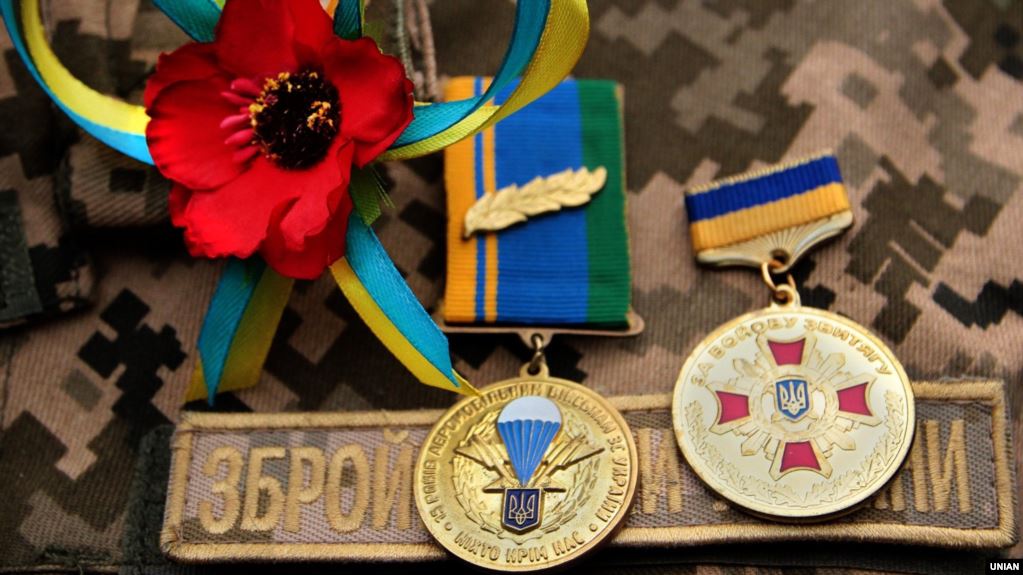
Since 2014, Ukraine has used the red poppy as the symbol of memory of the Second World War, the same symbol used elsewhere in Europe. The outlet describes it as a stylised image of a bullet passing through a heart and, simultaneously, a symbol of life reborn on former battlefields.
Ukrainian losses
For Ukraine, the Second World War began on 1 September 1939 with the Nazi German attack on Poland and the bombing of Lviv and other Ukrainian cities. Ukrainians at that time did not have an independent state and were divided among several countries. Ukrainian territory became one of the principal theatres of combat in Europe.
According to the Ukrainian Institute of National Remembrance around 7 million Ukrainians were mobilised into the Red Army. Ukrainians also fought in other Allied armies and in the Ukrainian liberation movement. More than 8 million Ukrainians and members of other peoples living on Ukrainian territory died.
Both totalitarian regimes committed numerous crimes against civilians during the occupation of Ukrainian territory, including the Holocaust, mass killings and deportations of peoples.
Memory and the current war
The Russian Federation, as the successor to the Stalinist regime, uses myths about the Second World War to justify its aggression against Ukraine — which began in 2014 and developed into the full-scale invasion of 24 February 2022.
Read also
-
Why can’t Ukraine just blow up Russian launchers firing ballistic missiles at its cities?
-
German brand sold in 150 countries just lost its Ukraine warehouse to a Russian strike. It says it won’t stop operating
-
Fewer air-defense missiles from partners may be attempt to make Ukraine more compliant, Zelenskyy says after Russia’s attack killed 17 civilians


