
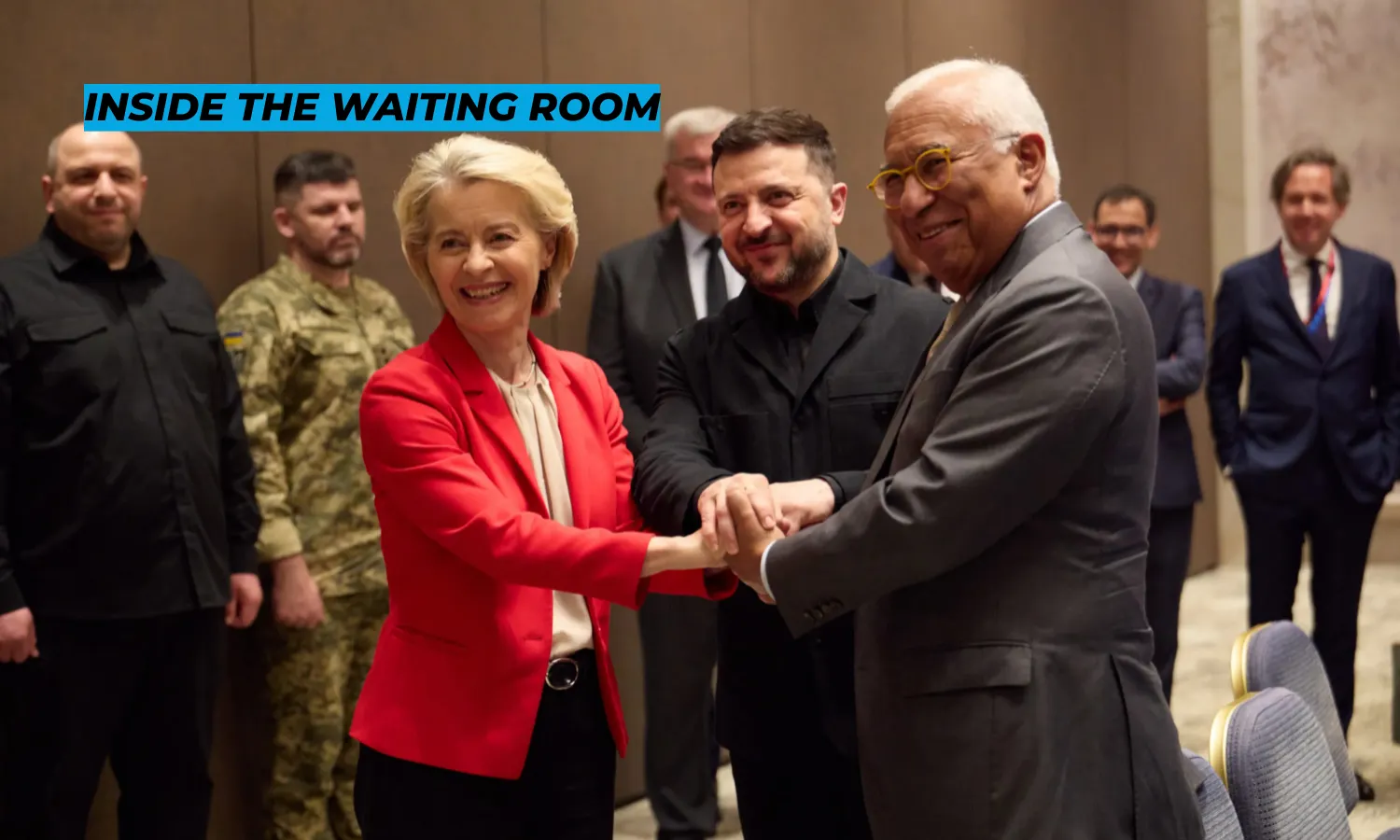

This is the first in a series by Euromaidan Press examining the structural, political, and domestic barriers to Ukraine's EU membership—and the cost of failing to overcome them.
The story making rounds in Brussels now is that Volodymyr Zelenskyy doesn't understand how EU enlargement works.
"Zelenskyy and his entourage have never had a real understanding of how it works," one EU official told the Financial Times. Seven officials, speaking anonymously, painted a picture of a wartime president too stubborn to accept that membership isn't a gift.
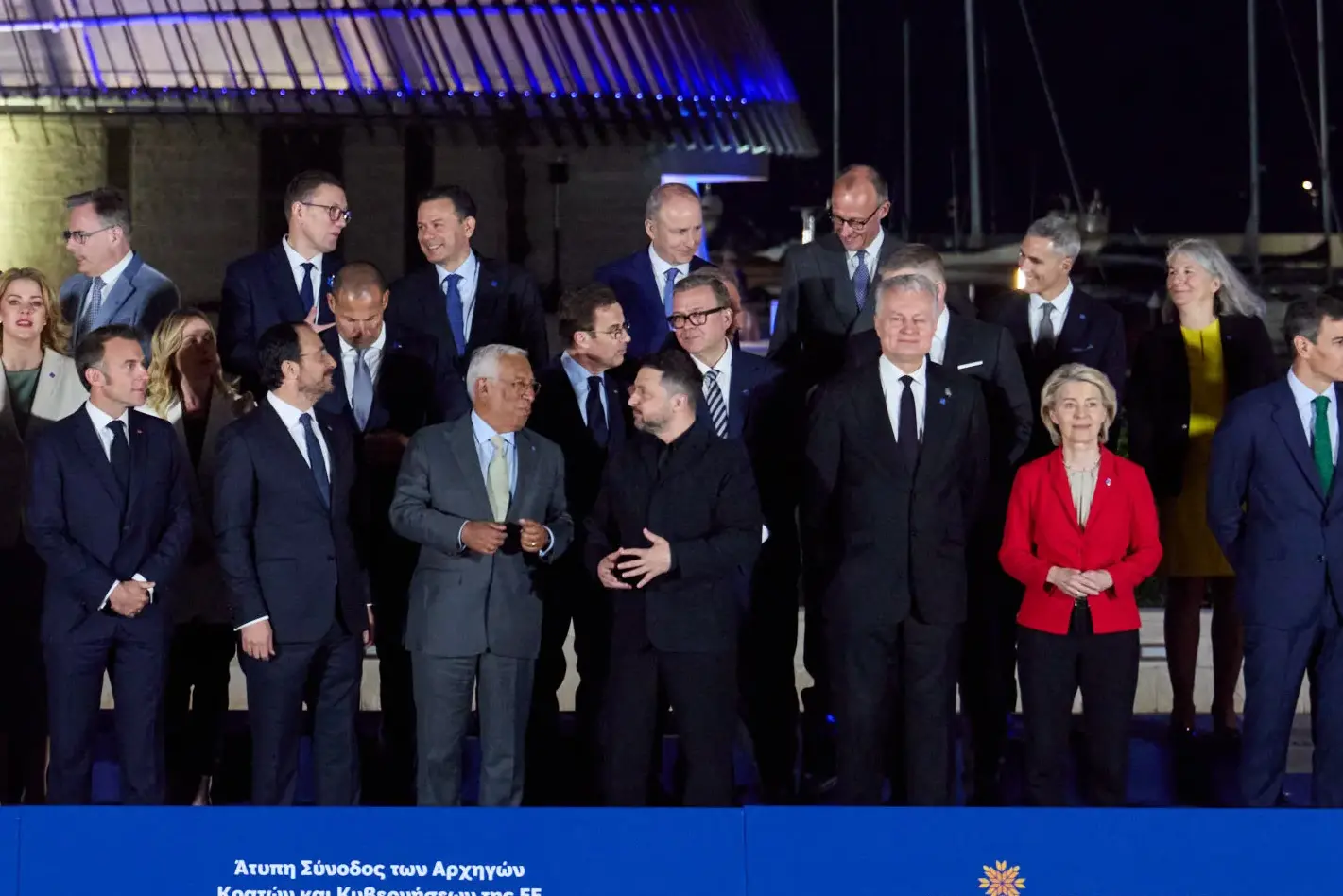
"We are the only friends he has, so he might be better off keeping his mouth shut," one said after the 23 April Cyprus summit, responding to the Ukrainian side’s rejection of “symbolic membership” prospects.
The story has a problem: it's missing the other half.
Not only Ukraine wants quick membership
The picture one might be tempted to imagine after reading mainstream media coverage: Ukraine wants to play the pity card because it’s at war and get accepted into the EU without doing the homework, while principled capitals say only merit-based membership will do.
It is true that Ukraine needs the EU. Russia's entire war against Ukraine is being waged because Ukraine chose to join Europe rather than remain in Russia's sphere of influence in the 2014 Euromaidan Revolution, which ousted a pro-Russian president who refused to sign the EU Association Agreement. For Ukraine, EU accession is simply existential: within the Russian world, it has few chances to survive as an independent nation-state.
But the EU needs Ukraine as well. A hostile or disillusioned Ukraine on its eastern border, with the US pulling back, is a security threat the EU can't afford.
However, the current stringent EU accession rules, which, in the words of the EU’s Commissioner for Enlargement Marta Kos, were "designed for a stable, rules-based world that no longer exists,” risk creating exactly that scenario. Ukraine is being expected to meet rules no standing EU member has met, all during an active war.
Both the EU Commission and Kyiv race to lock in Ukraine’s membership as quickly as possible—Kyiv has set 2027 as its target date, driven by the prospect of a peace deal that could come at any moment and EU elections in 2029 that could produce a parliament far less interested in enlargement.
And Ukraine's potential membership would transform the EU's untested mutual defense clause into something credible for the first time—the only country in the union with four years of combat experience against Russia.
Not everyone shares the urgency. “I don't believe in the fast-track membership by 2027,” Lithuanian MEP Petras Auštrevičius told Euromaidan Press. He doesn't see the 2029 political cycle as a hard deadline either: “I'm still very optimistic about the center-based forces still being in charge.”
The search for creative solutions—and why none have landed

But urgency or not, both sides are stuck. The EU can't agree on what to offer, and Ukraine can't pass the laws to earn whatever is offered, scoring 9 out of 100 on its own reform plan.
The growing understanding that the current EU accession rules might contradict the best interests of both Ukraine and the EU has led to a search for “creative solutions.” None of them have truly landed yet.
On 28 February 2022, five days into Russia's full-blown invasion, as Russian tanks encroached on Kyiv, Zelenskyy called on the EU to immediately grant membership "under a new special procedure." What he was asking for would later be termed "fast-track" membership: Ukraine would get accession now, and benefits—including voting rights—would follow later according to completed reforms, bypassing the reforms-first approach that could take decades.
In early 2026, a similar concept was floated in Brussels circles as "reverse membership," presented in the Foreign Affairs Committee, and killed by member states by March, Petras Auštrevičius said.
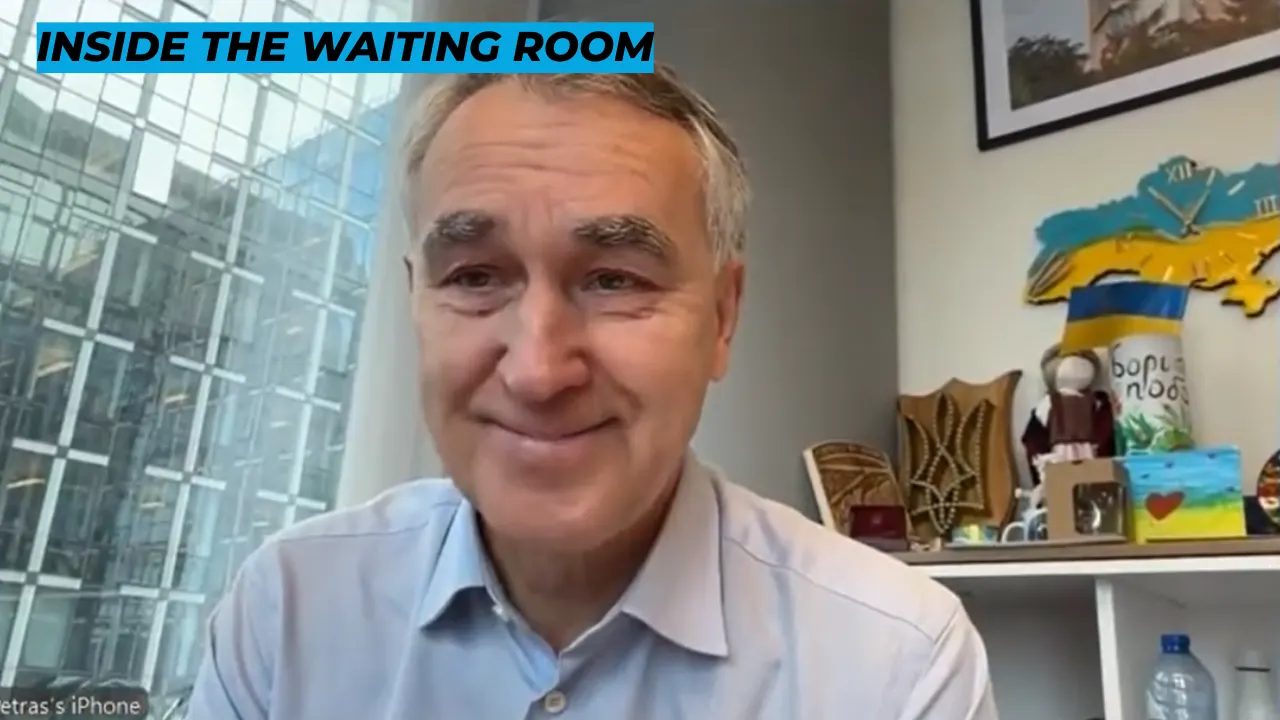
Ukraine’s EU membership: when, not if—but 2027 is unrealistic, says veteran MEP
The idea collapsed because of "toxic narratives" around it, European Council on Foreign Relations senior policy fellow Leonid Litra told Euromaidan Press: it created the appearance that Ukraine wanted to simply barge into the EU, bypassing all of the rules. But the rejection may have been less about substance than process. As one EU Council official told ECFR, "this was not a rejection of creative models per se, but rather a reaction to being kept in the dark by EU institutions."
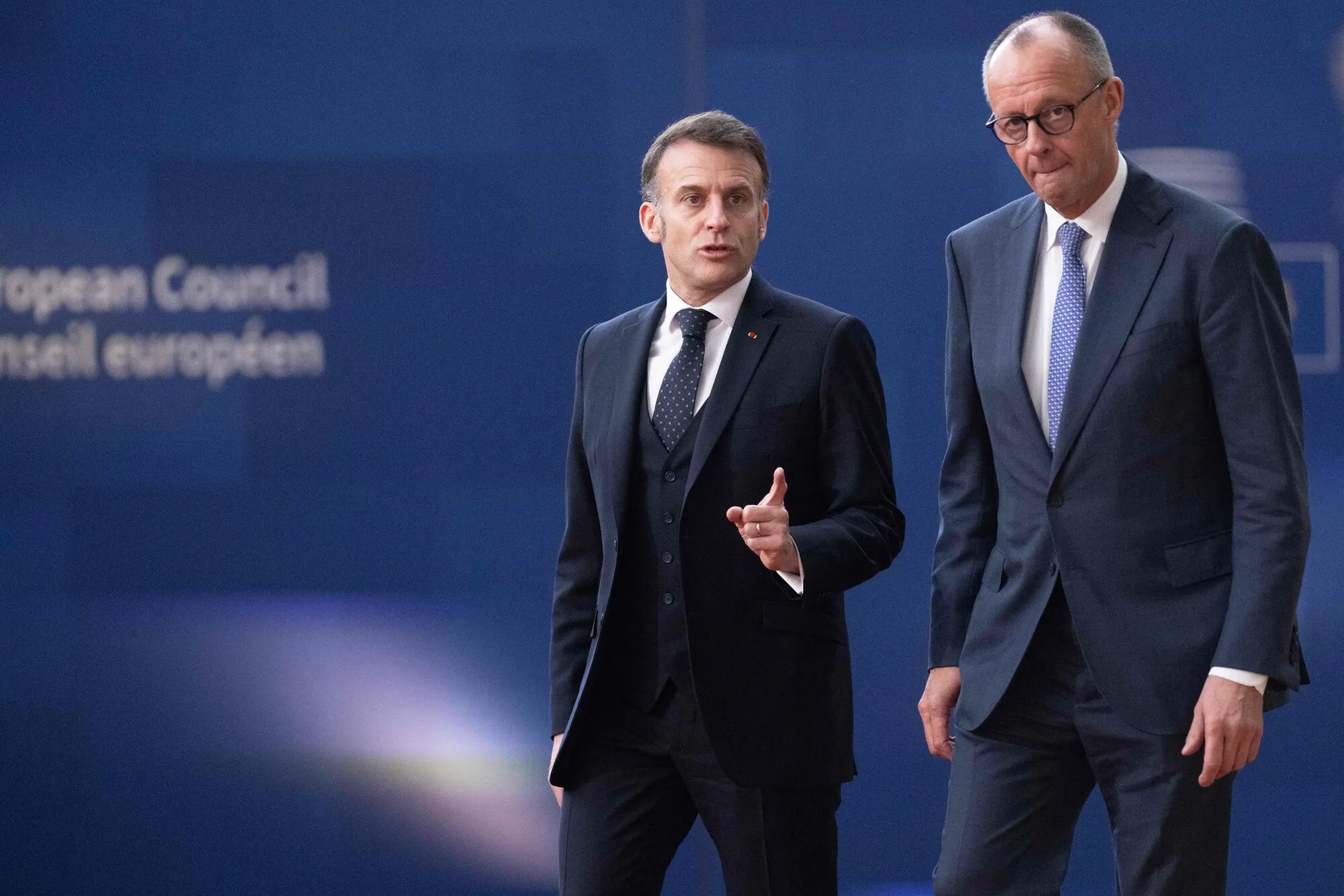
France and Germany suggested something lighter. As reported by the Financial Times on 20 April, Germany proposes an "associate membership" status; France dubs it "integrated state status." Both envision a seat at ministerial and leaders' meetings and potentially open the EU's mutual defense clause through a political declaration—but deny Ukraine voting rights and access to the EU budget.
The Franco-German model is not an alternative to full membership. Berlin says that the new status, adopted by a political decision of EU leaders without “lengthy procedures,” would carry “symbolic strength through the name.”
Zelenskyy rejected at the Cyprus summit. “Ukraine does not need symbolic membership,” Zelenskyy said. Ukraine is “not defending Europe symbolically — people are really dying.”
But Kyiv isn’t inflexible. Speaking to Bloomberg TV one day after the Franco-German proposal landed, Deputy Prime Minister Taras Kachka—who has publicly committed to signing an accession treaty by 2027—said Ukraine was ready to delay receiving subsidies under the Common Agricultural Policy for several years.
However, Kyiv's priority, he made clear, is full irreversible EU membership as quickly as possible; everything else is negotiable.
Lithuania's MEP Petras Auštrevičius, weeks before the Franco-German proposal emerged, told Euromaidan Press he had "sensed this kind of possibility for a second-class membership—with no voting rights, for example." He was cautious: "You never know when it will end up. Sometimes it becomes a kind of decision for longer periods of time."
Aiming to bridge the gap, Litra created an accession model called PACT (Political Accession with Commitments to Transformation): immediate political membership with limited rights, such as voting in the EU Parliament and having observer status in EU institutions, while delaying voting rights in the most sensitive sectors like agriculture.
Full political rights and funding access would be unlocked as reform progress is verified annually by the European Commission. A "reversibility mechanism" would allow the Commission to re-lock rights and funds if democratic backsliding occurs, addressing the Hungary 2.0 fears.
This aims to address concerns of member states such as Ukraine gaining access to a large part of the EU's agricultural budget.
PACT would also immediately open Article 42.7, the EU's mutual defense clause—an appealing option for Kyiv at a time when NATO membership remains off the table.
The model means creating a fundamentally new pathway for EU accession, which has hitherto always followed the logic of "reforms first, full membership later." How such a model could be adopted when every EU member has veto power over changing accession rules remains unclear.
Meanwhile, influential European capitals such as Berlin, the Hague, Paris, Madrid, and Rome understand that creative solutions must be found—although the discussions are happening “in the kitchens” with no certain answers, Litra told Euromaidan Press. Several member state officials privately cautioned that "the cost of non-enlargement could be higher than the cost of enlargement.”
"They are looking for balance—how to accept Ukraine without destroying the EU, because Ukraine is a very serious player in agriculture," Litra explained, touching upon the largest obstacle to Ukraine's quick accession: reconciling Ukraine's agricultural powerhouse status with the EU's Common Agricultural Policy, which distributes roughly €55 billion in annual subsidies—about a third of the entire EU budget.
The creative proposals are proliferating—and diverging. As Auštrevičius noted: "Nothing is ready. Nothing is on paper. Nothing is on the table."
The wall the EU built to protect itself
The current stringent accession rules were created after the EU was burned by the democratic backsliding of Hungary and Poland, accepted with fanfare in the 2004 "big bang" expansion. The 2020 revised enlargement methodology introduced a Fundamentals cluster—rule of law, judiciary, anti-corruption—that opens first and closes last, gating everything else behind it.
The system the EU built to prevent another Hungary now requires new members to meet demands no standing EU member was ever required to meet. So when Poland's Foreign Minister Radosław Sikorski said war-time Ukraine must fulfil all conditions “just as we had to”—Poland joined in 2004, before the Fundamentals cluster existed, before the 2020 methodology, under rules so lax they produced the very backsliding the new rules were designed to prevent.

Magyar’s victory: what it unlocks for Ukraine—and where it stops short
A result of the new rules: no new member has joined the EU since Croatia in 2013, with the Western Balkans locked in what seems like a permanent waiting room. Montenegro has been negotiating for 13 years. Serbia for 11.
But beneath the 2020 revision are 40-year-old rules that the EU’s commissioner for enlargement Marta Kos says were “not adapted to the difficult times we live in." The reforms first–membership later, chapter-by-chapter logic created for a Spain and Portugal in 1986 could result in the EU risking losing Ukraine and Moldova, she warned.
Many in the EU currently prefer that the rules designed to make accession as hard as possible stay. Enlargement "is not in the top three" priorities of the European Parliament, Lithuania's MEP Petras Auštrevičius, a member of the EU-Ukraine Parliamentary Association Committee and former chief negotiator for Lithuania's own accession, told Euromaidan Press.
"Security, competitiveness, Green Deal, and so on and so forth. Enlargement, yes, it is present, but it's not a dominating agenda," Auštrevičius said. He added that if EU member states were asked to vote on Ukraine joining by 2027 right now, "we might receive a negative response."
And Auštrevičius was blunt about Ukraine's own shortcomings: ”We need a parliament which supports the process fully. Anti-corruption efforts must be done so that nobody can point a finger.”
Political deadlock in Kyiv
But the EU's frustration isn't only about the rules. Ukraine's own reform engine has stalled—and the reasons are as ironic as they are structural.
In the summer of 2025, President Zelenskyy attempted to subjugate Ukraine's National Anti-Corruption Bureau and Anti-Corruption Prosecutor's Office to a politically appointed prosecutor general.
The coup attempt failed thanks to sweary teenagers with cardboard signs, but the fallout shattered his parliamentary faction. NABU then went after the faction itself, charging five MPs with taking cash for votes. The faction's working core dropped from 180 to 110 deputies. The parliament that needs to pass hundreds of EU integration laws can barely assemble the 226 votes needed for any single one.

Attempting to reverse the damage, Deputy Prime Minister Taras Kachka and EU Enlargement Commissioner Marta Kos created a 10-point trust-rebuilding plan in December 2025—focused entirely on anti-corruption and rule of law reforms, the very area Zelenskyy had undermined months earlier. Ukraine set itself a 12-month deadline.
Three months in, an independent expert consortium rated progress at 9 out of 100. Zero on prosecution reform. Zero on anti-corruption internal controls.
The irony: the EU required Ukraine to build NABU. Ukraine built it. NABU did what it was built to do—and the parliament stopped working.

"Do prove that you will not let us go"
On 1 March 2022, six days after the Russian invasion, Zelenskyy addressed the European Parliament, dressed in the military attire that became his signature look for years. "Do prove that you are with us. Do prove that you will not let us go," he pleaded. MEPs met his speech with a standing ovation.
What followed was the fastest political process for any EU candidate in history. Ukraine received candidate status in four months. Opened negotiations in two years. When Hungary blocked the way, 26 member states improvised an overnight workaround, opening all chapters of EU law through “informal meetings.” The Commission's own enlargement chief calls the current rules obsolete.
Four years later, the contradictions stack. The EU needs Ukraine in but can't agree on how. Ukraine needs to pass laws but broke the parliament that passes them. Poland demands conditions it never met. The Commission calls its own methodology obsolete but hasn't replaced it. Both sides need a lock and neither has built one.
The question is whether the rules the EU built to protect itself will become the reason it loses the country it most needs to keep.
This material was produced as part of a project by the Institute of Mass Information with the support of the Ministry of Foreign Affairs of the Netherlands. The content of this publication does not reflect the official position of the IMI or the Kingdom of the Netherlands.
Read Also
-
Wiretaps, a mocking codename, and a seized playbook—Ukraine’s anti-graft bureau reaches the President’s Office again
-
Kostiantynivka: Why one city in Donbas matters so much that Putin lies about having captured it
-
Russia banned the scholars documenting Stalin’s starvation of Ukraine. They put their course out anyway—as Moscow repeats the famine.


