

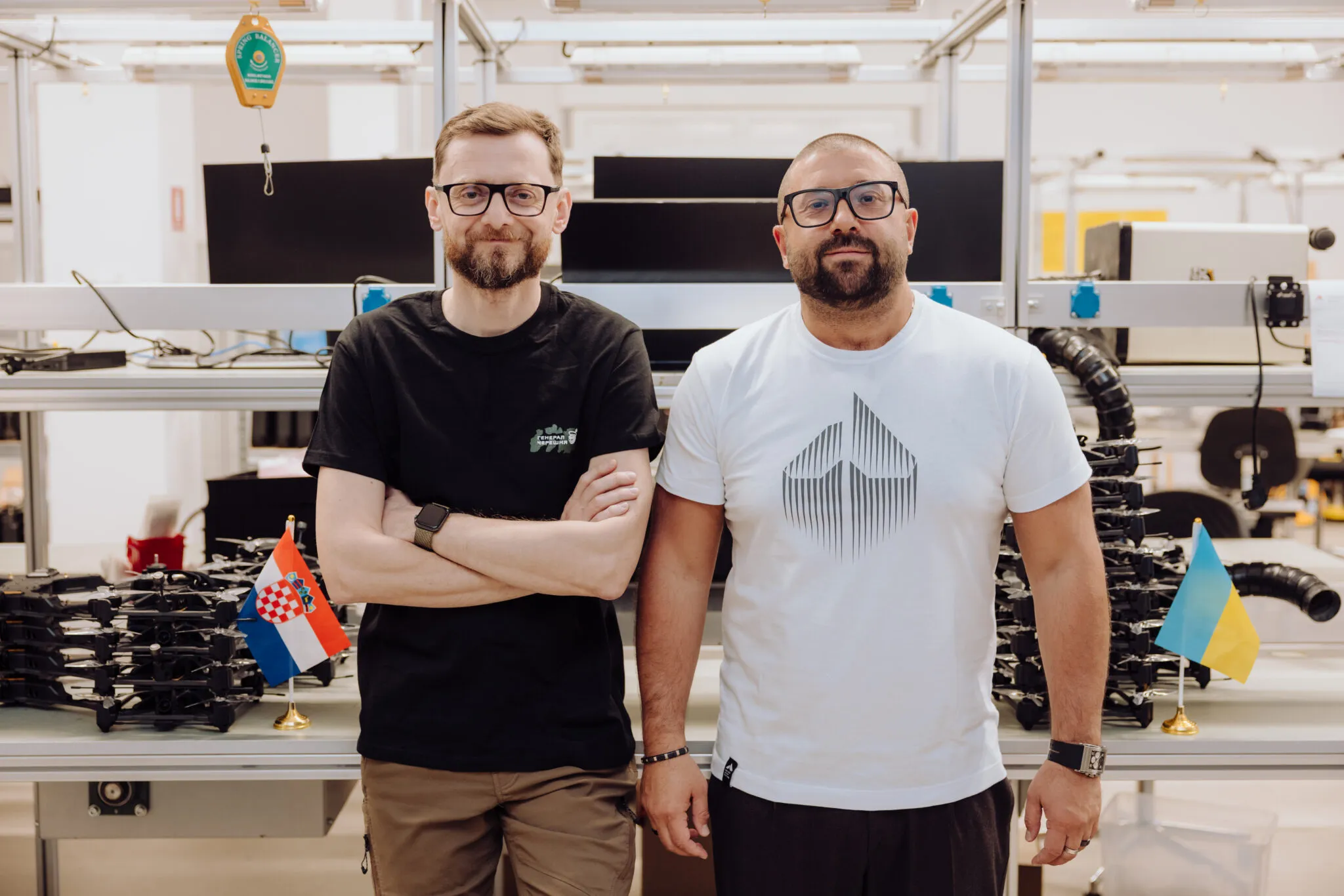
Ukrainian drone manufacturer General Cherry and Croatia's ORQA signed a memorandum of cooperation on 7 April. They agreed to jointly develop and manufacture interceptor drones and counter-drone systems, including an underground factory in Ukraine under the Build in Ukraine localization program, the companies announced.
The deal is the latest and most structurally ambitious push by Ukraine's drone industry to sever its dependence on foreign components. Ukrainian drones have relied heavily on Chinese-made flight stacks, communication modules, and electronics since the full-scale invasion began.
That dependency is a recognized vulnerability in a war where supply chains can be sanctioned, disrupted, or simply cut off.
The General Cherry–ORQA partnership aims to fully localize component production in Ukraine. ORQA, which already supplies 24 NATO member states and manufactures everything in-house, excluding Chinese parts, offers a proven template for exactly what Ukraine needs to build.
Underground factory for drone independence
Under the Build in Ukraine program, General Cherry and ORQA plan to construct an underground facility in Ukraine to produce drone electronics and peripheral components.
Production will start with flight stacks and communication systems, with the stated goal of eventually manufacturing all UAV components on site.
"We are ready to supply components to all our partners in Ukraine. This is our shared major aim to get rid of Chinese components," General Cherry told the online media Militarnyi.
The companies do not expect significant price increases from replacing Chinese suppliers. Technological independence, they say, is a step the entire drone industry must take. Alongside the Ukrainian facility, they will launch serial production in Croatia, where ORQA's manufacturing infrastructure will be combined with General Cherry's battlefield-driven development cycle.

Croatia and Ukraine: alliance built on shared memory
The industrial partnership sits within a broader relationship that runs deeper than most NATO members' ties to Ukraine. Croatia knows what it costs to fight for territorial sovereignty—a fact that has shaped its politics toward Kyiv since 2022.
Its government has backed Ukraine with helicopters, tanks, and demining robots, while Croatian volunteers have fought in Ukrainian ranks, including in the rebuilt Azov regiment during the battle for Bakhmut, Croatian outlet Večernji.hr reported.
Trending Now
That solidarity has not been cost-free. Defense Minister Ivan Anušić clashed publicly with Hungary last year over Kyiv, asking parliament whether Croatia wanted "to side with Serbia and Hungary, which are now publicly supporting Putin."
Croatia also held firm in refusing to transit Russian crude through the Adriatic pipeline, even as Budapest and Bratislava pressured Kyiv over energy.

President Zoran Milanović has staked out different ground. He has publicly questioned Ukraine's territorial integrity and stated Croatia will not send a single soldier to Ukraine, RBC-Ukraine reported.
Last October, Anušić challenged that stance directly before parliament, after Milanović refused to authorize Croatian participation in NATO's military training mission for Ukraine.
The gap between the president and his defense minister defines a Croatia that supports Ukraine through its institutional structures, while its head of state keeps his distance.
That has not stopped the cooperation from compounding: Croatia previously partnered with Croatian manufacturer DOK-ING to localize production of the MV-4 demining robot inside Ukraine. The General Cherry–ORQA deal extends that model to drone components, built underground, and built to last.


