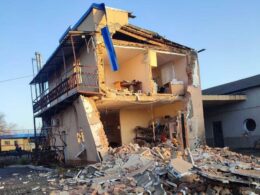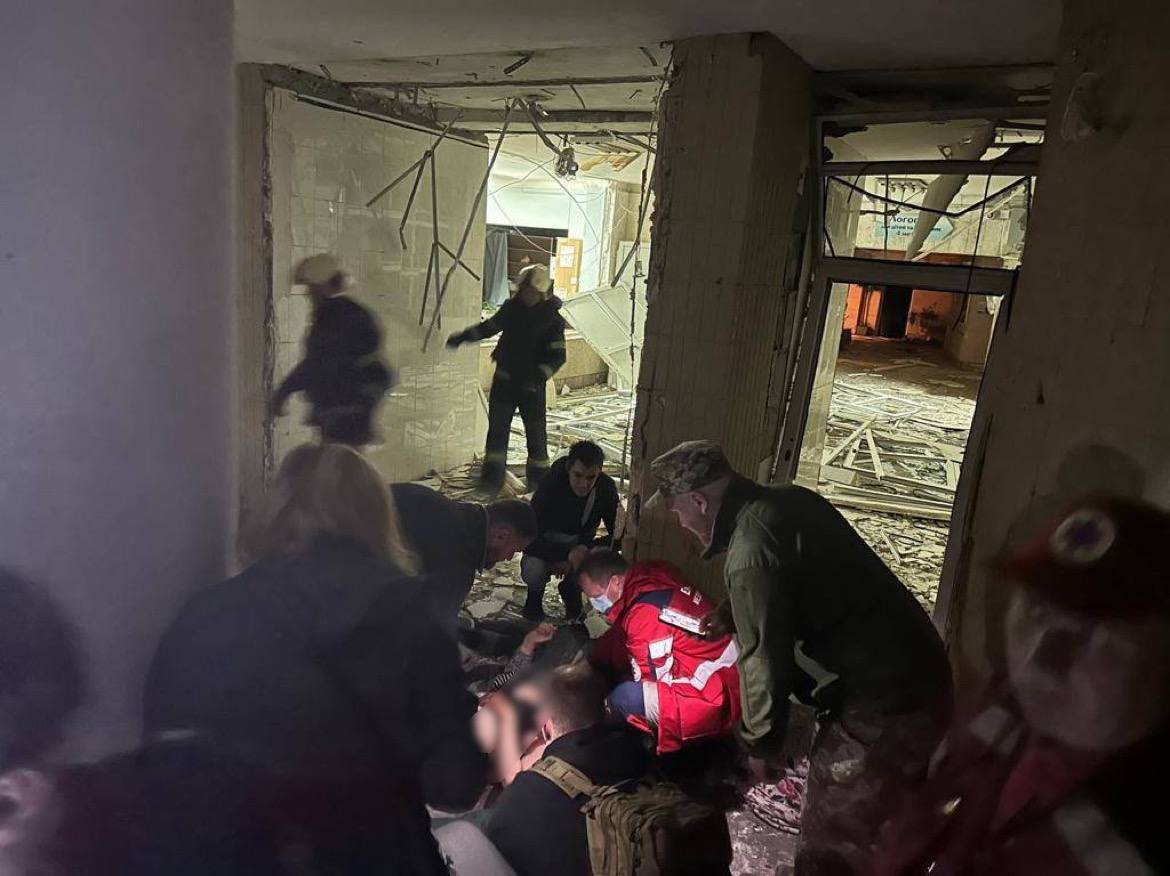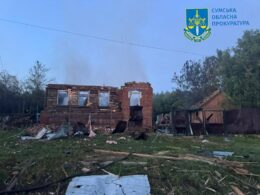

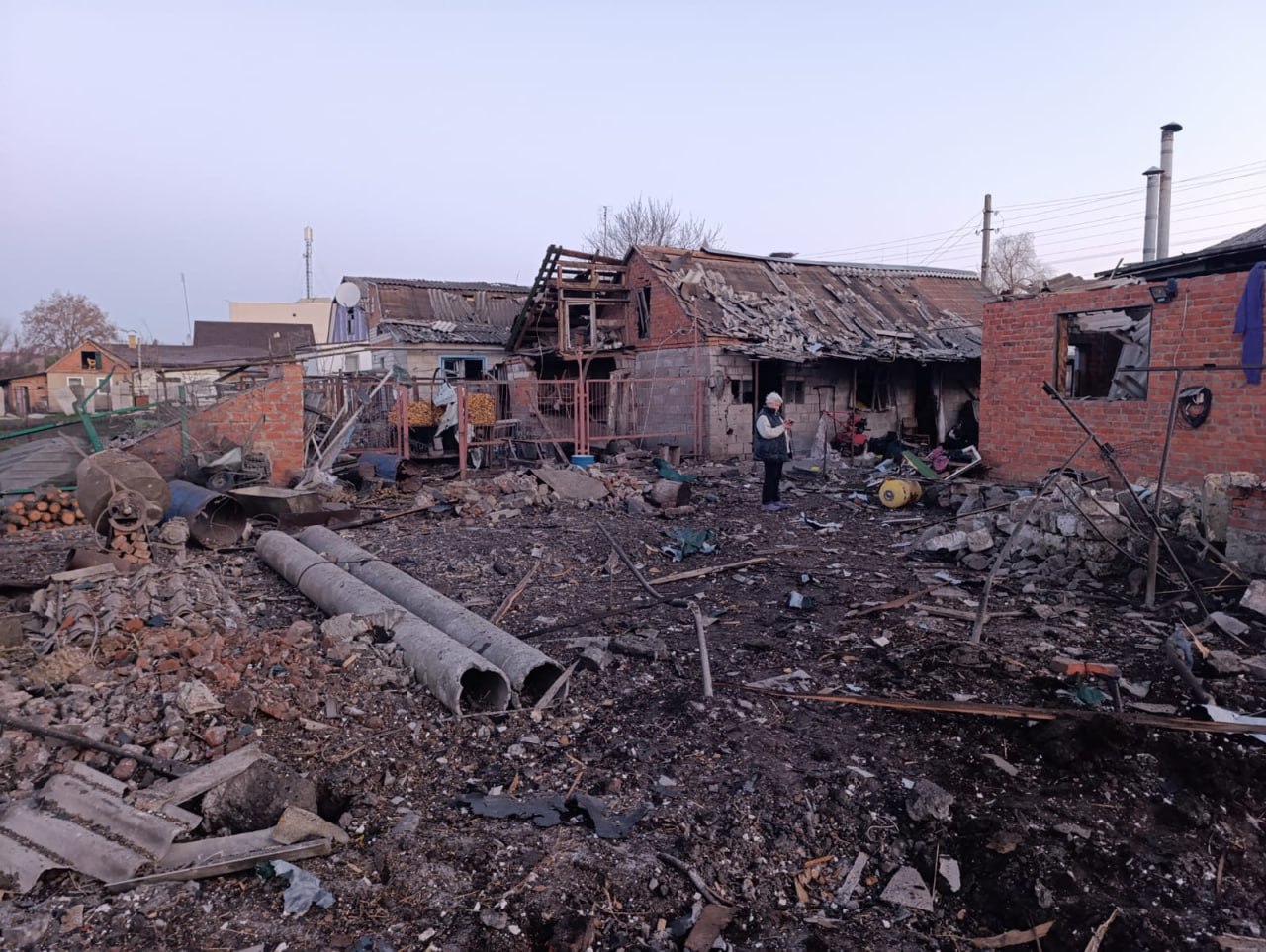
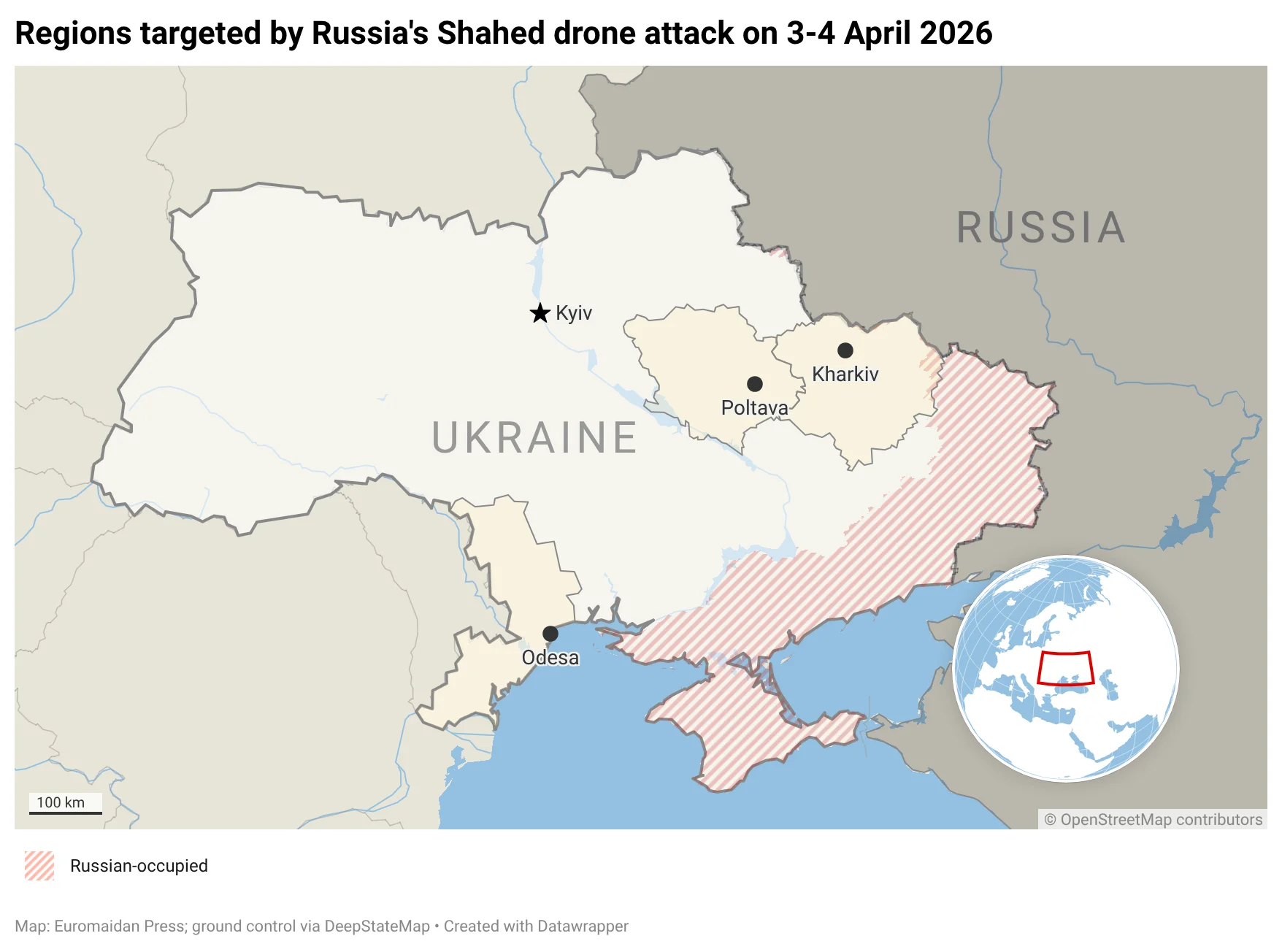
Russia struck Ukraine with 93 drones overnight on 4-5 April, the Ukrainian Air Force reported. Air defenses shot down or suppressed 76, yet 17 reached their targets across 10 locations. Residential areas in Kharkiv and Odesa took direct hits, leaving multiple people injured.
As Euromaidan Press has noted before, such a drop of this scale typically means Russia is stockpiling for a larger surge attack in the coming days. A separate explanation is also on the table: Russia may be really diverting drone supplies to Iran for use against US forces in the Gulf, and it is starting to show.
Air Force: Shaheds, Gerberas, Italmas — 76 of 93 downed
The Air Force says Russia launched Shahed, Gerbera, Italmas, and other drone types from six directions: Bryansk, Kursk, Oryol, Millerovo, and Primorsko-Akhtarsk in Russia, and Hvardiyske in occupied Crimea. Roughly 60 of the 93 drones were Shaheds, capable of carrying up to 90 kg of explosives. Aviation, anti-aircraft missile troops, electronic warfare units, unmanned systems forces, and mobile fire groups repelled the attack.
As of 8:00 a.m., 17 strike drones had hit 10 locations, with debris from downed UAVs falling on three more. The attack was still ongoing at the time of the morning report.
Kharkiv: dormitories, medical university hit; no injuries overnight
A Shahed drone hit a tree in Kharkiv's Shevchenkivskyi district, near residential buildings that include dormitories housing displaced residents, Kharkiv Mayor Ihor Terekhov reported late on 4 April. The blast blew out windows across three dormitories, three apartment buildings, and three cars, and damaged the medical center of Kharkiv National Medical University, Oblast head Oleh Synehubov added. No one was injured in the strike.
Bohdan Hladkykh, director of the city emergency situations department, told Suspilne the Shahed struck a tree next to the buildings.
"The attack intensity has decreased somewhat, but we see the enemy is not leaving Kharkiv alone," he said, referring to three consecutive days of Russian air strikes on the city.
In Zolochiv, Kharkiv Oblast, a drone — likely a "Geran" — struck at 23:10 on 4 April, community head Viktor Kovalenko reported. Geran is the Russian designation for the Iranian-designed Shahed drone, a term Kharkiv officials repeatedly use in their reports instead of Shahed. Six one-family homes, four utility buildings, and energy networks were damaged. No injuries were recorded.
By 8:13 a.m. on 5 April, Terekhov reported a fresh drone strike on Kyivskyi district, with details still being established.
Earlier on 4 April — before the overnight attack — Russian drone debris struck Kharkiv's Kyivskyi and Nemyshlyanskyi districts, injuring three men aged 39, 64, and 70; two women also suffered acute stress reactions. That afternoon, a drone strike on Slobidskyi district injured an 11-year-old girl.
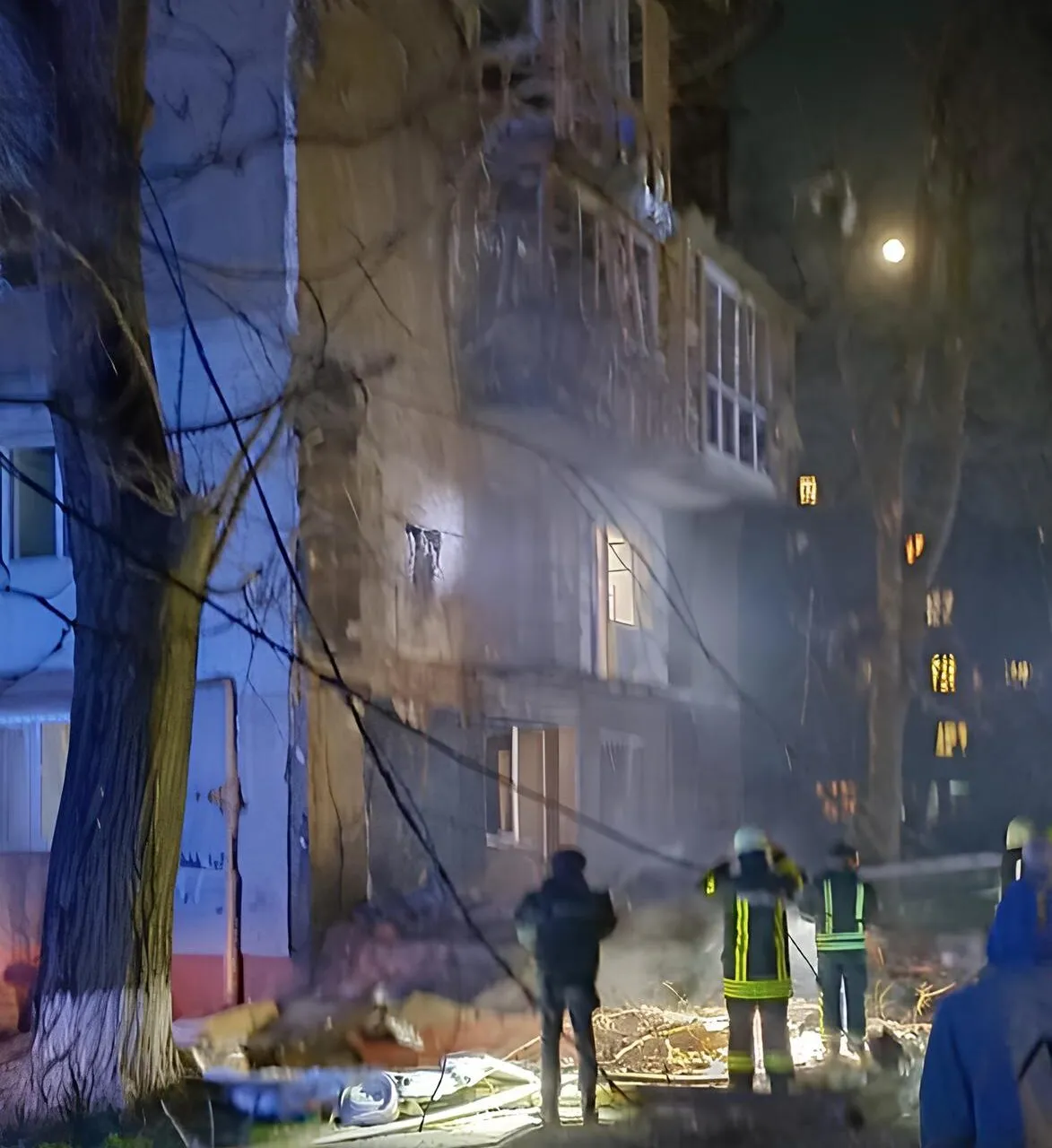
Odesa: 3 injured, 250 windows blown out
Russian drones hit residential buildings in Odesa's Khadzhibeyskyi district overnight, Odesa City Military Administration head Serhii Lysak reported. Cars and a balcony caught fire. Three people were injured, two hospitalized, Suspilne reported. Preliminary damage estimates show around 250 windows and 25 balconies damaged across residential buildings, with four balconies fully destroyed.
Gas production facilities struck in Poltava Oblast again
The night's strikes follow an earlier attack on the same day in which Russia hit Naftogaz infrastructure in Poltava Oblast twice in succession, triggering a fire between the two strikes. No casualties were reported. Naftogaz CEO Serhii Koretsky noted the company has been struck more than 40 times since the start of 2026.