
On Tuesday, EU High Representative Kaja Kallas stood in Kyiv to mark the fourth anniversary of the Bucha massacre and publicly signaled that the €90 billion loan meant to keep Ukraine financially afloat may not happen.
“So, we should also keep in mind that if plan B does not work, let’s go back to plan A.”
“Plan A was the use of frozen assets,” she told reporters. “So, we should also keep in mind that if plan B does not work, let’s go back to plan A.” Plan B is the €90 billion loan, blocked by Hungary since February over the Druzhba pipeline dispute.
Plan A—using frozen Russian assets—collapsed at a December summit over legal and financial objections from Belgium and others. Ukraine’s central bank warns that the country will run out of foreign aid in two months. Hungarian parliamentary elections on 12 April could shift the dynamic—or lock it in place.
An unlikely source
The sharpest warning about what comes next is arriving from an unexpected direction: Estonia, the EU member state that gives the most to Ukraine relative to its economy and has the most to lose if support collapses.
“No matter how many fine words are said—it’s easy for Western European intellectuals to sympathize with victims until they’ve lived through the hardship themselves.”
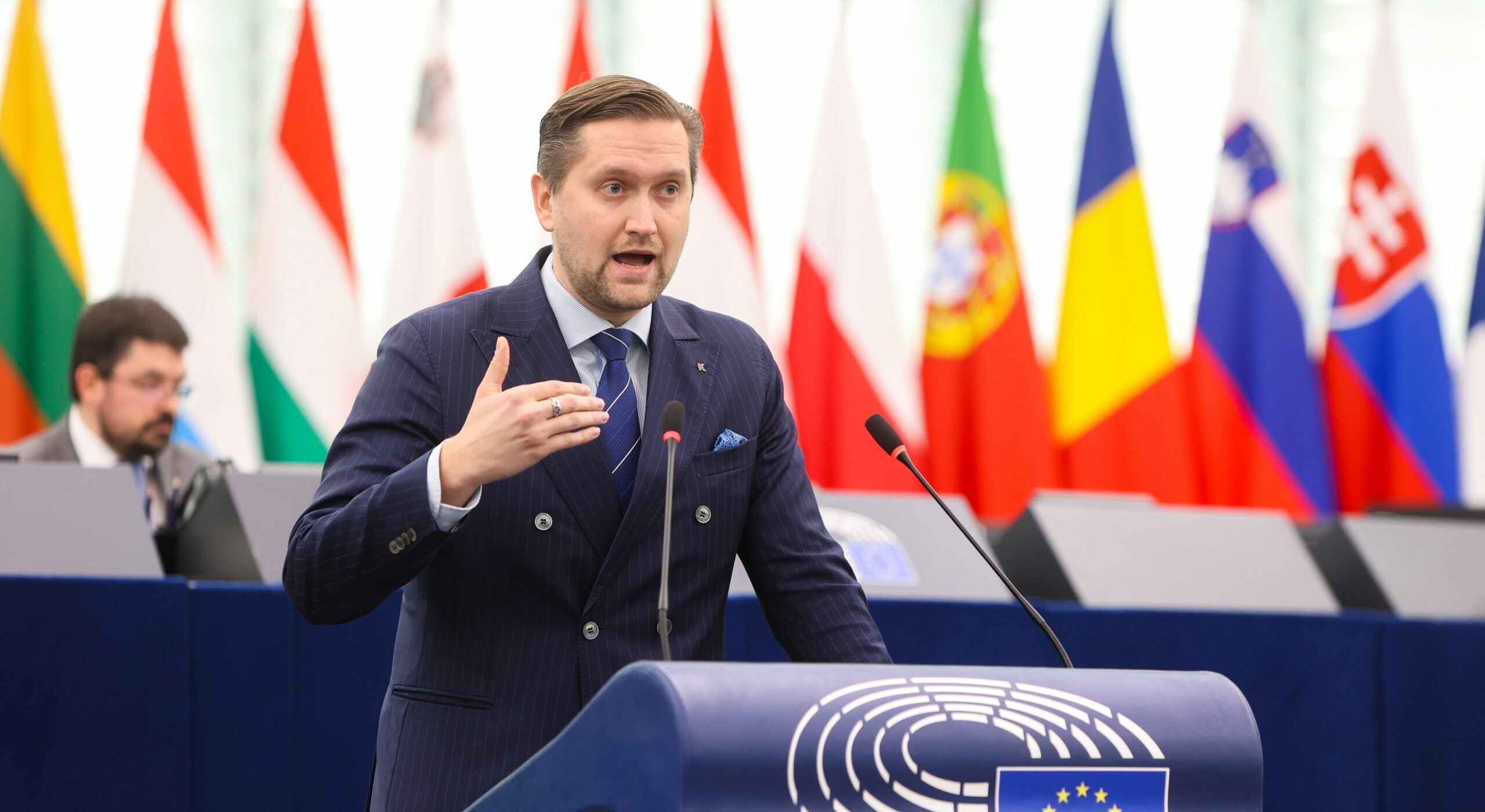
“Turning critical, badly,” Jaak Madison, an Estonian Member of the European Parliament, told Euromaidan Press when asked about the state of European public opinion on Ukraine.
“No matter how many fine words are said — it’s something like what Solzhenitsyn wrote in The Gulag Archipelago: it’s easy for Western European intellectuals to sympathize with victims until they’ve lived through the hardship themselves.”
Estonia allocates 3.01% of its GDP to Ukraine aid—second only to Denmark at 3.25%. When an MEP from that country says European support is deteriorating, it carries different weight than the same words from a Hungarian skeptic or a French centrist triangulating ahead of domestic polls.

Why the ballot box is the real problem
The average European paying more for food and fuel, Madison argues, is not abandoning Ukraine out of malice. They are voting rationally for politicians who promise to look after their own nation first.
“These people go to the ballot box and vote for politicians who promise to put their own nation first and pay less attention to a war 2,000 kilometers away.”
Trending Now
“One’s own shirt is closest to the body.”
The further a country sits from the EU’s eastern border, the less the Russian threat registers. Madison put it plainly: it is like asking an average Ukrainian how much they are affected by a civil war in Sudan. “One’s own shirt is closest to the body.”
The numbers bear this out. Spain has been among Ukraine’s loudest verbal supporters since 2022. It allocates 0.18% of its GDP to Ukraine aid. Words and votes in Brussels have not translated into proportional deliveries.
Russian info operations compound the erosion
Madison identifies a second mechanism: Russian information operations running anti-Ukrainian narratives across Western Europe—about corruption, about the sons of ministers living safely abroad while ordinary Ukrainians are mobilized.
“If support turns too critical,” he said, “it becomes very hard for governments to sell the idea of covering billions in loans for Ukraine.”
Kallas’s return to Plan A language on Tuesday suggests that Brussels has stopped assuming Plan B will hold.
The €90 billion loan is the immediate test case. Every week it stalls, the political cost of eventually passing it rises—and the argument that European publics will bear part of the repayment burden grows harder to make. Kallas’s return to Plan A language on Tuesday suggests that Brussels has stopped assuming Plan B will hold.
Surviving four years of full-scale war is one thing. The slow arithmetic of democratic politics in countries that don't feel the war at their border is another. That an Estonian MEP is now saying this openly is the part that is new.
Read also
-
Inside the EU parliament: the bloc Ukraine wants to join is already fracturing
-
Szijjártó told Russia’s deputy minister he’d removed 72 entities from EU sanctions — then asked Moscow to write his arguments for removing more
-
EU presses ahead to unlock €90 billion for Ukraine and new Russia sanctions – but Kallas says “no good news” yet