
In May 2025, a single team of around 10 Ukrainian experts, acting as the adversary in a NATO exercise in Estonia, "eliminated" two Alliance battalions in a single day. More than 16,000 troops from 12 NATO countries had drilled alongside them. None of it was enough.
The Ukrainians did not overwhelm NATO with numbers. They simply used the battlefield awareness, drone integration, and kill-chain speed that three years of full-scale war had made routine. NATO forces had no answer for it.
NATO has declared that it will defend every inch of allied territory—emphasizing that its military strength is "ready, willing, and able" to meet any threat. The Alliance's own account from October 2025 put it plainly:
"Over the past decade, NATO has massively reinforced its deterrence and defence posture along its eastern flank, from the Arctic Ocean in the north to the Black Sea in the south… NATO has responded by significantly strengthening its readiness to protect and defend all Allies, with more combat-ready forces along the eastern flank and the most comprehensive defence plans since the end of the Cold War."
NATO, 23 October 2025
It reads well. The exercises tell a different story.
Russia did not try to match NATO. It studied it.
To understand why NATO finds itself here, it is necessary to understand how Russia prepared for the confrontation the Alliance spent twelve years hoping to avoid.
Russia built a compensatory system—not a mirror image of NATO, but a force designed specifically to exploit its dependencies, stretch its timelines, and raise the cost and risk of any confrontation.
The logic was systematic. When the West developed a "quick in, quick out" expeditionary model, Russia prepared for protracted, industrial-scale warfare, emphasizing sustainability and endurance.
- When the West advanced high-tech precision warfare, Russia followed in part but retained a focus on mass—particularly in artillery and armour.
- When the West prioritized air power, Russia placed greater emphasis on multilayered air defense and nuclear deterrence to deny air superiority.
- When the West developed network-centric warfare, Russia invested heavily in electronic warfare and cyber capabilities to disrupt it.
Alongside this, Russia employed hybrid methods—information operations, cyber activity, and political interference—to exploit vulnerabilities within Western societies.

Where Western militaries prioritized force protection, Russia demonstrated a higher tolerance for attrition. And while the West operated on the assumption of a post-Cold War peace, Russia continued to view relations in terms of enduring strategic competition.
Russia does not need to defeat NATO in a symmetric engagement. It only needs to make the cost of confrontation high enough that a divided, ammunition-scarce, politically hesitant Alliance decides not to act.
In Brussels, NATO planners see an alliance with technological superiority and nuclear deterrence.
In Moscow, Russian strategists see something different: hollowed-out European militaries optimized for peacekeeping, not peer conflict. Political divisions that paralyze collective action. Ammunition stockpiles measured in weeks, not years. 500 million Europeans asking 330 million Americans to defend them—at the moment the United States is turning its back on Europe.
The 2025 exercises showed what this looks like in practice.
NATO ground forces are unprepared
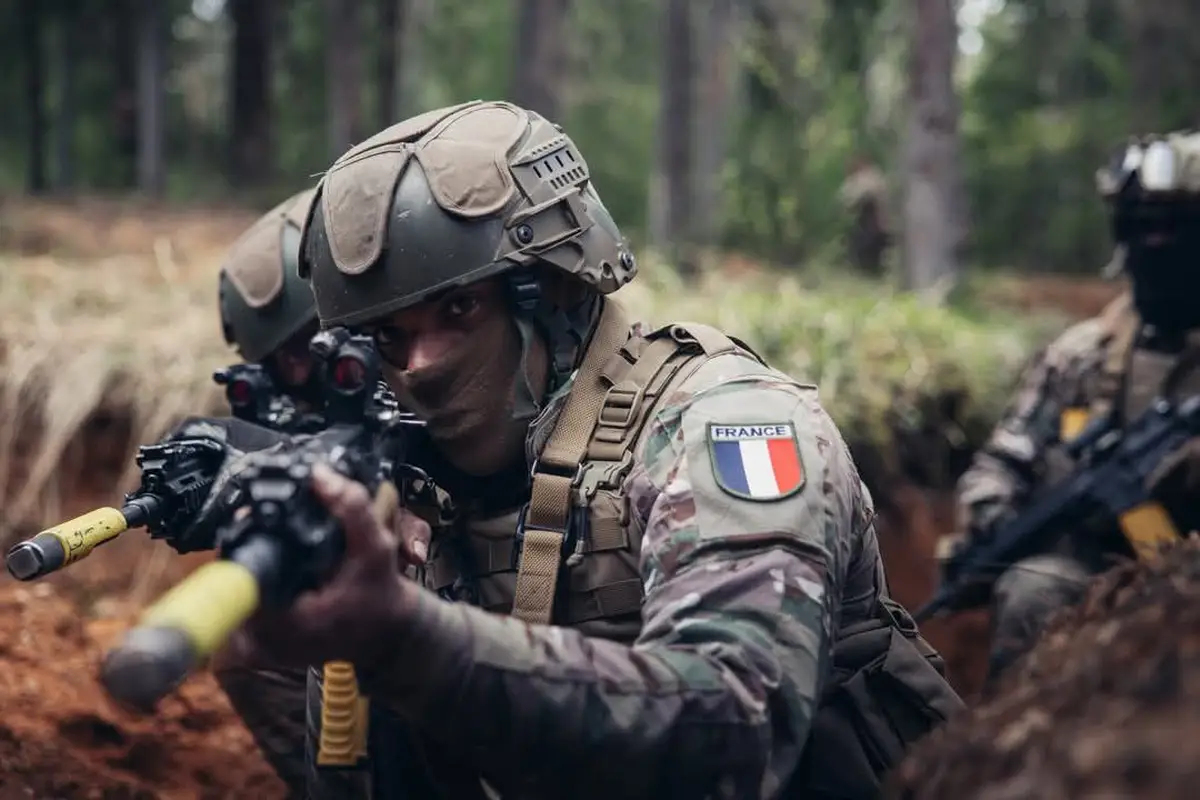
Exercise Hedgehog 2025, held in Estonia in May 2025, involved more than 16,000 troops from 12 NATO countries drilling alongside Ukrainian drone experts—including soldiers borrowed from the front line. It simulated a "contested and congested" battlefield with various kinds of drones.
During the exercise, the Ukrainians used Delta, their sophisticated battlefield-management system. It collects real-time intelligence, uses artificial intelligence to analyze vast amounts of data, identifies targets, and coordinates strikes across commands and units—enabling a fast "kill chain": see it, share it, shoot it, all within minutes or less.

More than 30 drones were deployed against NATO troops in an area of less than 10 square kilometers—roughly half the drone saturation Ukrainians currently face at the front. In May 2025, Russia launched on average around 2,920 FPV drones per day along the frontline. By March 2026, the daily average had increased to a staggering 8,900.
Euromaidan Press concluded that Hedgehog showed how visible the battlefield has become—and how vulnerable that makes anyone or anything moving on it. NATO will need to adjust its tactics and find better ways to protect its tanks and armored vehicles.
Of note: Russia has copied Ukraine and created Unmanned Systems Forces, which already number 80,000 soldiers. By the end of 2026, Russia plans to double that number to 165,500, training over 70,000 new drone operators this year. By 2030, Russian Unmanned Systems Forces are projected to reach nearly 210,000 soldiers.
Despite fielding over 300,000 earmarked high-readiness forces across three tiers under the NATO Force Model introduced after Russia's full-scale invasion, Exercise Hedgehog 2025 is not the only evidence that those forces are not trained or equipped to fight Russia's battle-hardened ground troops.

NATO naval forces are unprepared
In September 2025, NATO conducted a combined REPMUS (Robotic Experimentation and Prototyping with Maritime Unmanned Systems) with Dynamic Messenger, part of NATO's Operational Experimentation series. According to NATO's Maritime Command (MARCOM), it offered a realistic environment to test and evaluate new maritime capabilities, supporting NATO's drive to modernize its naval forces and sustain an operational advantage.
A multinational "red" team led by Ukraine exposed vulnerabilities in Alliance naval tactics by scoring "hits" on at least one NATO frigate, Frankfurter Allgemeine Zeitung reported on 16 March.
Five scenarios were practiced, including port protection, convoy escort, and attacks on those convoys. A Ukrainian officer who participated said all five scenarios ended in victory for the red team.

During one scenario simulating an attack on a convoy, the "red team" delivered such a large number of conditional strikes against a frigate that in a real battle it would have sunk. A few minutes later, the "blue team" asked in the general chat: "So are you going to attack us or not?"
"The problem wasn't that they couldn't stop us—they didn't even see us," a Ukrainian source explained.
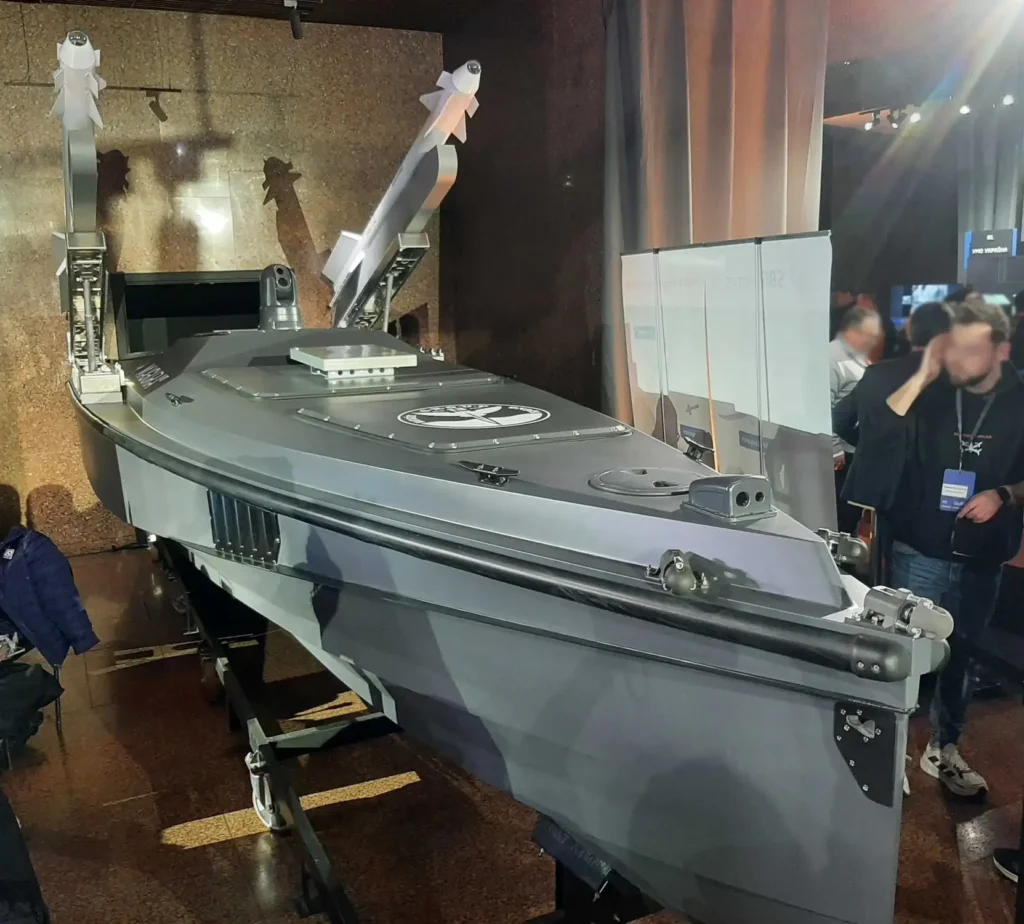
Ukraine demonstrated several variants of its Magura V7 unmanned surface vehicle (USV) during the exercises. The drills showed that unmanned systems, paired with operational experience and battle-tested planning, pose a real threat to NATO navies—which are not yet prepared for attacks using cheap unmanned vessels.
The country actually fighting the war has rendered its verdict
Ukraine's General Staff has decided to scale back overseas training for its troops and—despite the constant threat of Russian missile and drone strikes—move it to Ukraine.
According to Militarnyi and LB.ua on 20 March, General Staff's Deputy Chief for Doctrine and Training Yevhen Mezhevikin cited logistical concerns and a lack of relevant combat experience among Western instructors. "They are disconnected from our realities, from the current combat operations," he said.
Ukraine is evolving its armed forces on the basis of hard-earned experience. Every tactical adaptation is the result of soldiers killed or wounded, equipment damaged or destroyed, territory lost or liberated.
Western instructors, however skilled, are working from manuals. Ukrainian soldiers are working from last week.
Ukraine's decision to scale back training offered by NATO member states is one of the most devastating evaluations of the Alliance's readiness to defend itself against a future Russian assault.
Trending Now
On 17 February 2025—eleven years into the war and three years after the start of the full-scale invasion—the Joint Analysis, Training and Education Centre (JATEC) was launched: the first joint NATO-Ukraine civil-military organization, embedded in the NATO Command Structure. At the center, Ukrainian and NATO personnel work together to identify and apply lessons from Russia's war of aggression against Ukraine.
Western instructors are working from manuals. Ukrainian soldiers are working from last week.
"Lessons are not learned when they are identified," says retired Gen. David Petraeus. "Rather, they are only learned when you develop new concepts, write new doctrine, change organizational structures, overhaul your training, refine leader development courses, set out new materiel requirements that drive the procurement process, and even make changes to your personnel policies, recruiting, and facilities."
It took the Alliance more than a decade to realize it could learn from Ukraine.
JATEC will never replace the value of real-life experience that Ukraine accumulates every single day. The lessons captured have not yet been implemented in NATO doctrine, tactics, training, or equipment.

NATO has spent years cataloging what Ukraine's war reveals. Russia spent those same years applying it. Ukraine—which needs its soldiers ready for this war, not a theoretical future one—has drawn the logical conclusion.
NATO's unpreparedness does not stem from incompetence alone. It stems from a decision not to get militarily involved in Ukraine—walking back on its own strategic ambition to use a mix of military and political means to end a conflict that threatens the Alliance's security.
Every exercise result, every training withdrawal, every drone that crosses NATO airspace unchallenged is a direct consequence of that choice.
Russia is no longer deterred—and it is acting accordingly
The exercises did not reveal NATO's weakness to Russia. Russia already knew. The exercises confirmed what Moscow has been demonstrating through action for years.
Russia would never have attacked Ukraine on 24 February 2022 if it believed NATO was credible. According to the Alliance's own strategic concept then in force, NATO was obliged to "actively employ an appropriate mix of [...] political and military tools to help manage developing crises that have the potential to affect Alliance security, before they escalate into conflicts; to stop ongoing conflicts where they affect Alliance security."
While not obliged to defend Ukraine, the Alliance was committed to defending itself in Ukraine. Russia correctly assessed that it would not act on that commitment—and invaded.
That assessment has since been reinforced at every step. If Russia found NATO credible, it would not be conducting an ever-escalating hybrid war on Alliance territory with near-total impunity.
Since February 2022, Russian sabotage campaigns across North America and Europe have accelerated. Attacks on critical infrastructure quadrupled in 2023 and tripled in 2024, reaching 30 attacks. According to a report by the Netherlands-based International Center for Counter-Terrorism (ICCT) published on 23 February 2026, Russia has planned or carried out at least 151 hostile operations in Europe since invading Ukraine.
A state that feared retaliation would not escalate at this rate.
Intelligence communities across Europe now assess that NATO could be engaged in a military conflict with Russia before the end of the decade. European intelligence services treat this as a working baseline, not a worst-case scenario—and that itself is evidence that Russia's deterrence of NATO, rather than NATO's deterrence of Russia, is the operating condition of European security.
Recent strategic shifts have deepened Russia's confidence further. NATO is no longer functioning as a unified defensive alliance. The United States has shifted from an ally to a potential strategic adversary.

According to Denmark's Defense Intelligence Service, Russia "will likely be more willing to use military force in a regional war against one or more European NATO countries if Russia perceives NATO as militarily weakened or politically divided."
Present-day NATO represents precisely that situation: an alliance that has revised its ambitions downward under pressure, shown persistent reluctance to cross Putin's red lines, and repeatedly failed to respond to Russian provocation—despite Ukraine's demonstration, sustained over three years, that those red lines are hollow.
The drone incursions make the same point in miniature. Central and Northern Europe have faced around 50 drone incursions, primarily targeting NATO's staunchest Ukraine supporters. On 10 September 2025, approximately 23 Russian Gerbera drones entered Polish airspace—the largest breach since 2022. NATO scrambled jets, downing at least four. Poland invoked Article 4 and briefly closed four airports.

"We would also wish that the drone attack on Poland was a mistake," Prime Minister Tusk said. "But it wasn't. And we know it." It was a deliberate act of violation—a test of NATO's readiness and force posture, a test of the Alliance's ability to stop Russian drones, and another attempt to intimidate member states supporting Ukraine.
Poland and its NATO allies managed to down less than 24% of the Russian drones. In the words of Stefan Korshak of the Kyiv Post: "A 24% successful interception rate would be, by Ukrainian wartime standards, shockingly poor performance and probable grounds for sacking the entire [Ukrainian] regional air defence command leadership."
Ukraine's average long-range UAV intercept rate for March 2026 stands at 90.4%.
The Alliance must stop treating each Russian act of aggression as a unique incident. Each one is a data point in a deliberate campaign—and Russia is watching how NATO responds to every single one.
The cost of staying out
Together, the two exercises, Ukraine's withdrawal from Western training programs, the uncontested drone incursions, and the escalating hybrid campaign without repercussion do not merely demonstrate that NATO is unprepared. They constitute the signal Russia needs to make its next move.
An alliance that cannot stop drones over Poland, that loses simulated engagements it did not even see coming, whose training programs have been quietly abandoned by the country they were meant to help—that alliance is not a credible deterrent. Russia has understood this for years. Europe is still processing the implication.

Twelve years after all military options were taken off the NATO table, the Alliance has failed to implement Ukraine's hard-earned lessons. Ukraine has not only "undressed Russia" by exposing its military shortcomings. It has also undressed NATO.
Member states must now urgently act on Ukraine's lessons—not to prepare for some theoretical future contingency, but because Russia is already in the process of making its next strategic calculation. Learning by doing remains the only reliable method. There is only so much one can absorb from studying reports and watching video recordings.
The cost of not getting directly involved militarily in Ukraine—the failure to defend the Alliance's own security in Ukraine—is concrete and accumulating: in every exercise NATO loses, every drone it fails to intercept, and every year Russia spends assessing whether the Alliance will act. If NATO does not close that gap, Russia will eventually conclude that it won't.