

In a sweeping interview with the Associated Press published on 18 February, Ukraine's former Commander-in-Chief Valerii Zaluzhnyi laid the 2023 counteroffensive's failure squarely at President Volodymyr Zelenskyy's door.
His version is clean: there was a plan to concentrate forces into a "single fist" aimed at Zaporizhzhia, cut Russia's land corridor to Crimea, and change the war. Zelenskyy and "other officials" wouldn't commit the resources. Forces were dispersed. The plan died.
Two anonymous Western defense officials corroborated parts of his account. The interview generated hundreds of headlines across 40 countries. Russia's Dmitry Medvedev celebrated within hours.
But the contemporaneous record—reconstructed by the New York Times, Washington Post, the UK's Royal United Services Institute (RUSI), and Ukraine's own military officials—tells a story with more authors, more mistakes, and a more uncomfortable conclusion than any single finger can point to.
The cursed counteroffensive remains the most consequential military decision of this war. It ran into minefields and dragon's teeth along the most extensive fortified belt in Europe since World War II. Because it failed, Ukraine has spent two years slowly retreating. Because it failed, Ukraine is now at the negotiating table being pressured to accept territorial losses that everyone—including Western intelligence services—knows Russia will use as staging grounds for the next offensive.
Success, the saying goes, has many fathers. This failure has none. Everyone points sideways. But the cost is being paid right now, in square kilometers, during "peace" talks.
Here is what Zaluzhnyi claimed, and what the evidence shows.
Claim 1: "The plan was to concentrate forces into a 'single fist' toward Zaporizhzhia Oblast"
Verdict: Correct.
The original concept of operations called for 12 armored and mechanized brigades to achieve a breakthrough along a 30-kilometer front, isolate Tokmak within seven days, and push south toward Melitopol to sever Russia's land corridor to Crimea. This is confirmed by RUSI's investigation, the New York Times reconstruction, the Washington Post investigation, and multiple Ukrainian military officials. General Oleksandr Tarnavskyi was to command the main assault. General Oleksandr Syrskyi would conduct a supporting strike near Bakhmut. General Yurii Sodol would feint toward Mariupol.
Nobody disputes this was the plan.
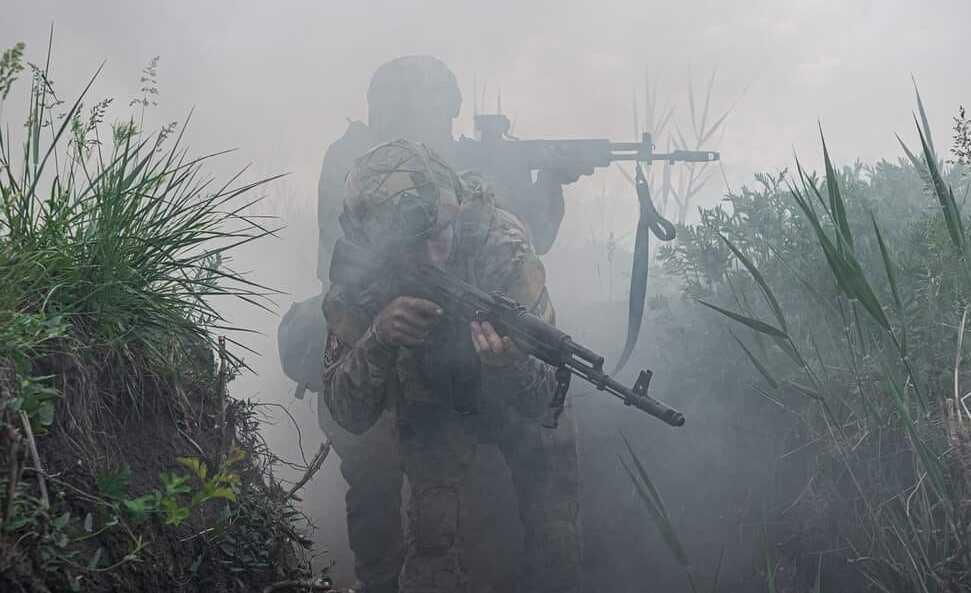
Leaked intel, late aid deliveries: RUSI report exposes flaws in Ukraine’s 2023 counteroffensive
Claim 2: "Zelenskyy and other officials wouldn't commit the resources"
Verdict: Misleading.
Zelenskyy didn't withhold resources. He redirected them.
According to the NYT investigation, at a late May 2023 meeting of the Supreme Commander's Staff, Syrskyi demanded a full-scale attack to retake Bakhmut, followed by an advance into Luhansk Oblast. He wanted more men and ammunition.

After the meeting, Zelenskyy ordered Western-supplied ammunition be split evenly between Tarnavskyi and Syrskyi. Syrskyi received five of the 12 newly trained brigades. Tarnavskyi was left with seven for the Melitopol axis—the operation's main effort.
The "single fist" became two half-fists. Not because resources didn't exist, but because Zelenskyy sided with Syrskyi over Zaluzhnyi on where to send them.
Bakhmut had become a political symbol. Syrskyi—who had commanded the successful 2022 Kharkiv counteroffensive—argued he could deliver another breakthrough.
The Prigozhin mutiny, when Wagner's commander marched on Moscow instead of Ukraine, inflated Syrskyi's confidence that his strategy was right.
Lt. Gen. Antonio Aguto, who commanded the US-led Security Assistance Group for Ukraine in Wiesbaden, Germany, then pressed to divert forces to the lightly-guarded Melitopol. Syrskyi refused. "I was right, Aguto. You were wrong," an American official recalls Syrskyi saying. "We're going to get to Luhansk."
He couldn't. Syrskyi never recaptured Bakhmut, never advanced toward Luhansk.
The brigades and ammunition he received produced no strategic result. But the Melitopol axis—starved of the forces it was designed around—also stalled.
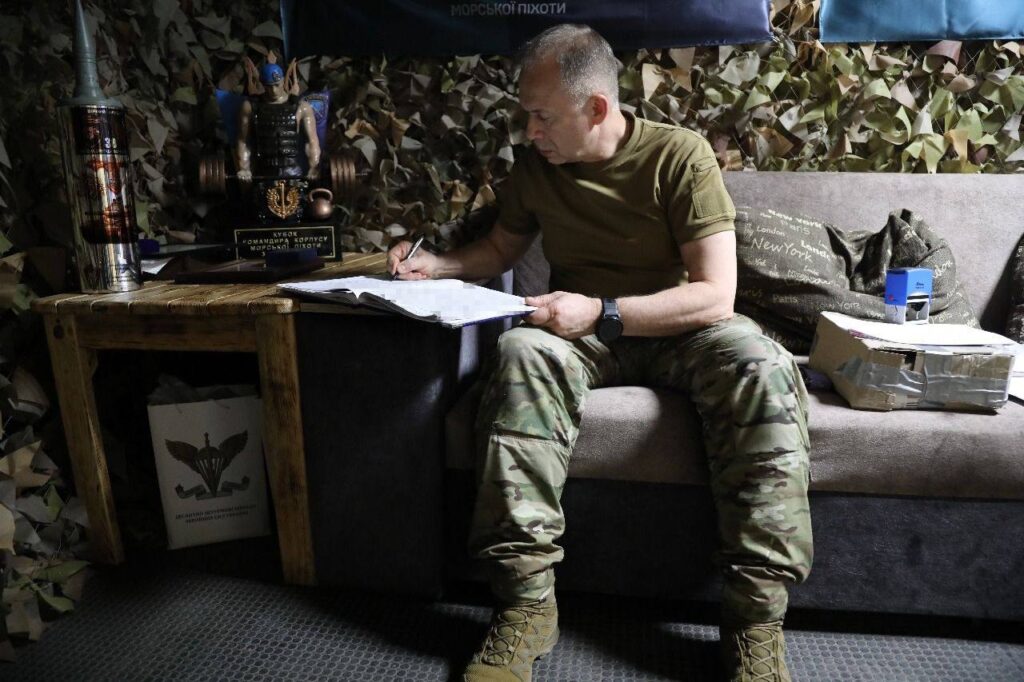
This is a legitimate grievance. Zelenskyy made a strategic decision that weakened the main effort. But framing it as "wouldn't commit resources" suggests negligence or indifference.
The record shows a strategic disagreement—and Zelenskyy made the wrong call by choosing Bakhmut over concentration.
There were further complications.
The damage from the Bakhmut operation went deeper than the brigade count. Syrskyi was supposed to contribute four battle-hardened brigades for Western training in Europe, alongside four brigades of new recruits. Instead, he kept his experienced troops for Bakhmut.
"Take all new guys" for Melitopol, he told Aguto, according to the NYT. The recruits who arrived in Germany were mostly in their 40s and 50s. "All we kept thinking was, This is not great," a senior US official recalled.
This is why 70% of the troops in the counteroffensive's lead brigades entered battle with no combat experience—not because Ukraine lacked veterans, but because the veterans were in Bakhmut.
Major General Oleksandr Komarenko, who served as Chief of Operations at the Khortytsia group during the counteroffensive, confirmed to RBC-Ukraine in March 2026 that the Bakhmut operation was part of Zaluzhnyi's own concept—approved by the Supreme Commander in early May. Khortytsia's task was to conduct offensive actions at Bakhmut "to mislead the enemy and contain Russian forces."
Syrskyi escalated the scope of that operation beyond what Zaluzhnyi planned—but the Bakhmut axis was in Zaluzhnyi's design from the start.

When Syrskyi responded to the NYT investigation in April 2025, he disputed its account entirely: "Every officer and general who took part in the fighting knows that this is not true at all." He said he had only two brigades at Bakhmut, not five, and that "we simply did not have enough assets and personnel."
The Americans weren't told about the reallocation. US intelligence observed troops and ammunition moving in directions inconsistent with the agreed plan. At a hastily arranged meeting on the Polish border, Zaluzhnyi admitted to US Generals Christopher Cavoli and Antonio Aguto that the Ukrainians had diverged from the plan—to the Americans' dismay.
Claim 3: "Forces were dispersed, diluting striking power"
Verdict: Partially correct—but Zaluzhnyi was part of the dispersal.
The Bakhmut split was Zelenskyy's decision. But the broader dispersal had multiple authors.
The Washington Post investigation documented that the US consistently pushed for a single concentrated southern axis toward the Sea of Azov. Ukraine—under Zaluzhnyi's command—chose to attack along three axes instead, believing this would force Russia to stretch its troops.
The Americans grew "increasingly frustrated" with this dispersal. US military officials were "highly critical of Ukraine spreading its forces across three attack axes instead of massing them along the southern thrust they viewed as most strategic."
This operational decision—three axes instead of one—was Zaluzhnyi's, not Zelenskyy's. The president split brigades between Melitopol and Bakhmut. The commander-in-chief spread the remaining forces across multiple fronts.
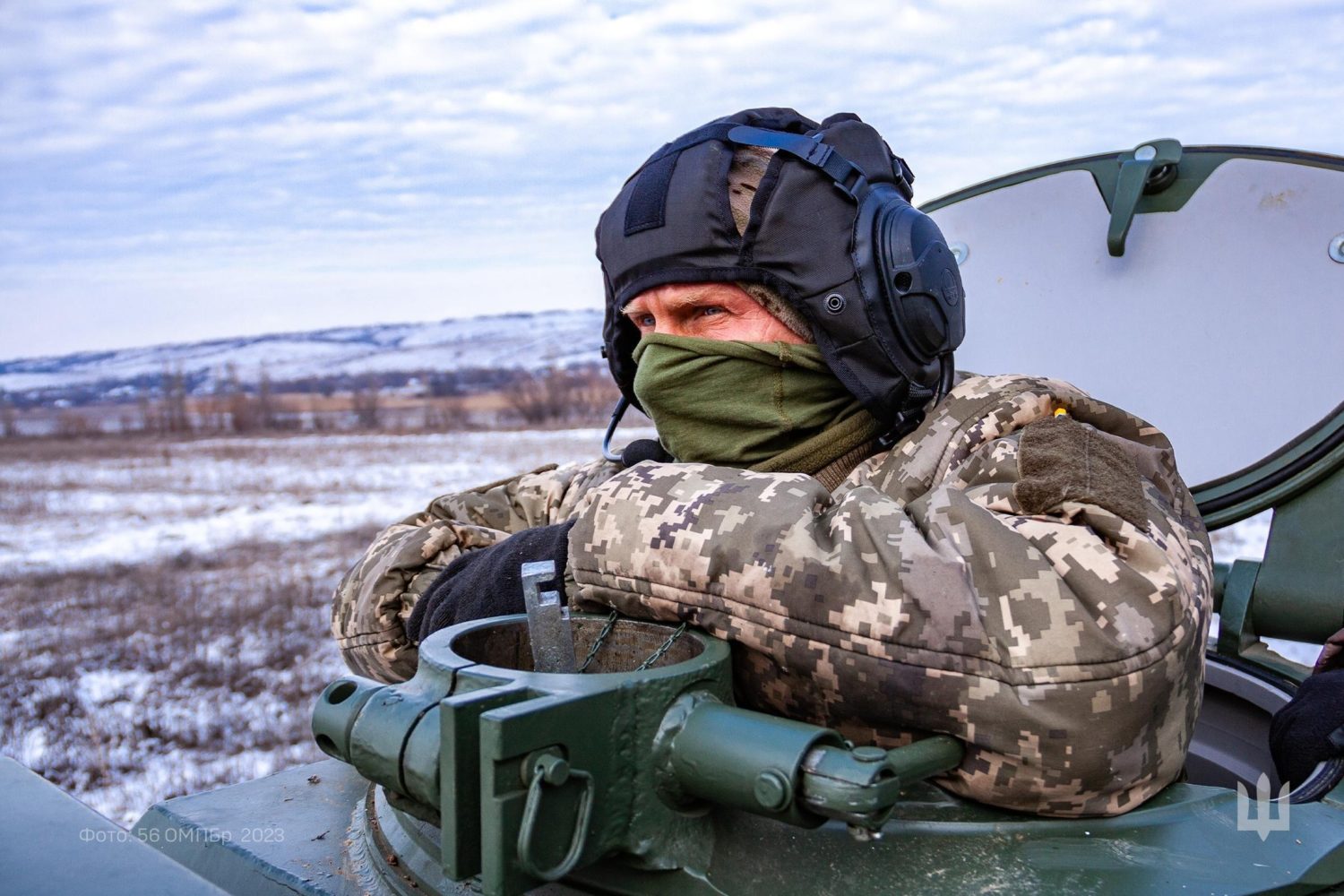
Later, when the Americans proposed a last-ditch option—sending marines under General Sodol to Robotyne to attempt a breakthrough—Zaluzhnyi rejected it. Instead, he ordered the marines to open a new front in Kherson, crossing the Dnipro River toward Crimea. The Americans explicitly warned this operation was "doomed to fail."
The marines made it across but ran out of men and ammunition. Thousands died at Krynky. This was Zaluzhnyi's decision.
Claim 4 (implicit): With full resources, the plan would have succeeded
Verdict: Unsupported by the evidence.
This is the claim Zaluzhnyi doesn't make explicitly but implies throughout the interview. If only the forces hadn't been dispersed, the breakthrough would have worked.
The contemporaneous evidence points in the opposite direction.
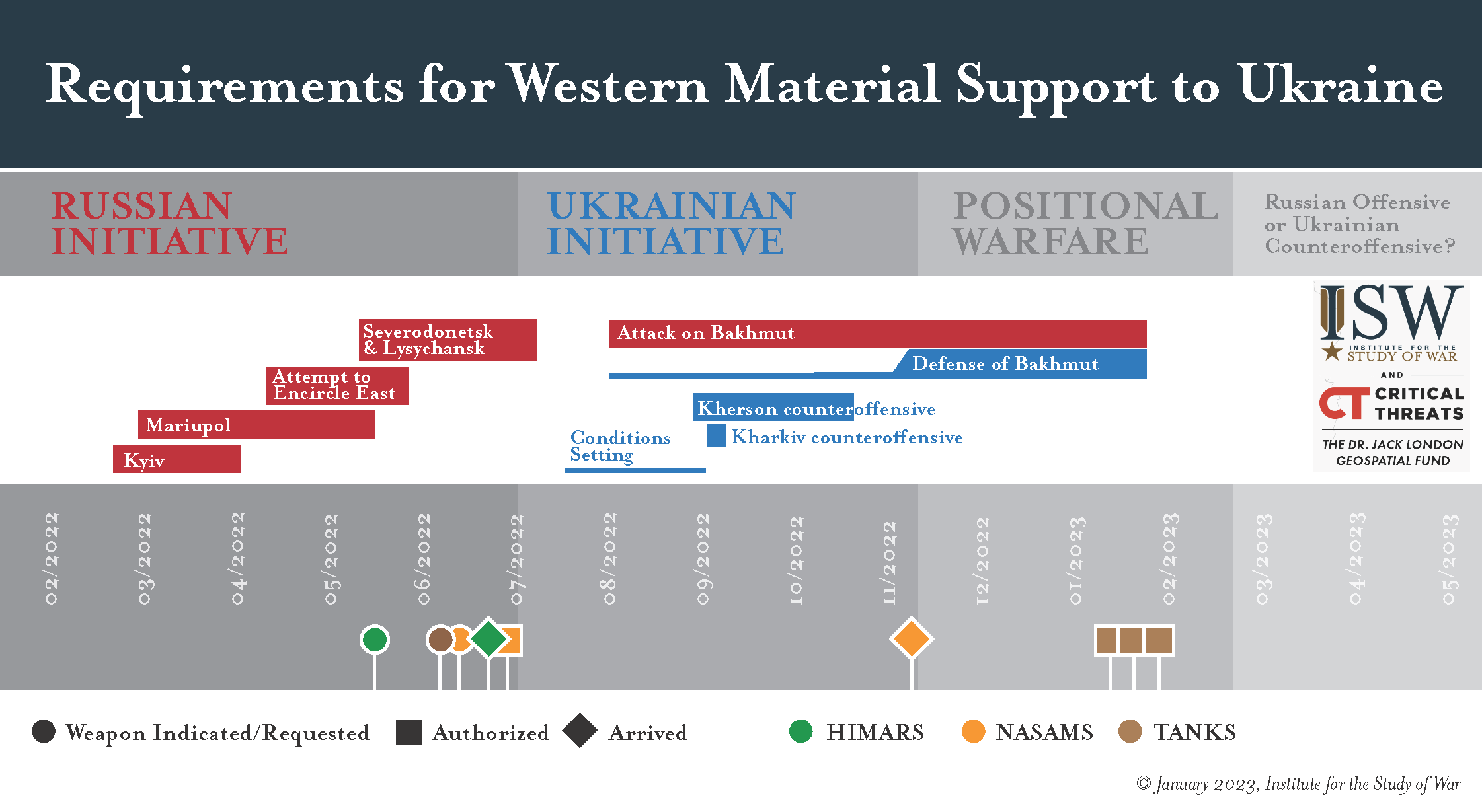
After two sweeping counteroffensives that liberated parts of Kherson and Kharkiv oblasts in the fall of 2022, Ukraine's progress had ground to a halt. Western aid delays limited Ukraine's ability to capitalize on the victories, warned the Institute for the Study of War. The stalled front may have created a snowball effect, leading Western officials to deprioritize deliveries in anticipation of a winter lull.
The Russians regained the initiative, attacked Bakhmut, and started constructing the Surovikin line. By the time Ukraine was ready to attack in June 2023, Russia had constructed the most extensive defensive fortifications in Europe since World War II—nearly 2,000 kilometers of trenches, minefields, dragon's teeth, and prepared firing positions.
Trending Now
By June 2023, Russia had doubled its forces in Ukraine to approximately 420,000 troops, up from roughly 200,000 in autumn 2022.
Not everyone on the American side believed the offensive should proceed at all. Lt. Gen. Christopher Donahue, who had built the Wiesbaden operational partnership from scratch, argued that the Ukrainians should spend the next year building and training new brigades before attempting Melitopol, NYT reported.
He pointed to the Russian trenches being dug and to the Ukrainians' halting advance to the Dnipro weeks before. Lt. Gen. Mykhaylo Zabrodskyi, Zaluzhnyi's planning deputy and chief liaison with Wiesbaden, told Zaluzhnyi that Donahue was right. "Nobody liked Donahue's recommendations, except me," Zabrodskyi said.
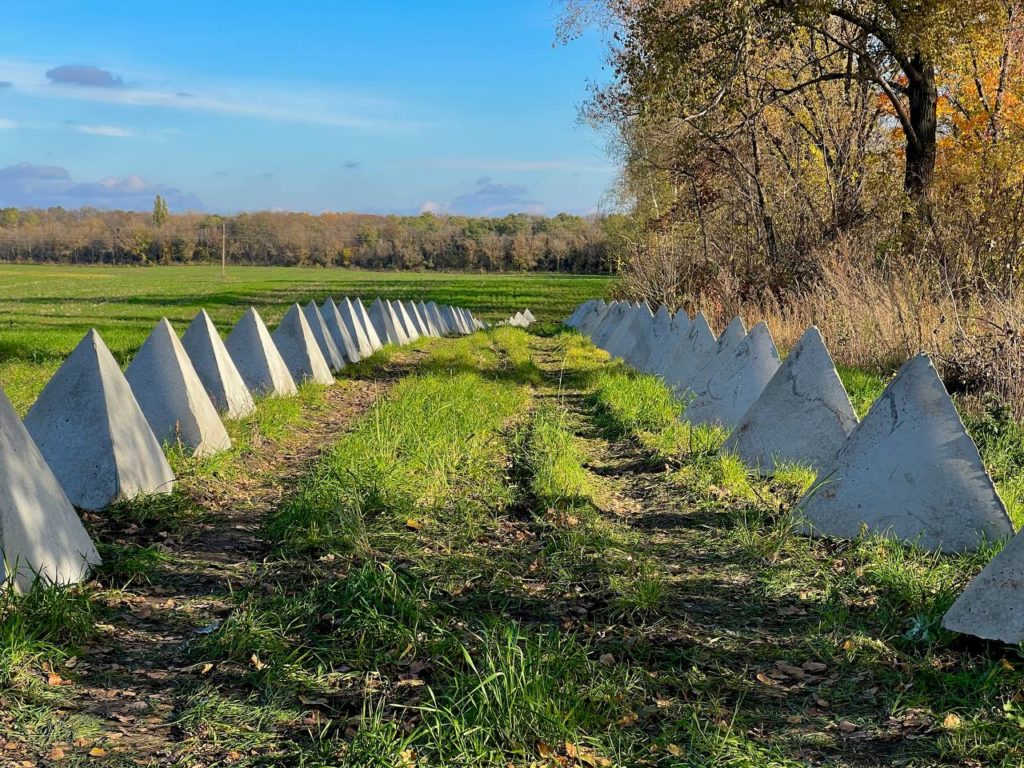
RUSI's report found that Ukraine's international partners "provided equipment in a manner that was completely inconsistent with NATO doctrine, such that Ukraine could not concentrate a critical mass of the relevant capabilities at the decisive point."
Demining vehicles were far below the doctrinal minimum. Equipment arrived late, sometimes different from what troops had trained on, frequently without proper manuals or spare parts. F-16s were never delivered for the offensive. Ukraine's aging fighter jet fleet could not cover the operations, and Ukrainian officials accused the West of effectively asking to sacrifice soliders in frontal attacks without the air power that no NATO country would go without.
ATACMS missiles—needed to counter Russian helicopter attacks devastating Ukrainian armor—were only approved in October, months after the offensive started.
70% of Ukraine's key mechanized units had zero combat experience before the offensive began. Even the US wargames' best-case scenario projected reaching the Sea of Azov only in 60 to 90 days—with everything going perfectly.
Writing for Euromaidan Press in November 2023—while the offensive was still grinding forward—analyst Mykola Bielieskov identified the core problem: Ukraine faced a "strategic zugzwang." Politically, it had to attack—staying defensive would trigger Western pressure to freeze the front lines. Militarily, the offensive-defensive balance structurally favored defense for both sides.
The West had set the trap by providing offensive weapons, then expecting results that required three times the force.
In March 2026, Oleh Semenenenko, a military scientist and deputy head of the Ukrainian Armed Forces' Central Research Institute, published a detailed rebuttal to Zaluzhnyi's claims. His assessment: even three to four additional brigades on the Zaporizhzhia axis would not have achieved the nearest tactical objectives of the counteroffensive, let alone an operational breakthrough.
"Any modeling of combat operations under the scenario that existed at the time shows that introducing an additional 3-4 brigades on the Zaporizhzhia axis would not have facilitated achieving even the nearest tactical goals," he wrote.
A US Army analysis published by the Modern War Institute at West Point in February 2025 reached a similar conclusion: the tactical dilemma Ukraine faced "was a combined arms nightmare that required droves of platforms, resources, and time" and "would challenge any Western force."
Claim 5: SBU agents raided his office in September 2022 as deliberate intimidation
Verdict: Disputed. Both accounts are on the record.
Zaluzhnyi says dozens of SBU agents arrived at his Kyiv office in mid-September 2022 while British military officers were present. He says they came with a search warrant obtained two days earlier that listed the address as a strip club—a business that had closed before the full-scale invasion. He called then-chief of staff Andriy Yermak and warned: "I will repel this attack, because I know how to fight."
The SBU provided a different account: during that period, the agency had been conducting searches at numerous addresses as part of a criminal investigation into organized crime. One of those addresses had recently been used as a concealed backup command post for Zaluzhnyi. The SBU insisted it conducted no searches or investigative actions there, and that SBU chief Vasyl Maliuk spoke with Zaluzhnyi "immediately and personally" to resolve the matter.
No independent investigation has verified either version. Both are on the record.
What Zaluzhnyi leaves out
The AP interview is notably selective. Several significant elements of the counteroffensive story are absent:
He halted mechanized assaults after four days. After losing more than 20 Bradley fighting vehicles and six Leopard tanks in the opening days around Robotyne, Zaluzhnyi ordered his forces to stop armored thrusts and switch to infantry-based advances. The Americans considered this premature.
Whether Zaluzhnyi was right to protect his remaining Western armor or wrong to abandon the operational concept is a legitimate debate. But it was his call, not Zelenskyy's.

The Robotyne hilltop. When Ukrainian forces approached Robotyne in late August, American intelligence showed Russians retreating under artillery fire. Aguto urged Tarnavskyi—Zaluzhnyi's southern commander—to take the ground immediately.
But Tarnavskyi spotted a group of Russians on a hilltop. Instead of firing and advancing simultaneously, Tarnavskyi sent reconnaissance drones to verify the intelligence, then fired, then sent drones again to confirm the strike. Only then did he order his forces into Robotyne. The back-and-forth cost 24 to 48 hours.
In that time, south of Robotyne, the Russians built new barriers, laid mines, and sent reinforcements. "A damned platoon stopped the counteroffensive," one American officer remarked. This was a decision made under Zaluzhnyi's command.
The Kherson river crossing. As noted above, Zaluzhnyi overruled American recommendations and ordered marines across the Dnipro to open a new front—an operation the US warned would fail and that cost thousands of lives at Krynky.
The narrative has shifted.
In November 2023, Zaluzhnyi publicly explained the counteroffensive's limited results as a "technological stalemate"—telling The Economist that "the level of our technological development today" had "put both us and our enemies in a stupor." He did not blame Zelenskyy.
By September 2025, writing in Dzerkalo Tyzhnia, his explanation had migrated to "insufficiency of assets and personnel"—still no direct Zelenskyy blame.
In February 2026, speaking to the Associated Press, the explanation became: Zelenskyy didn't commit resources. The framing changed as the political context changed.
Since the AP interview, Zaluzhnyi has spoken at Chatham House on the eve of the war's fourth anniversary about the "robotization" of future warfare, warned in The Telegraph that a US ground operation in Iran would end in catastrophe, and appeared in Monocle as a future presidential contender—a media rhythm that everyone in Kyiv's political circles reads as campaigning.
Why this matters now
The 2023 counteroffensive debate isn't history. It's the single decision point that determined the territorial map Ukraine is now being asked to accept.
If the counteroffensive had succeeded—if Ukrainian forces had reached the Sea of Azov and cut Russia's land corridor to Crimea—the Trump-led negotiations would look entirely different. The territorial concessions being discussed would be different. The pressure on Ukraine would be different.
Instead, every village Ukraine briefly recaptured during those months has since been retaken by Russia. All 14 of them, by May 2025. The front lines are worse than before the offensive began.
Zaluzhnyi blames Zelenskyy. Zelenskyy's circle points at Syrskyi. Syrskyi says he had two brigades, not five. The General Staff says responsibility was "collective." Everyone points sideways.
Even Zabrodskyi, Zaluzhnyi's own planning deputy, acknowledged the core problem. "The real reason why we were not successful," he told the NYT, "was because an improper number of forces were assigned to execute the plan."
On this, Zaluzhnyi is not wrong. But the question of who assigned them improperly—and why—has more than one answer.
But the biggest contributor to this failure isn't in the room for the blame game. The West ran eight wargames with Ukrainian officers. The Pentagon pushed for a spring launch. Western partners then delivered equipment late, in insufficient quantities, incompatible with training, without air cover, and with intelligence leaks that revealed the entire plan to Moscow before it began—in a manner that RUSI concluded was "completely inconsistent with NATO doctrine."
No NATO military would attempt a ground offensive against fortified positions without air superiority. The West planned one for Ukraine, then withheld the jets.
And now that same West, in the face of the USA, is at the table where "peace talks" are being conducted, pressing Ukraine to accept the territorial consequences of an offensive it helped design and failed to resource.
The debate between two Ukrainian leaders is legitimate. Democracies argue about military decisions—the Americans spent decades relitigating Vietnam and Iraq.
But this particular debate serves everyone's interests except the one that matters most: accountability for the people who set the conditions for failure and are now deciding what Ukraine pays for it.