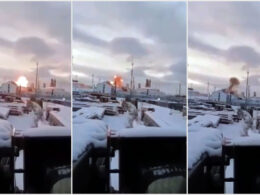

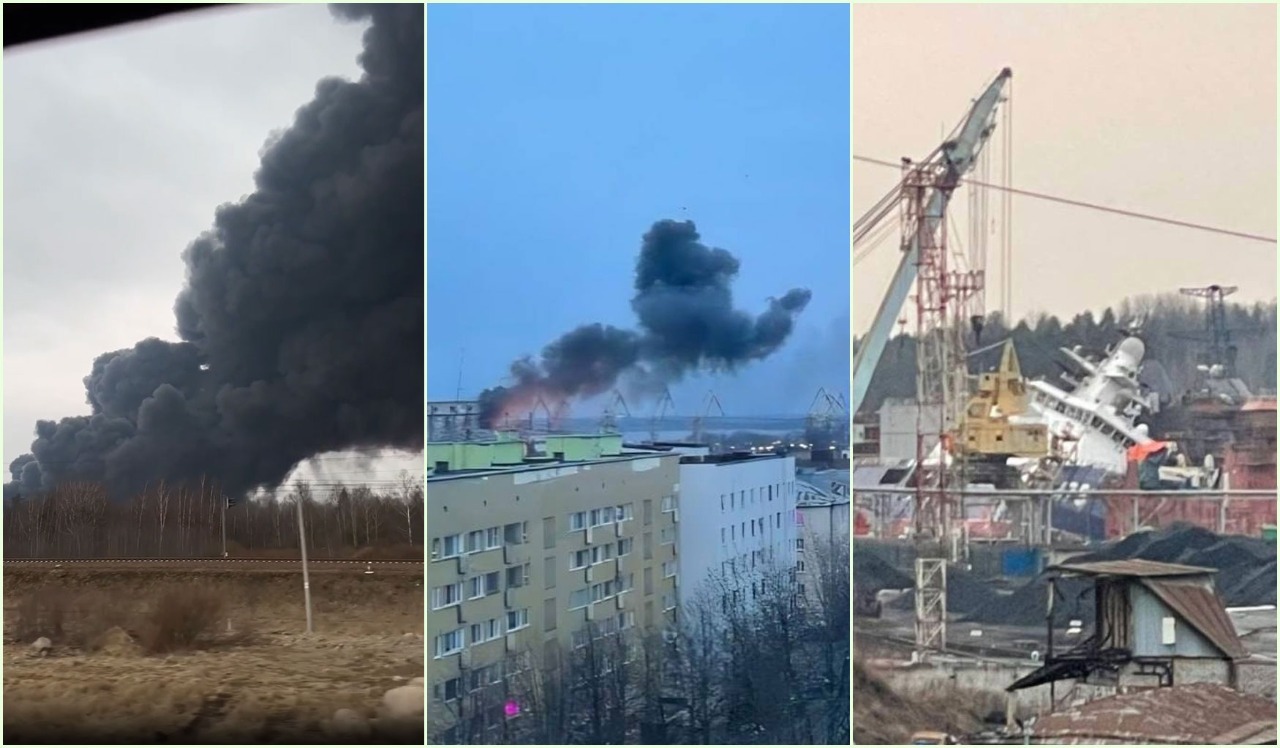
Ukrainian long-range strike drones hit the Gazprom Ust-Luga gas processing complex in Russia's Leningrad Oblast overnight on 24–25 March — the first assault on the facility in 2026. In the same region, a ship at the Vyborg Shipbuilding Plant reportedly also sustained damage in the same overnight campaign.
Strike on one of the largest gas processing plants on the continent
The attack fell on the night of 24–25 March. Local residents heard about a dozen explosions and saw a strong glow light the sky. By morning, a black column of smoke rose over the facility.
Leningrad Oblast Governor Alexander Drozdenko claimed air defense forces destroyed 56 Ukrainian drones over the region. He described the resulting blaze as a minor fire being brought under control.
The complex sits about 900–1,000 km from Ukraine's state border, near the Estonian border on the Gulf of Finland.
The target: NOVATEK's gas condensate facility
Geoint analysis by Dnipro Osint identified the NOVATEK-Ust-Luga condensate processing facility as the likely specific target within the port. The plant processes stable gas condensate — a byproduct of oil and gas extraction — and ships petroleum products to foreign markets.
This marks at least the third strike on the complex since early 2024. In January 2024, Ukraine's Security Service damaged gas condensate storage tanks, stopping the terminal's technological process. Ukrainian drones struck the complex again in August 2025, setting off a large-scale fire.
Ship reportedly damaged at Vyborg shipyard
The same overnight campaign reached Vyborg — located across the Gulf of Finland from Ust-Luga, over 100 km away. Local residents reported a ship in the port had sustained damage, the Supernova+ Telegram channel wrote. A follow-up update with a photo placed the stricken vessel — visibly listed at at least 35 degrees — at the Vyborg Shipbuilding Plant.

Third Russian energy target in Baltics in three days
The Ust-Luga and Vyborg strikes followed a Ukrainian drone attack on Primorsk two nights earlier. Ukrainian drones hit Russia's largest Baltic oil export terminal on the night of 22–23 March, igniting a fuel depot and forcing evacuations.
Read also
-
Rosneft’s classified document recommended smoke screens against GPS-guided drones — and the same document explains why that’s useless
-
Fires tear through one of southern Russia’s biggest oil hubs after drone attack in Krasnodar Krai
-
“Air defense zoo”: Ukraine’s drones took out Russian Pantsir, Tor, Buk, and S-300V in one night over occupied south