
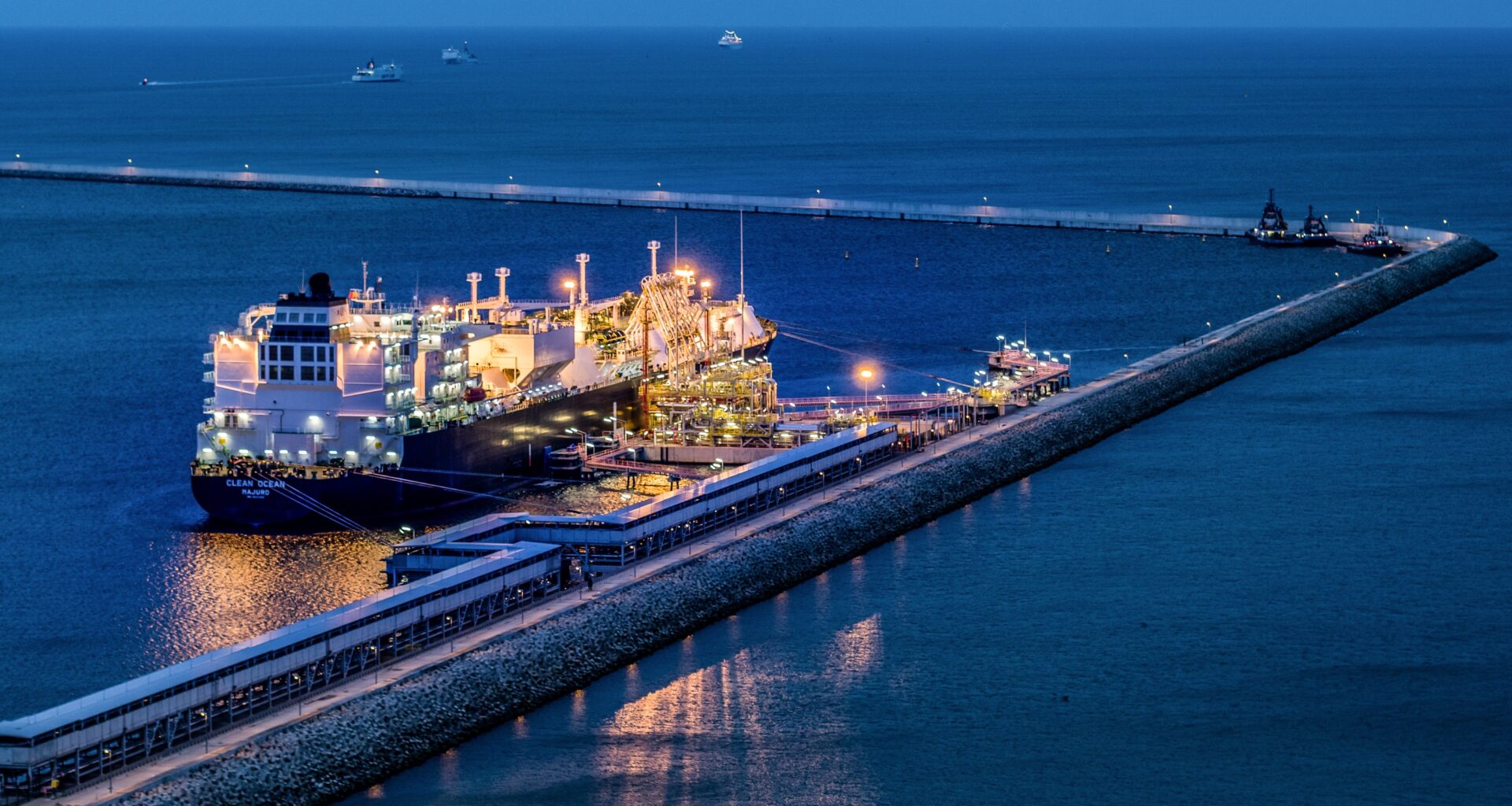

The last tankers that loaded gas in Qatar before the war are arriving at the port this week. When they empty, the cushion that kept prices from fully reflecting the Hormuz closure disappears. Pakistan’s gas import terminals will stop receiving deliveries by the end of this month.
“With the geopolitical situation we see now, I believe the debate will be revived.”
Terje Aasland told Reuters on 3 March that Europe may have to reopen debate on its ban on Russian gas to cope with what follows. “With the geopolitical situation we see now, I believe the debate will be revived,” Norway’s energy minister said.
That ban—adopted by the European Parliament in December 2025, with 500 of its 720 members voting in favor after years of Ukrainian lobbying—would phase out all Russian gas imports by 2027, cutting off a revenue stream that flows directly into the Kremlin’s war budget.

Europe’s gas benchmark, the Dutch TTF, already stands at €60 ($69) per megawatt-hour—double its level before the fighting started. That doubling has happened while the pre-war tankers were still at sea, softening the blow. According to an analysis by shipbroker Affinity, the last of those ships will dock within ten days.
Why gas prices spike
El País reports that Qatar alone produces a fifth of the world’s liquefied natural gas—gas chilled to liquid form so it can be loaded onto specialized tankers and shipped anywhere, rather than flowing through a fixed pipeline.
93% of Qatar’s exports and 96% of the UAE’s pass exclusively through the Strait of Hormuz.
The International Energy Agency confirms there is no alternative route out of the Gulf: 93% of Qatar’s exports and 96% of the UAE’s pass exclusively through the Strait of Hormuz.
An Iranian missile strike this month damaged 17% of Qatar’s capacity at Ras Laffan, the world’s largest LNG facility, with CEO Saad al-Kaabi saying repairs will take three to five years.
Three mechanisms then compound each other, driving prices up sharply:
- First, a fifth of global supply has simply vanished—fewer cargoes are chasing the same demand, so prices rise.
- Second, most LNG contracts contain what El País describes as “destination flexibility clauses”: the company shipping the cargo can legally redirect it to whoever offers more money, even if it was already contracted elsewhere. That turns every tanker still at sea into a live auction, with Europe, Japan, South Korea, and Pakistan all bidding against each other simultaneously.
- Third, unlike oil—which can be rerouted around a chokepoint by sending tankers on longer voyages—gas infrastructure is fixed. Importing gas requires purpose-built terminals to receive it, purpose-built terminals at the other end to liquefy and load it, and specialized tankers to move it in between. None of that can be built in weeks or months. You cannot simply order gas from a new country: the pipes and ports either exist, or they don’t.
Pakistan called everyone. No one answered.
Naveed Ahmed, an asset manager at Chevron in Australia, tracked the disruption on LinkedIn. Before the war, Pakistan relied on Qatar for almost 99% of its LNG imports.
Anticipating an oversupply, it had negotiated to redirect 35 shipments away from itself—24 from QatarEnergy, 11 from Italy’s ENI—because it didn’t need them. When the war started, it asked ENI to send some back. The answer was no.
Asian gas prices have more than doubled since the conflict began.
Pakistan’s state buyer then called traders and suppliers across Europe, Oman, the United States, Azerbaijan, and Africa. Every offer came back at a price it could not pay.
Asian gas prices have more than doubled since the conflict began. Both of Pakistan’s import terminals will stop receiving gas by the end of this month. Bangladesh and Taiwan are in similar straits, if less acute.

How high and how fast
Trending Now
European gas reserves stand at 28.48% of capacity—well below where they were at this point in previous years—according to Gas Infrastructure Europe, with Bruegel’s tracker confirming the figure at around 29%. The EU’s agreed target before winter is 90%. “Europe has to outbid Asia to secure its supply,” Arend Kapteyn, chief economist at UBS, told El País.
Jamie Stewart, head of energy content at commodity intelligence firm ICIS, calculated that a three-month Hormuz closure could drive TTF above €90 ($104) per megawatt-hour. A disruption of more than two months “would likely lift European natural gas prices to more than €100 ($115) per megawatt-hour,” Goldman Sachs Research warned in early March.
The only real solution in the short term is reduced demand: rationing, efficiency measures, or four-day working weeks.
In 2022, when Russia cut pipeline gas to Europe after its invasion of Ukraine, prices peaked at €345 ($397) per megawatt-hour and triggered a cost-of-living crisis across the continent.
Warren Patterson, head of commodity strategy at ING, explained to El País that while US production capacity will grow by 93 billion cubic meters annually through 2027—equivalent to roughly a quarter of the EU’s total annual gas consumption—this is still short of the 110 billion cubic meters currently cut off from the Gulf.
The only real solution in the short term, he said, is reduced demand: rationing, efficiency measures, or four-day working weeks, as some Asian economies have already imposed.
45 million people and Ukraine’s spring planting
The Fertilizer Institute points out that Gulf countries supply—directly or indirectly—approximately 49% of global urea exports, 30% of ammonia, and nearly half of global sulfur trade.
Natural gas is the primary raw material for ammonia, which is the basis for all nitrogen fertilizers. When Gulf gas stops, fertilizer production falls, and food prices rise everywhere. The UN World Food Programme estimates that around 45 million people—primarily in Africa and Asia—face acute hunger from the disruption.
The National Bank of Ukraine projects Ukrainian importers will overpay $140 million for fertilizers in 2026.
Ukraine buys its urea from Azerbaijan and Turkmenistan, not the Gulf—but when Gulf supply falls short, prices rise everywhere. Since the conflict began, urea is up 32% to $683 per ton; ammonia up 8.7% to $750 per ton.
Two of Ukraine’s six major ammonia plants are currently operating, and the country imports more than 60% of its nitrogen fertilizers. The National Bank of Ukraine projects Ukrainian importers will overpay $140 million for fertilizers in 2026 as a direct result.

Fertilizers account for up to 30% of grain production costs, Dmytro Hordiichuk, head of the Infoindustria project, told Ekonomichna Pravda. Yevhen Barkov, coordinator of the fertilizer market operators committee at the Ukrainian Agribusiness Club (UKAB), told the same outlet that grain and corn production costs will rise by 7%, and sunflower costs by 5%.
Farmers who bought supplies before the conflict will absorb this season at the old price. Those who didn’t will pay the new one.
Moscow’s position
Russia’s oil revenues were at their worst quarter since the pandemic in the months before the Iran conflict; the energy price surge has partially reversed that pressure. Russia is the world’s largest fertilizer exporter and has maintained gas export capacity to Asia.
EU countries that imposed high tariffs on Russian fertilizers will face steeper price rises than those that didn’t.
India is already in negotiations to increase fertilizer purchases from Russia and Belarus. Barkov warns that EU countries that imposed high tariffs on Russian fertilizers will face steeper price rises than those that didn’t—and the bloc may revisit those tariffs if market pressure intensifies.
Ukraine spent three years persuading Europe to cut the gas revenues that fund the war against it. The war that may undo that work is being fought thousands of kilometers away.


