

On 10 February, a Shahed drone hit a house in Bohodukhiv, Kharkiv Oblast. A father and his three toddlers died. The family had evacuated from another town just days earlier to escape Russian shelling. Three days before that, in the same town, a drone killed a woman and her 10-year-old son.
Russia's drone war against Ukrainian civilians is accelerating. Commander-in-Chief Oleksandr Syrskyi has warned that Moscow aims to scale long-range drone production to 1,000 per day in 2026. Nightly barrages have already reached 810 drones in a single wave. Starlink-equipped Shaheds struck a passenger train in Kharkiv Oblast on 27 January, killing six people—their remains so badly damaged that DNA forensics were needed to identify them.
Since October 2025, Russia has struck 11 hydroelectric plants, 45 of the largest thermal power plants, and 151 electrical substations, leaving millions without heating, electricity, or running water as temperatures drop to –20°C.
The missiles and drones destroying Ukraine's infrastructure are assembled with components that pass through gaps in the EU's own sanctions regime—gaps Brussels has had the tools to close since June 2023.
The loopholes cover microelectronics as well as critical raw materials. For example, according to the Economic Security Council of Ukraine's research, in 2024, Russia imported at least 300 tonnes of sanctioned antimony trioxide from Belgium worth over €4.5 million through Türkiye, Belarus, and Uzbekistan. The substance is used in detonators for ammunition.
A mechanism that exists on paper

In the 11th sanctions package, the EU formally introduced a mechanism to ban the export of sensitive goods to specific third countries that systematically re-export them to Russia. It was the kind of instrument sanctions advocates had long demanded: direct, enforceable, with real trade consequences.
To this day, both the list of goods and the list of countries remain empty.
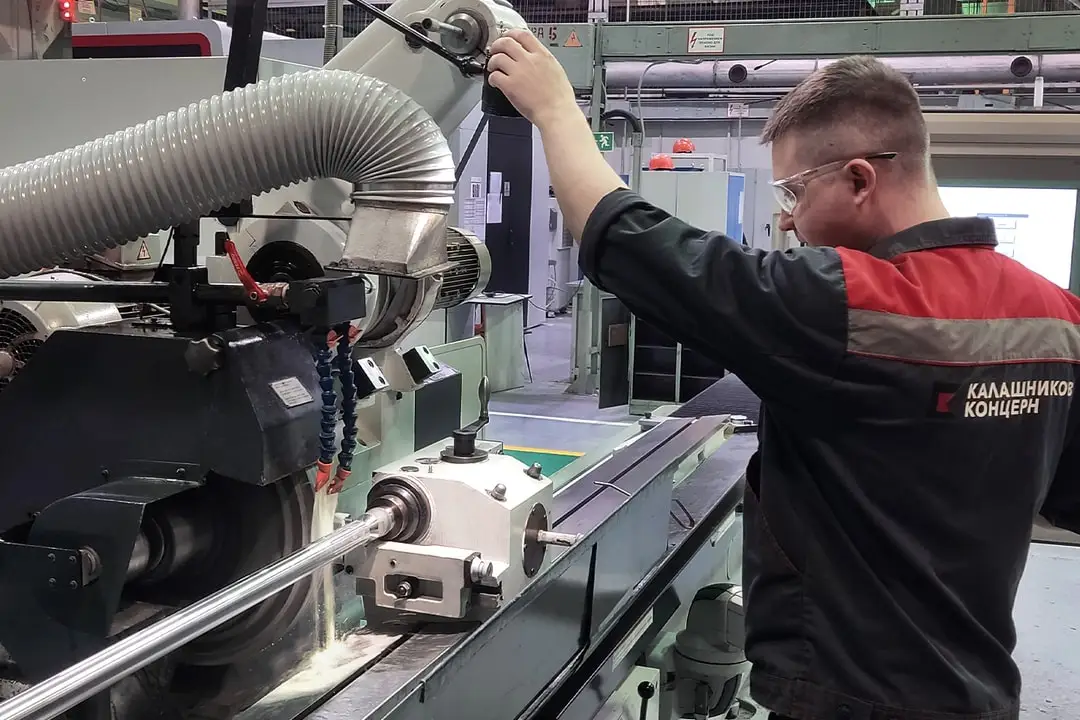
President von der Leyen announced that in the 20th sanctions package, the EU will finally activate this mechanism. But the ban will apply only to the export of CNC machines—the precision manufacturing tools without which Russia cannot produce missiles, drones, or artillery at scale—to Kyrgyzstan.
Kyrgyzstan is not the biggest problem here. According to the KSE Institute, in 2023, Kyrgyzstan supplied just 1.1% of battlefield goods to Russia, while China and Hong Kong sold 69% of such goods.
The goods list already exists
The Common High Priority Items List (CHPL)—a catalogue of 50 product codes covering microelectronics, sensors, navigation equipment, and other components found in Russian weapons on the battlefield—was developed by the G7 specifically to guide engagement with third countries on export controls. It provides a ready-made solution.
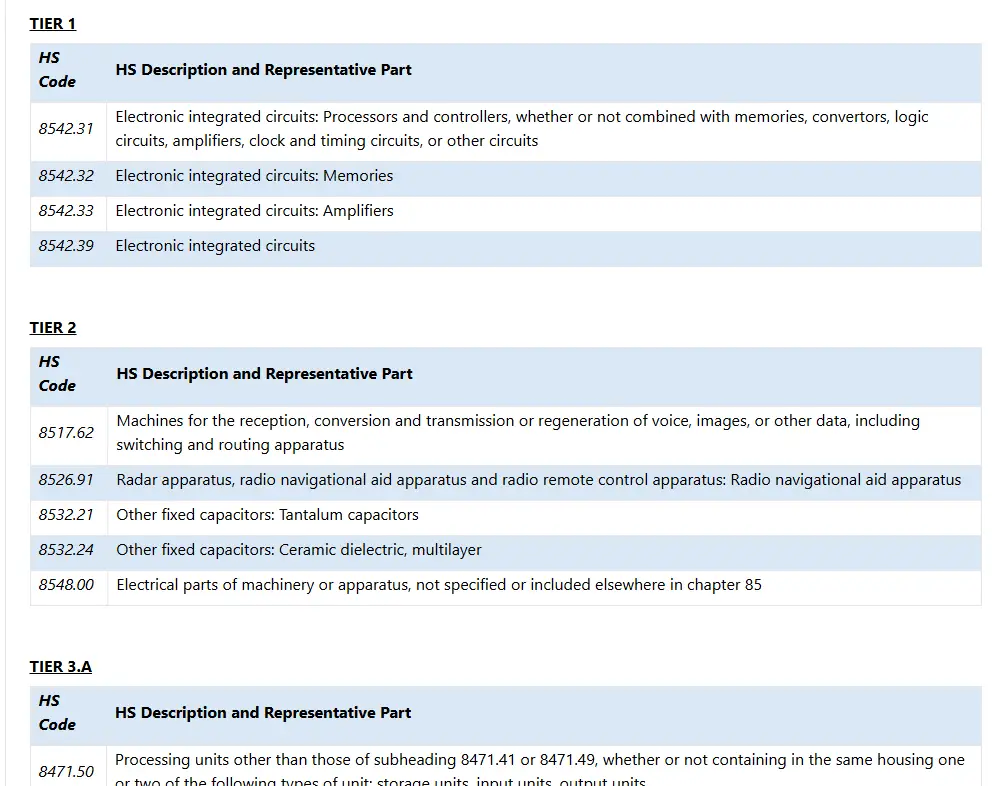
The EU has repeatedly urged third states not to re-export these items to Russia. But the effectiveness of such diplomacy has always depended on whether Brussels had real "sticks" to enforce compliance.
Restricting exports of at least CHPL-listed goods to countries that systematically re-export them to Russia would be a logical and long-overdue application of this framework.
By 2026, the CHPL in its current form no longer works as intended and requires both updating and enforcement. Without consequences, lists and dialogues remain symbolic gestures rather than instruments of pressure.
For example, there are no strategic raw materials in the list, while this group of products is extremely important for the military-industrial complex.
The real evasion hubs aren't on the list
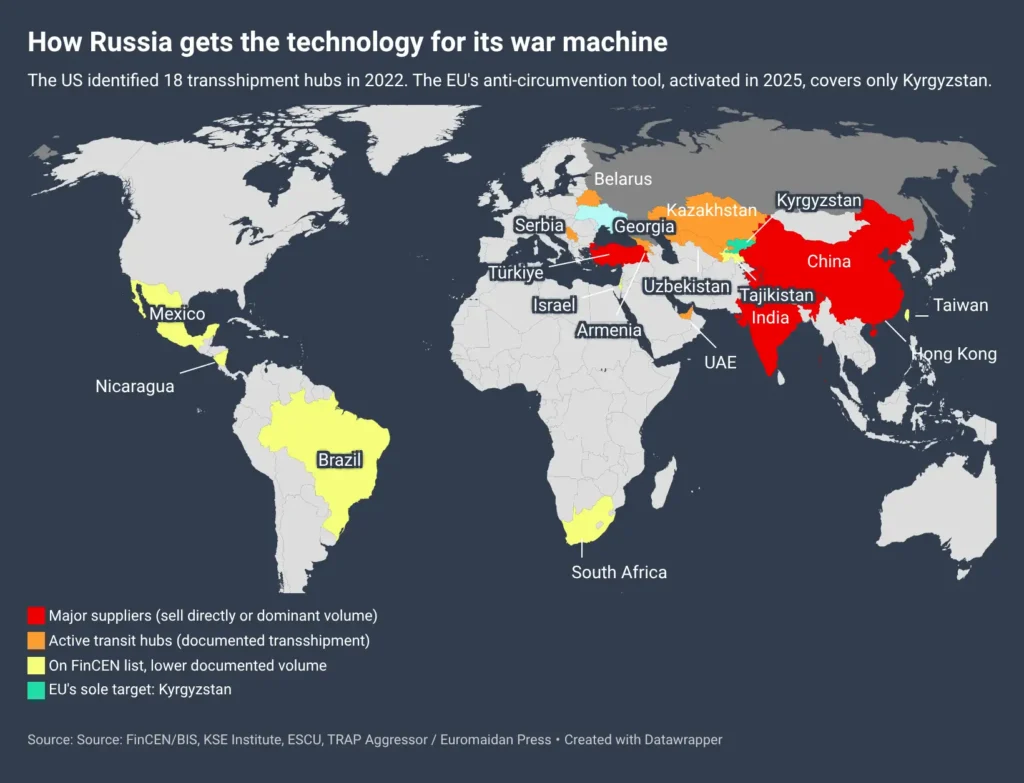
If you look at the main third-country hubs supplying sanctioned goods to Russia, China and Türkiye dominate the picture—not Kyrgyzstan.
Between January 2023 and July 2024, Russia imported over 22,000 CNC machines, components, and consumables worth $18.2 billion, according to the Economic Security Council of Ukraine. China supplied 62% of those machines. Italy and Germany—both EU member states—still accounted for over 10,000 machines worth $405 million.

Supplies of Western CNC machines to Russia through these countries have even attracted the interest of European prosecutors. In 2025, German machine tool manufacturer Spinner was publicly accused of sending over 20 high-precision machine tools to Russia through Türkiye, China, and Uzbekistan. More than 140 investigators and eight prosecutors were involved in searches of offices in Germany and Bulgaria. The investigation is ongoing.
Hong Kong is another critical route. The EU maintains separate agreements with Hong Kong on customs cooperation. In 2023, the EU was Hong Kong's third-largest trading partner.
The trade data is damning. From January 2024 to February 2025, Russia imported over $13.6 million in CHPL-listed goods via Hong Kong that were originally manufactured in EU member states: the Czech Republic ($9.4mn), Germany ($2.7mn), France ($657,000), Finland ($235,000), Latvia ($166,000), and Italy ($124,000), plus Switzerland ($378,000).
Georgia exported dual-use items worth $10.7 million to Russia, Armenia, Azerbaijan, and Central Asia in 2023 and 2024.
These are only some of the routes. Many other countries may be involved as transit hubs, re-export platforms, or jurisdictions lacking effective export controls. In 2022 the US named 18 countries such as Armenia, Kazakhstan, United Arab Emirates, Uzbekistan and others as common transshipment points for the sanctioned goods.
Trending Now
When enforcement works: the Starlink precedent
The Starlink episode proves that targeted enforcement can produce immediate results. Russia had been mounting illicitly obtained Starlink terminals on strike drones, extending their range deep into Ukraine's rear and bypassing electronic warfare. SpaceX, at Ukraine's request, blocked unauthorized terminals in early February 2026. The effect was swift: Russian command and control collapsed across multiple front-line sectors, assault operations halted in many areas, and Russia's elite Rubikon drone unit was visibly disrupted, according to ISW.
One company's decision to enforce its terms of service accomplished more in a week than months of diplomatic outreach. The same logic applies to sanctions: enforcement works when someone decides to enforce.

Ukrainian brigades detail Starlink crackdown: Russian terminals “became just bricks,” assaults disrupted
The stakes keep rising
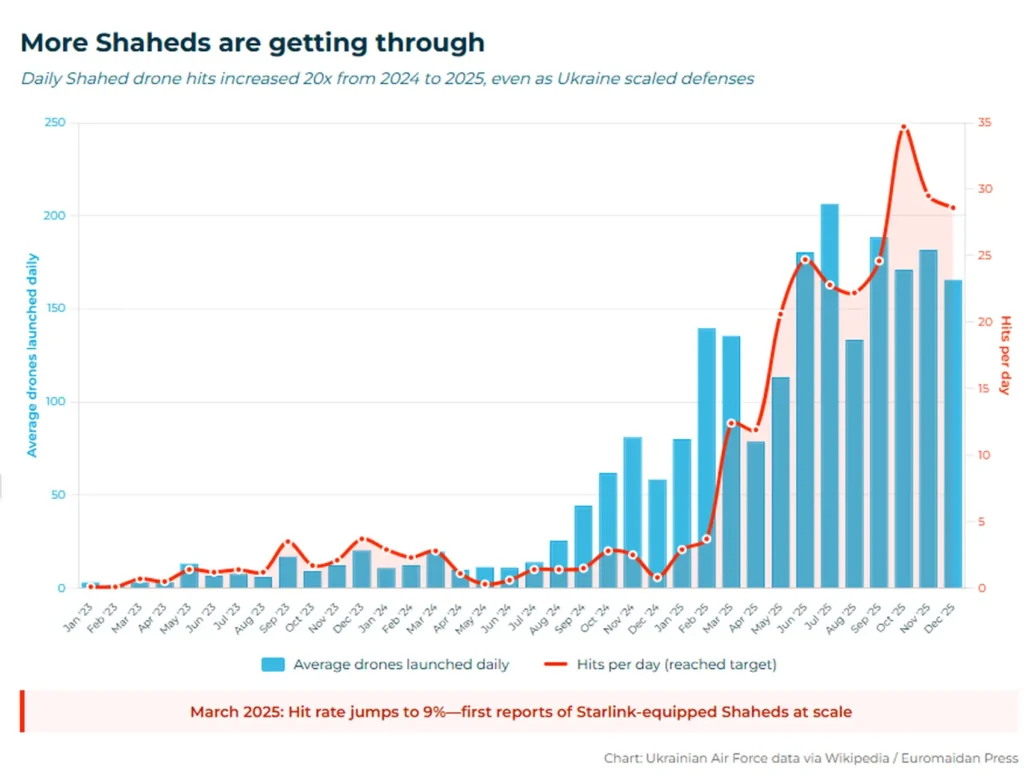
Russia's shift toward cheap, mass-produced drones is making its war cheaper to sustain.
Long-range drone barrages intercepted by Ukraine have surged from 1,760 in 2022 to over 280,000 in 2025—a 16,000% increase.
FPV drones have created 15–20 km kill zones across the front line. Russia's drone production depends on imported components: Chinese parts flow to assembly plants in Tatarstan and beyond. Western microchips and precision tools continue reaching Russia through the very evasion networks the EU has the tools—but not the will—to shut down.
A clear lesson of this war is the extensive use of inexpensive, mass-produced commercial products in weapons manufacturing. Russia relies on commercially available microelectronics in its missiles and drones, as well as dual-use machine tools for its defense industry production facilities.
In 2025, the Economic Security Council of Ukraine and partners analyzed Russia's dependence on imported chromium for artillery production.
Following an advocacy campaign, EU restrictions temporarily shut down Russian plants in early 2025 after they failed to adapt to disrupted supply chains.
It worked—briefly—until circumvention routes reopened in a couple of months.
A choice, not a constraint

Sanctions carry economic costs. Policymakers face a choice: accept those costs or accept that Russia's war economy keeps running.
The EU has the legal mechanism. It has the trade data. It has active criminal investigations into specific companies routing precision tools to Russia.
The 20th sanctions package should not be another symbolic gesture. What is needed now is a strong, visible case that sends a clear signal to all intermediaries: the EU is prepared to impose real costs for enabling Russia's war machine.
Targeting Kyrgyzstan alone won't do that. Activating the mechanism against the countries where the data shows the real evasion is happening—including Chinese, Turkish, and Hong Kong-based networks—would.
That means expanding the scope of covered products to include the full Common High Priority Items List, not just CNC machines. It means broadening the geographic focus to high-risk jurisdictions where the trade data already points—even where EU member states have significant bilateral trade relationships at stake. And it means introducing systematic monitoring to track whether the mechanism actually disrupts supply chains or merely rearranges them.
The scope of work is enormous, as many EU member states have significant bilateral trade relationships with these countries.
Without a willingness to match enforcement to evidence, the sanctions policy will remain performative. And the drones will keep coming.


