

I am no longer sure who I represent as a citizen, a former officer, or a European.
As a former officer of the Royal Norwegian Navy, my identity is inseparable from the values and standards of the Norwegian armed forces. "In order to defend what we have and what we stand for, we must live in accordance with the values we are set to defend." "Most important, we recognize the value of human life—the lives of others as well as our own—and furthermore that it is our job to protect the life, freedom, and safety of the individual."
The core values—respect, responsibility, and courage—are to form the basis of all activities.
Most Norwegians would likely identify with those values, military or not. Norway as a state, however, is no longer demonstrating them.
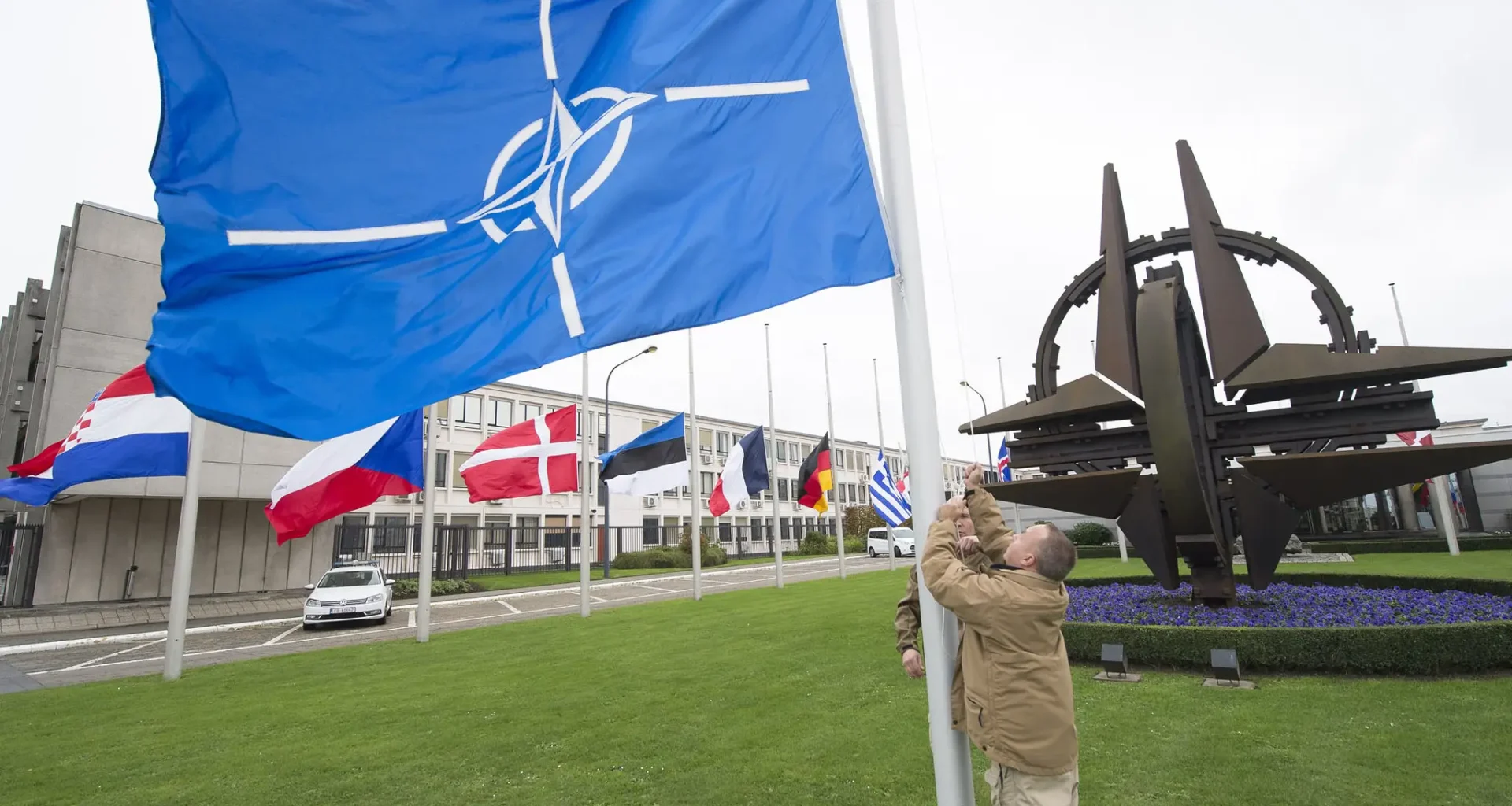
As a former officer, my service and my identity are also closely linked to NATO. The Alliance's values and principles have been fundamental to my professional life: who I am and what I believe in.
NATO states that it "strives to secure a lasting peace in Europe and North America, based on its member countries' common values of individual liberty, democracy, human rights and the rule of law."
NATO's strategic concept is unambiguous: "Our vision is clear: we want to live in a world where sovereignty, territorial integrity, human rights and international law are respected and where each country can choose its own path, free from aggression, coercion or subversion."
That is the NATO I once knew. The Alliance I joined in 1982 was truly a "coalition of like-minded countries."
The member states agreed on who the enemy was, its strategic aim and objectives, doctrine, strategy, theater of operations, and military capabilities. Equally important, they agreed and committed to a joint effort to deter and contain what was seen as an existential threat.
Present-day NATO bears no resemblance to the Alliance we once knew. Member states no longer share values and principles. Several are acting in direct contradiction to what used to be a shared vision. Worse still, the others are bending to placate the aggressor among us—undermining our common identity in the process.
That is why I can no longer be sure who and what I represent.
I find it increasingly difficult to identify with the state I am a citizen of; with the Alliance that, on paper, guarantees our security; or with the member states that were supposed to stand up and defend our common values.
How can Norway—or any liberal democracy—claim to be defending those values while remaining in an Alliance whose leading power actively undermines "a world where sovereignty, territorial integrity, human rights and international law are respected"? A president who actively undermines the rules-based world order.
How can they placate a US administration that has turned from ally to strategic opponent—threatening to annex Canada, occupy Greenland by military force, use Spanish air bases without consent, and scold the UK, its closest European partner, for not supporting a war in violation of the UN Charter?

How can we stand behind an ally that disrespects European military contributions to its operations but refuses to support Europe when the tables turn—only to demand, not ask, our contribution to an illegal war?
The US is negotiating European security and stability over the head of Europe while seeking to reset relations with Russia, a country that poses an existential threat to the continent. It is undermining the EU, dividing Europe, threatening land grabs, waging a trade war, and ending defense support for Ukraine—and therefore for its European allies. Its president calls European countries "decaying" and their leaders "weak."
How can we possibly identify with politicians who still call the United States their closest strategic ally?
The Alliance's credibility is not only undermined by US actions against Europe.
Its integrity is an illusion because one of NATO's founding nations, according to the UN, is supporting a genocide in Gaza. Because the US launched a military strike on Venezuela and captured its president on 3 January 2026 without legal justification.
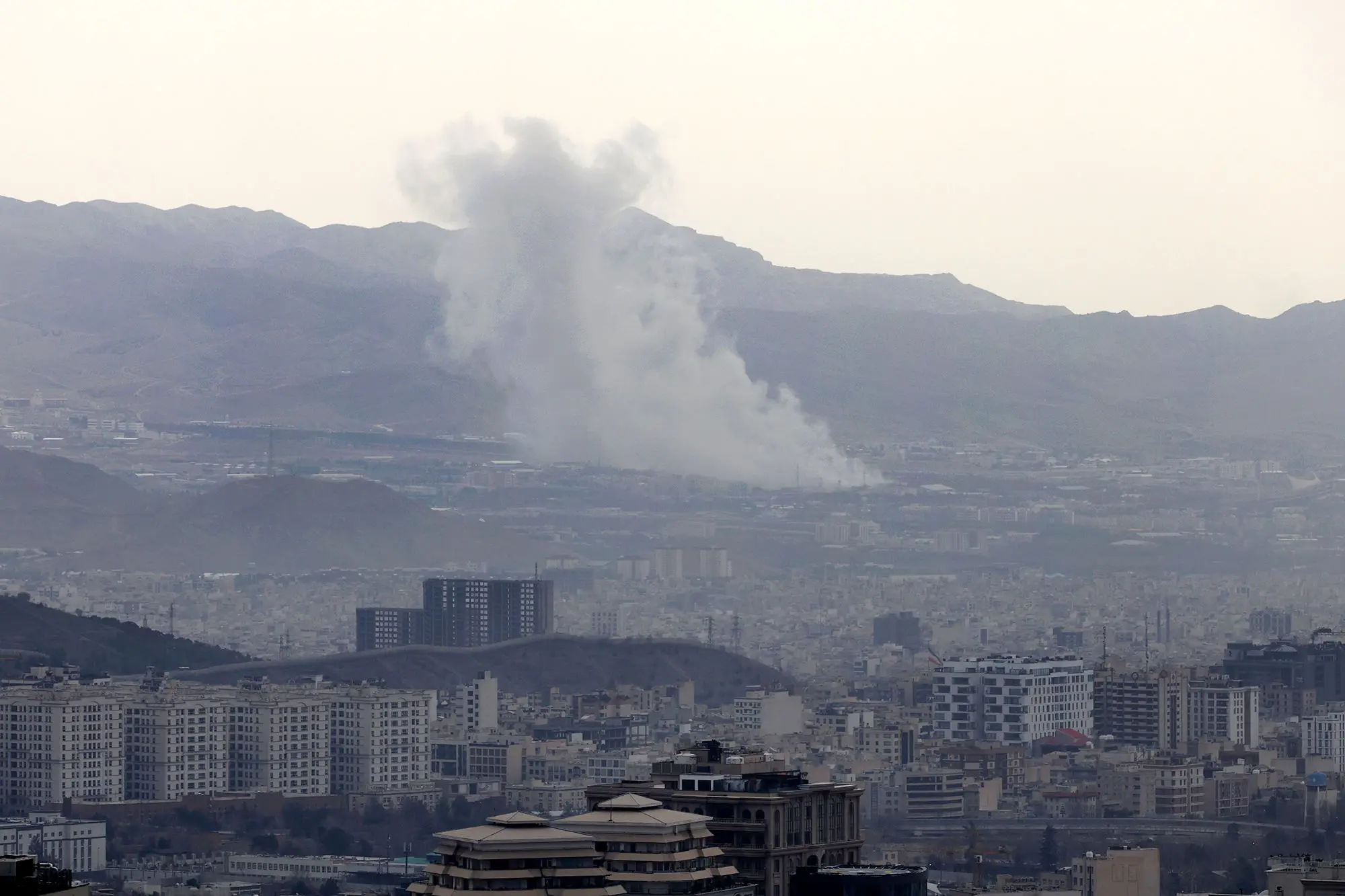
Because on 28 February, the US launched a military campaign that killed Iran's head of state in pursuit of regime change—acting on a nuclear threat that various Western and Israeli leaders have described as "imminent" for over 30 years. And because it is tightening sanctions on Cuba to bring down its regime—and has even threatened to take the country.
The question is not whether we support any of these countries or their governments.
It is whether international law applies equally to the powerful and the weak, irrespective of their chosen form of governance. The world does not accept one standard for the West and another for the rest.
We—the free and democratic states—either lead by example or we do not lead at all.
At present, Europe does not lead. We follow. And we are following someone who undermines the very values and principles we stand for, allowing ourselves to be discredited in the process.
Canadian Prime Minister Mark Carney put it plainly at Davos on 20 January 2026: "We are in the midst of a rupture, not a transition."
Great powers, he argued, have begun using economic integration as a weapon—tariffs as leverage, financial infrastructure as coercion, supply chains as vulnerabilities.
"You cannot live within the lie of mutual benefit through integration when integration becomes the source of your subordination."
Carney reminded the audience that "the system's power comes not from its truth, but from everyone's willingness to perform as if it were true. And its fragility comes from the same source."
If we continue acting as if the US is an ally, and as if—despite all evidence—it still shares what used to be our common values, we are maintaining the illusion of an Alliance. An illusion of an Alliance defending sovereignty, territorial integrity, human rights, and international law.

Carney addressed Europe, Australia, New Zealand, South Korea, and Japan directly—calling on small and medium powers to organize.
"Our view is the middle powers must act together because if we're not at the table, we're on the menu."
They cannot unite and coordinate within NATO—an organization that gives the US the right to veto any reform contrary to its interests. Carney was pointing toward something else, without explicitly naming it: a coalition of like-minded countries that could fill the gap.
Neither the Norwegian prime minister nor any other European head of state has demonstrated that leadership. They have refused to face the strategic reality—or to defend our sovereignty and independence against those who threaten it. Statements of concern are no longer enough.
When we no longer defend our core values and principles, we undermine the very foundation of who we are.
It is time, as Carney urged, to engage "broadly, strategically, with open eyes"—to take on the world as it is, not wait for a world we wish to be.

The alternative to NATO: A Coalition of Like-Minded European Countries
Editor's note. The opinions expressed in our Opinion section belong to their authors. Euromaidan Press' editorial team may or may not share them.
Submit an opinion to Euromaidan Press


