

The United States Treasury has issued a temporary 30-day license permitting the purchase of Russian crude oil and petroleum products currently stranded at sea, citing the need to stabilize global energy markets disrupted by the ongoing US-Israeli military operation against Iran.
The Office of Foreign Assets Control (OFAC) published the authorization on 12 March, covering Russian-origin oil and petroleum products loaded onto vessels on or before that date. The permit runs through 11 April 2026.
Treasury Secretary Scott Bessent framed the measure as narrowly targeted. "This narrowly tailored, short-term measure applies only to oil already in transit and will not provide significant financial benefit to the Russian government, which derives the majority of its energy revenue from taxes assessed at the point of extraction," he wrote on X.
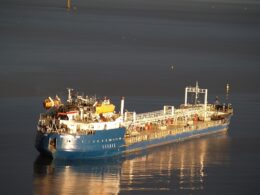
According to CNBC, approximately 124 million barrels of Russian-origin oil were at sea across 30 locations worldwide as of 12 March — roughly five to six days of supply.
The move follows an earlier, more limited step: on 6 March, the US had already eased sanctions for 30 days specifically for Indian refineries, allowing them to purchase Russian oil stranded at sea.
White House Deputy Chief of Staff Stephen Miller, speaking on Fox News, said the Trump administration was "taking all possible measures to reduce prices."
On 9 March, President Trump had signaled the direction of travel, stating he might lift some oil-related sanctions to cushion the impact of the Middle East conflict, without specifying which countries. He stopped short of providing details at the time.
The broader context is a sharp spike in energy prices triggered by military escalation. Israel attacked Tehran on 28 February, after which Trump announced that US forces had launched what he described as "a large-scale combat operation" against Iran. Iran's Islamic Revolutionary Guard Corps subsequently claimed missile and drone strikes against American military bases in Qatar, Saudi Arabia, and the UAE. On March 11, Trump announced the US would draw on its Strategic Petroleum Reserve to help manage the market impact.
European officials have pushed back on the sanctions easing. EU Commissioner Valdis Dombrovskis called on the US to maintain the Russian oil price cap, warning that removing restrictions could deliver unexpected revenues to Moscow.
Read also
-
“They don’t like the EU”: Europe’s top diplomat says Washington wants to divide Europe
-
Zelenskyy in Paris: €90 bn EU loan, shadow fleet, and the coalition of the willing on the table
-
Russia plans to re-register 80 shadow fleet tankers under its own flag to evade Western sanctions, Ukraine intelligence says