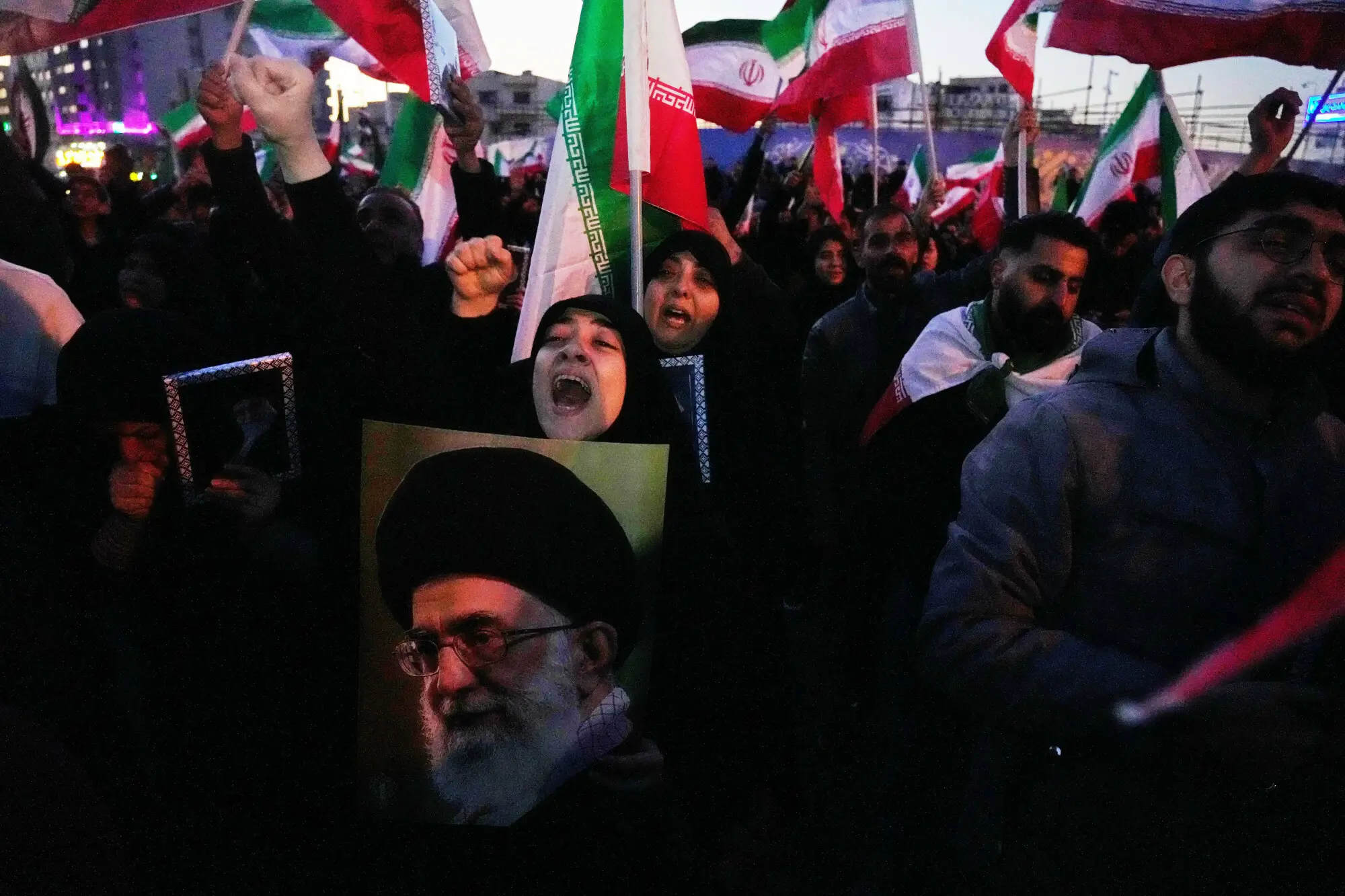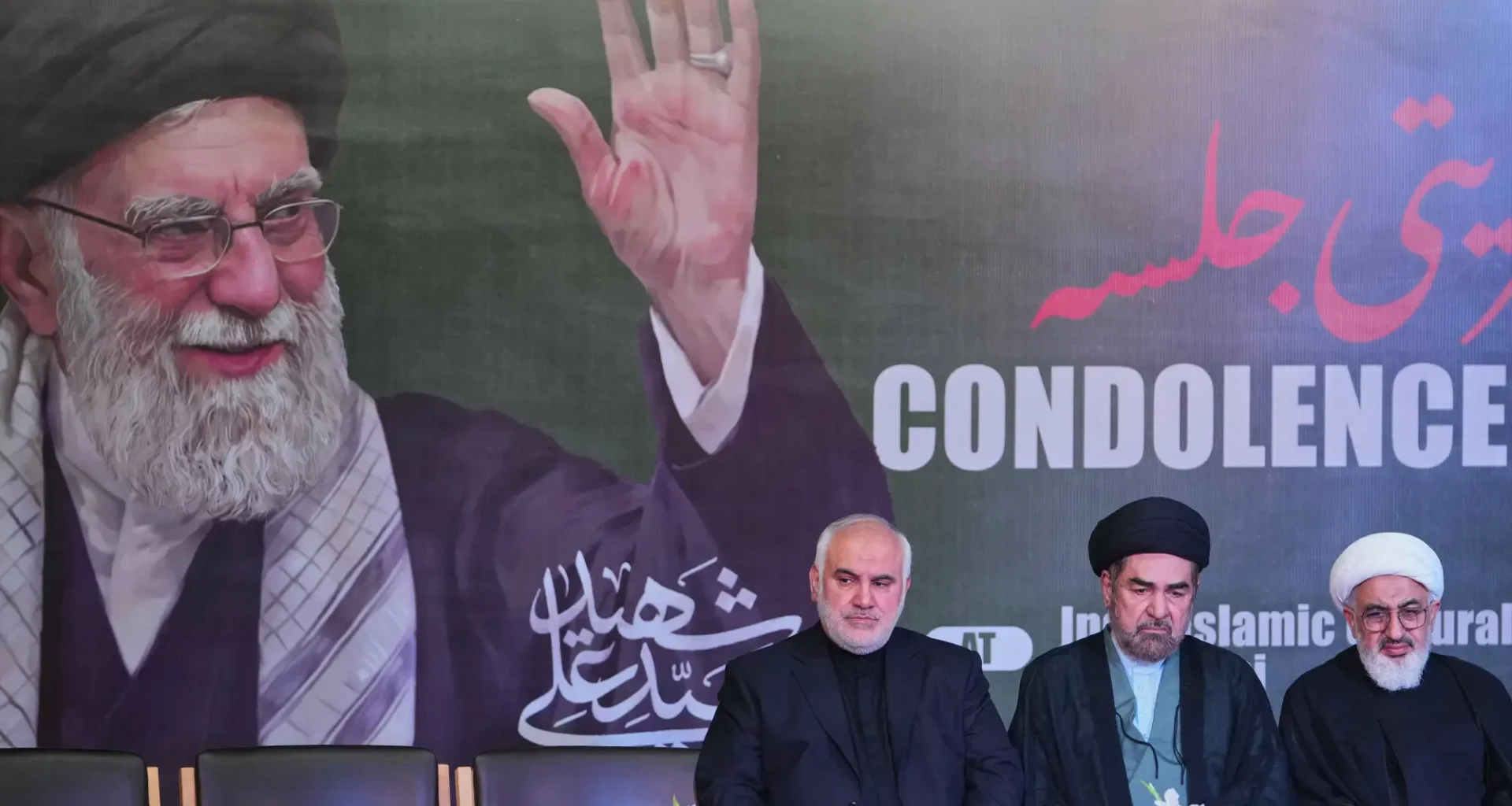

Iran's Supreme Leader Khamenei is dead. The country is under sustained US-Israeli bombardment, and Iranian drones are striking Gulf cities from Dubai to Bahrain. It is the third Russian ally to fall in three months, following Assad and Maduro.

For Ukraine, which has been on the receiving end of 57,000 Iranian-made Shaheds since 2022, this is both a moment of vindication and a source of new risks—Western munitions are being consumed in the Middle East, oil prices are spiking, and diplomatic attention is being pulled away.
In a 2024 Euromaidan Press interview, defense analyst Mykhailo Samus mapped the China-Russia-Iran-North Korea alliance as an interconnected system and argued that Ukraine's war is the key to dismantling it.
We asked him whether that system is now falling apart—and what the Iran war actually changes for Ukraine's fight.
The axis is falling apart—but without China, it wouldn't exist
The "Axis of Evil" sounds formidable. But Samus argues it has always had one structural weakness: without China, it wouldn't exist at all.
"This system works because China provides all the resources, money, technology, and components," Samus says. "They created the flow of military-technical cooperation between all these countries. A bright example is the Shahed kamikaze drone—designed by Iran with components from China, the US, and other countries. These technologies were transferred to Russia, and the thousands of drones attacking Ukraine are the result."
The same pipeline feeds North Korea, which is getting technology for submarines and missiles—a problem the Pacific region will feel sooner or later, Samus warns.
But China uses proxies rather than acting directly. Russia destroys the European order. Iran destabilized the Middle East through Hezbollah, Hamas, and other proxies while keeping Syria in chaos. Venezuela worked in South America. North Korea handles the Pacific.
Step by step, though, Iran has been losing its zone of influence. And China isn't stepping up to defend it.
"China is not ready to say openly that they are prepared to compete directly with the United States," Samus says. "They prefer to sit by the river and watch the bodies of their enemies float past."
Even Iran's own leadership sees it. "They said, of course, China is supporting us," Samus notes. "But they supported with components and machinery—for money, not for free. And this is not how allies do serious business."
Without Chinese money and components, Russia, Iran, and North Korea could exist separately—but there would be no synergy, no strategy with a clear goal.
China still lacks the nuclear, economic, and military power for a direct confrontation with the US. "They are not even decisive regarding Taiwan," Samus says.
If the US-led coalition succeeds in stabilizing Iran, the implications for China go far beyond the Middle East. "China loses another very strong proxy," Samus says. "This could mean China loses the capability and even the intention to dominate the world."

"Your friends are killed, and you say you could be a moderator?"
If China is the silent backbone, Russia is the helpless bystander. Three allies gone in three months, and Moscow didn't lift a finger.
Why not? Because it can't.
"Russia doesn't have any resources," Samus says flatly. "What can they do now? They openly said they are nothing here. They cannot even say something against Trump or the military forces collected by the United States and Israel around Iran."
Russia just sits and keeps silent, he says—can't even tell Washington, "This is our friend, you shouldn't kill our friend." A lot of Putin's declared friends are already dead. Nothing from the Kremlin.
Samus reserves particular scorn for Moscow's offer to mediate.
"They said they could be a moderator. What the hell, a moderator? Your friends are killed by the United States, and you say you could be a moderator? You should just get out if you cannot propose something strong and effective."

Russia and Iran: intelligence sharing, friction, and a ballistic missile pause
The partnership wasn't just drones. Russia and Iran were exchanging intelligence and military technologies right up until the strikes. Russian components were found in the Shaheds that hit the British base in Cyprus. And the latest reports suggest Russia provided intelligence for Iran to target US forces—a detail that could blow up in Moscow's face.
"It's very interesting how Trump will react to this information on intelligence transferring from Russia to Iran to kill American soldiers," Samus says. "This reaction will define how Russia acts."
His prediction: Russia will back off. "To stop military cooperation with Iran is a lesser price than getting problems with Trump now, for Putin and for Russia."
But the cooperation had deeper friction than the public image suggested. Samus says that when Iran asked Russia for nuclear technologies and aviation, Russia stalled. "Russia said, 'No, we should think,' and tried to buy time." Iran may have responded by withholding ballistic missiles and technology transfers. No confirmed evidence of Iranian ballistic missile use in Ukraine has ever emerged—suggesting the exchange stalled before it got that far.
"It looks like Putin and Khamenei didn't have good contact and understanding of each other," Samus says. "Something happened between the two countries. Compared to 2023 and 2024, the cooperation slowed."

"If they don't have money, they don't have support"
So what actually keeps Russia's war machine running? Samus is categorical.
"The main resource for Russia is money."
With money, they buy technology components from China. They order production in North Korea. They route purchases through intermediary countries to dodge sanctions. "Having American, European, Japanese, or Taiwanese components in missiles and drones is not a problem for Russians," he says. "As long as they have money."
And China's role is strictly commercial. "China is not 'supporting' Russia. They are interested in a strong Russia as a proxy to destroy the European order, but they avoid any kind of military support. They just say, 'If you'd like to buy some microchips, okay, buy them. If you'd like to buy millions of motors for drones, okay, buy them.' This is how the Axis of Evil works."
The flip side: "If they don't have money, China will stop immediately. If they don't have money, they don't have support."
That makes oil prices the single most important variable. In the short term, the Iran war is handing Russia a windfall. "Russia is getting more money from higher oil prices, which is bad," Samus says. "It means for the next couple of months, they can recruit more soldiers and produce more Shaheds and ballistic missiles."
But if the operation is short and successful? "Oil prices will immediately fall to a very low level, even lower than before. And Russia will have huge problems."
Two wars, one production line
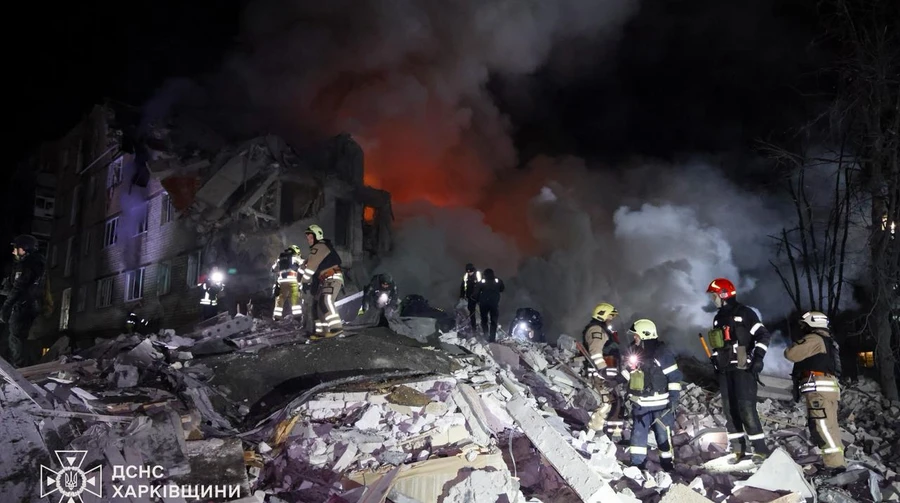
The most concrete threat to Ukraine right now: the competition for Patriot PAC-3 interceptors, the only system that can stop Russian ballistic missiles.
Trending Now
"The US, Israel, and others in the region are using a lot of Patriots," Samus says. "Production lines are working at their limits, but it's absolutely not enough—not enough for Ukraine, not enough for the United States, not enough for Europe or the Middle East. Japan produces these missiles but cannot export them because of internal limitations."
The numbers back him up. Lockheed Martin produced 620 PAC-3 MSE interceptors in 2025—its record. But President Zelenskyy said that in just three days of fighting in the Middle East, more than 800 Patriot missiles were used—more than Ukraine received throughout the entire full-scale invasion. A deal to triple production to 2,000/year won't reach full capacity until 2030.
"Russia will have more ballistic missiles than we have PAC-3 interceptors," Samus warns. "They will be able to punch through our air defense."
His proposed solution goes on the offensive. "Only one way: destroy Russian defense industry facilities with our massive missile attacks. We should create capability to attack with hundreds and hundreds of missiles every day. This is the only way, because Russia will have more missiles and we will have fewer Patriots. That reality is impossible to change."

Not enough Patriot missiles to stop 60 Russian Iskanders a month. The Iran war is draining what’s left.
"We don't need focus. We need concrete things."
Does the Iran war mean the world's attention will shift away from Ukraine? Samus pushes back hard.
"I cannot support the narrative that there will be a focus shift away from Ukraine," he says. "We don't need this focus. We have a pretty strong understanding of what it means to fight Russia. We need strong armed forces, resilience, and financial support. Focusing is something from 2014, maybe 2022. Now we need concrete things."
And one of those concrete things is an unexpected opportunity.
Ukraine has something nobody else does—and the US knows it
The United States discovered, the hard way, that it has no working defense against Shahed drones. Ukraine does. And nobody else comes close.
"Very high-tech developed countries like the United States found they don't have proper air defense against Shaheds. They don't have it. Ukraine has it," Samus says.
Ukraine built a layered system from scratch: light aviation, mobile groups, drone interceptors, radars, F-16 fighters—all integrated. "Last year, about 50,000 Shaheds attacked Ukraine, sometimes 150 a day, and 85.5% were destroyed."

The cost gap is staggering. Ukrainian interceptor drones cost approximately $5,000 each. European prototypes run $50,000 to $100,000—and they're unproven.
"Everybody has a model at an exhibition," Samus says. "We are talking about weapons proven in battle. If they have a model, go to the Chernihiv region and hit a Shahed. If you can't, it's just a prototype. We could produce prototypes every day, including children. Only a weapon that works on the battlefield is a weapon."
The Americans? "They don't have any interceptors. And they won't have them next year. They cannot produce them."
The Pentagon and at least one Gulf state are already in discussions to purchase Ukrainian-made interceptors, the Financial Times reported this week. Zelenskyy confirmed on 6 March that Ukraine received a request from the US "for specific support in protection against Shaheds in the Middle East region."
Samus insists Ukraine must protect its advantage. "We should sell the ready-to-use product, not the technology. I cannot imagine the United States giving us the technology to produce their missiles or even their rifles—they protect their technology absolutely. Ukraine should act the same way. If you want our drones, get the drones with black boxes. No technology transfer."
He says Ukraine could organize production lines in the United States—but without transferring the core technology. And training should happen on Ukrainian terms.
"Ukrainian instructors shouldn't leave the country. American soldiers should come to Ukraine—for example to the Chernihiv Oblast—for practical lessons on how to fight Shaheds. We cannot send our soldiers away from our war to teach Americans somewhere else. That is against Ukrainian interests."
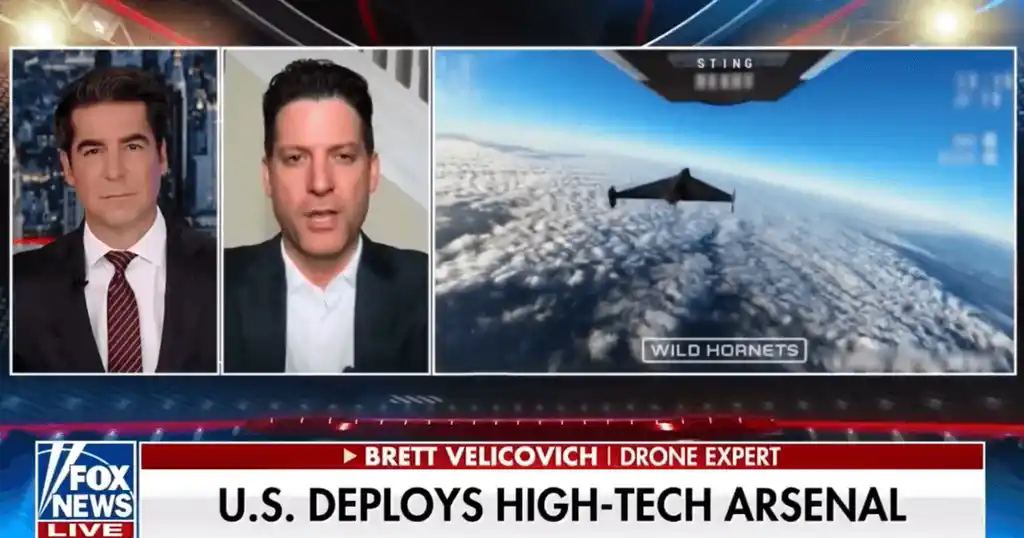
Fox News already showed a Ukrainian drone interceptor and called it American, Samus notes. "The IP for this technology should be Ukrainian. The technology should be Ukrainian."
Best case, worst case
Samus sees the Iran war as a fork with radically different outcomes for Ukraine.
"Best case: a short, several-week campaign where the US finds leaders inside the regime, military operations stop, and there's an immediate impact on oil prices. Russia won't have resources to continue the war—problems recruiting soldiers, problems getting components from China."
"Worst case: a Vietnam or Afghanistan for the United States for the next 10 years, making America weaker and giving Russia more money from oil prices—maybe $200 or more per barrel. If the US starts a land operation with 100,000 to 300,000 troops and gets stuck, that's a disaster."
The determining factor, in his view, is whether the Iranian population supports the change. "The main idea of this operation should be that the majority of the Iranian population is against the regime and will support the change. If the United States fights the Iranian people, it will be a disaster."
Samus believes the Trump administration's approach—removing authoritarian leaders and finding what he calls "adequate communicators" within existing regimes, rather than imposing democracy from outside—could eventually be applied to Russia as well. He points to the Venezuela pattern, where the US removed the leader but negotiated with figures inside the same regime to secure American business interests.
"Trump has proposed this to the Russians for a year: stop the war and make a business deal," Samus says. "The obstacle is Putin. I am sure that sooner or later, the Russian oligarchs will solve this problem."
That scenario remains speculative—and depends on variables far beyond Ukraine's control. What Ukraine can control is how it plays the hand it's been dealt: a PAC-3 crisis that demands offensive solutions, a drone defense capability the world suddenly needs, and a window in which one more leg of the authoritarian axis has been kicked out.
It can't control whether Iran's regime will fall. And so far, that is far from certain.