

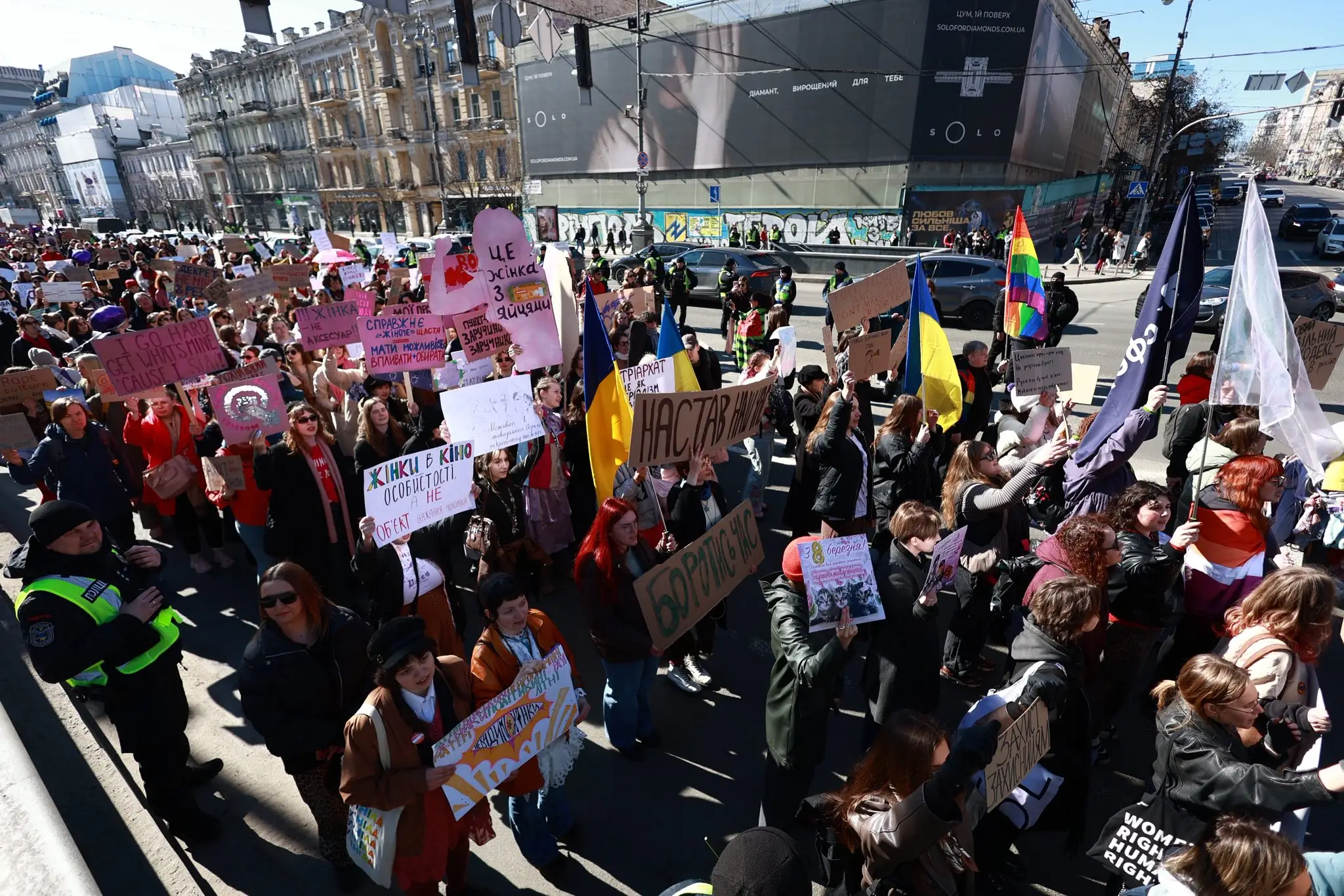
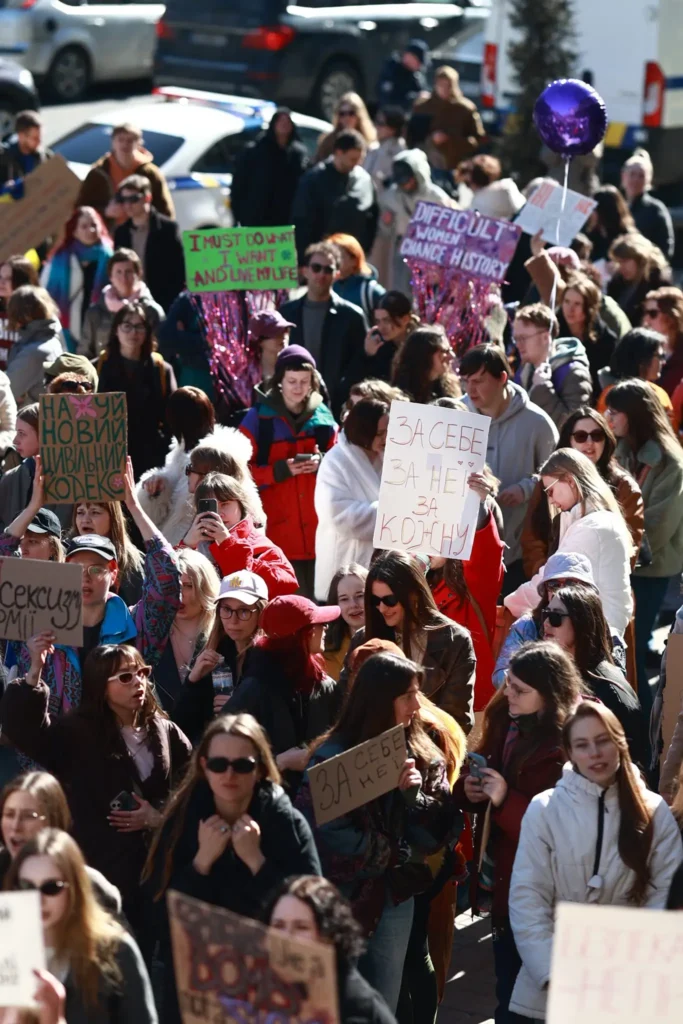
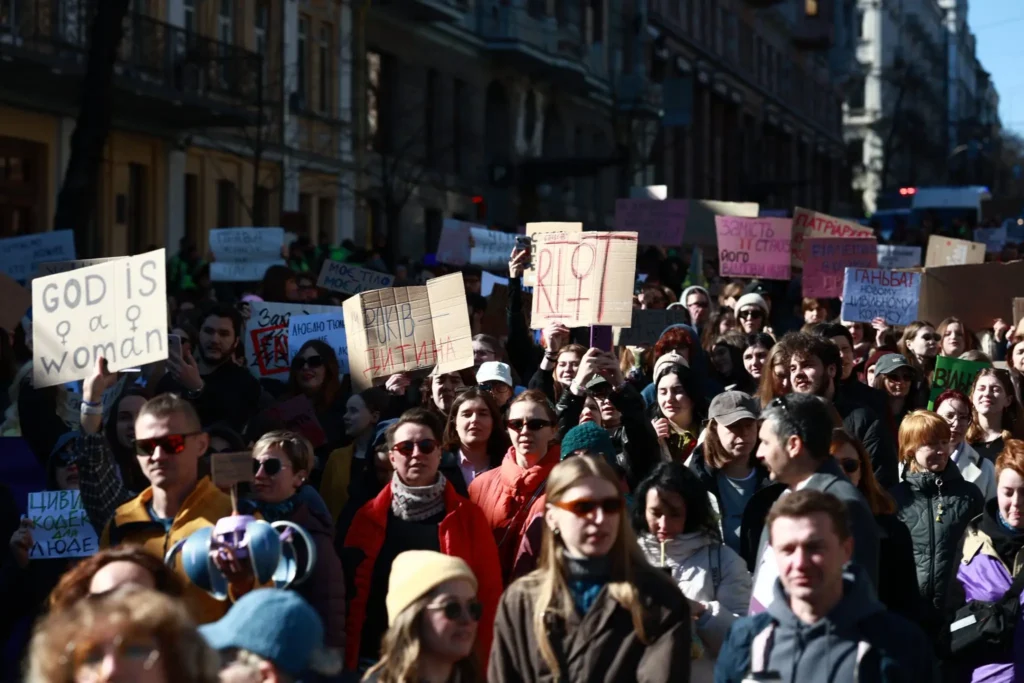
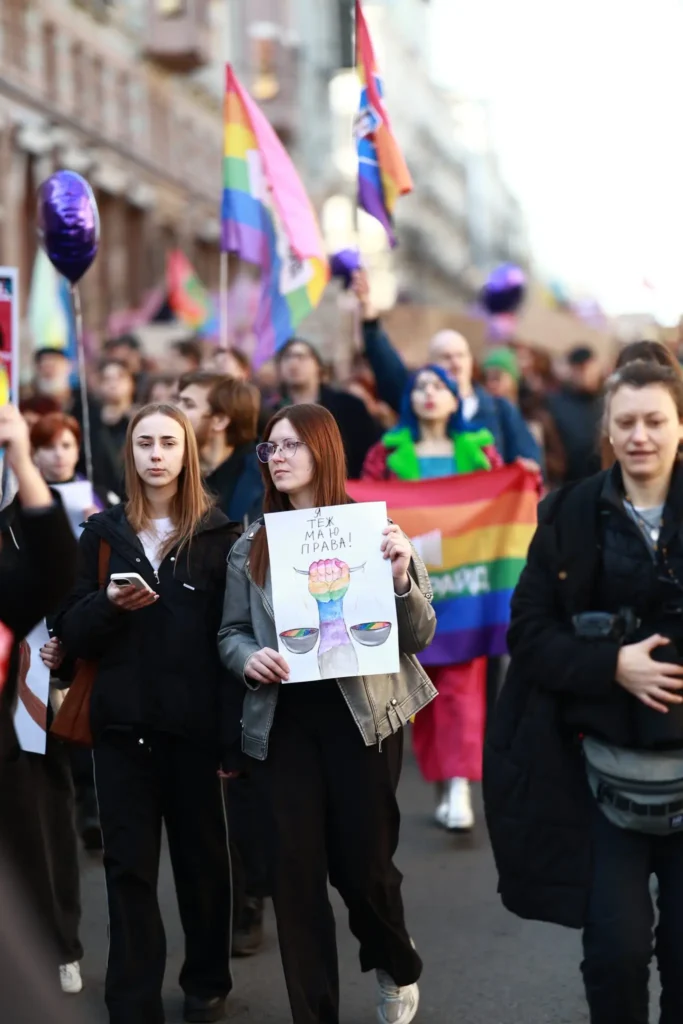
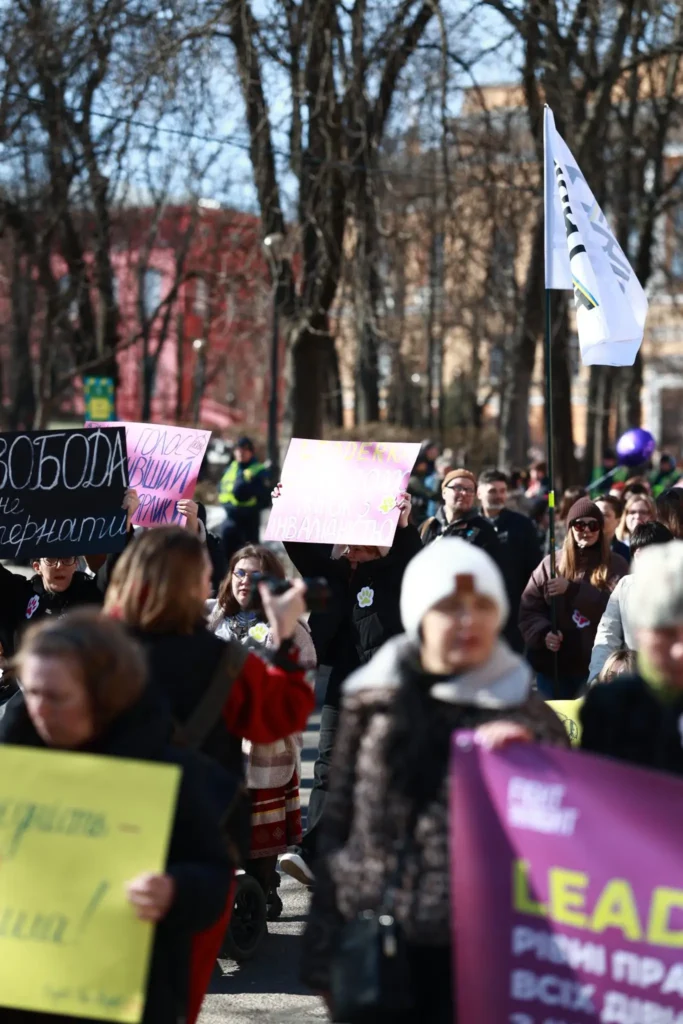
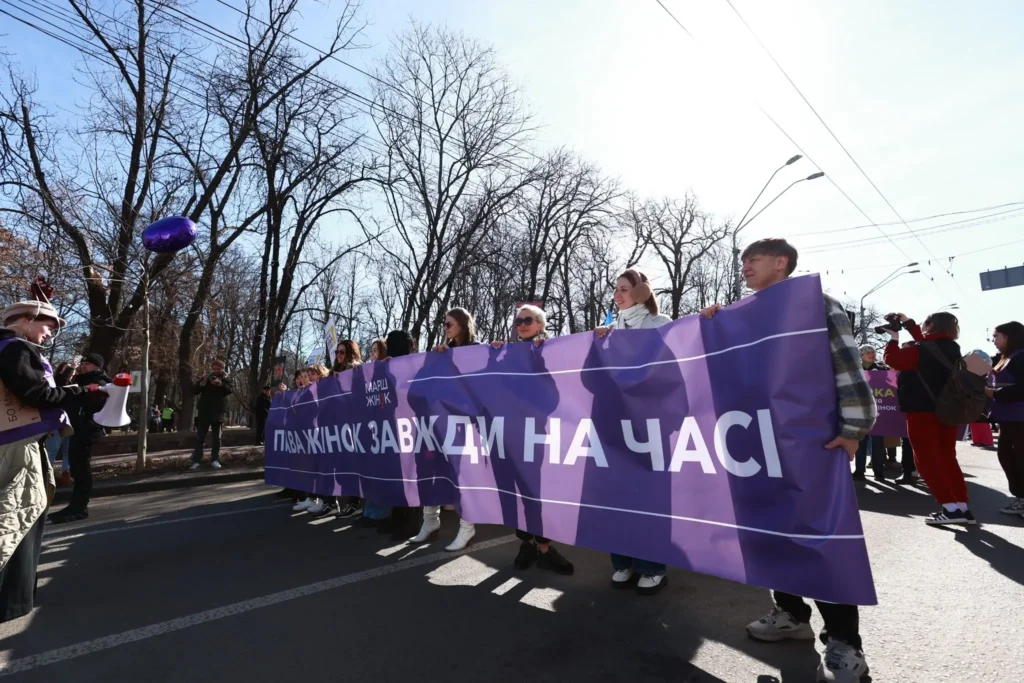
More than 3,000 women marched through central Kyiv on 8 March in the first Women's March since Russia's full-scale invasion began four years ago. They gathered in Taras Shevchenko Park not to celebrate International Women's Day but to deliver three demands to the Ukrainian state. Withdraw a draft civil code they say threatens women's rights. Protect servicewomen from discrimination and sexual harassment. Bring women home from Russian captivity.
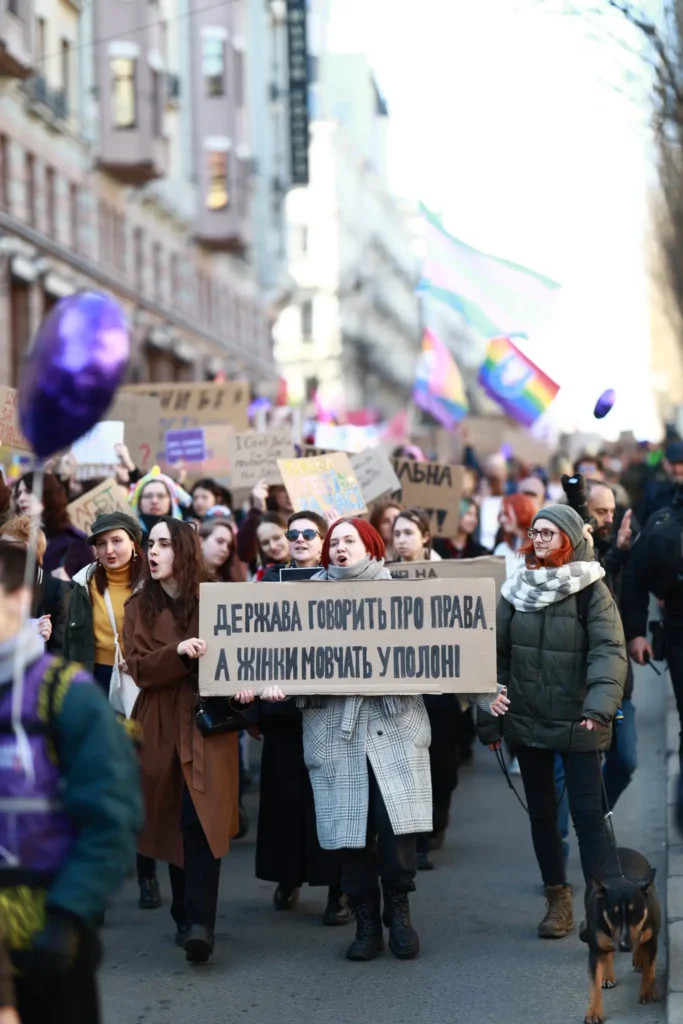
The march marks a turning point for Ukraine's women's movement—one that has been reshaped by four years of war. Over 75,000 women now serve in the Armed Forces, Commander-in-Chief Oleksandr Syrskyi said on the same day. More than 55,000 are active servicewomen. Five have been awarded the title Hero of Ukraine, three posthumously. The women who marched today are demanding that a state they help defend stop undermining their rights behind closed doors.
The civil code that no one discussed
At the center of the protesters' anger is Draft Law No. 14394—a sweeping rewrite of Ukraine's Civil Code registered in the Verkhovna Rada on 22 January 2026 by Speaker Ruslan Stefanchuk. The bill consolidates existing family law into a single framework and proposes to modernize Ukraine's civil legislation. The working group labored on it for six years with 247 experts.
The problem: it was published without meaningful public consultation. Activists who read the nearly 2,000-article document found provisions they say would roll back women's rights, restrict divorce, and contradict Ukraine's EU accession obligations.
The most explosive clause—Article 1478—would have allowed courts to approve marriage for girls as young as 14 in cases of pregnancy or childbirth. The current Family Code sets the minimum at 16, by court decision only. The outcry was immediate. Stefanchuk announced the provision would be removed, calling it a protective mechanism that had been misunderstood. The clause was dropped, and two alternative versions of the bill (No. 14394-1 and 14394-2) were registered without it.
But the marriage-age controversy overshadowed what activists say is the deeper problem. The rest of the code's family law provisions remained intact—and they paint a picture:
Divorce restrictions. The draft effectively prohibits divorce during a wife's pregnancy and until a child reaches one year of age, alongside mandatory reconciliation measures. For women trapped in abusive marriages, this could mean being legally bound to their abuser for over a year.
"Good manners" as a legal standard. The code introduces concepts of "good manners" and "immorality" as legal criteria—what lawyer Viktoria Dorofeeva, speaking at the march's press conference, called dangerously vague terms. Courts could judge a woman's "amorality" and demand disclosure of sensitive personal circumstances, Ukrainska Pravda noted in an analysis of the draft.
Religious marriage gaining legal weight. Article 1473 states that the law may establish legal consequences for a religious marriage ceremony—a provision critics say undermines the constitutional principle of a secular state.
Separately, the bill has drawn criticism for excluding same-sex couples from legal recognition, contradicting Ukraine's EU accession commitments—though this was not a focus of the march's demands.
Deputy Speaker Olena Kondratyuk withdrew her signature from the draft after analyzing it with the Ukrainian Women's Congress. She told Babel she had personally fought to allow women to divorce during pregnancy, advocated for the Istanbul Convention—and then found "terrible norms that came out of nowhere" in the very code she co-signed.
The Norwegian Helsinki Committee called on Ukrainian authorities to halt the bill entirely. The ZMINA Human Rights Center and dozens of Ukrainian civil society organizations issued a joint statement: the draft contradicts the ECHR, the Copenhagen criteria, and Ukraine's negotiating obligations to the EU.
The marchers' demand: withdraw Draft Law No. 14394 and its clones (No. 14394-1 and No. 14394-2), and conduct a genuine public discussion with civil society organizations and independent experts before any new version advances.
Women at war—still fighting for equality in the ranks
The march's second pillar: conditions for the tens of thousands of women serving in Ukraine's military.
The Verkhovna Rada adopted Bill No. 13037 on 25 February 2026—symbolically, on Ukrainian Women's Day—with 276 votes, unanimously among those present. The bill strengthens mechanisms for combating discrimination and sexual harassment in the Armed Forces. As of 2 March, it had been signed by the Rada Speaker and sent to President Zelenskyy for signature.
The law originated from a petition submitted by Kateryna Pryimak, head of the Veteranka movement—Ukraine's first organization for women veterans. It collected over 25,000 signatures. The legislation obliges commanders to investigate cases of discrimination and violence. It mandates zero tolerance toward harassment. Sexual harassment is now formally defined as a disciplinary offense. A military ombudswoman, Olha Reshetylova, said emergency response to reports of gender-based violence must be launched within 15 minutes of a report.
This has been a long time coming. A survey by the Women's March organization found that of 46 servicewomen interviewed, only 12 said they would report witnessing violence. Women feared condemnation and being told it was their own fault. Law enforcement agencies investigating sexual violence in the military do not even keep statistical data on such cases—even as the number of appeals to hotlines has increased.
The practical gaps are not just legal. The Atlantic Council noted in a recent analysis that despite legal equality, Ukrainian servicewomen still face inconsistent access to training and promotion. Many lack properly fitted equipment and body armor. Units often have no separate barracks, showers, or gynecological care. Mechanisms to prevent and address misconduct are poorly enforced.
The numbers tell the scale. Women officers now make up 21% of all officers in the military—up from 4% in 2023. One in five candidates at recruitment centers is female. The march demands that the state match this contribution with actual protections.
"Bring every woman home"
The march's third demand centers on Ukrainian women held in Russian captivity. As of February 2026, Russia holds approximately 7,000 Ukrainians captive, including civilians—a figure cited by President Zelenskyy. The exact number of women among them is uncertain because Moscow does not grant Red Cross access.
Former female prisoners of war have described starvation, beatings, being stripped in front of male guards, and being coerced into recording anti-Ukrainian statements on camera. Medic Olga Shapovalova, captured in Mariupol, was cycled through three penal colonies where conditions included electrocution for minor infractions and sleeping 15 women to two benches.
The recent 500-for-500 prisoner exchange on 5-6 March—brokered in Geneva—brought 500 Ukrainians home over two days. But the pace of exchanges remains tied to how many Russian prisoners Ukraine holds to offer in return. The marchers demand that the state and international community do everything possible to free every Ukrainian woman and ensure comprehensive support for each after release.
A code drafted in silence, shaped by a crisis no one names
The civil code fight sits inside a larger dynamic. Ukraine has lost roughly 10 million people since 2022—to war, emigration, and one of the lowest fertility rates in the world. The Ukrainian Greek Catholic Church has been openly calling for "pro-family state policy." Conservative religious and civic groups that pushed back against gender equality legislation before the full-scale invasion have not disappeared during it.
The code's authors frame the bill as European modernization. The explanatory note describes a "child-centered" approach. Stefanchuk called it a "supermarket of legal opportunities." But the ZMINA Human Rights Center reached a different conclusion: despite the declared goal of harmonizing with European law, the family law section demonstrates the opposite tendency—a departure from standards of inclusivity and nondiscrimination.
Whether this amounts to a deliberate conservative turn or the byproduct of a code drafted over six years with no public oversight is now an open question. Two alternative versions have been registered. The marchers want all three withdrawn.
What 8 March means now
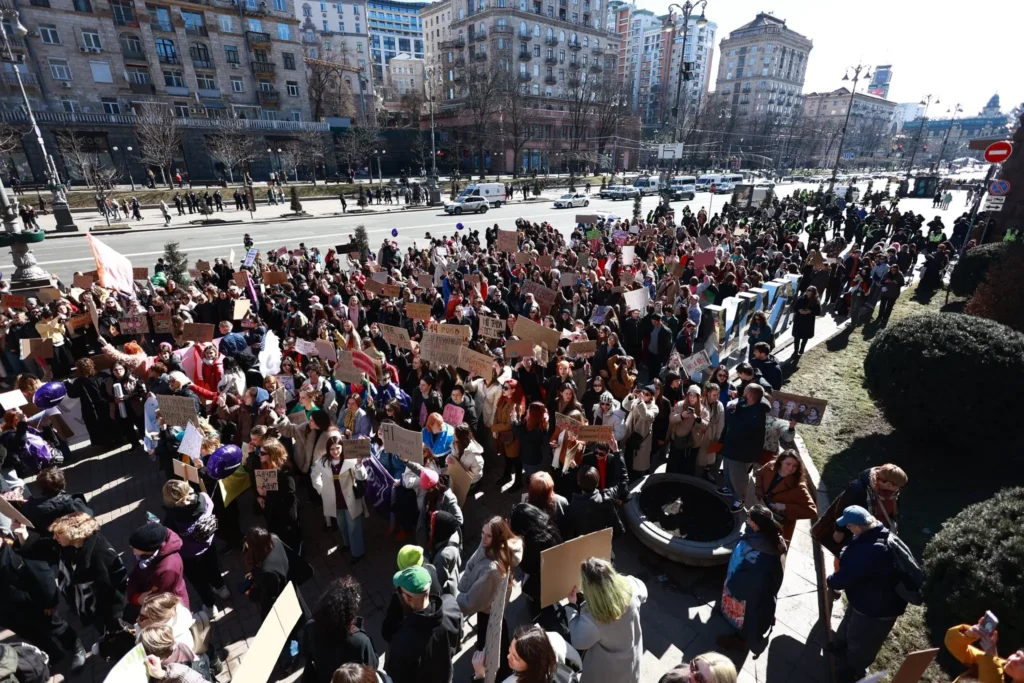
For decades, 8 March in Ukraine meant flowers, chocolates, and compliments—a Soviet-era femininity ritual that outlasted the Soviet Union. A Rating Group survey this year found 52% of Ukrainians won't celebrate at all—down from 68% who marked the day in 2021. The holiday has been drifting from its original meaning for years, but the war has finished the job.
The facts of women's lives in wartime Ukraine explain why 3,000 of them chose a march over a bouquet.
UNHCR recorded 5.9 million Ukrainian refugees abroad as of February 2026—roughly three-quarters of them women and children, since men of military age cannot leave under martial law.
Those who stayed carry a double load. With husbands mobilized, women are raising children and caring for elderly parents alone, often in cities where heating and power infrastructure has been systematically destroyed by Russian strikes. Many kindergartens and schools sporadically or not at all due to Russian shelling or power and heating outages. When husbands come home wounded, wives step into a rehabilitation system that barely exists—scrambling between overstretched military hospitals and volunteer-run programs.
The financial hit is concrete. Many drafted husbands now bring in a fraction of what they earned in civilian life. For many households, the woman's income is the only stable one. At the same time, 75,000 women serve in the Armed Forces themselves—as drone operators, medics, snipers, signal officers, commanders. Five hold the title Hero of Ukraine.
The protest organizations—the Women's March coalition, Sotsialnyi Rukh, Veteranka—framed 8 March as what it was originally meant to be: a day of political struggle for women's rights. Not a celebration. Not a holiday. A demand that the state see the women holding it together—and stop rewriting their legal protections in an 832-page document that nobody outside Parliament was asked to read.


