

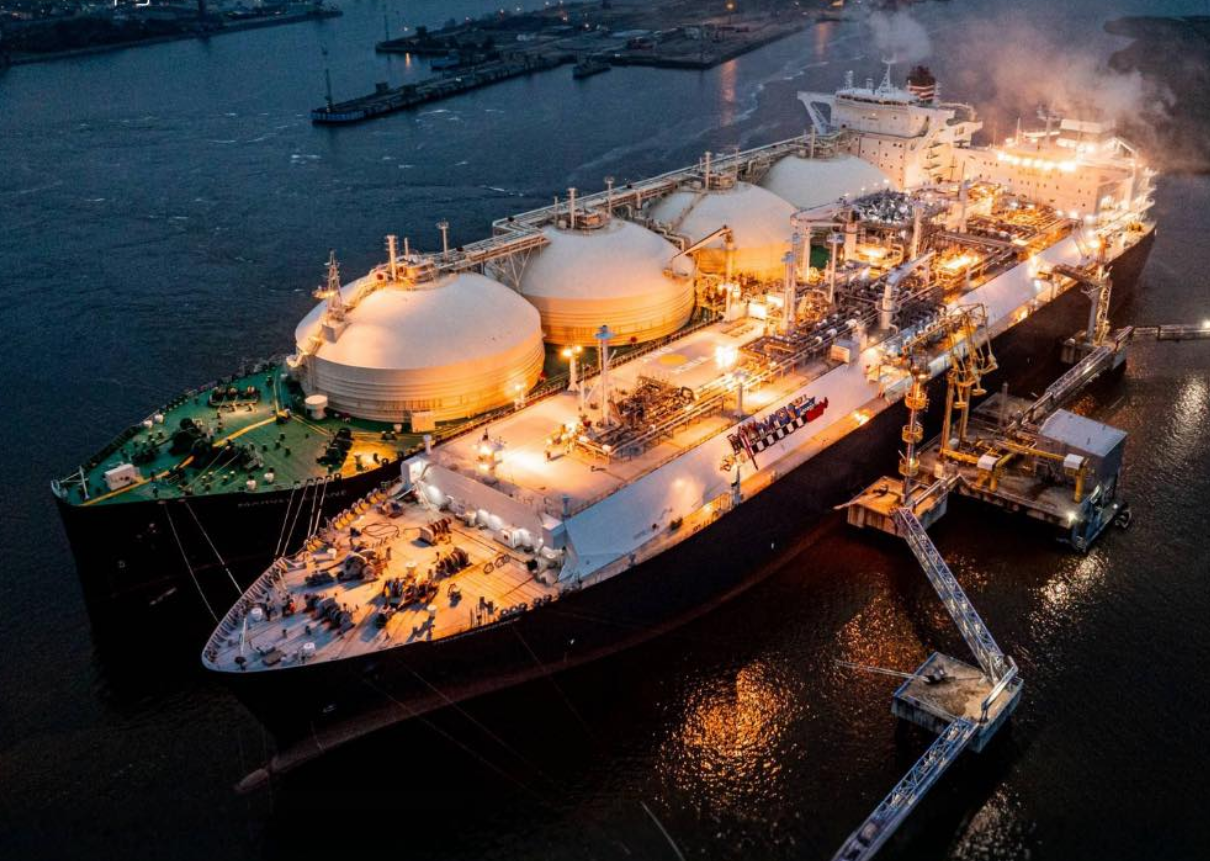
Ukraine’s state energy company Naftogaz on 26 February began importing American liquefied natural gas through Klaipeda port terminal in Lithuania for the first time, delivering 90 million cubic meters in partnership with Lithuanian state holding Ignitis Group, Naftogaz CEO Serhii Koretskyi announced on Facebook. Naftogaz will independently deliver the gas to Ukraine during February–March.
Today, four parallel corridors carry US gas into a country whose own production Russia has destroyed by 60%.
The Lithuanian delivery came three days after Naftogaz secured its first-ever US LNG shipment through a German terminal on the Baltic island of Rügen—meaning Ukraine opened two new American gas routes in a single week.
Two years ago, none of these routes existed. Today, four parallel corridors carry US gas into a country whose own production Russia has destroyed by 60%.
Four corridors where there were none
In January, Naftogaz received almost 100 million cubic meters of American LNG through Poland’s Świnoujście terminal, in partnership with state energy company Orlen—enough to heat about 700,000 families for a month during extreme cold.
In March, the first US cargo will arrive via Greece’s Revithoussa terminal and travel north through Bulgaria, Romania, and Moldova along the so-called “Vertical Corridor”—the same Trans-Balkan pipeline system that for decades carried Russian gas in the opposite direction.
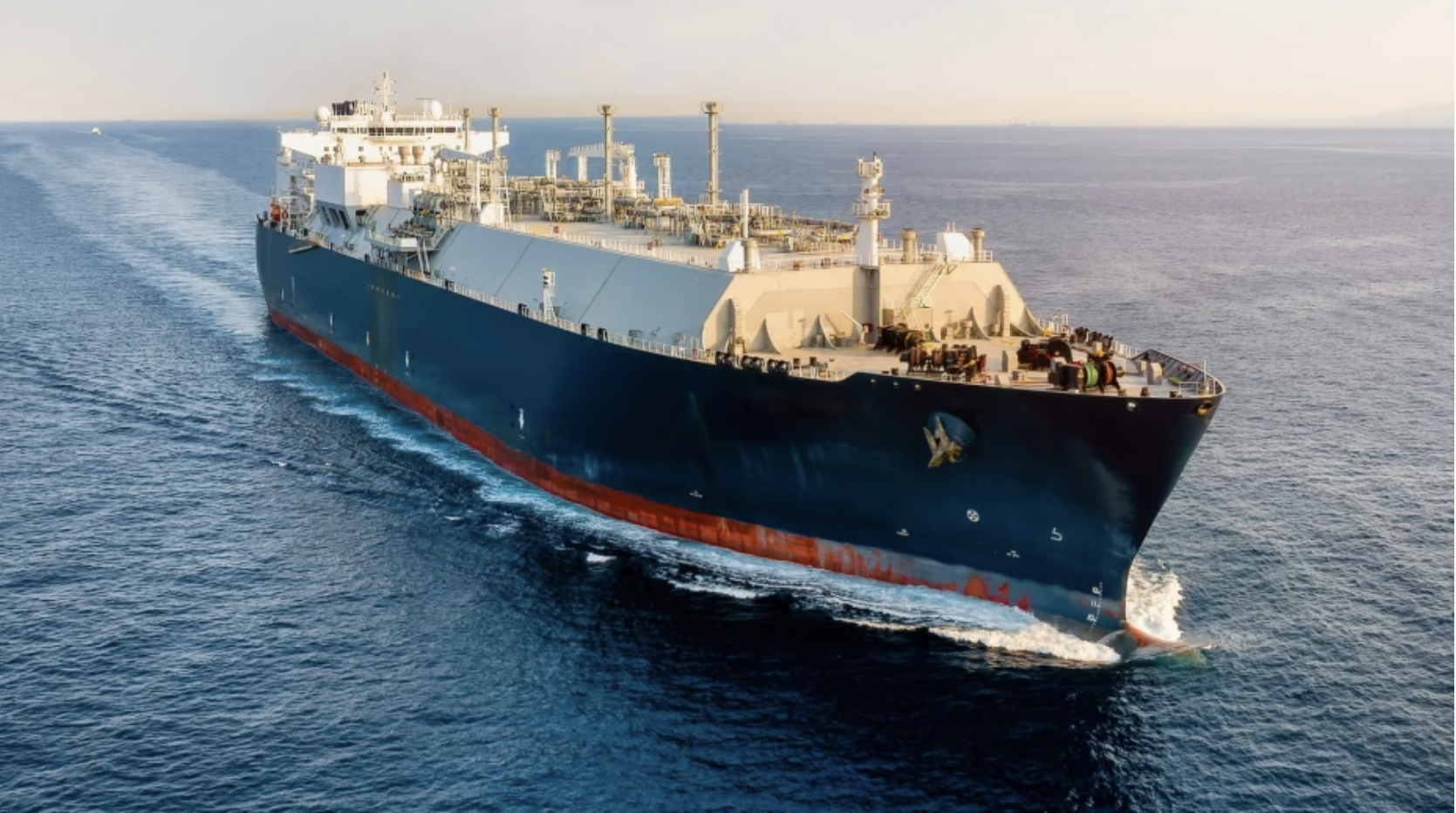
Russia destroyed 60% of Ukraine’s gas production—so where does Ukraine get gas now? (MAP)
The German route runs through Deutsche ReGas’s privately operated terminal on Rügen, with TotalEnergies supplying the LNG. The tanker Minerva Amorgos had to wait offshore for days as ice blocked the approach and a German federal icebreaker broke down—until two other icebreakers cleared the path.
After regasification, the gas moves through Poland into Ukraine’s system. Deutsche ReGas CEO Ingo Wagner called it a direct contribution to Ukraine’s energy security.
Naftogaz plans to import up to 1 billion cubic meters of US LNG in 2026.
The destruction that forced diversification
This buildout didn’t happen by choice. Russia avoided hitting Ukraine’s gas infrastructure for the first three years of the full-scale war—because those same pipelines carried Russian gas to European customers. When Ukraine terminated the transit agreement on 1 January 2025, Moscow’s restraint ended.
The attacks haven’t stopped.
In 2025, Russia carried out 229 attacks on Naftogaz facilities—more than the previous three years combined. Production capacity fell by 60%. Ukraine’s gas imports surged ninefold, from 724 million cubic meters in 2024 to 6.5 billion in 2025.
The attacks haven’t stopped. On 24–25 February, Russia launched about 60 drones at gas storage and production facilities in Kharkiv and Chernihiv oblasts over two consecutive days. Since the start of 2026, the company has recorded 26 attacks on its infrastructure.
Trending Now
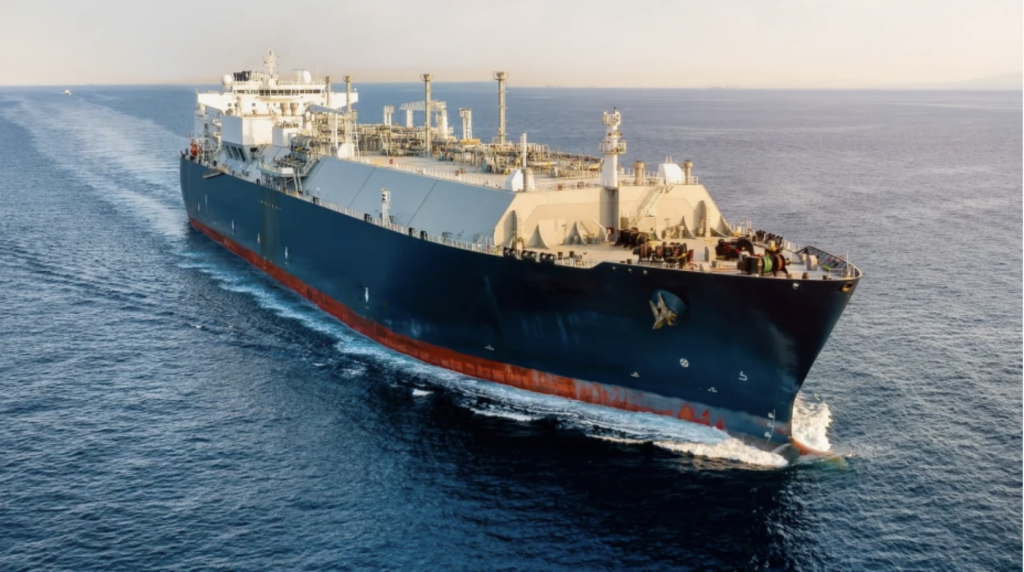
What Russia built for Ukraine
Russia’s campaign to cripple Ukraine’s energy system achieved its immediate objective: domestic production lies in ruins. Before the attacks, Ukraine depended heavily on its own gas fields.
Now it draws American LNG through four European terminals, financed by EBRD and EIB loans, Norwegian grants, and Ukrainian bank credit. Each new corridor makes the next round of Russian strikes less decisive.
The EU’s ban on Russian gas imports takes full effect by late 2027—making these corridors not just a wartime emergency measure but a permanent one.
“This winter is the most difficult since the start of the war, due to constant shelling of gas infrastructure and extreme cold weather,” the Naftogaz chief stated on the company’s website.
The EU’s binding ban on Russian gas imports takes full effect by late 2027—making these corridors not just a wartime emergency measure but a permanent redrawing of Europe’s energy map.


