
24 February 2026 marks four years since Russia's full-scale invasion of Ukraine. The Kremlin insists on continuing the war until "the root causes" of the conflict are eliminated—yet Russian diplomats and Putin himself struggle to define those causes, their stories ranging from the alleged threat of NATO expansion to the intrigues of the Cumans and Pechenegs, two nomadic peoples who roamed the Eurasian Steppes some eight centuries before the foundation of the Russian empire.
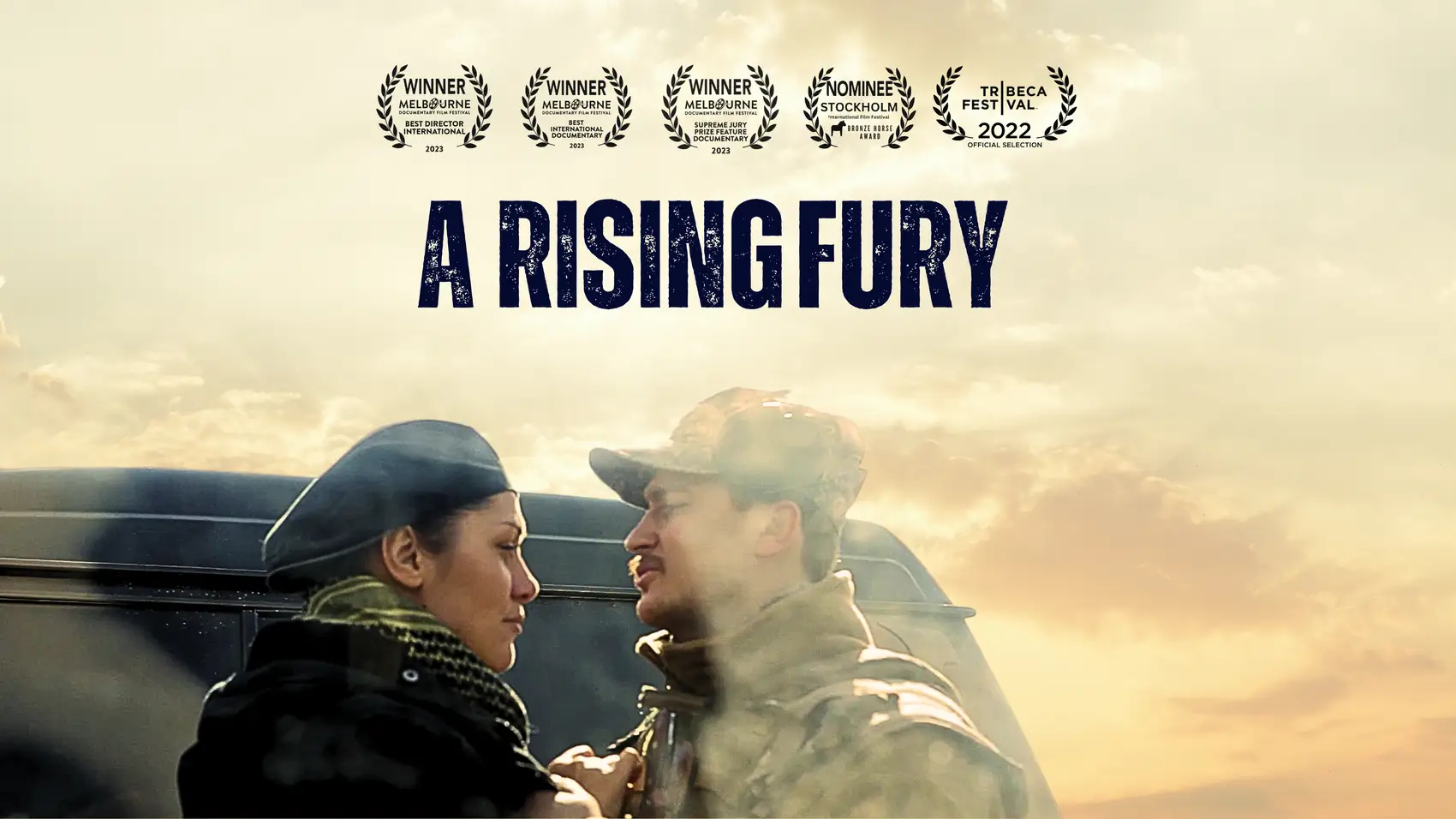
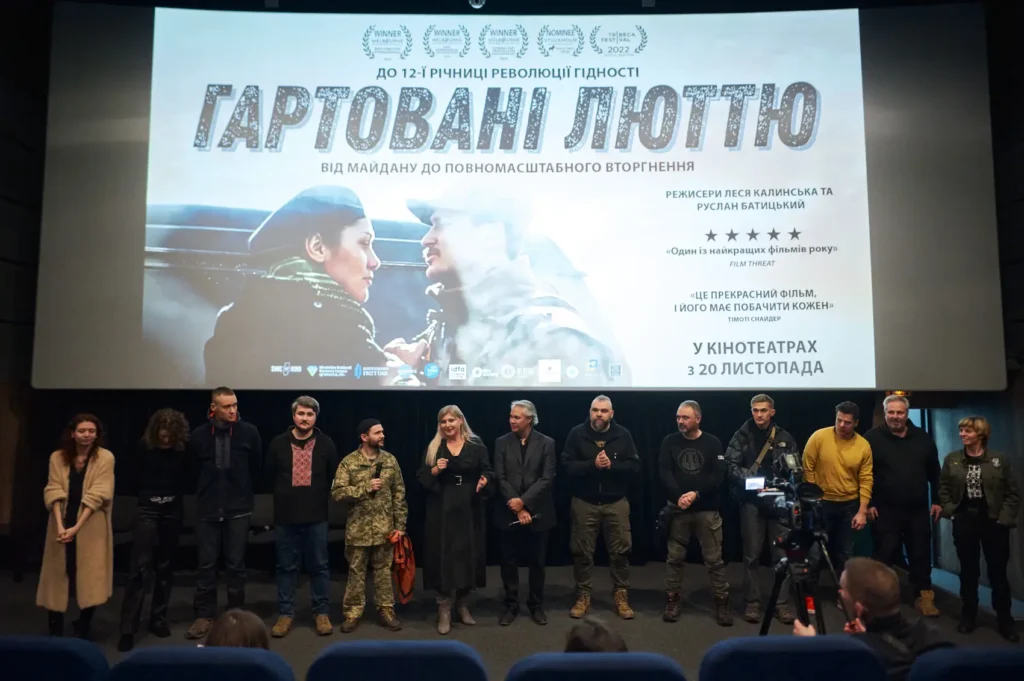
A Rising Fury, an award-winning documentary by Lesya Kalynska and Ruslan Batytsky, offers something Putin's storytelling never will: actual root causes, documented on camera.
The film follows Pavlo and Svitlana, a young couple whose love and lives are irrevocably shaped by war. Shot in cinéma vérité style and spanning nearly a decade—from the 2013 Revolution of Dignity on Kyiv's Maidan to the full-scale invasion—it chronicles the events that culminated in Europe's most devastating war in generations.
But what emerges is not merely a chronicle. It is an exposé of a long-laid plan.
The FSB operation hiding in plain sight
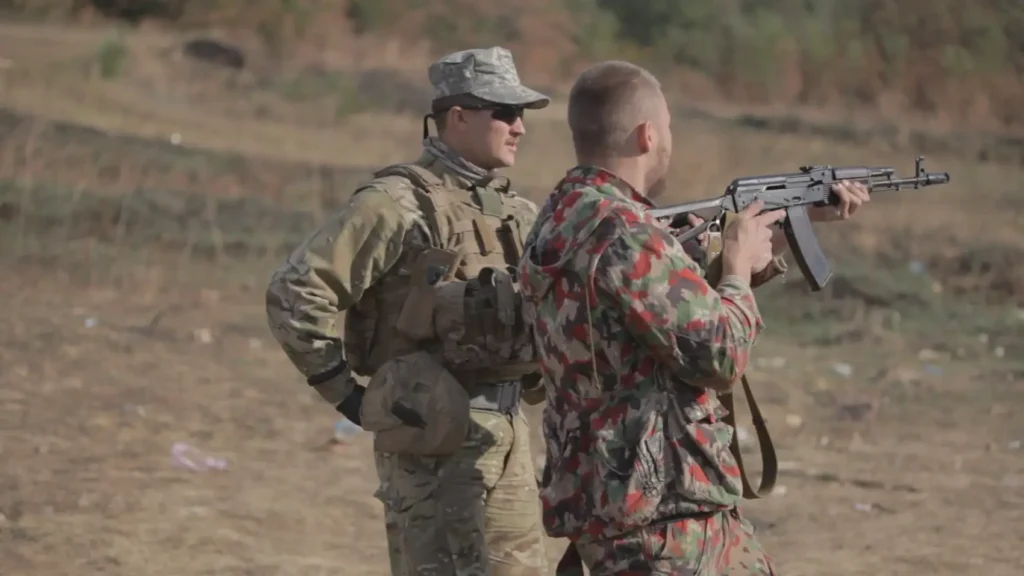
Years of careful investigation and trust-building paid off when Pavlo shared a labored testimony about his former involvement in a local Strikeball club—a paramilitary youth organization similar to Airsoft groups in the United States.
It turns out that in 2007, right around the time Putin delivered his revanchist speech in Munich, Russia's security services began quietly establishing a clandestine network of such clubs across eastern Ukraine. All operated under the seemingly benign banner of "patriotic education." The Moscow curators deliberately left vague which patriotism was being cultivated: Ukrainian or Russian. The ambiguity was not a flaw in the program but its essence.
The goal was to groom vulnerable teenagers from fractured families into personal loyalty to undercover Russian instructors.
In the volatile Donbas—a region still reeling from Soviet rule, sharing a porous border with Russia—the strategy proved devastatingly effective. Adolescents yearning for purpose and belonging found both. Pavlo would later describe the psychological method as confluence: the fusion of self and group forged through shared intensity and the intoxicating camaraderie of a common cause.
Under the guise of nurturing youth, Russia's operatives were training future combatants for the so-called "LNR" and "DNR" militias directly on Ukrainian soil. Once the groundwork was laid, the next steps were simple: give them weapons and deploy the newly modeled recruits against their own country.
By 2014, Russian troops entered Ukraine disguised as local insurgents, using former Strikeball players to advance the Kremlin's military objectives. The rest of the world, lulled by Putin's narrative of "self-determination" and a mythical "civil war," looked away. Many still cling to those fictions today.
"Human feelings are but a tool"
Pavlo's awakening was rude and painful. Igor, his trusted older friend, turned out to be one of these FSB instructors. In anticipation of the deadly armed raid on peaceful Maidan protesters—including Svitlana and Pavlo—he suddenly dropped his mask to warn them of the upcoming massacre.
"I do not want to catch you in the crosshair of my rifle," he said later, already during the war in Donbas, patronizing to the last.
"Pavlo was heartbroken upon learning the truth," Svitlana recalls. "As for them, human feelings are but a tool."
When it came to choosing sides, nearly the entire Strikeball team remained faithful to their Russian handler. But in Pavlo's case, the Kremlin's plans misfired. The young man they had groomed instead became a defender of the nation they sought to destroy.

The Euromaidan revolution, and what came after
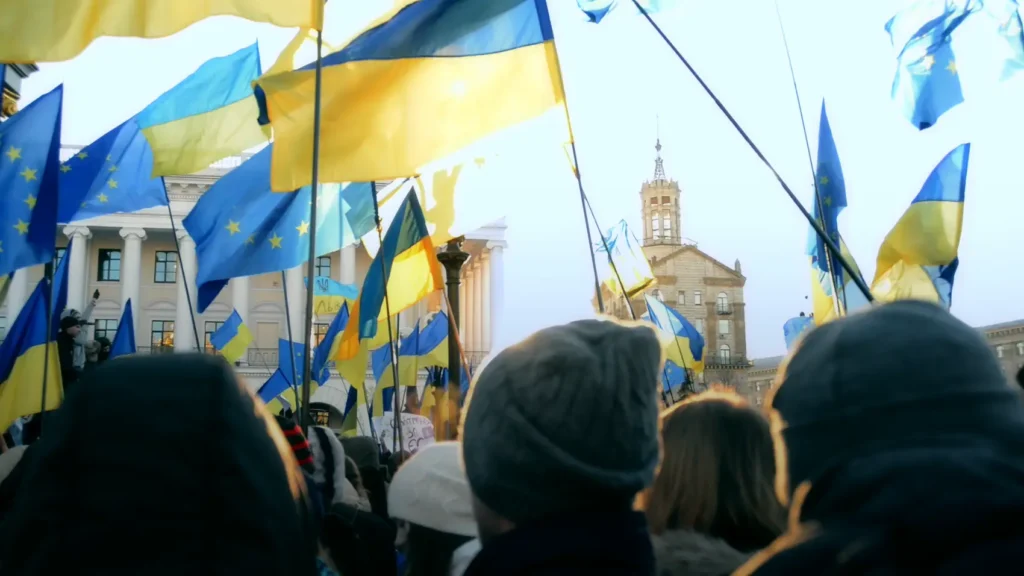
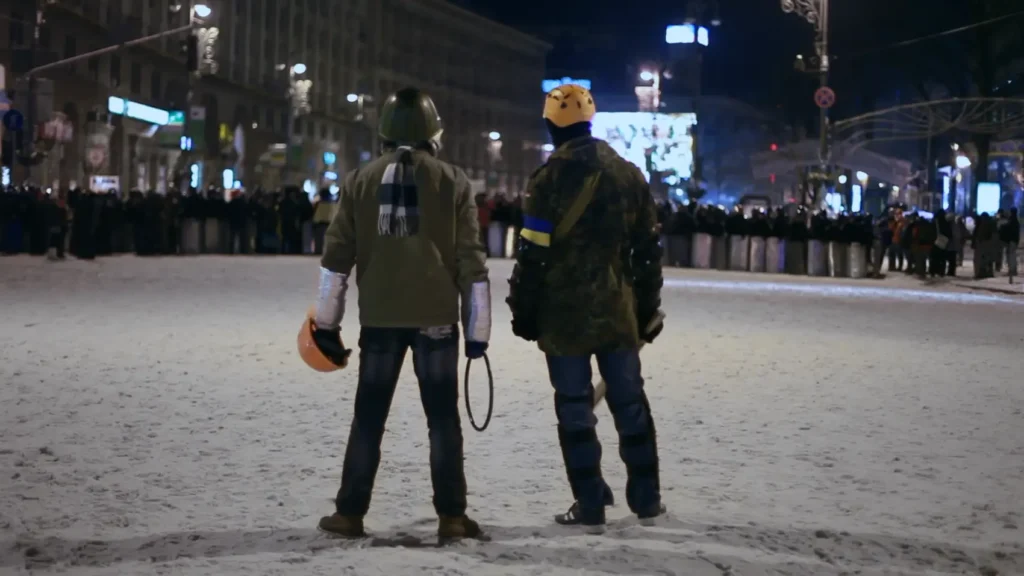
Kalynska and her team filmed under sniper fire on the Maidan. To film the evacuation of civilians and battles in 2014–2015, several team members of the film were embedded with the Ukrainian Armed Forces.
Their footage is an irreplaceable archive—brave and beautiful people of all ages waving Ukrainian flags, dancing to the folk-rock group Kozak System, tasting kutia, building barricades. The same people bleeding under the fire of Russia-backed snipers. Burying their dead, the legendary Heavenly Hundred.
A somber middle-aged woman in mourning approaches the film crew. She wants to know where exactly her son was shot dead: which street or park, near which lamp pole. No one can tell her. After exchanging heartfelt apologies, the mother lowers her eyes and walks away, collected and quiet. Her son is one of many who fell defending their country's freedom the night before.
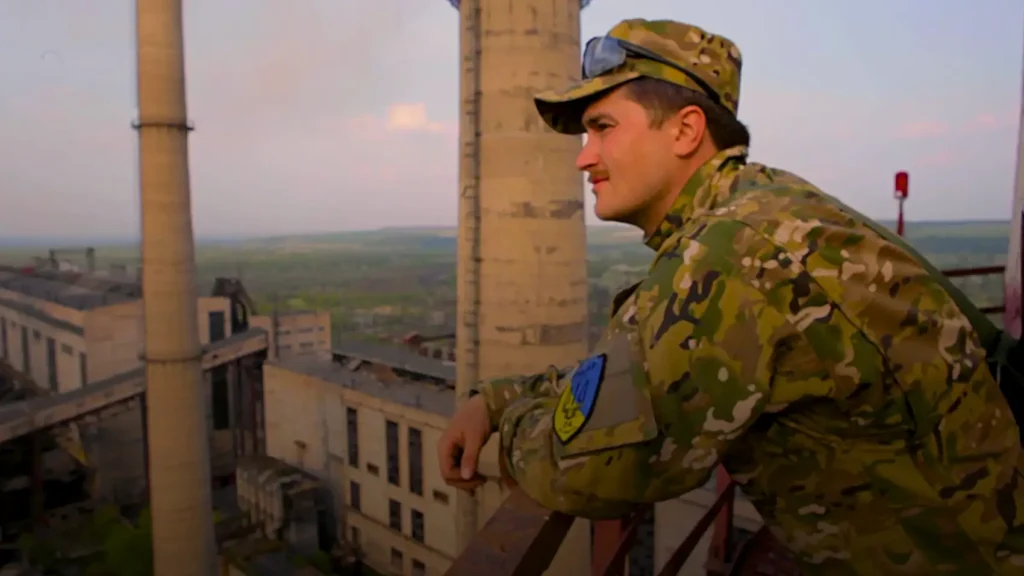
Pavlo enlists in the army after Russian forces occupy Alchevsk, the city of his father's birth in Luhansk Oblast—a "beautiful land, a home to Ukrainian Cossacks" that endured two Holodomors, waves of state-orchestrated population replacements, and forced Russification. The project was not merely to conquer territory but to erase memory.
"Your eyelashes are white, totally burnt out. And your head… all grey," Pavlo's mother tells him. Year 2014. She has just learned he will leave for his regiment the next morning.
A language shift caught on film
As someone who grew up in Luhansk, in Ukraine's eastern borderlands, I felt an immediate kinship with Pavlo's story. The film captures something I recognize in my bones: the moment when the language of the aggressor stops feeling like your own.
In 2014–2015, Pavlo, Svitlana, and others in the film speak either Russian or surzhik: a mix of Ukrainian and Russian. As the war gains momentum, the Russian language recedes. A unit commander, Zola, speaks Ukrainian with his team but switches to Russian when addressing distressed refugees from the east. An elderly woman from Shchastya begins to speak about Ukraine's unity in Russian, then corrects herself mid-sentence: "Godamy Ukraina byla… Rokamy Ukraina bula iedyna! [Ukraine has been united for years]!"
Among survivors of torture in Russian captivity, not one returns home still speaking Russian.
"No such buses ever arrived"
In 2014, people in the Donbas braced themselves for what Russian state media had promised: "buses full of bloodthirsty Banderites," ultranationalists from the west who would punish them for speaking Russian.
No such buses ever arrived.
Instead, convoys rolled in from across the Russian border—buses filled with operatives and agitators from the Rostov region. They stormed administrative buildings and tore down Ukrainian flags. Local residents recognized many of them. These were the same desperate faces that, after the collapse of the Soviet Union, had once poured across the border to raid grocery stores for bread and sugar. The Donbas, impoverished and scarred as it was, had still offered a better life than the grinding poverty of Rostov just a few miles away.
It was Rostov's misery, not Kyiv's governance, that came knocking.
At a 2014 open-air market in Rivne, in Ukraine's west, sweet Ukrainian grannies tell Pavlo and his brothers-in-arms that Luhansk and Donetsk "should stand for themselves." Pavlo softly retorts: "We do. I am from Donetsk."
"With or without support"
"Do you think a bigger war is coming?" the director asks Pavlo on camera in 2021. "100%," he replies. "Putin will NOT leave us alone. But we will continue fighting, with or without support, as we have been since 2014."
Four years into the full-scale war, his words read less as prediction than as prophecy.
The chilling testimonies of those who escaped Russian occupation dissonate sharply with today's talks about permanently ceding the region. High-profile documentaries such as 20 Days in Mariupol have drawn global attention, but independent works like A Rising Fury—which lack the backing of major distributors—are no less vital. They demand to be seen, not solely for the truths they reveal about this war, but for the cautionary tale they offer about humanity's repeated surrender to imperial illusion.
The film ends with a song: Kozak System's "Ukrainian Sun." A long list of credits—first and foremost to the living and the fallen defenders—passes before our eyes.
"Ukrainian sun has risen.
Let it shine brightly.
The price is too high.
We will not forgive them."
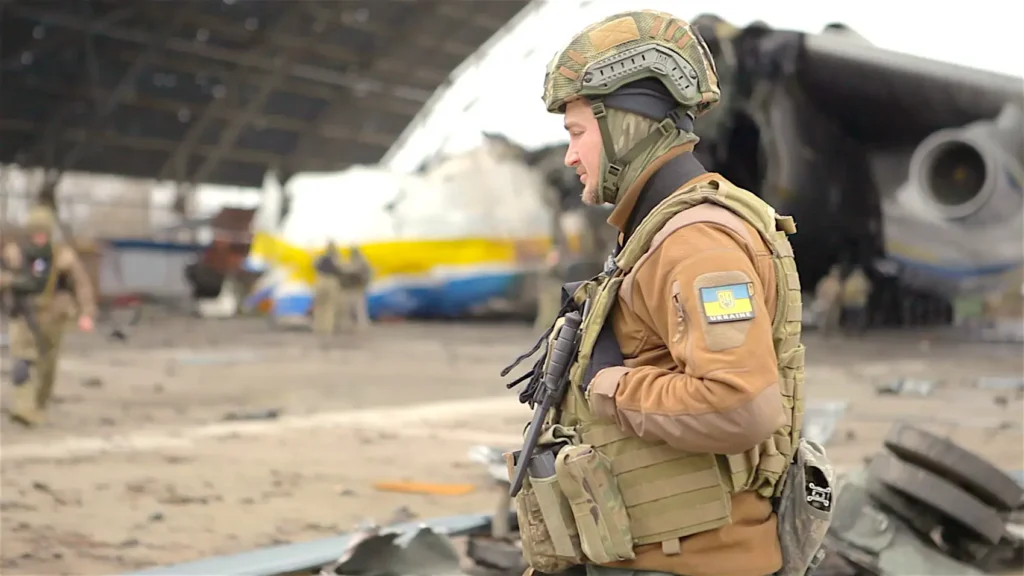
The beauty of Ukrainian landscape opens from the perspective of a soldier fallen in combat. The hero's soul wanders through the grain, rises above the ground, soars over the mountains, and reaches the sun.
The chirping of birds returns. The sun rises over Ukraine.
Find out more about the film on its official website.
More films about the Euromaidan revolution and war:
-
WINTER ON FIRE: Oscar-Worthy Documentary on Ukraine’s Euromaidan Revolution
-
Volunteers supply 95% of Ukraine’s military trucks. Watch their 30-hour drive to Kyiv
-
Ten movies about Maidan
-
This one video tells about a year of revolution and war in Ukraine
-
Soldiers of Song: documentary on how Ukraine’s musicians battle Russian “cultural genocide” through music