“Painful but this is war”: Ukraine weighs radical decision against Russian FPVs dropped from Shaheds and controlled via LTE

One adviser to the Defence Ministry warns that curbing bulk SIM sales could narrow the enemy’s exploitation of Ukrainian mobile networks.
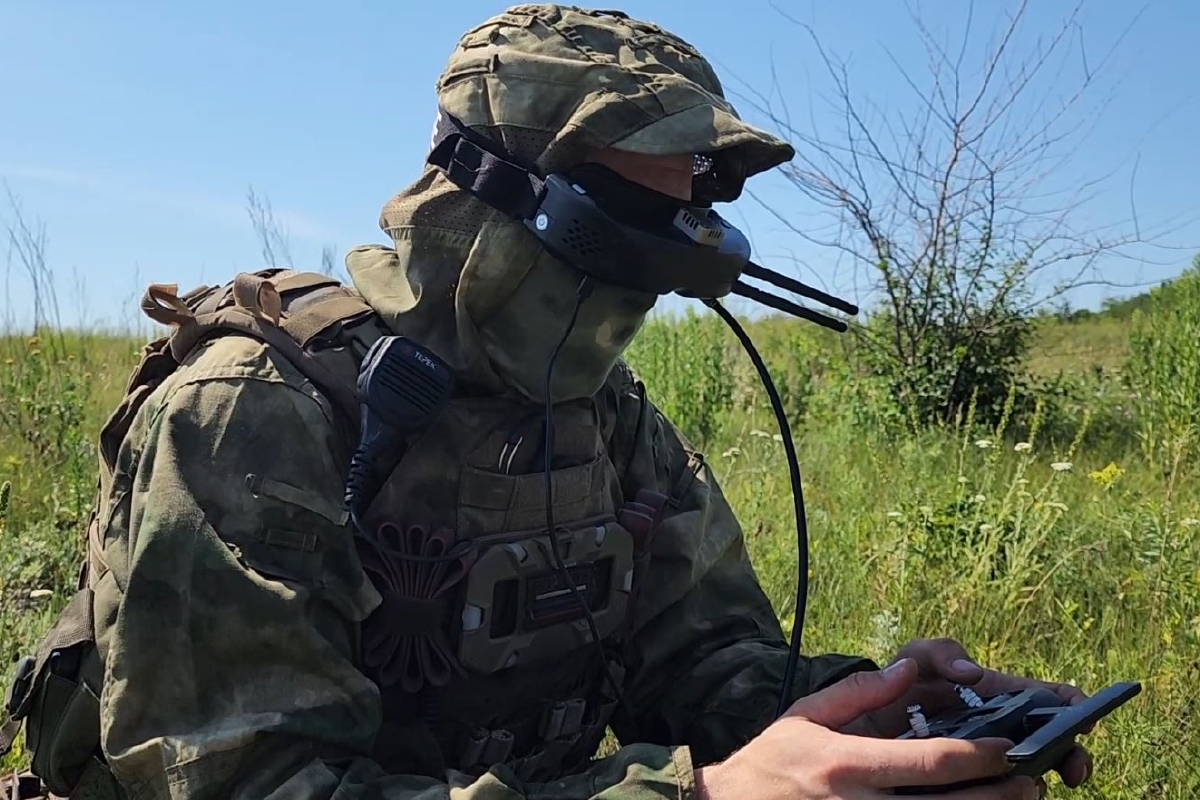
Russian FPV drone operator.
A Russian FPV drone operator. Russian Defense Ministry photo.
“Painful but this is war”: Ukraine weighs radical decision against Russian FPVs dropped from Shaheds and controlled via LTE

One practical countermeasure against Russian FPV drones being dropped from UAVs could be the sale of SIM cards by passport with quantity limits. The decision is politically sensitive and would require a vote in the parliament, but it could narrow the scale of abuses already exploited by the Russians, Serhii Beskrestnov, an adviser to Ukraine’s Defense Minister, says. 

On 17 February, a video reportedly from Ukraine's Sumy Oblast confirmed a new tactic on front lines: the Russians have begun dropping FPV drones from Shahed-type strike UAVs.

According to the military, FPVs can operate for up to 45 minutes and may be controlled from outside Ukraine, increasing operator survivability against counterstrikes.

Delivering FPV by Shahed and control via LTE

According to Beskrestnov, Russian forces have begun carrying FPV drones on Shahed-type strike UAVs and dropping them in areas with stable mobile coverage, after which the FPV drones are controlled via LTE networks.

“They realized that FPV drones can be delivered by winged UAVs to places with good and stable mobile coverage and then dropped onto targets,” Flash explains.

Under this scheme, the operator controls the drone from Russian territory, while the flight after release lasts only a few minutes. To access the network, the enemy uses, among other things, Ukrainian SIM cards.

“Work on this problem is ongoing around the clock,” Beskrestnov notes.

SIM cards by passport: unpopular, but capable of reducing abuse

Flash stresses that passport-based SIM sales will not solve the problem 100%, since even in Russia, where such a practice exists, SIM cards can be obtained through shadow channels. However, the measure would limit bulk purchases for sabotage.

“Right now, any ‘waiter’ can buy 3,000 SIM cards without any problems and send them to Russia. Passport-based sales would at least curb the massive, uncontrolled scale of this process,” he emphasizes.

The expert also points to a practical constraint: the Russians typically use new SIM cards, and buying large quantities of SIMs from random individuals for FPV operations is unrealistic.

“No one is going to run around buying SIM cards from pensioners for FPV missions,” Flash states.

Radical measures against connectivity: painful for the country, but this is war

Among the alternatives, Beskrestnov mentioned temporary technical restrictions on data transmission in certain formats or areas, acknowledging their social cost.

“We all understand how painful such actions are for the country. Unfortunately, friends, this is war. It affects all of us in all its forms,” he adds.

To suggest a correction or clarification, write to us here

You can also highlight the text and press Ctrl + Enter

Please leave your suggestions or corrections here


    Euromaidan Press

    We are an independent media outlet that relies solely on advertising revenue to sustain itself. We do not endorse or promote any products or services for financial gain. Therefore, we kindly ask for your support by disabling your ad blocker. Your assistance helps us continue providing quality content. Thank you!

    Ads are disabled for Euromaidan patrons.

    Support us on Patreon for an ad-free experience.

    Already with us on Patreon?

    Enter the code you received on Patreon or by email to disable ads for 6 months

    Invalid code. Please try again

    Code successfully activated

    Ads will be hidden for 6 months.