
Every month, Hungary pays Russia for imports of Russian crude at a discount, refines it, sells the oil products at premium European market prices, and pockets the difference.
Hungarian drivers never see the savings at the pump. MOL, the country's dominant oil company and refinery operator, sees them in its margins. And the Kremlin receives substantial export revenues—EUR 130 million monthly—that help finance its war against Ukraine.
This arrangement is not an accident of geography or infrastructure. It is a political business model—and understanding it explains everything about Budapest's latest diplomatic theatrics.
The "technical necessity" that isn't
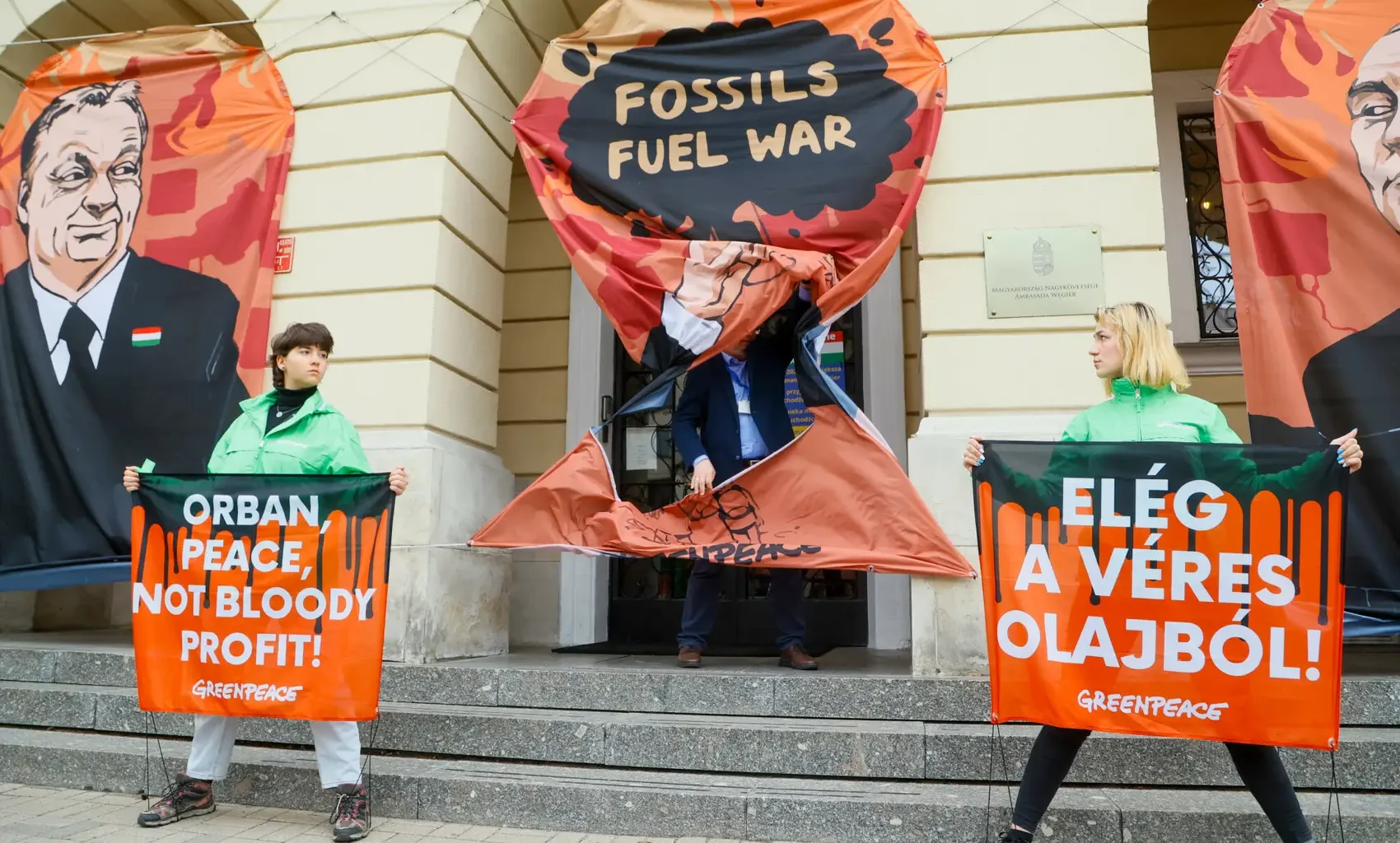
When Hungary's foreign minister Péter Szijjártó rushed to Zagreb to ask Croatia for help after Russian oil flows via Ukraine were halted, the move was presented as an emergency appeal for energy security. It was nothing of the sort.
A report by the Center for the Study of Democracy and partners demonstrates that Hungary's continued imports of Russian crude are a political choice, not a technical necessity. The country has full access to alternative supplies via the Croatian Adria pipeline. Its refineries can process non-Russian crude. Transit costs via Adria are comparable to the Druzhba pipeline—in some cases lower.
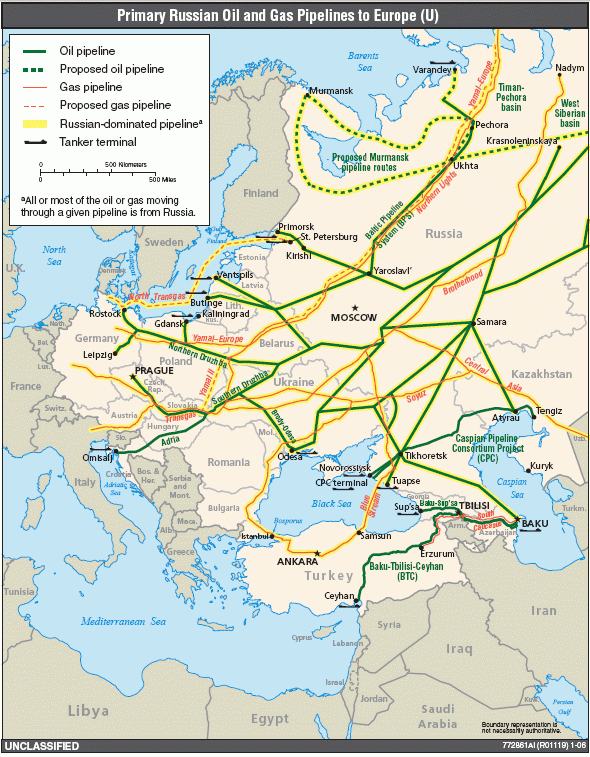
Yet since the EU granted a temporary derogation in 2022, Hungary has turned that exception into a permanent business model.
By 2025, Russian crude accounted for more than 90% of Hungary's oil imports. That is not diversification. It is self-imposed captivity.
Bulgaria provides the sharpest rebuttal. Sofia ended its Russian crude imports on 1 March 2024 after parliament voted to phase out the derogation. Alternative crude from Kazakhstan and Iraq now feeds the Burgas refinery, which reconfigured for non-Russian grades. Retail fuel prices remained stable or even fell.
The supposed "technical impossibility" exists mainly in government press releases.

Follow the money: from pipeline to political machine
The MOL margins, originating from the discounted Russian crude, feed an entire political ecosystem. MOL's dividends—inflated by cheap Russian feedstock—flow downstream into Viktor Orbán's patronage network. Among the beneficiaries: the Mathias Corvinus Collegium (MCC), the regime's flagship think tank. According to investigative reporting and NGO analysis, MCC received more than €50 million in a single year from dividends linked to MOL.
MCC is not an ordinary academic institution. Its Brussels branch presents itself as a think tank but functions as a political embassy for Orbánism inside the EU quarter. It hosts events attacking the Green Deal, flirts with climate-science denial, promotes narratives casting EU institutions as illegitimate constraints on "sovereignty," and employs figures linked to pro-Kremlin media ecosystems. It has exploited loopholes in the EU Transparency Register to avoid meaningful disclosure of its funding.
The chain deserves stating plainly: Russian oil, sold at a discount to MOL, generates outsized margins. Those margins produce dividends. Those dividends fund MCC. MCC runs influence operations aimed at dismantling the EU institutions that enforce sanctions on Russian oil. The pipeline feeds the machine that protects the pipeline.
In 2025, MCC and its allies openly promoted sweeping institutional changes—including dismantling the European Commission and the Court of Justice of the EU—under the banner of "restoring member state sovereignty." Remove the bodies that enforce EU law, and the problem of EU law goes away.
What Szijjártó is really asking for

Routing Russian oil through Croatia would not merely stretch EU sanctions—it would tear a hole in them. The entire sanctions regime is built on the idea that exemptions are temporary, narrow, and aimed at enabling transition. Hungary has done the opposite: used its derogation to entrench dependence, threaten vetoes, and litigate against the very phase-out plan it previously accepted.
That is not a legal argument. It is hostage-taking with footnotes.
Allowing a sanctioned commodity to re-enter the EU via a different member state would create exactly the loophole Brussels has spent three years trying to close. It would tell every member state that EU sanctions are negotiable if you invest enough effort into sabotaging them. It would tell Ukraine that European unity has a convenient side door.
So when Szijjártó demands "flexibility" from Brussels, he is not defending Hungarian drivers. He is defending a rent-seeking system that channels discounted Russian oil into private profit and political power.

What the EU can actually do
The real question is no longer whether Hungary can live without Russian oil, but whether the European Union is willing to enforce its own law.
The temporary exceptions for Hungary and Slovakia from the EU-wide sanctions on Russian oil were never meant to be permanent. The Commission now has ample evidence that Hungary has viable alternatives via the Adria pipeline and adaptable refineries.
Keeping the exemption alive has become a political choice, not a necessity.
Brussels also has financial leverage it has so far used only timidly. Under the EU’s rule-of-law conditionality framework, cohesion and recovery funds can be frozen or conditioned when a government persistently violates EU law or undermines common policies.
Systematically abusing an energy derogation to weaken sanctions—and flirting with sanctions-evasion schemes via third countries—fits that description uncomfortably well.
Finally, the legal toolbox already exists: infringement proceedings before the Court of Justice, and competition or state-aid scrutiny of privileged access to discounted Russian crude.
None of this requires new treaties or heroic legal creativity. It requires one decision: to stop treating sanctions enforcement as optional—and start treating it as the price of EU membership.
Cut the cord
Hungary, as a country, would be fine without Russian oil. The technical case for diversification is strong. The infrastructure exists. The refineries can adapt. The regional examples are there. The EU has offered a roadmap and support to make the transition predictable and orderly.
What would not survive is the political economy built around cheap Russian crude, opaque profits, and ideologically motivated obstruction.
The answer should be boringly legalistic, painfully clear, and refreshingly unsentimental: the derogation era is over. No rerouting. No creative interpretations. No more sanctions theatre.
Hungary will survive without Russian oil. The only thing that won't is the political business model built on it.
Editor's note. The opinions expressed in our Opinion section belong to their authors. Euromaidan Press' editorial team may or may not share them.
Submit an opinion to Euromaidan Press