
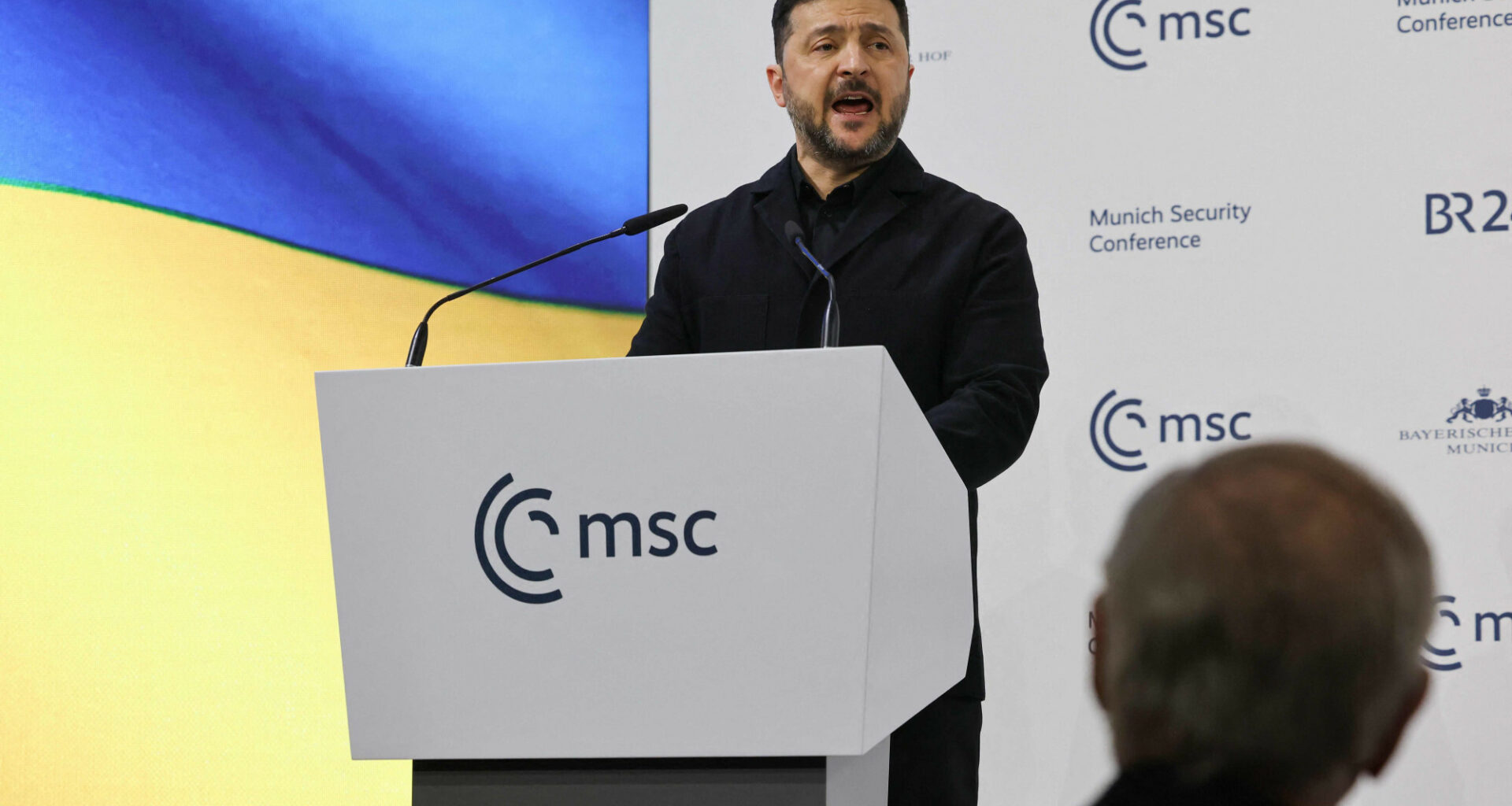

In January at Davos, Zelenskyy scolded Europe for loving to "discuss the future" while "avoiding action today." Three weeks later, at the Munich Security Conference, the word "thank you" appeared 30 times in his speech. European Pravda's Serhii Sydorenko noted this may be a record for Zelenskyy's public appearances.
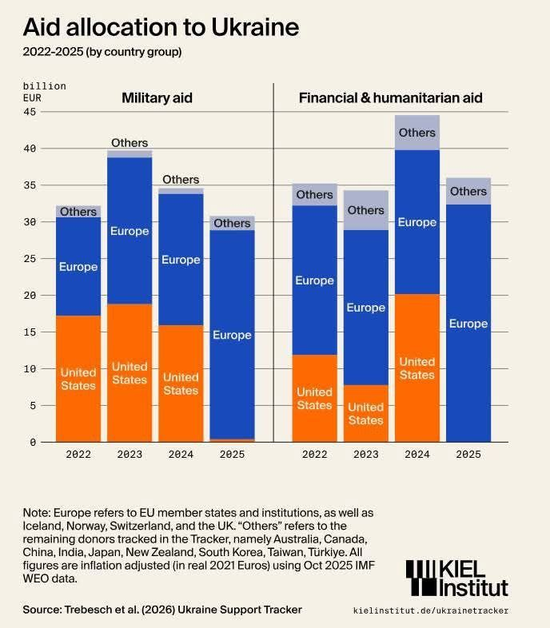
The gratitude had a reason—and a target. In 2025, Europe overtook the United States as Ukraine's largest military and financial backer for the first time since the full-scale invasion. US military aid dropped 99% under Trump. European military aid rose 67%. The Kiel Institute's latest data shows EU institutions now provide 98% of Ukraine's incoming support.
Each of Zelenskyy's 30 thank-yous was tied to a specific, concrete element of that support—not abstract goodwill. Germany, Norway, the Netherlands by name. NATO Secretary General Mark Rutte personally. The European Parliament for the €90bn loan and for the Prioritized Ukraine Requirements List (PURL) program, which funds Ukraine's Patriot missiles.
The shift was deliberate—what Sydorenko called a "correction of mistakes" after Davos—by a wartime leader learning in real time where his leverage actually lies.

The setting amplified the message: Zelenskyy was accepting the Ewald von Kleist Award on behalf of the Ukrainian people, awarded for "courage, self-sacrifice, and unwavering determination to defend their freedom and the freedom of all Europe."
The gratitude wasn't just diplomatic courtesy. It was a carefully staged show of unity—staged for an audience of European leaders whose support Zelenskyy needs more than ever.
With US-brokered talks in Geneva beginning this week and Washington signaling it views the negotiations as a bilateral US-Russia affair, Zelenskyy arrived in Munich with one overriding goal: to make Europe's support so visible and so invested that no peace deal can happen without European buy-in. Gratitude, deployed at scale, is a form of binding.

Why Zelenskyy needs Europe more than ever
For most of the full-scale war, Ukraine's primary diplomatic relationship was with Washington. The US provided the heaviest weapons, the intelligence, and the diplomatic muscle. Europe was important but secondary.
That equation has inverted. The Trump administration wants a deal, and it wants one fast. Zelenskyy told Munich that the US has set a June 2026 deadline for Ukraine and Russia. But his central complaint was pointed: "The Americans often return to the topic of concessions, and too often, those concessions are discussed only in the context of Ukraine, not Russia."
Europe, by contrast, now holds most of the cards that matter for Ukraine's long-term survival: the sanctions regime, €210bn in frozen Russian assets, the €90bn loan, the EU membership process, and an increasingly significant share of the weapons. The shift is accelerating—EU institutions now provide 90% of Ukraine's financial aid, up from 50% in 2022. The €90bn loan, the frozen assets pipeline, the drone joint ventures: each deepens a dependency that would survive even a change of government in Washington.
Zelenskyy put it bluntly from the Munich stage: "Europe is practically not present at the table. It's a big mistake, to my mind. And it is we, Ukrainians, who are trying to bring Europe fully into the process."
"Europe is practically not present at the table. It's a big mistake. And it is we, Ukrainians, who are trying to bring Europe fully into the process."
Volodymyr Zelenskyy, Munich Security Conference, 14 February 2026
That line is worth pausing on. Ukraine, the country being bombed daily, is the one lobbying for its allies to be included in talks about its own future. The inversion is telling—and it explains why every "thank you" in Munich was aimed not at the past, but at the future.
Rubio's snub—and what it signals for Geneva
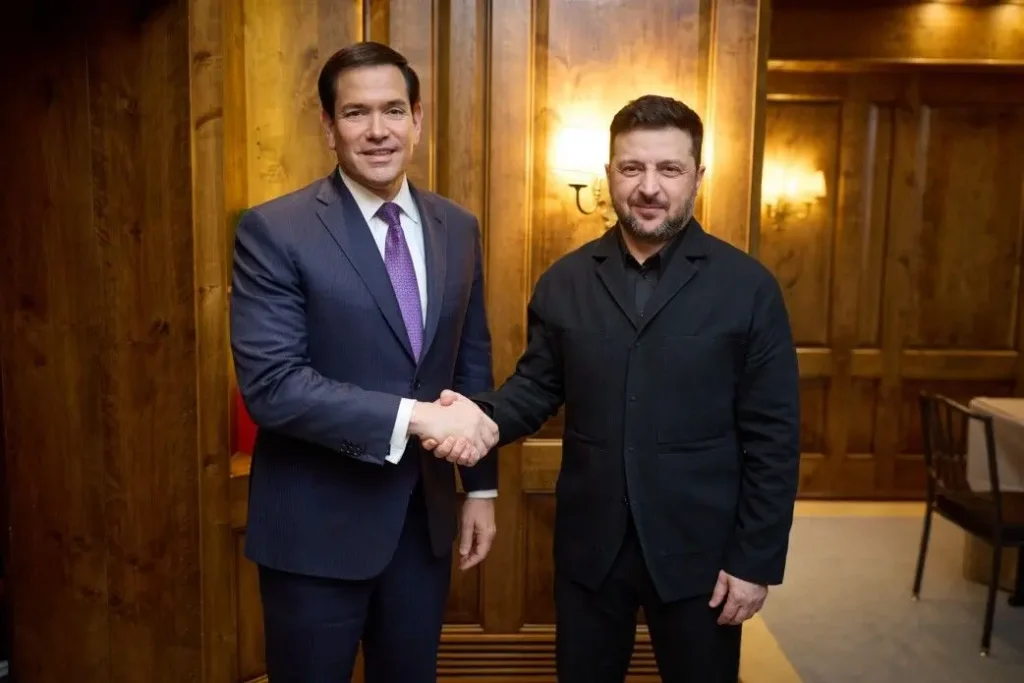
The most underreported moment of the conference happened before the speeches began. US Secretary of State Marco Rubio was expected to attend the Berlin Format meeting on Ukraine—a gathering of a dozen European leaders, Zelenskyy, the heads of the European Commission, European Council, and NATO. He canceled at the last minute, citing "scheduling conflicts."
One European official told the Financial Times the situation was "insane."
Rubio met Zelenskyy bilaterally. He met Merz bilaterally. He met the Chinese and Syrian delegations. But he skipped the one meeting where Europe sat collectively at the table to discuss Ukraine's future.
The signal was hard to miss: Washington does not want Europe shaping the peace process.
This tracks with a broader pattern. Rubio skipped the NATO foreign ministers in December. Defense Secretary Pete Hegseth skipped NATO defense ministers the same week as Munich. Rubio has vowed to boycott the G20 in South Africa.
The Geneva talks beginning this week will test whether this pattern holds.
Russia has replaced its delegation lead—swapping military intelligence chief Kostyukov for Vladimir Medinsky, whom Ukrainian officials accuse of delivering history lectures instead of negotiating. NATO Secretary General Rutte said Medinsky's appointment signals Russia doesn't actually want a deal.
Latvia's President Rinkēvičs put it bluntly: "Frankly, I can't imagine we are going to have a deal in 2026."
Europe arms up—and Ukraine plugs in
Zelenskyy's gratitude landed on fertile ground because Europe is already moving toward a genuine defense transformation—faster than most observers expected.
German Chancellor Friedrich Merz opened the conference by declaring the post-war rules-based international order dead. Germany alone will invest "hundreds of billions of euros" in defense. He disclosed, for the first time publicly, that he has begun talks with French President Macron on European nuclear deterrence—integrating France's estimated 290 warheads into a broader European security architecture.
Trending Now
Macron confirmed the dialogue, calling for Europe to become "a geopolitical power with independent defense." Danish Prime Minister Mette Frederiksen has said 2035 is too late for Europe's rearmament. The European Parliament has approved the EU's €90bn loan package for Ukraine. The EU's ReArm Europe plan envisions mobilizing up to €800bn for armaments.
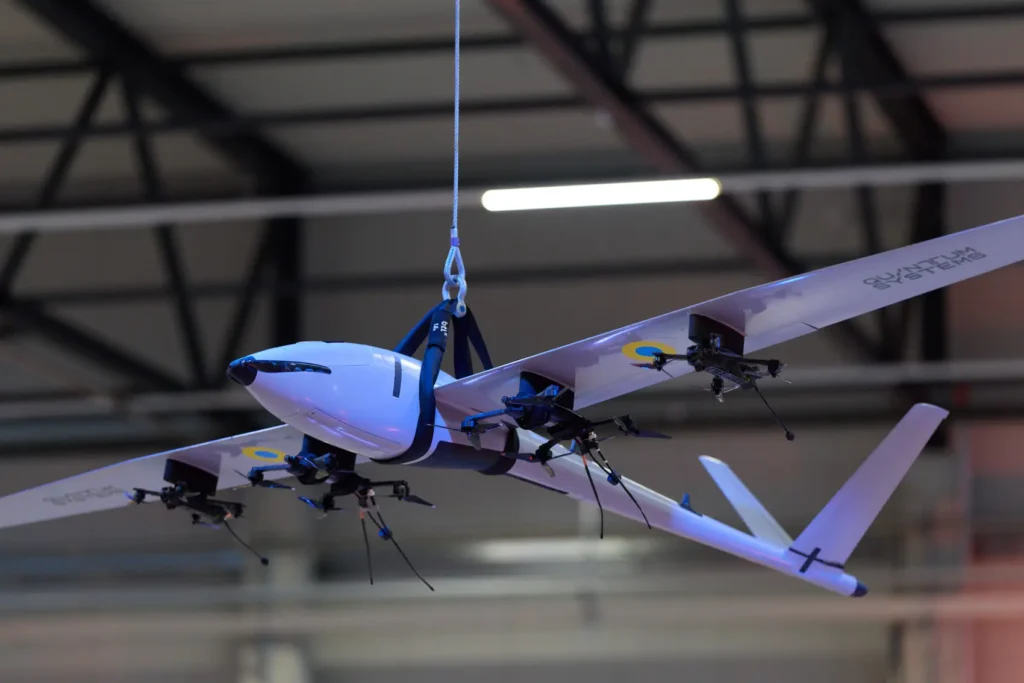
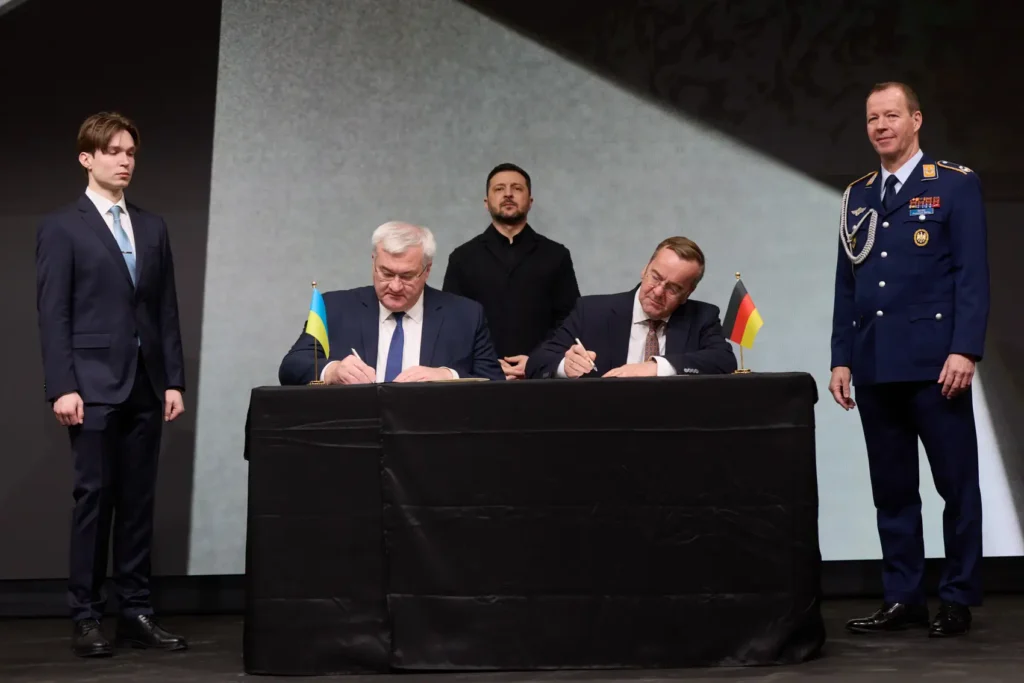
But something concrete happened on Munich's margins that mattered more than any speech. Zelenskyy and German Defense Minister Boris Pistorius visited Quantum Frontline Industries—a German-Ukrainian joint venture that handed Zelenskyy the first Ukrainian drone manufactured in Germany.
The Linza 3.0 is AI-enabled, battle-tested, and the facility plans to produce 10,000 units per year. Pistorius called the timeline "lightspeed"—two months from announcement to production. Ukraine plans ten more such joint ventures across Europe by the end of 2026.

This is what Zelenskyy's gratitude reinforces: not charity, but a transaction. Ukrainian battlefield innovation meets European industrial capacity. The 30 thank-yous are the receipt for a partnership that Europe can no longer walk away from without cost.
"This is modern Ukrainian technology. Battle-tested. Powered by AI. It will strike, it will scout, it will protect our soldiers."
Volodymyr Zelenskyy on receiving the first German-manufactured Ukrainian drone, 13 February 2026
The echoes of 1938—and the limits of gratitude
Zelenskyy hasn't entirely abandoned the sharper edge. In his main speech, he drew a direct parallel between current peace pressure and the 1938 Munich Agreement—at the Munich Security Conference, in Munich. "It would be an illusion to believe that this war can now be reliably ended by dividing Ukraine—just as sacrificing Czechoslovakia didn't save Europe from a greater war."
He called Putin "a slave to war" and took a swipe at Hungary's Viktor Orbán, thanking him for "pushing us all to be better—so that we are never like him, someone who seems to have forgotten the word 'shame.'"
Then the line that cut through the gratitude: "We can't save lives by saying thank you."
That's the tension Zelenskyy is navigating. He needs European goodwill—but he also needs European action.
The 30 thank-yous are a strategy from a leader who watched his Davos combativeness backfire—at Davos, he accused Europe of being "lost" and living in a "Groundhog Day" of inaction, then NATO pushed back publicly on his claims about delayed Patriot deliveries, and a PURL funding dispute had to be quietly walked back.
Zelenskyy is learning that appreciated allies deliver faster than blamed ones.
What happens next—and what it costs
His ask is clear: security guarantees of at least 20 years, a date for EU accession with Ukraine technically ready by 2027, and Europe at the negotiating table. He got encouraging noises on all three. He got commitments on none.
What Zelenskyy is building is something more durable than a single conference outcome: a European coalition so invested in Ukraine's survival that it becomes structurally impossible to cut a deal over Kyiv's head. The €90bn loan, the frozen assets, the drone joint ventures, the Merz-Macron nuclear dialogue—each creates a thread of dependency that strengthens Ukraine's position regardless of what happens in Geneva.
None of these threads is unbreakable. The €90bn loan runs through a "money for reforms" pipeline that Brussels froze entirely last July over anti-corruption backsliding; the €210bn in frozen assets remain legally contested and require an emergency clause to escape Hungary's veto cycle; sanctions relief still demands unanimity—one member state can unravel the whole structure.
It's not a guarantee. But it's a structure. And structures outlast speeches.
The cost of this strategy is patience—a commodity measured in Ukrainian lives. Every week of diplomatic maneuvering is a week of Russian bombardment. The missiles that struck Ukraine on 12 February—24 ballistic missiles and 219 drones—arrived just days before Zelenskyy took the stage in Munich. The air defense missiles that intercepted them had arrived from partners "just a few days earlier." On 1 February, twelve miners were killed on a bus in Ternivka after their shift—and the drone operators directed a second strike at the survivors climbing from the wreckage.
Overnight on 10-11 February, in Kharkiv Oblast, a family evacuated from Zolochiv looking for somewhere safer was killed on their first night: twin two-year-olds Ivan and Vladislav, one-year-old Miroslava, and their father Hryhoriy—under the rubble. Their mother, Olha, 35 weeks pregnant, was pulled alive from what remained.
"We can't save lives by saying thank you."
Volodymyr Zelenskyy, Munich Security Conference, 14 February 2026
That is the margin Ukraine operates on. Gratitude is a strategy. But the gap between a thank-you and a Patriot interceptor is measured in seconds, not speeches.
Read also
-
Europe’s Groundhog Day: Zelenskyy demands Europe stop waiting and start acting
-
Carney to democracies: the old world order is gone — act like it
-
What West mistakes for Ukraine’s peace talks is Soviet psychological warfare: Ex-military chief reveals four stages of Russia’s Cold War–era “Gromyko Method”
-
Russia’s info-op worked. Ukraine is now haggling over how much to surrender


