
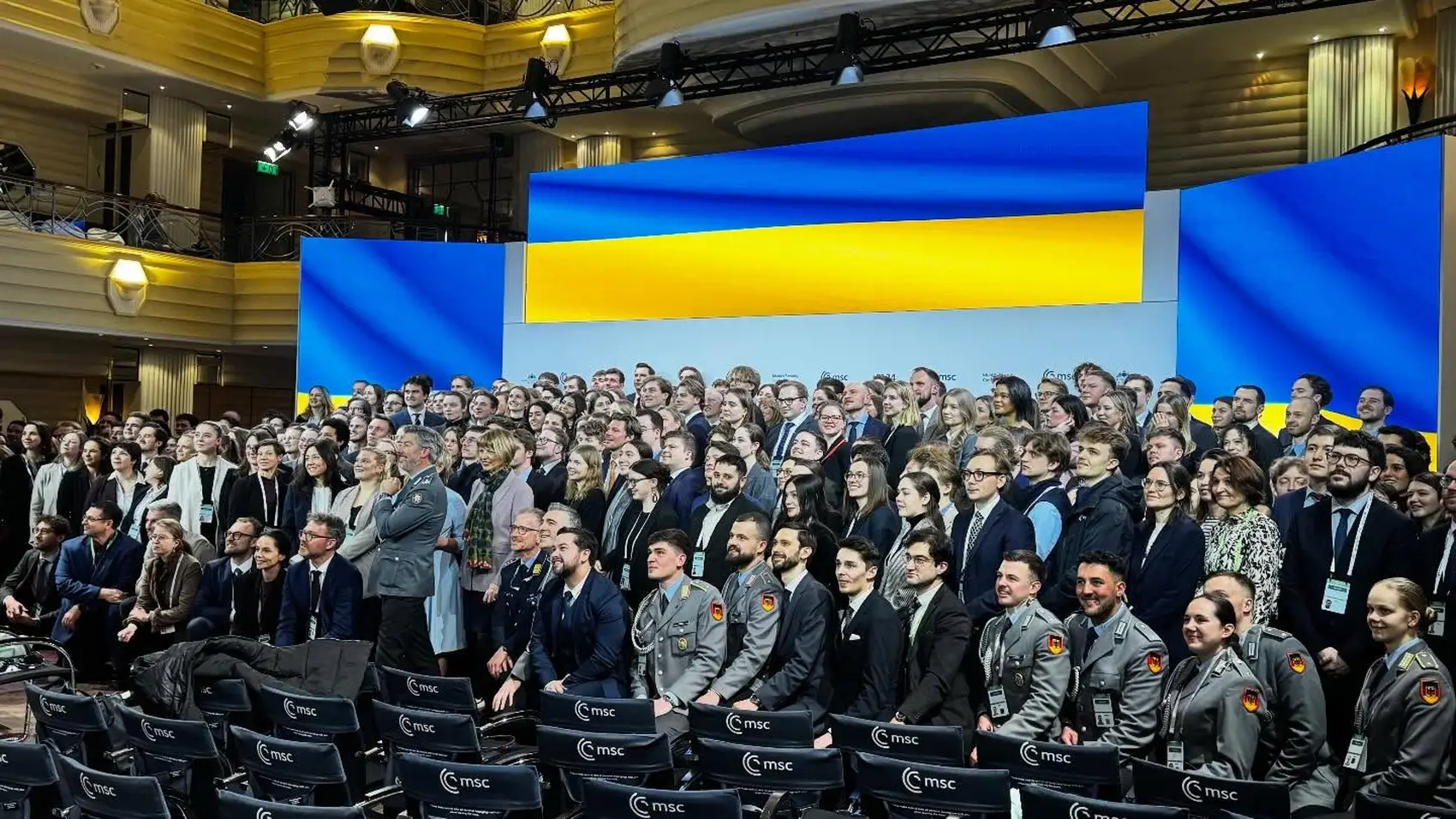

European leaders arrived in Munich with a new consensus: Russia has no genuine intention of ending this war. They also arrived with the same toolkit they've had since 2022.
That gap—between the diagnosis and the prescription—defined the 62nd Munich Security Conference. The MSC's annual report, titled "Under Destruction," laid out the erosion of the rules-based order, democratic backsliding, and rising populism with precision. But precision in analysis has never been Europe's problem. Acting on it has.
Republican Senator Lindsey Graham told the conference that the US needs to provide Tomahawks for Ukraine, that Russia should be designated a terrorist state for kidnapping Ukrainian children, and that Putin will not stop himself—he needs to be stopped. Democratic Senator Richard Blumenthal said the same.
Their bipartisan bill for tougher sanctions has been sitting in Congress for a year. None of it has moved an inch.
While they spoke in Munich, President Trump posted that "Russia wants to make a deal and Zelensky is going to have to get moving, otherwise he's going to miss a great opportunity."

Two continents, two languages
The divide between American and European rhetoric at this year's conference ran deeper than tone.
Secretary of State Marco Rubio delivered the keynote—a marked contrast to JD Vance's speech at last year's conference, where the Vice President lectured Europeans about free speech, never mentioned Russia as a threat, and was met with silence. European Commission President Ursula von der Leyen called Rubio's speech "very much reassuring."
Rubio invoked shared history and intertwined fates, even drawing a standing ovation.
But beneath the polished delivery, the substance echoed Vance: criticism of European mass migration, warnings of "civilisation erasure," and the insistence that Europe cannot solve Gaza or Ukraine without Washington.
The message, more diplomatically packaged: America wants strong allies, not dependent ones.
When discussing the new global order, the split crystallized: EU High Representative Kaja Kallas argued that new rules must include accountability for those who break international norms—and pushed back directly: "When America goes to war, we go too and our people die. So to be a superpower, you need us."
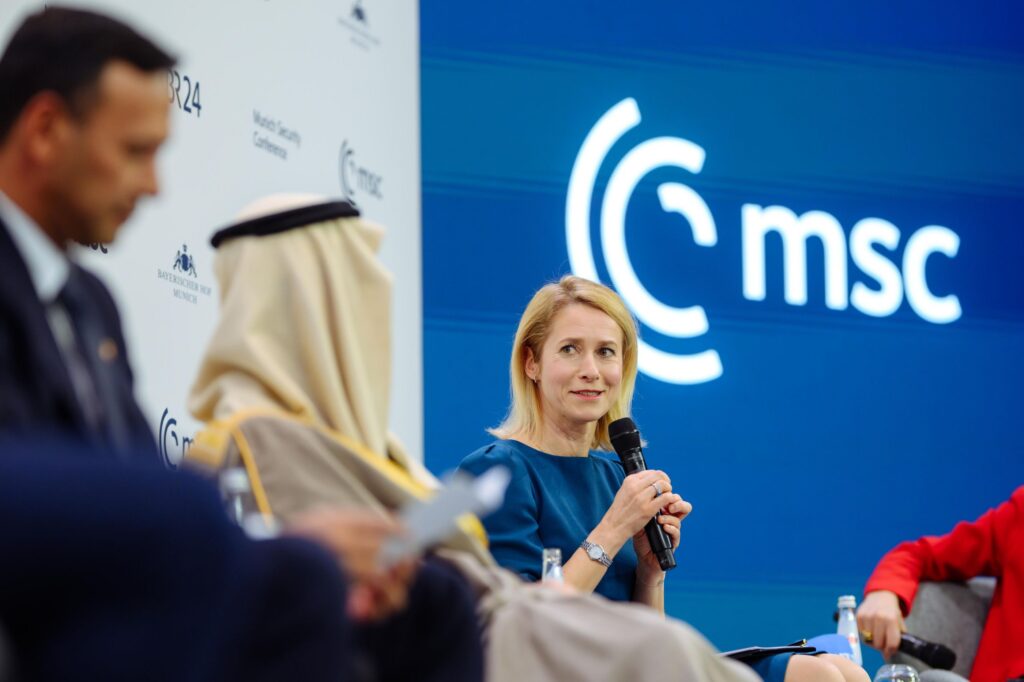
US Ambassador to the United Nations Mike Waltz presented the panel with a "Make the United Nations Great Again" hat and argued the international body needed to be put "on a diet."
European leaders, for their part, still want the partnership.
German Chancellor Friedrich Merz warned, in English: "In the era of great power rivalry, even the United States will not be powerful enough to go it alone."
The desire is genuine. Whether Washington reciprocates beyond rhetoric remains the open question.
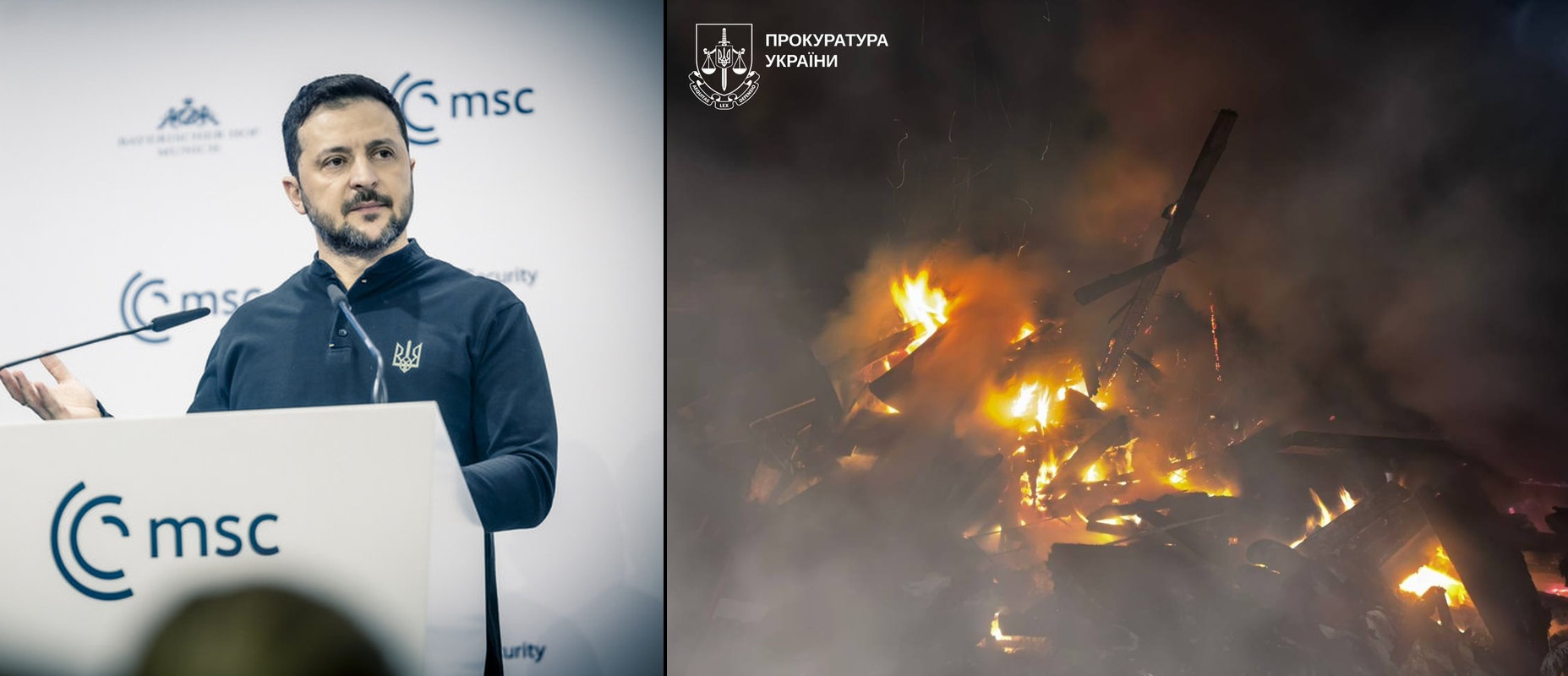
“If not Brussels, then Moscow:” Munich Security Report 2026 paints stark picture of Europe’s security crisis
The reality check
The most revealing moments at MSC 2026 came when specific proposals met specific questions—and fell apart.
The shadow fleet: discussed at length, with France exploring legislative measures to stop Russian oil tankers rather than just temporarily blocking them. In January, fourteen European countries announced coordinated measures to restrict Baltic Sea access for these vessels. Yet the Danish straits, through which many tankers pass, remain open.
The contact line: no European official could explain how to monitor 700 kilometers of front line in any potential ceasefire. Ukrainian Foreign Minister Andrii Sybiha—deliberately or not—offered no detail on what the American security guarantee backstop should look like.
Troops on the ground: President Macron ruled out deploying forces from the "Coalition of the Willing" before a ceasefire, saying such a step could be seen as escalatory and that no consensus exists among allies.
Each of these represents the same pattern: a problem correctly identified, followed by solutions that don't survive contact with reality.
What Zelenskyy made visible
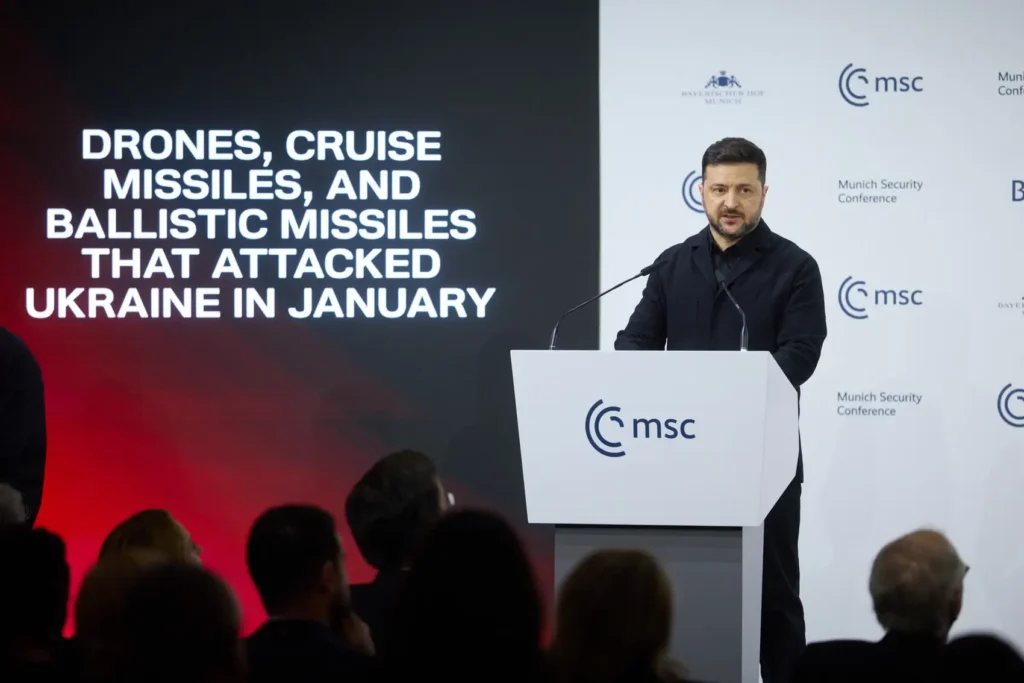
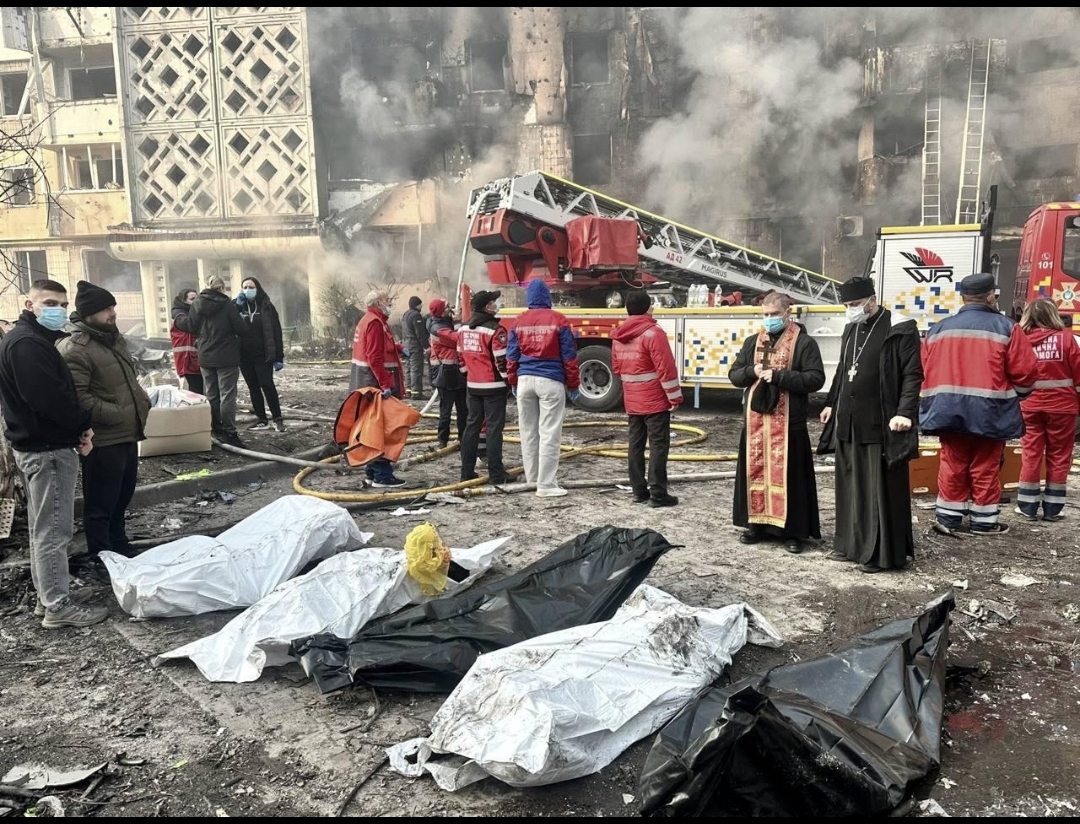
Ukraine calibrated its message carefully—a marked shift from the sharper tone at Davos that had drawn concern from European officials. At Munich, Zelenskyy balanced gratitude with specificity, using visual aids to show the scale of the 12 February Russian attack: 24 ballistic missiles and over 200 drones, intercepted only because Patriot interceptors arrived days earlier.
He laid out the daily reality: 6,000 combat drones, 158 missiles, and 5,500 glide bombs per month, with no undamaged energy plant left in the country. "Ukrainians are people, not terminators. Our people are dying too," he said—a message that cut against the constant European admiration for Ukraine's "resilience." That resilience has a cost in human suffering, and it should not be taken for granted.
His central strategic message was blunter: Europe is practically absent from the peace negotiations, and Ukraine—the country being bombed daily—is the one lobbying for its allies to be included in talks about its own future.
Macron's nuclear signal
Perhaps the most consequential development came from the French president. Macron declared Ukraine "existential" for Europe—and drew the conclusion most leaders have avoided: European support will not diminish over time, which means time is not on Russia's side.
"When I hear some defeatist speech about Ukraine, when I hear some leaders urging Ukraine to accept they are defeated, overpricing Russia in this war, this is a huge strategic mistake," he said.
"One day Russians will have to reckon with the enormity of the crime committed in their country, with the futility of the pretexts, and the devastating longer term effects on their country. But until that time comes, we will not lower the guard."
Macron insisted Europe must be directly involved in any peace settlement.
"The Europeans will have to agree to any possible deal, because they will be an essential part of any security guarantees, any prosperity package, any sanctions relief, any decisions on the European future for Ukraine. No peace without the Europeans."
Then he went further: Europe's "rearticulated nuclear deterrent" should include special cooperation, joint exercises, and shared security interests with partners.
While French nuclear doctrine currently limits such sharing, Macron explicitly opened the door. Merz publicly engaged on the question in his own speech. If this moves beyond conference rhetoric, it would represent the most significant shift in European defense architecture since the Cold War.
But that "if" is doing a lot of work—and Munich has historically been better at generating signals than delivering follow-through.

The gap between words and war
The conference left European leaders seeing clearly that Russia has no genuine intention of ending this war. They see the Russian economy degrading. They agree more pressure is needed. They even articulate what that pressure should look like—tougher sanctions, expanded military support, credible deterrence.
What they cannot seem to do is act at the speed the war demands. The prescriptions remain incremental while the disease accelerates.
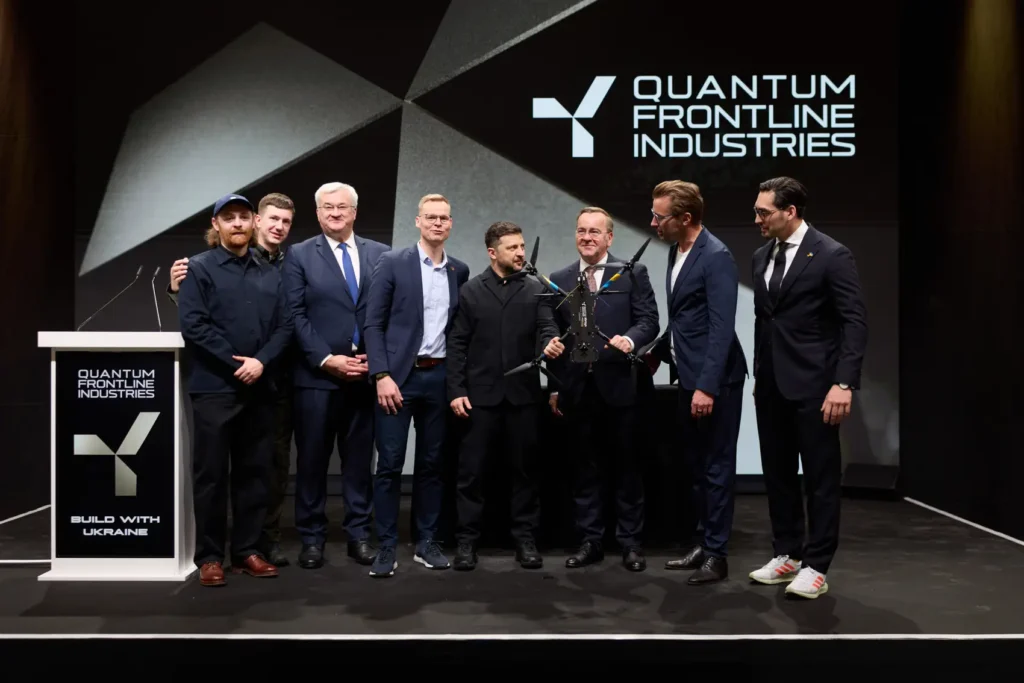
Zelenskyy's closing message pointed to the answer European leaders haven't fully embraced: "Our wall of drones is your wall of drones. Our expertise in drones is part of your security. Our ability to stop assaults and Russian sabotage can also be part of your defense."
Ukraine is already making the contribution to European security that Munich spent three days discussing. The question is whether Europe will match it.
Editor's note. The opinions expressed in our Opinion section belong to their authors. Euromaidan Press' editorial team may or may not share them.
Submit an opinion to Euromaidan Press


