

The rules-based world order that underpinned European prosperity for eight decades is unraveling. Russia wages war and hybrid attacks across the continent. Washington retreats behind conditions and commercial demands. And Europe—caught between denial and adaptation—has yet to answer the most basic question of this era: can it defend itself? The short answer: not yet.
That is the central finding of the Munich Security Report 2026, titled "Under Destruction," released this month by the Munich Security Conference. 2026's Munich Security Conference begins on Friday, 13 February and will conclude on Sunday, 15 February.
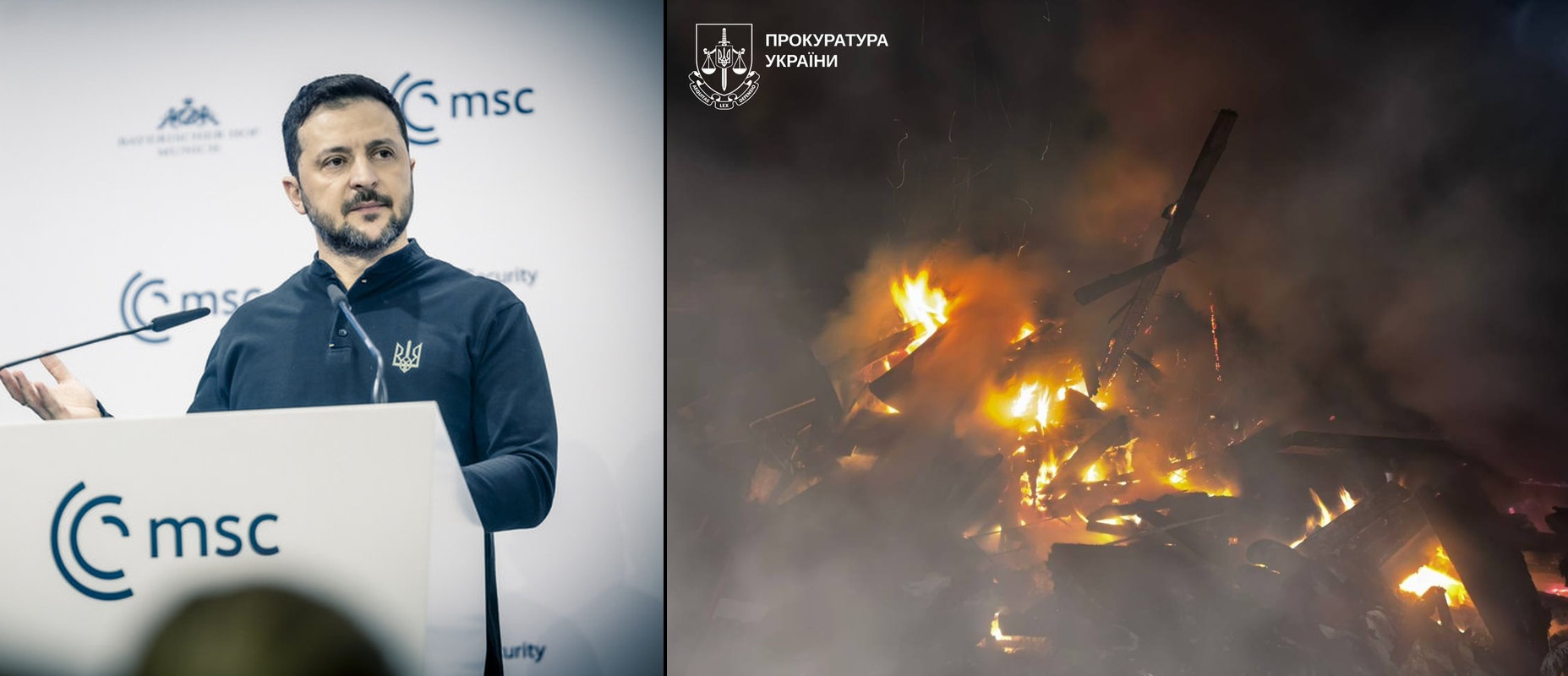
The report documents a continent in prolonged confrontation with Russia. At the same time, Europe grapples with an unreliable American security guarantee, rising defense costs, and an industrial base too fragmented to respond effectively. As Ukrainian President Volodymyr Zelenskyy warned at the 2025 conference: "If not Brussels, then Moscow. It's your decision. That's geopolitics. That's history."
"If not Brussels, then Moscow. It's your decision. That's geopolitics. That's history." — Volodymyr Zelenskyy, Munich Security Conference, February 2025
The report's implications extend far beyond defense budgets. They touch on the survival of the European project itself—and on whether Ukraine will have partners capable of standing beside it.
How Munich's 2025 disaster foreshadowed the crisis
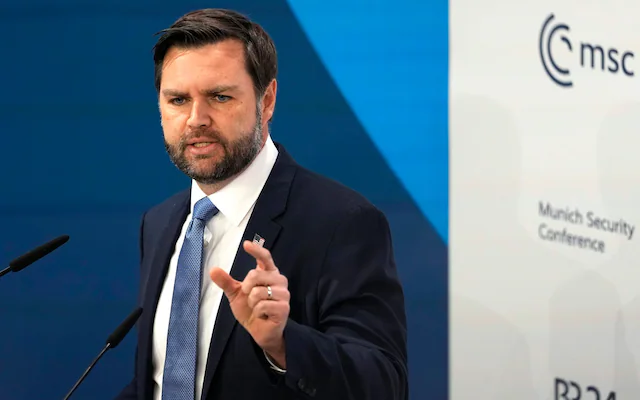
The Munich Security Conference has served since 1963 as the world's premier forum for security policy debate. The 2025 conference was a watershed—and not a good one. European leaders arrived hoping for clarity on Russia, Ukraine, and NATO's future. Instead, US Vice President JD Vance delivered a speech that "sent shockwaves through Europe," as the MSC's own analysis put it. Vance lectured European democracies on internal threats to free speech. He never mentioned Russia as a security concern. "The threat that I worry the most about vis-à-vis Europe is not Russia, it's not China," he said. "What I worry about is the threat from within."
At one point, Vance paused for applause. The vice president was met with silence. German leaders rejected what they saw as American interference. The MSC debrief concluded starkly: "The feeling among most European participants was that America is turning its back." The 2026 report suggests that those fears were justified.
The framework Europe relied on is collapsing
The Munich Security Report does not describe a temporary disruption. It documents a structural collapse. The rules-based order that shielded European prosperity for decades is breaking apart—and not only because of Russia.
The V-Dem Institute's Democracy Report 2025 found that 72 percent of the world's population now lives under autocratic rule—the highest share since 1978. Forty-five countries are actively autocratizing. Most alarming for Europe: the United States, its former anchor ally, is among them.
V-Dem's lead author, Professor Staffan Lindberg, warned bluntly: the United States "will not score as a democracy" in the next report if current trends hold.
A Carnegie Endowment study echoed V-Dem's findings. It found US democratic erosion is proceeding "with striking speed," weakening checks "across multiple levels all at once." The pace exceeds comparable cases in Hungary, India, or Türkiye.

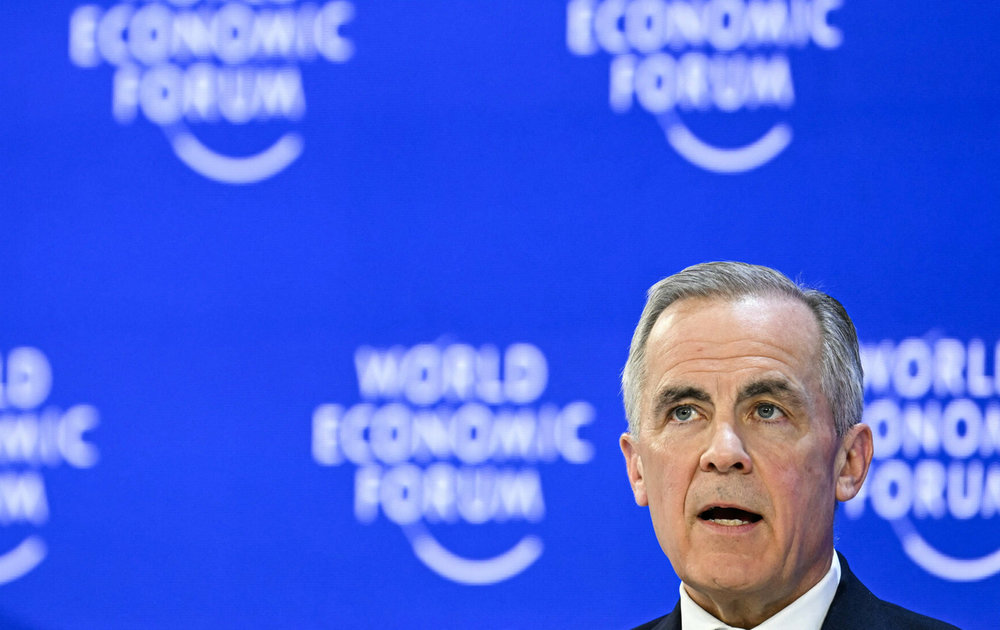
Canadian Prime Minister Mark Carney put it most bluntly. At Davos in January 2026, he called the post-Cold War settlement a "pleasant fiction." He received a rare standing ovation. His warning landed squarely on European ears: "If we're not at the table, we're on the menu."
"We are in the midst of a rupture, not a transition. The old order is not coming back." — Mark Carney, Davos, January 2026
Carney was speaking about Canada. But the description fits Europe well. European states are middle powers. They built their prosperity on American security guarantees and multilateral rules. Both are now eroding. At the same Davos forum, Zelenskyy warned that "a year has passed—and nothing has changed" since he first urged Europe to learn to defend itself.
Russia's hybrid war comes home
The threat is no longer theoretical—or confined to Ukraine. The Munich Security Report documents a sharp escalation in suspected Russian hybrid operations across EU and NATO countries, including sabotage, arson, cyberattacks, and unauthorized drone overflights. The fall of 2025 saw these incidents spike. On 9-10 September, around 24 Russian drones intruded into Polish airspace. Three Russian MiG-31 fighter jets also violated Estonian airspace for 12 minutes. Both governments invoked NATO consultations under Article 4.
Moscow is blending cyber and kinetic tactics in surveillance, sabotage, and attacks on energy grids, deliberately blurring the line between war and peace. Most incidents are designed to remain deniable or ambiguous—enabling Russia to evade attribution while exerting psychological pressure and inducing political paralysis. Analysts view these operations as deliberate probes of Europe's defenses, aimed at sowing division, intimidating publics, and diverting attention from Ukraine toward domestic security concerns.
Trending Now
The pattern echoes what Ukrainians have endured for a decade—now applied across the continent. Europe must deter further provocations without triggering inadvertent escalation. The timeline is tight. Some intelligence agencies estimate Russia could reconstitute forces for a regional war in the Baltic Sea area within two years of a potential ceasefire in Ukraine.

Europe's defense dilemma: guns, butter, and fragmentation
The Munich Security Report quantifies Europe's response—and its limits. European NATO members boosted defense budgets by 41 percent between 2021 and 2025. At the Hague summit last June, members pledged 3.5 percent of GDP on core defense plus 1.5 percent on security measures by 2035.
But the numbers conceal a fracture. The report identifies a clear divide between fiscally solid, high-spending states in the northeast and strained, lower-spending states in the southwest. Poland now allocates over four percent of its GDP to defense. Germany has pledged hundreds of billions. But southern European nations face "guns versus butter" trade-offs that threaten political stability.
"We have a simple choice—either money today, or blood tomorrow. I'm not talking about Ukraine; I'm talking about Europe." — Polish Prime Minister Donald Tusk, December 2025
The industrial picture is bleaker. Despite EU pledges to spend "better, together, and European," US systems accounted for 51 percent of equipment spending by European NATO members between 2022 and 2024. That share rose from 28 percent between 2019 and 2021. Rising defense budgets are fueling what the report calls "a new wave of industrial nationalism"—deepening fragmentation and inflating costs. Europe is spending more, yet not together.
What does Washington's retreat cost Ukraine
The cost is measured most concretely in Ukraine. US military aid dropped sharply after January 2025. The Trump administration suspended intelligence sharing in March. It halted Patriot missile deliveries in July. The administration disbanded KleptoCapture, a task force tasked with tracking Russian oligarchs' assets. And when a 28-point US-Russian peace plan leaked in November, it envisioned sweeping territorial concessions for Ukraine while demanding almost nothing from Moscow.
European allies scrambled. The "coalition of the willing"—more than 30 nations—took responsibility for coordinating military and financial aid. France stepped in to provide two-thirds of Ukraine's intelligence. Germany began building spy satellites to replace American coverage. But the December EU summit exposed the limits of European resolve. Leaders failed to agree on how to use €210 billion in frozen Russian assets. Instead, they settled for a €90 billion loan—enough to avert Ukraine's financial collapse, but far short of what the moment demanded.
NATO Secretary General Mark Rutte framed the stakes in December: "Russia has brought war back to Europe. And we must be prepared for the scale of war our grandparents endured."
What comes next
The report's prescription is clear: Europe must move "from anxiety to agency." That means coordinated procurement, shared capability priorities—air defense, drones, intelligence satellites—and the political will to act without waiting for Washington.
It also means anchoring Ukraine within Europe. EU accession is not charity—it is a strategic necessity. Ukraine offers battle-tested military experience, a growing defense industry, and the geographic depth European deterrence requires.
Higher defense spending means cuts elsewhere or higher debt. Procurement reform means surrendering national prerogatives. Supporting Ukraine means accepting that confrontation with Russia is generational. But the alternative, as Zelenskyy put it, is submission. Not to Brussels—but to Moscow.
Read also
-
Germany is building spy satellites to help Ukraine watch Russia without the US
-
Forbes: US isolates itself from Five Eyes alliance while Europe fills Ukraine’s space intelligence gap
-
The Guardian: UK and France pledge continued intelligence support to Ukraine despite US cutoff
-
US warns EU: Seize Russia’s frozen billions and you’ll “have to give it back”


