

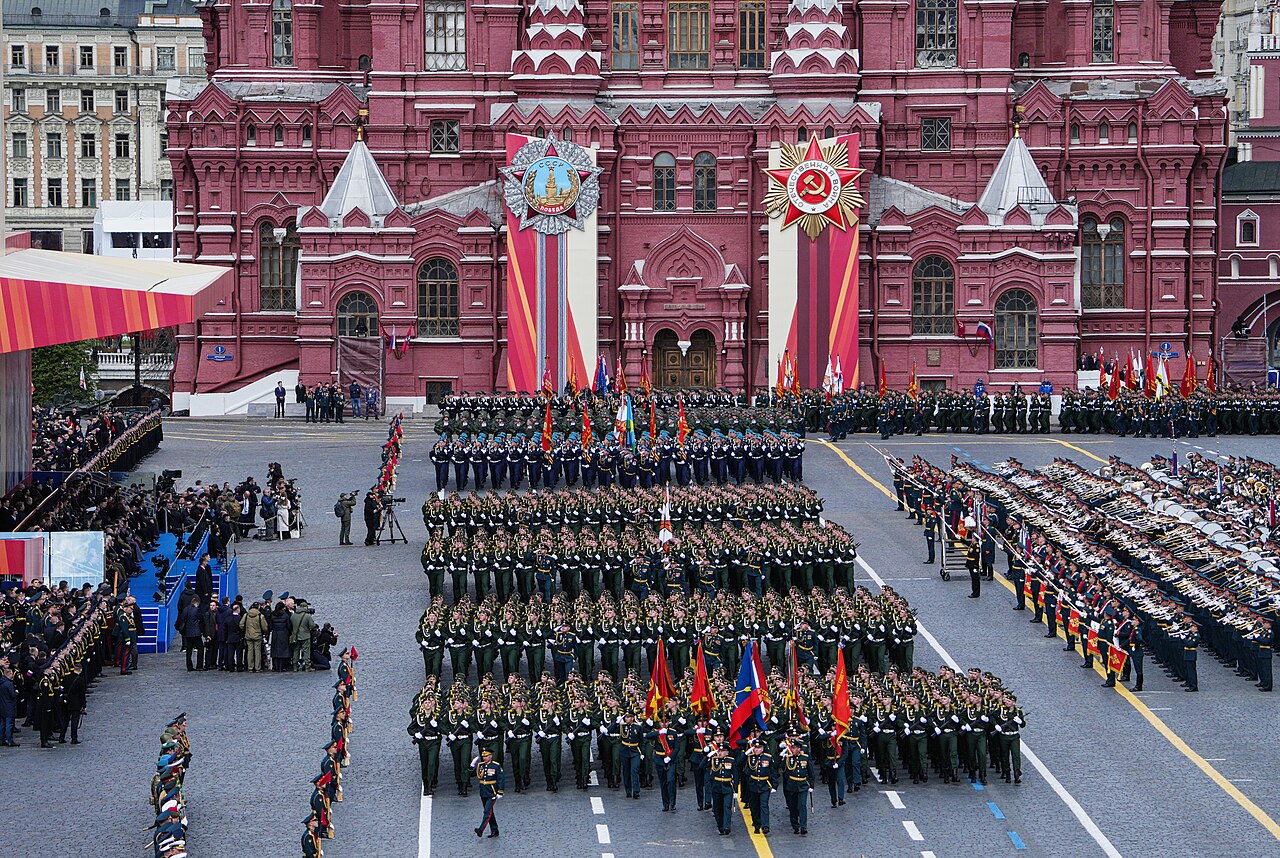
Germany’s foreign intelligence service has concluded that Russia spent approximately €250 billion ($295 billion) on its military last year—roughly half its entire state budget and about 10% of its GDP. The real figure, the Bundesnachrichtendienst (BND) found, was 66% higher than what the Kremlin officially reported.
Items like Defense Ministry construction projects, military IT programs, and social payments to families of soldiers are deliberately booked under civilian budget headings.
The BND published its analysis on 4 February—the same day Russia and Ukraine resumed negotiations in Abu Dhabi—putting hard intelligence numbers behind what Moscow has spent years concealing. Russia’s definition of “defense spending” deviates sharply from the one NATO uses, the agency found, and official Russian data is systematically distorted.
Items like Defense Ministry construction projects, military IT programs, and social payments to families of soldiers are deliberately booked under civilian budget headings—making the defense line look smaller than it actually is. “In these figures, the growing threat to Europe from Russia is concretely materializing,” the BND stated.
From €78 billion to €250 billion in four years
The trajectory is steep. In 2021—the last year before the full-scale invasion—Russian military spending totaled roughly €78 billion ($92 billion). In 2022, the year of the full-scale invasion, it jumped to €106 billion ($125 billion).
By 2023, it reached €136 billion ($160 billion), and in 2024, it climbed to €202 billion ($238 billion). Now, in 2025, the BND estimates a total of around €250 billion ($295 billion)—more than tripling in four years.
As a share of GDP, the climb is just as dramatic: from 6% in 2022 to 6.7% in 2023, 8.5% in 2024, and now roughly 10%. For context, NATO asks its members to spend 2% of GDP on defense. Russia is five times that level.

Not just Ukraine—NATO’s eastern flank too
The BND emphasized that the money is not only sustaining the war against Ukraine. A substantial portion funds the buildup of military capabilities near NATO’s eastern border. BND President Martin Jäger warned in October that Moscow pursues three goals: to undermine NATO, to destabilize European democracies, and to split their societies. NATO Secretary General Mark Rutte has cautioned that Russia could attack a NATO member within two to five years.
Germany is set to double its defense budget compared to pre-2022 levels.
The scale of Russia’s rearmament has forced parts of Europe into their largest military buildup since the Cold War—though the response remains deeply uneven. Germany is set to double its defense budget compared to pre-2022 levels, aiming to make its forces ready for conventional ground war by 2029.
But much of southwestern Europe and Canada have been far slower to act, only reluctantly moving toward the NATO spending targets that Russia’s trajectory makes look inadequate.
The real bill keeps growing
Last year, the Stockholm International Peace Research Institute estimated Russia’s defense outlay at around 7% of GDP—a level it called “manageable.” The BND’s figures suggest the real burden is substantially higher.
Trending Now
Total military expenditures for 2025 ran 20% above the planned budget, averaging $2.7 billion per week.
Those findings cap a pattern of revelations about Russia’s true war costs. In December, Russian Defense Minister Andrei Belousov disclosed that direct war spending alone consumes over 80% of Russia’s defense budget—more than 11 trillion rubles ($143 billion). Total military expenditures for 2025 ran 20% above the planned budget, averaging $2.7 billion per week.
Russia spends $2.7 billion weekly on war against Ukraine, total war costs exceed $195 billion in 2025
Even those figures undercount the real burden. Researcher Craig Kennedy—former vice chairman at Bank of America Merrill Lynch, now at Harvard—revealed a separate hidden channel: since 2022, the Kremlin forced banks to issue $210–250 billion in subsidized loans to military contractors, many with poor credit ratings. That off-budget scheme effectively doubled Russia’s actual war financing beyond what any official figure captures.
Who pays?
The burden falls unevenly inside Russia. Some 20% of the population earns income connected to military service or war production—their wages have risen. The other 80% absorb the cost through higher taxes, a January VAT hike, slashed social spending, and a budget deficit estimated at over $70 billion. Russia’s poorest regions are already cracking, with two-thirds running deficits.
The BND released its findings as diplomats gathered in Abu Dhabi. Moscow’s 2026 budget, published last autumn, projects defense spending will fall for the first time since the invasion. German analysts don’t believe it.


