

Russia launched its largest energy strike of 2026 before scheduled peace talks in Abu Dhabi, using the brief moratorium on infrastructure attacks not to de-escalate. Instead, Russia stockpiled missiles for maximum civilian damage while projecting an image of diplomatic good faith, according to a new Institute for the Study of War (ISW) assessment.
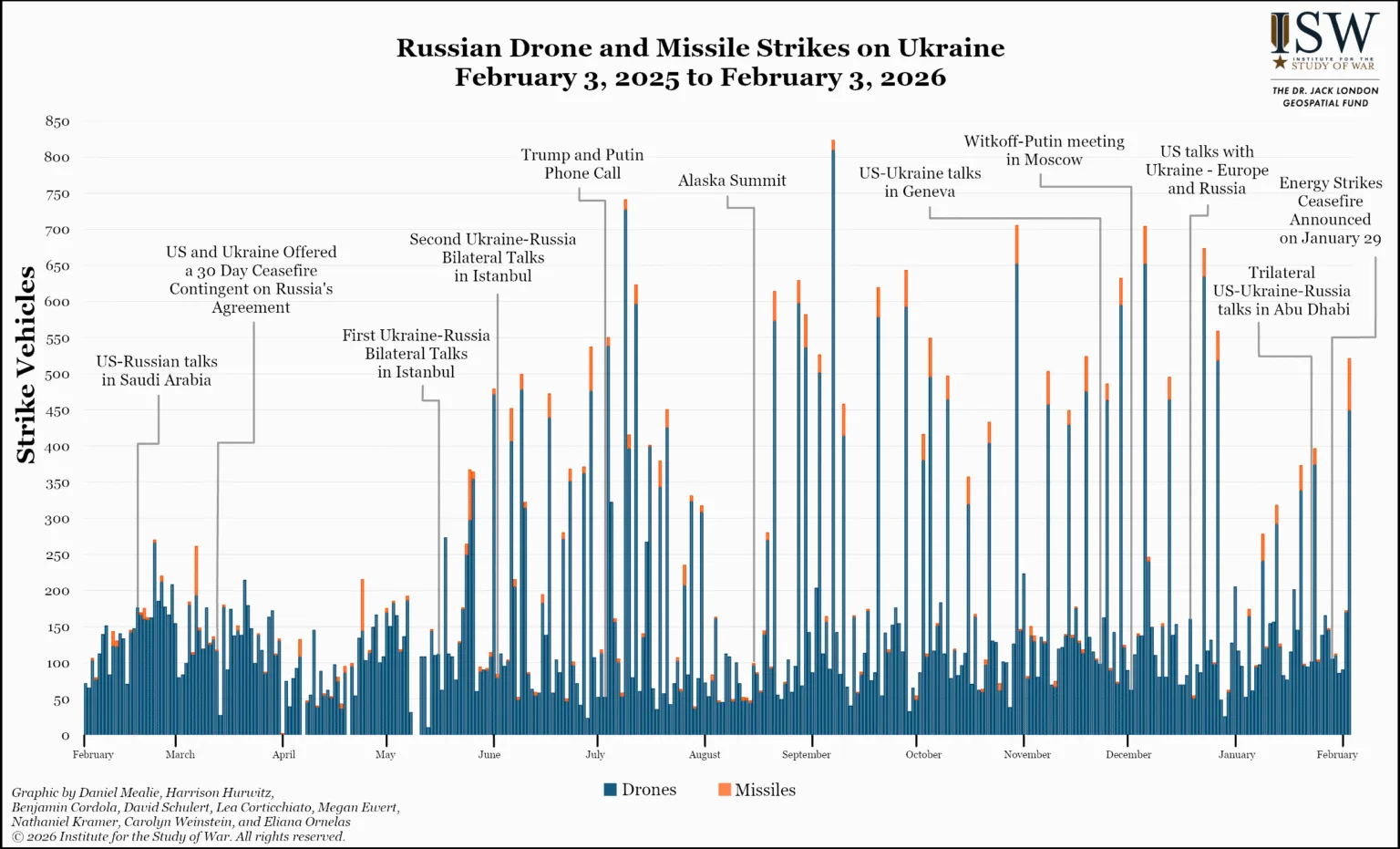
The 3 February barrage of 450 drones and 71 missiles left over a million Ukrainians without heat in -20°C temperatures. President Volodymyr Zelenskyy stated that the strike package was 1.5 times larger than those launched before the January 23-24 trilateral talks. The Kremlin, it appears, used the pause to reload—not reconcile.
ISW: "The February 2 to 3 strike demonstrates that Russia never intended to use the energy strikes moratorium to de-escalate the war or seriously advance the US-initiated peace negotiations."
The pattern found in ISW's report reflects what former Ukrainian diplomat Iuliia Osmolovska calls "the Gromyko method": Soviet-era tactics that weaponize negotiations themselves. Even during the brief pause, Russian forces struck Ukrainian railroads and logistics—simply switching targets rather than de-escalating. Ukraine's grid, already degraded from months of attacks, suffered a cascading blackout on 31 January without any direct strike.
Kremlin's unchanged demands
ISW's analysis confirms Russia has no intention of compromising on its original war demands. The Russian Foreign Ministry insists any deal must address NATO expansion—effectively demanding the destruction of the current alliance. The Kremlin continues to reject Western security guarantees for Ukraine, demand recognition of territories it failed to capture militarily, and leverage the New START expiration (5 February) as a pressure tactic.
ISW: "The Kremlin will likely attempt to portray its adherence to this short-term energy strikes moratorium as a significant concession to gain leverage in the upcoming peace talks, even though the Kremlin used these few days to stockpile missiles for a larger strike package."
The 3 February strike contained an unusually high number of ballistic missiles—weapons that Ukraine struggles to intercept. Of 38 missiles downed, only 10 were ballistic. Ukrainian Air Force spokesperson Colonel Yuriy Ihnat assessed that Russia has deliberately shifted toward ballistic-heavy packages because they are harder to counter—underscoring Ukraine's critical need for Patriot air defense systems.
EU foreign policy chief Kaja Kallas warned that Western pressure on Ukraine is helping Russia secure "maximalist demands they haven't even conquered militarily."
Read also
-
Gromyko’s ghost at Abu Dhabi: The Soviet playbook Russia still uses to sabotage peace talks
-
Lavrov’s Soviet playbook in Abu Dhabi: Russia frames itself as America’s equal to cut Europe out of Kyiv-Moscow talks
-
EU’s Kallas: Western pressure on Ukraine helps Russia secure demands it never won on the battlefield
-
ISW: Russia keeps rejecting any peace deal without full concessions