


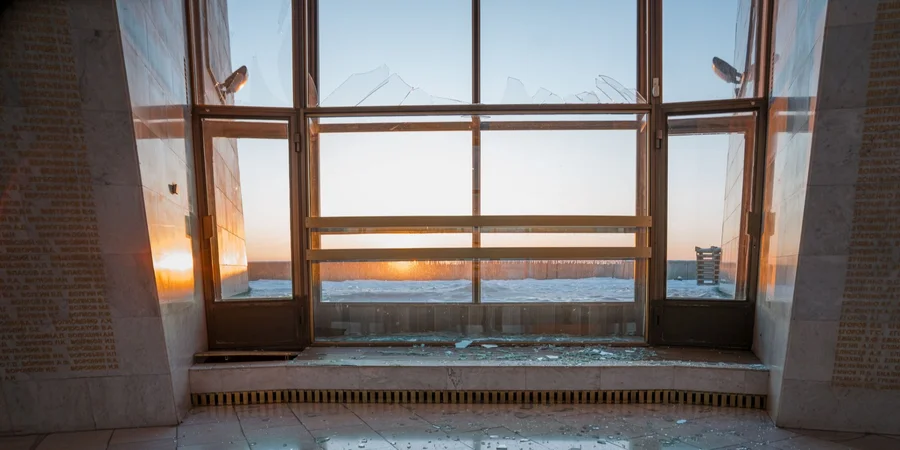
Russia's overnight strike on Kyiv damaged the Hall of Glory at the National Museum of the History of Ukraine in World War II, the memorial complex that stands at the base of the capital's iconic Motherland Monument, Ukraine's Culture Ministry reported on 3 February.
The attack carries a grim symbolism that Ukraine's Culture Minister Tetiana Berezhna did not leave unnamed: Russia struck a place that preserves the memory of the fight against aggression in the 20th century, effectively repeating those crimes in the 21st. The nation that claims the mantle of victory over Nazi Germany now bombs the very shrine to that victory—in a country it invaded under the pretext of "denazification."
"We will restore what was destroyed. We will preserve the memory of both the crimes of Nazism in the 20th century and the crimes of Russia today." — Culture Minister Tetiana Berezhna
Russia's largest attack of the year—one day before peace talks
The museum strike came amid Russia's largest drone and missile attack of 2026—71 missiles and 450 drones launched overnight as temperatures in Kyiv plunged to minus 19°C, Euronews reported. Ukrainian air defenses intercepted 38 missiles and 412 drones. The assault came one day before a second round of US-brokered talks in Abu Dhabi—and just after the Kremlin's week-long informal truce on striking Kyiv expired Sunday.
The Hall of Glory sits beneath the 102-meter steel Motherland monument—one of Kyiv's most recognizable landmarks. The complex houses over 300,000 exhibits commemorating World War II and displays marble plaques with the names of more than 11,600 soldiers honored during that conflict.
In August 2023, Ukraine replaced the Soviet hammer and sickle on the monument's shield with the Ukrainian trident as part of the country's decommunization efforts. The statue is expected to be renamed "Mother Ukraine," though, according to an analysis in the Cultures of History Forum, "there was no progress in the renaming" because the Culture Ministry was slow to finalize the bureaucratic process.
Museum specialists, technical services, and police are now documenting the damage, Ukrainska Pravda reported. Full restoration requirements will be known once the inspection concludes.
Despite the damage, the museum continues to operate.
The broader assault damaged residential buildings, a kindergarten, and a gas station across five districts of the capital, injuring five people and leaving 1,170 apartment buildings without heating, according to Kyiv Post.
A deliberate pattern of cultural erasure
The museum strike fits Russia's systematic campaign against Ukrainian cultural heritage. Since February 2022, Russian forces have damaged or destroyed more than 1,680 cultural heritage sites and thousands of cultural infrastructure facilities across Ukraine, Berezhna stated, according to United24 Media.
Just days earlier, on 31 January, Russian ballistic missiles struck Odesa's historic center—a UNESCO-protected zone—damaging approximately 15 cultural heritage sites, including the Philharmonic building and multiple architectural landmarks from the 19th and 20th centuries.
The destruction extends far beyond Kyiv and Odesa. According to Ukraine's Ministry of Culture, Russian attacks have damaged 784 libraries, 166 art education institutions, 120 museums and galleries, and 39 theaters. Cultural facilities in 302 territorial communities—20.6% of all communities in Ukraine—have suffered damage. Donetsk Oblast shows the highest concentration, with 87% of communities affected.
This is not collateral damage. The PACE Culture Committee in May 2024 condemned the deliberate destruction of Ukraine's cultural heritage as crimes against humanity, recognizing the Kremlin's intent to erase Ukrainian national identity.
Calls for international response
Berezhna stressed that Russia's attacks on cultural heritage require a consolidated international response—strengthened sanctions against Russia and additional air defense systems for Ukraine. Kyiv is working with international partners to develop the Ukrainian Cultural Heritage Fund as a transparent instrument for the restoration and protection of damaged sites.
The paradox hangs heavy: a museum built to ensure the world never forgets the horrors of mid-century totalitarianism now bears the scars of its 21st-century heir.


