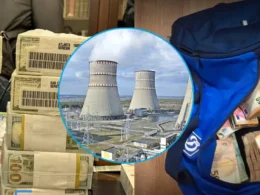


When Hungary's Foreign Minister Péter Szijjártó announced on 2 February that Budapest had taken the EU to court over REPowerEU—the regulation that phases out Russian gas imports by late 2027—the message was clear: Brussels, he claimed, had overstepped its powers, trampled on national sovereignty, and betrayed the principle of European solidarity.
It sounds dramatic. It is also deeply misleading.
The regulation passed the Council 24 to 2, with only Hungary and Slovakia opposed. Behind Szijjártó's political rhetoric lies a haphazard legal case that rests on shaky ground and misrepresents how the European Union actually works—especially in times of crisis.
Trade policy is not sanctions policy
Hungary's first claim is that banning Russian energy imports can only be done through sanctions, which require unanimity among all EU member states. Since REPowerEU was adopted without Hungary's consent, the argument goes, it must be illegal.
EU law does not support this view.
The EU has exclusive competence over trade policy, including rules governing imports from third countries. This is not a loophole or a trick—it is black-letter law embedded in the EU treaties for decades. When the EU decides to restrict or ban certain imports as a matter of trade policy, it does so by qualified majority, not unanimity.
Sanctions are a different legal instrument. They are targeted, punitive measures adopted in response to breaches of international law—freezing assets of specific individuals, banning transactions with designated entities. REPowerEU, by contrast, is a structural policy designed to reduce strategic dependence on a single, high-risk supplier and strengthen the resilience of the EU energy market. It applies generally across all member states, not selectively against particular actors.
The Court of Justice has been clear on this point. In Case C-156/21 (Hungary v Parliament and Council), the ECJ held that what matters is the substance of a measure, not how politically uncomfortable it may be for one government. By that standard, Hungary's unanimity argument is unlikely to survive legal scrutiny.
Europe’s “self-sabotage”: Seven EU countries increase Russian energy imports while supporting Ukraine – Reuters
Energy sovereignty is not a free pass to buy Russian gas
The second argument appeals to national sovereignty. EU treaties, Hungary insists, guarantee each member state the right to choose its own energy sources and suppliers.
This is only a half-truth.
Yes, Article 194 TFEU states that member states retain control over their energy mix. The EU cannot tell Hungary how much gas it should consume or whether it should build nuclear plants or wind farms. But that sovereignty is not absolute. It exists within the framework of the EU's internal energy market, competition rules, climate objectives, and collective security interests.
EU law has long recognized that national energy choices cannot undermine shared European goals or expose the Union to systemic risks. A member state does not have a treaty-protected right to lock itself—and by extension its neighbors—into dependence on a supplier that has repeatedly weaponized energy for political coercion.
That is not a hypothetical. In 2022, Gazprom slashed Nord Stream 1 flows to 20% capacity, then shut the pipeline entirely, sending European gas prices above €300 per megawatt-hour. The European Commission described it as deliberate "weaponisation of gas exports." Most EU members responded by diversifying—gas consumption fell 18%, new LNG terminals opened, and Russian gas dropped from 45% of imports in 2021 to roughly 13% by 2025.
Hungary moved in the opposite direction. According to IMF figures, Hungary bought 74% of its gas and 86% of its oil from Russia in 2024—up from 61% for oil before the invasion. In October 2024, Budapest negotiated to increase Gazprom deliveries beyond its existing 4.5 billion cubic meter annual contract. The same CSD-CREA study found Hungary now functions as a regional Russian gas hub, with 17 billion cubic meters transiting the country in 2023 against domestic consumption of just 8.3 billion.
REPowerEU does not dictate Hungary's energy mix. It restricts sourcing from Russia, a supplier whose role in destabilizing Europe's energy system is beyond dispute. That distinction is legally crucial and politically inconvenient for Budapest—but it is decisive in court.
Solidarity does not mean subsidizing dependence
Hungary's third claim flips the meaning of solidarity on its head. According to Szijjártó, cutting off Russian gas violates the principle of energy solidarity because Hungary will face higher prices and fewer options.
EU law defines solidarity very differently.
In the landmark 2021 OPAL case (C-848/19 P), the ECJ ruled that energy solidarity is a justiciable legal principle—but not one that guarantees cheap fuel to any one country. The Court held that solidarity means reducing shared vulnerabilities and preventing one member state's energy choices from putting others at risk. Poland successfully argued that Germany's decision to expand Russian gas flows through the Baltic threatened Polish energy security. The Court agreed.
Dependence on Russian energy has done exactly what the OPAL ruling warned against. It fueled price volatility, enabled political blackmail, and financed a war that directly threatens European security.
Hungary and Slovakia have paid Moscow an estimated €5.4 billion in oil tax revenues alone since February 2022—enough to finance thousands of the cruise missiles striking Ukrainian cities.
From this perspective, clinging to Russian supply routes is not an expression of European solidarity—it is a rejection of it.
REPowerEU, by contrast, is built on collective action: joint diversification, shared infrastructure, coordinated storage, and long-term price stability. Short-term adjustment costs do not constitute a breach of solidarity. They are the price of finally correcting a strategic mistake that Europe has paid for many times over.
And Hungary has alternatives. The same CSD-CREA report found that Budapest could diversify through Croatia's Adria pipeline, Greek LNG terminals, and interconnectors with neighboring states. Technical constraints, the researchers concluded, do not justify continued Russian dependency—it is a political choice.
From crisis response to structural energy independence
The EU's 2026 legislative agenda shows how REPowerEU is shifting from an emergency response to a long-term strategy. Planned measures such as the Grids Package, the Industrial Accelerator Act, and the Electrification Action Plan aim to tackle key vulnerabilities exposed by Russian energy leverage—weak infrastructure, distorted price signals that favor gas, and limited clean-tech capacity.
Together, they strengthen REPowerEU's core approach: accelerating renewables, scaling electrification, and reducing reliance on a single high-risk supplier. The planned post-2030 Energy Union framework will further cement this shift, making the phase-out of Russian fossil imports a lasting pillar of Europe's energy independence.

Russian bombs keep destroying Ukraine’s Soviet heating. Scotland shows what to build instead
A political case dressed up as a legal one
Seen in this light, Hungary's lawsuit looks less like a principled defense of EU law and more like a political gesture aimed at preserving a special relationship with Moscow. Prime Minister Viktor Orbán has maintained closer ties to the Kremlin than any other EU leader—visiting Putin in July 2024, repeatedly blocking sanctions packages, and threatening vetoes unless Brussels pressured Ukraine to restore Russian gas transit.
Szijjártó estimated proceedings could take 18 months to two years, and tied the lawsuit's continuation to Hungary's upcoming election—warning that an opposition victory would mean abandoning the case and "tripling household energy costs." The legal arguments are thin, selectively quoted, and contradicted by existing case law. But the challenge may drag on, feeding domestic narratives about Brussels overreach.
In court, however, slogans do not matter—legal coherence does.
And on that front, the balance is clear: REPowerEU stands firmly on the foundations of EU trade law, energy policy, and the very principle of solidarity Hungary falsely claims to defend.
The real question is not whether the EU has the right to end its dependence on Russian energy. It is why some governments still pretend that Europe's past vulnerability should be treated as a legal entitlement rather than a lesson painfully learned.
Editor's note. The opinions expressed in our Opinion section belong to their authors. Euromaidan Press' editorial team may or may not share them.
Submit an opinion to Euromaidan Press