

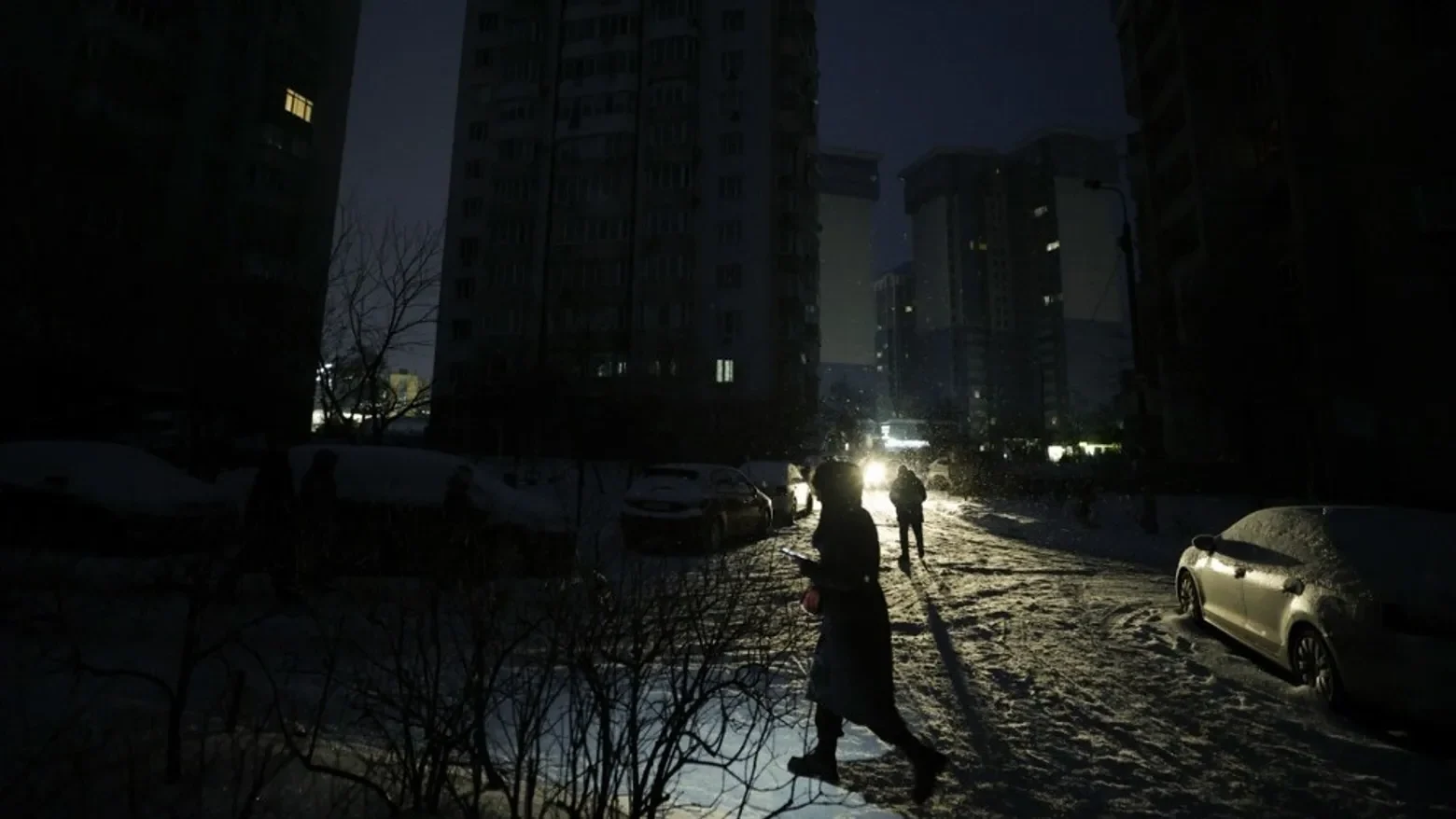
The Ukrainian power grid suffered a cascading failure on Saturday, knocking out electricity across multiple Ukrainian cities and neighboring Moldova. Despite partial repairs restoring 500 MW of capacity, nationwide scheduled outages remain in effect on Monday as temperatures plunge to -20°C, with forecasts warning of -28°C by Tuesday.
When Ukraine’s grid buckled, Moldova’s capital, Chisinau, went dark.
When Ukraine’s grid buckled, Moldova’s capital, Chisinau, went dark. Traffic lights failed, trolleybuses stopped, and border crossings with Ukraine closed after customs databases crashed. Hospitals switched to generators.
What caused the cascading failure
At 10:42 a.m. on 31 January, two critical transmission lines failed simultaneously: a 750 kV line connecting western and central Ukraine, and a 400 kV line linking Romania and Moldova, First Deputy Prime Minister and Energy Minister Denys Shmyhal said on Telegram.
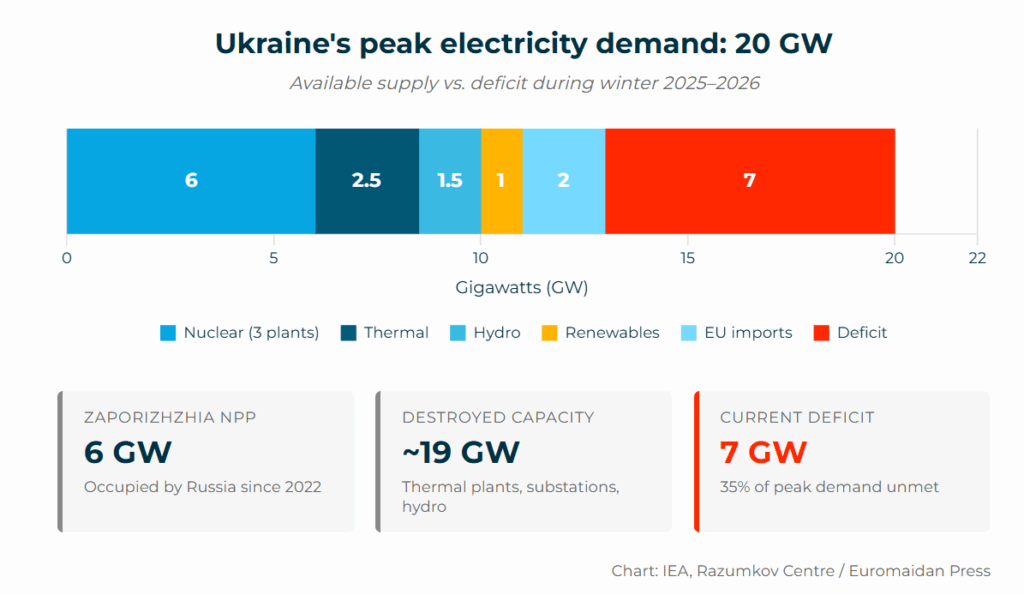
Ukraine’s power deficit now reaches up to 7 GW during peak hours—35% of total consumption.
The dual failure triggered automatic protection systems across the grid, forcing nuclear power plants to reduce output. Emergency blackouts hit Kyiv, Zhytomyr, and Kharkiv oblasts. In the capital, the metro stopped running, and water supplies were cut off.
Ukraine’s power deficit now reaches up to 7 GW during peak hours—35% of total consumption, Volodymyr Omelchenko, director of energy programs at the Razumkov Centre, told the Ukrainian Crisis Media Center.
Ukrainian officials attributed the failure to “technical problems” rather than a direct Russian strike.
Kyiv can generate only 25% of its electricity needs, leaving it dependent on power transmitted from the Trypilska thermal plant and the Rivne nuclear station. When transmission lines fail, even existing generation cannot reach consumers.
Ukrainian officials attributed the failure to “technical problems” rather than a direct Russian strike. But one analyst told RFE/RL that Russian sabotage cannot be ruled out.
Attacks continued through the weekend
Russia launched 171 attack drones and an Iskander-M ballistic missile at Ukraine from Sunday evening into early Monday. The assault injured four people in Cherkasy Oblast and sparked fires in the regional capital.
In Uman, a city in Cherkasy Oblast, a boiler plant shut down around 4 a.m. Monday due to a power surge, cutting heating to the railway station district and city center amid temperatures around -20°C.
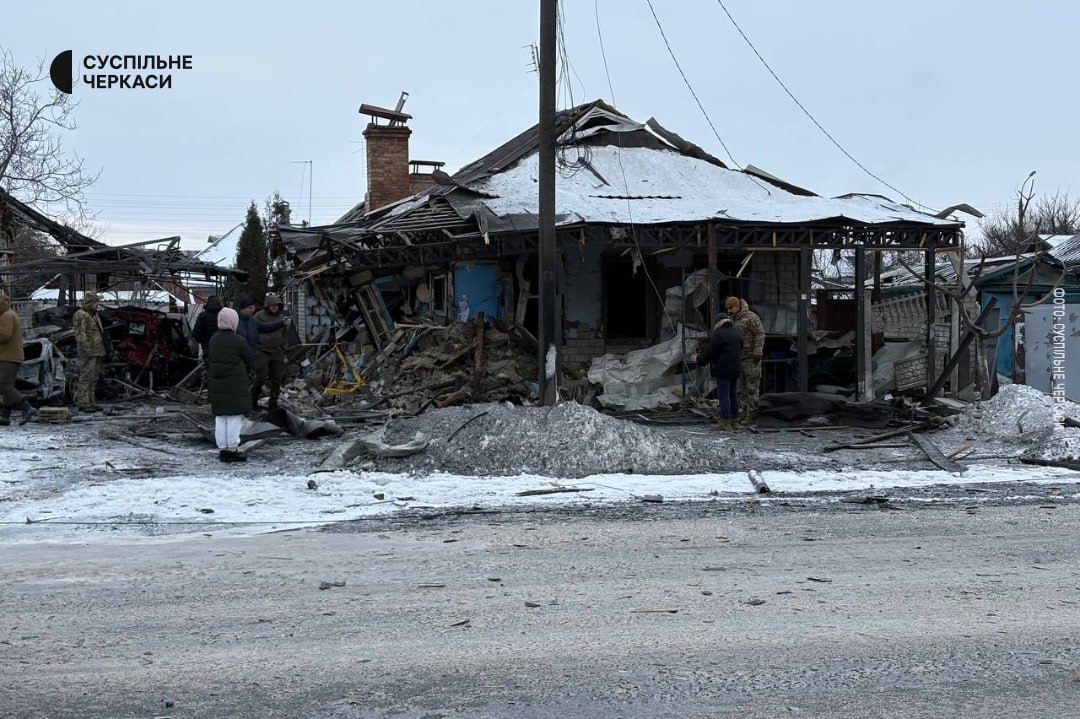
171 drones, 1 ballistic missile, 4 injured: Russia’s overnight assault leaves Cherkasy counting damage
Monday brings no relief
Ukrenergo, Ukraine’s grid operator, announced on Telegram that scheduled hourly outages would continue across all regions on Monday, with industrial consumers also facing power restrictions.
“The reason for introducing restriction measures is the consequences of previous Russian missile-drone attacks on energy facilities,” the company said.
Cumulative damage from months of Russian strikes means the grid cannot meet demand.
Technicians completed repairs to the high-voltage line connecting Ukraine and Moldova overnight on 1 February, restoring 500 MW of capacity to help stabilize southern regions. But cumulative damage from months of Russian strikes means the grid cannot meet demand.
Temperatures on Monday hit -9°C in Lviv, -14°C in Kyiv, and -16°C in Kharkiv, with overnight lows reaching -21°C. Weather forecaster Natalia Didenko warned that Tuesday will bring -22 to -28°C overnight, with Ukrhydrometcenter warning some areas could drop below -30°C. Warming is not expected until 5 February.


