

Key takeaways: How Russia weaponizes peace talks
• The "no-name" trick: Russia sends delegations without decision-making authority to stall
• Timing manipulation: Short talks signal disinterest; marathon sessions exhaust opponents
• Attack during talks: Military strikes mid-negotiation apply psychological pressure
• High anchoring: Extreme opening demands force opponents to argue from Russia's frame
• Avoidance strategy: Key figures vanish when Russia wants to freeze progress
• Intangibles over interests: Moscow values pride and fear over cost-benefit calculations
• The Gromyko inheritance: Modern Russian diplomacy fuses Soviet-era endurance tactics with KGB psychological manipulation
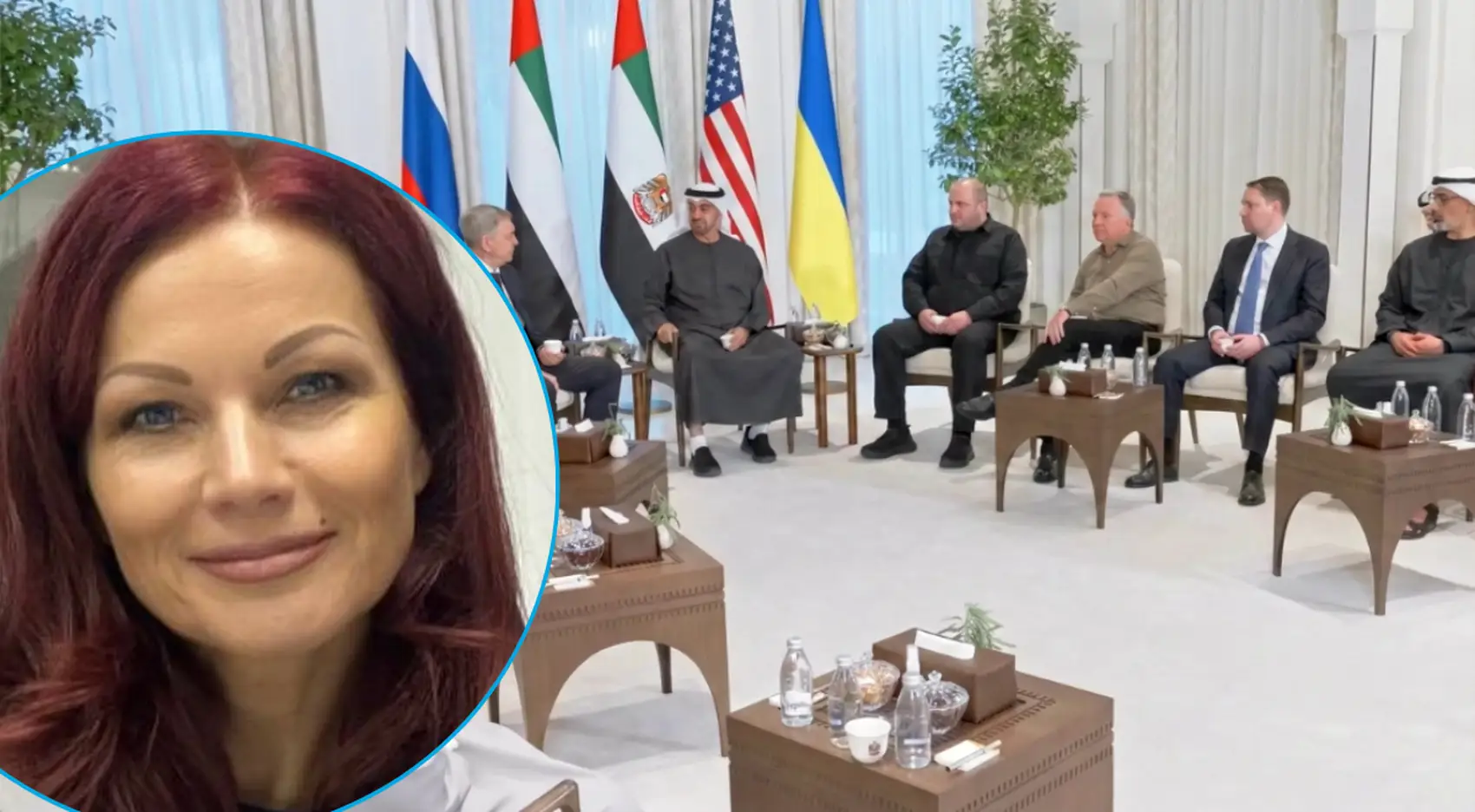
Between the first and second day of "peace talks" in Abu Dhabi, Russia launched nearly 400 drones and missiles at Ukraine. Over a million people lost power. Residents in Kyiv huddled in metro stations through sub-zero temperatures.
The next morning, both delegations returned to the table. Both called the discussions "constructive."
This is the pattern. It has repeated for a decade.
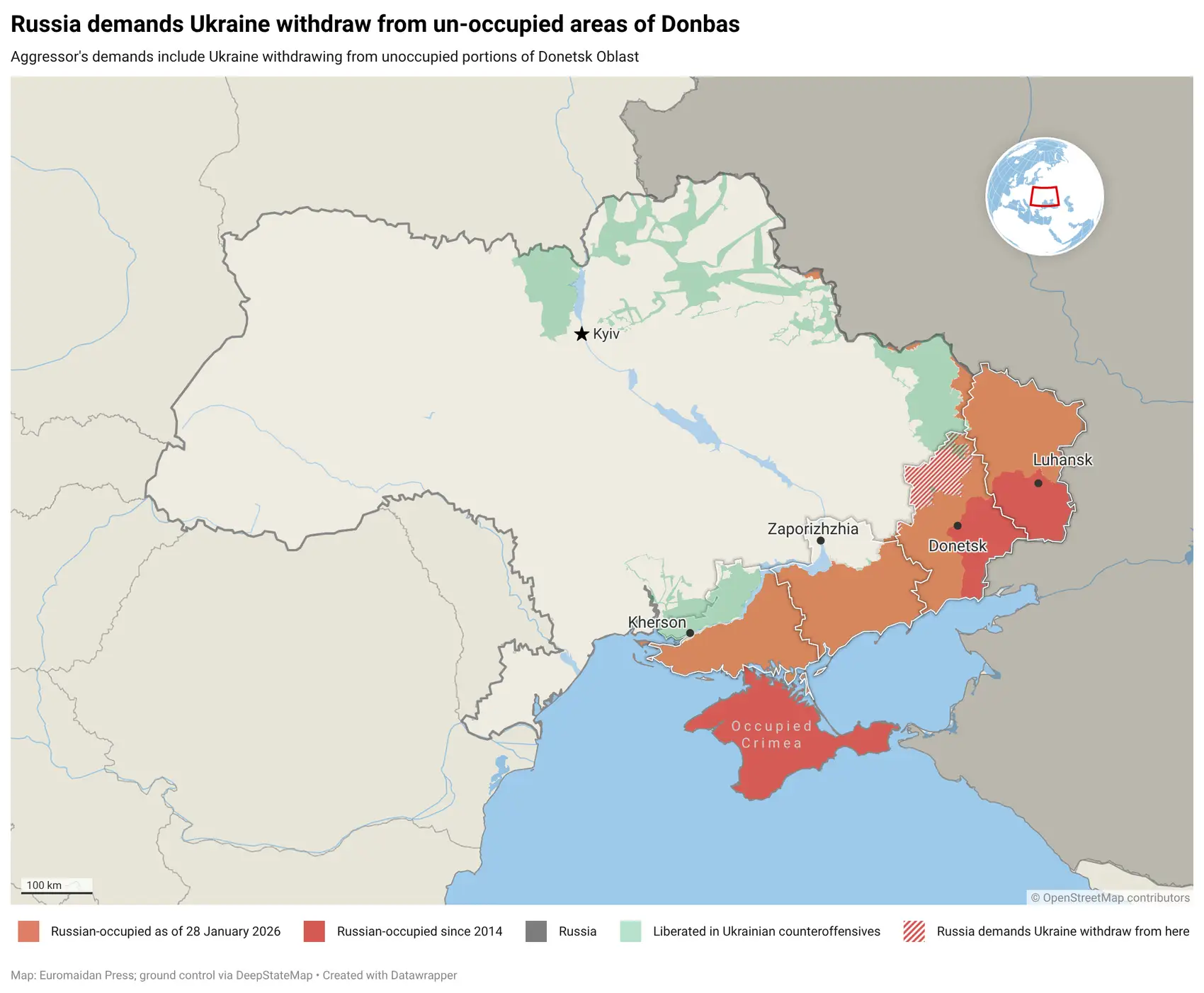
During the Minsk process after 2014, Russia pretended to engage in peace talks with Ukraine while preparing for a full-scale invasion. Now, Russia is pretending to engage in peace talks with Ukraine despite having no real intentions to establish peace. Moscow's demands before Abu Dhabi remained maximalist—full Ukrainian surrender of Donbas, including 5,000 square kilometers Russian forces have failed to capture in nearly four years of war.
The Trump administration called the mid-negotiation strikes "dangerous and inexplicable." Yet the cycle continues: meetings scheduled, "constructive" statements issued, power plants burning, Ukrainians freezing.
Iuliia Osmolovska knows the Russian art of negotiation intimately, having studied the psychology of negotiation at St. Petersburg University before Russia's initial 2014 invasion and observing Russia's tactics over the next 15 years as a Ukrainian diplomat.
Now directing GLOBSEC's Kyiv office, she walked us through the playbook:
- The "ripeness" required for real negotiation hasn't come. Russia doesn't need a deal.
- Negotiations aren't even a top-10 driver of this war. Nine of the top factors are military. The tenth is Ukrainian societal resilience.
- 61 Ukrainian defense experts project 75% probability that war scenarios dominate through 2026. Peace settlements: 25%.
- Russia gains from prolongation—exhausting the West until it pressures Ukraine into concessions.
Interview edited for length and clarity
The key players: Who was in the room at Abu Dhabi?
Daniel Thomas: Let's set the scene. Abu Dhabi, 23 January 2026. Ukraine and Russia sit down for the first day of talks. Who was in the room? What were they supposedly there to discuss?
Iuliia Osmolovska: We need to consider them alongside the Istanbul rounds in May and June 2025—[the first direct negotiations since 2022]. The goal then was to test whether the two sides could find any common ground on ending the war.
A few markers were interesting to observe.
- The composition of the delegation.
- The issues at stake
- The timing—how long these talks lasted.
1. The composition
Russians put forward again the same "no-name," as we call him—Mr. Medinsky. He was not an experienced negotiator but rather a technical figure.
Russia uses a trick: send a delegation with no decision-making authority. They can't agree to anything at the table—they just report back to Moscow and wait for instructions. It's designed to prolong negotiations.
Or, as you said, to create this cycle of false negotiations.

2. The issues at stake
In heated, complex negotiations, less complicated issues—usually humanitarian ones—should come forward first; it demonstrates good faith. In our case, that means prisoner of war exchanges, releasing illegally detained civilians, returning deported children.
But even this track had stalled by last year. No major exchanges were happening.
3. The timing
Russians play with time strategically. If they're interested in talks and want a favorable decision, they make talks long and exhausting—the goal is to wear out an opponent.
If they're not interested, they keep talks short and technical.
What we saw in May and June is telling. Talks lasted two hours in May and only 45 minutes in June. Russia also handed over its peace proposal just before talks started—not in advance.
In diplomatic practice, you submit a draft early so the other side can prepare. The way Russia did it signaled they weren't interested in meaningful talks.
Why Russia attacks Ukraine during the Abu Dhabi peace talks
Iuliia Osmolovska: A few things stand out about Abu Dhabi talks. First, the timing. The negotiations didn't take long on either day.
Most importantly, in between the two days, Russians shelled Ukraine again. They used combined attacks of missiles and drones.
Classically, this is reason enough for the Ukrainian delegation to walk away. They could say: "You're not showing good faith. You're trying to pressure us." But they didn't walk away—because of the Americans.
Both sides are playing this game. But Russia is doing it most blatantly—pretending to negotiate when it's really just imitation.
What would it take to break this cycle?
Negotiation theory calls it "ripeness"—the moment when both sides are dissatisfied with the status quo and understand they can't achieve their goals unilaterally. That's when real negotiation becomes possible.
We're not there. Russia is gaining from prolongation. They're exhausting opponents, hoping Americans or Europeans will tire and give up, enabling Russia to pursue their goals. Then Russia can demand maximalist concessions from Ukraine.
What changed in Abu Dhabi: Spymasters replaced diplomats
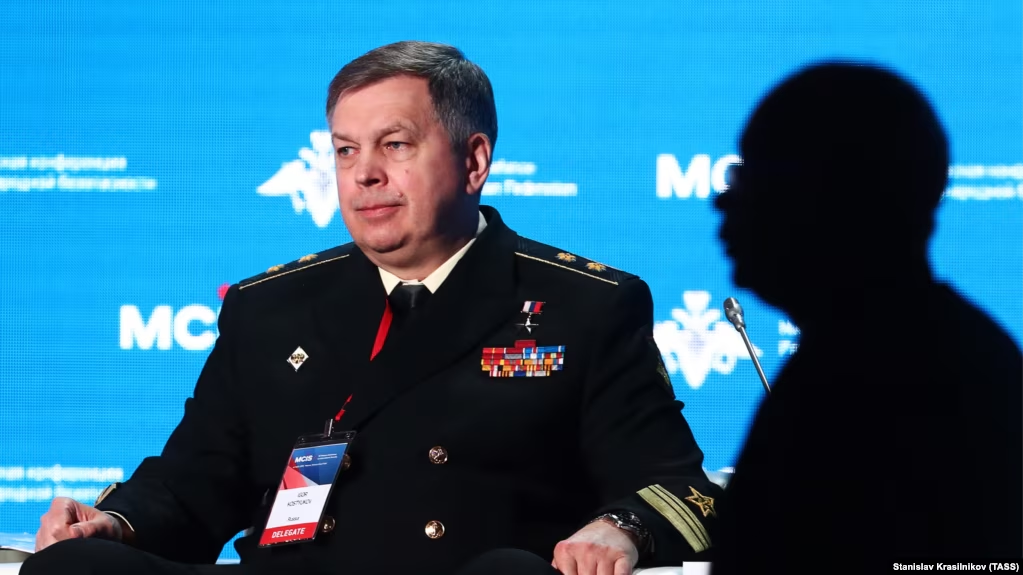
Iuliia Osmolovska: What changed in Abu Dhabi is the delegation. Russia replaced "no-name" Medinsky with Igor Kostyukov, a senior military intelligence officer. Ukraine's Budanov reportedly knows Kostyukov personally—they've communicated before.
Trending Now
This personal component plays a significant role in negotiations. But whether it signals real progress remains to be seen. The moment of ripeness, by our assessment, hasn't come yet.
Daniel Thomas: It's not often you have spymasters at the negotiating table. What role could Budanov play that differs from a traditional diplomat?
Iuliia Osmolovska: Both sides are trying to show they're willing to negotiate. But in fact, they're not ready to negotiate meaningfully.
The questions being discussed are the modalities of a potential ceasefire—that requires military people at the table.
What military intelligence brings to the table

Psychologically, the presence of both Budanov and Kostyukov indicates something. Both sides might be willing to talk seriously.
Military intelligence people have a much better reality check. They know what's happening on the ground. They know the potential capacity of the other side. Classic diplomats don't always possess this.
When these people sit at the negotiation table, it means something important. "We have someone who has more knowledge. You're not going to fool me by pretending the situation on the ground is different from what we see."
Russia's perception manipulation
Osmolovska: Russia has been selling a narrative—quite successfully—that it's winning on the ground. They claim the upper hand in combat.
Military experts see it differently. The front line is essentially a stalemate. Tactical movements happen on both sides. Yes, Russia is advancing, but slowly—50 kilometers in 10 months. That's very slow.
But perception in the West, especially America, is different. Trump has echoed the line that Russia has the upper hand. That's the psychological influence operation working.
The problem for Russia: you can't sell that narrative to Ukrainian military intelligence sitting across the table.
Why the West keeps falling for Russia's tactics
Iuliia Osmolovska: Western mentality is grounded in the theory of rational choice. Cost-benefit analysis. If you're offered something beneficial, you consider it. Russians understand this perfectly.
But Russian mentality appears irrational to the West. Russians value intangibles—pride, respect, being feared. There's a proverb: "If he fears, then he respects me. If he fears, then he loves me."
Russians think the whole world is scared of them. They believe everybody acts out of fear. In Russian culture, fear leads to respect automatically.
They're ready to tolerate the cost of sanctions. They accept massive battlefield losses. Why? Because it serves the higher goal: respect out of fear from the whole world.
This is exactly where Western understanding of the Russian mindset fails. Russians view opponents at the negotiation table not as partners but as foes. It matters not just how much they win, but also how much the other side loses.
The Gromyko inheritance: Soviet tactics, KGB psychology
Western analysts trying to understand Russian negotiating behavior often land on Andrei Gromyko, Soviet foreign minister from 1957 to 1985. His nickname was "Mr. No"—he refused nearly every proposal from the other side.
Osmolovska: But Gromyko is only one element of the picture. If you look at how Soviet diplomatic school developed and transformed into modern Russian diplomacy, it's still a mixture of old KGB methods and the Gromyko school.
Russians don't undervalue psychological factors. They use many tricks exploiting psychological vulnerabilities. Underestimating this component makes Western partners very vulnerable.
Former Ukrainian military chief Valerii Zaluzhnyi warned that what the West mistakes for peace talks is actually Soviet-era psychological warfare dressed in diplomatic language.
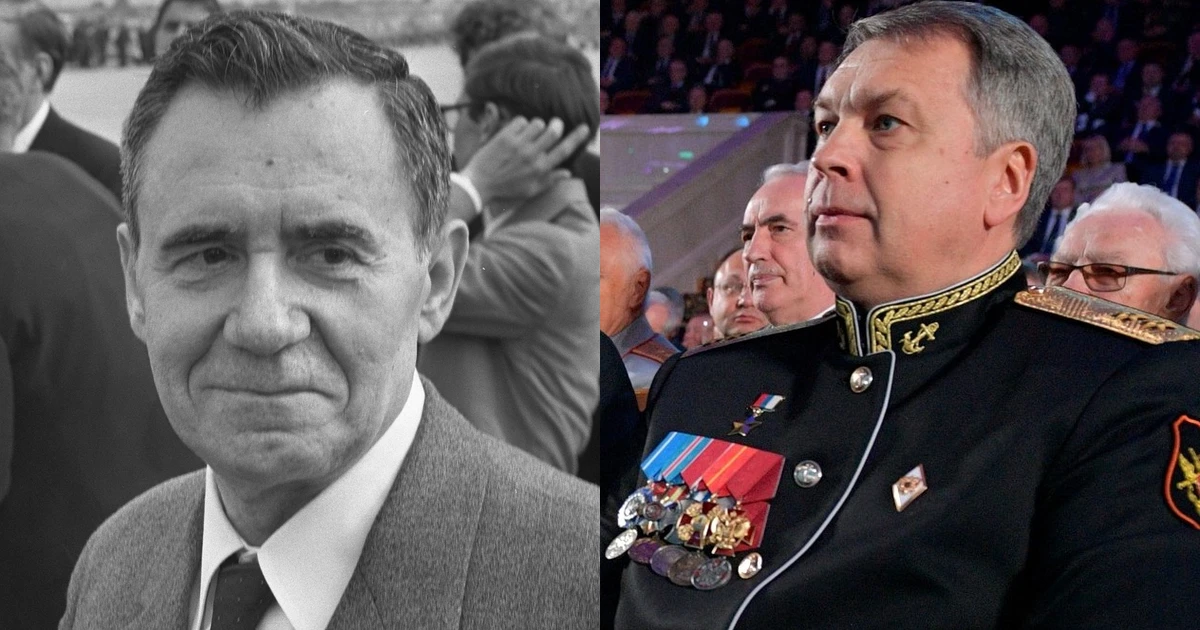
Gromyko’s ghost at Abu Dhabi: The Soviet playbook Russia still uses to sabotage peace talks
High anchoring: How Russia's December 2021 ultimatums set the pattern
Iuliia Osmolovska: Russia starts with extreme demands. In negotiation terms, this is "high anchoring." It works because it forces the opponent to argue within Russia's frame—you're already anchored to their position.
This is exactly what happened in December 2021, in the prelude to the full-scale invasion. Russia submitted two drafts to the US and NATO demanding NATO withdraw to 1997 borders and redeploy troops from Eastern Europe.
The West wasn't ready. They had no counter-drafts, so they responded to Russia's proposals—playing on Russia's turf.
These demands were maximalist. Russians were well aware they wouldn't fly. It was just a pretext for the full-scale invasion.
"If you won't consider this, we will act militarily, in the way we consider appropriate." Two months later, they invaded.
Daniel Thomas: To offer that impossible deal that you can't really fulfill—that's classic.
What actually drives the war's trajectory
Iuliia Osmolovska: We asked GLOBSEC experts to rank the top 10 drivers of this war out of 50 possible factors. Nine were military or military-financial. Only one non-military factor made the cut: Ukrainian society's resilience and mobilization.
Negotiation tracks? Not a first-tier driver. The calculus comes down to military capacity—whether each side can keep fighting.
Daniel Thomas: Precisely. That seems like yet another piece of evidence against the rational choice approach. Civil society and Ukrainian resilience can't be measured in a numerical or quantitative way.
Iuliia Osmolovska is the Director of the GLOBSEC Kyiv Office. She previously served 15 years as a diplomat at Ukraine's Ministry of Foreign Affairs.


