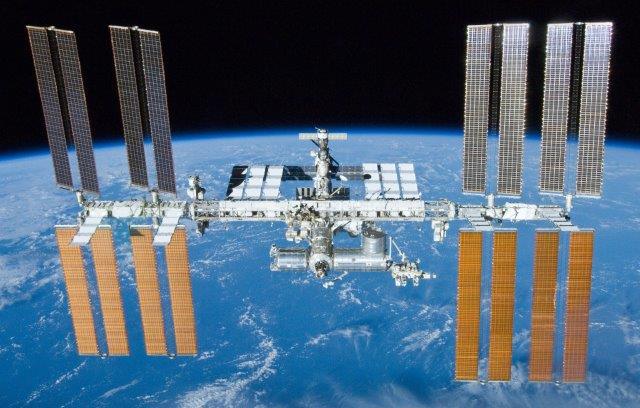


Last week, important operations were launched within the framework of the European Union’s Space Programme Governmental Satellite Communications system (Govsatcom). They are linked to the development of the IRIS² satellite system, UkrInform reports.
Europe aims to reduce its dependence on private US companies, particularly SpaceX.
A proposal is also being developed to create a virtual European Space Command.
Space as a new dimension of European security
This means that all members will be able to access sovereign satellite communications, military and governmental, secure and encrypted, built in Europe and operated in Europe under European control.
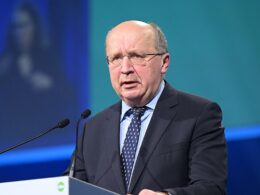
This is the first step toward space autonomy, and by 2027, the EU will be ready to expand the satellite system's coverage and capacity to a global scale, said Andrius Kubilius.
He made the remarks on 27 January at the 18th European Space Conference in Brussels.
IRIS²: Europe’s own alternative
The new capacities will be procured from commercial partners, Kubilius explained, adding that the EU will need to introduce additional security measures in this context.
The European Commissioner noted that Govsatcom relies on existing national satellite capabilities, specifically, eight satellites owned by five countries.
IRIS², which is being developed in parallel, is expected to become operational in 2029.
Fivefold increase in funding and the efficiency challenge
The European Commission will soon present a report on the “European Space Shield” program, a roadmap covering initiatives on “defense of space” and “space for defense” for the coming years.
As part of the next EU Multiannual Financial Framework, the European Commission will propose a fivefold increase in space-related spending.
The EU will also work to prevent fragmentation of the space sector and duplication of funding programs.
Kubilius praised the increase in national space funding by individual member states, including Germany, but acknowledged that the EU faces a challenge in ensuring the cost-effectiveness of defense spending, particularly on space, at the EU level.