
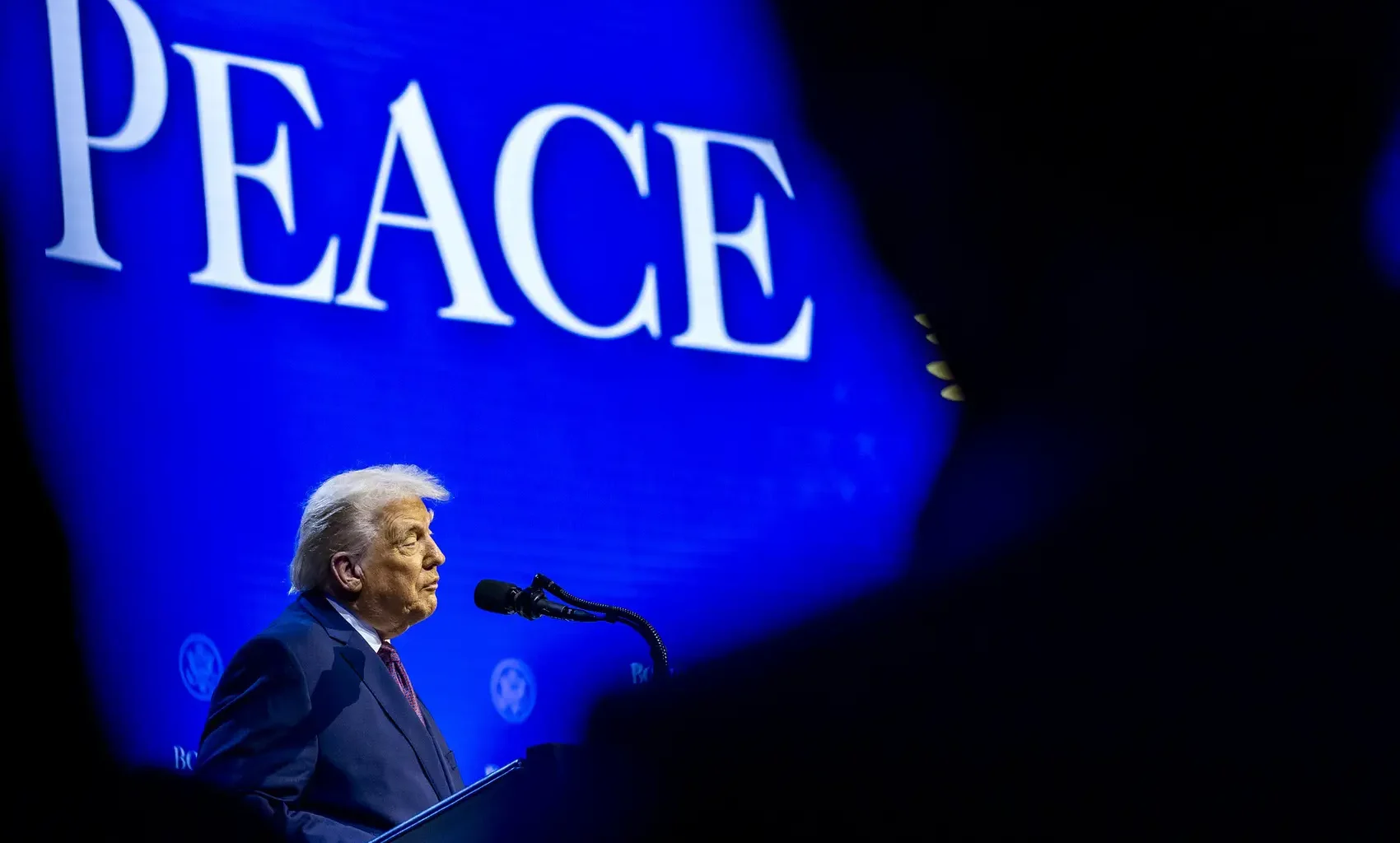

In September 2024, 95 countries and organisations—including every major EU state—signed a Joint Communiqué on a Peace Framework. It was built on international law and the UN Charter. It was linked to Ukraine's Peace Formula and Victory Plan—not seeking Russian defeat, but forcing Russia to accept a just and lasting peace.
Less than six months later, Europe abandoned that framework. It is now negotiating on the basis of Trump's "peace plan"—a plan I dubbed in July 2024 "a blueprint for Russian victory over Ukraine and West." Trump has since presented three versions, each increasingly more biased towards Russia. The latest—seen as a joint US-Russian proposal—amounts to a call for Ukrainian and European capitulation.
European leaders issue statements stressing "commitment to a just and lasting peace in Ukraine in line with the United Nations Charter principles." Then they sit down to negotiate a plan that does the opposite. The contradiction is jarring.
The cost of European delay
While Europe wastes time trying to make an unacceptable plan slightly less so, Russia is exploiting every day of paralysis.
Since the start of 2026, Ukraine has documented 256 air attacks on energy and heating facilities. From October 2025 to the present, Russia has struck 11 hydroelectric power plants, 45 of the largest thermal power plants, and 151 electrical substations across Ukraine.
The strikes—concentrated in Kyiv, Kharkiv, Odesa, Dnipropetrovsk, Sumy, Mykolaiv, and Chernihiv oblasts—use combined strike packages of ballistic missiles, cruise missiles, and long-range drones. Launched during extreme cold, they caused widespread power, heating, and water outages affecting millions.
For the first time since the full-scale invasion, Ukraine declared a state of emergency in its energy sector. The Security Service of Ukraine (SBU) classifies Russia's systematic attacks as crimes against humanity—a deliberate Kremlin policy to harm the civilian population.
In August 2024, EU Energy Commissioner Kadri Simson warned that parts of Ukraine may become uninhabitable that winter. "The coming winter will likely test the resilience of the Ukrainian people in a way that has not been seen on our continent since World War II," she said. Last winter, Ukrainian resilience, international support, and the warmest winter on record allowed Ukraine to prevail. This winter may be different.
The escalation—long-range drone strikes up by factor five—happened after the Trump administration stopped donating air defence systems and missiles to Ukraine. The slow trickle of American-produced weapons reaching Ukraine now comes only through European procurement. Russia is using Trump's "peace process" as cover to break Ukraine before any agreement is reached.
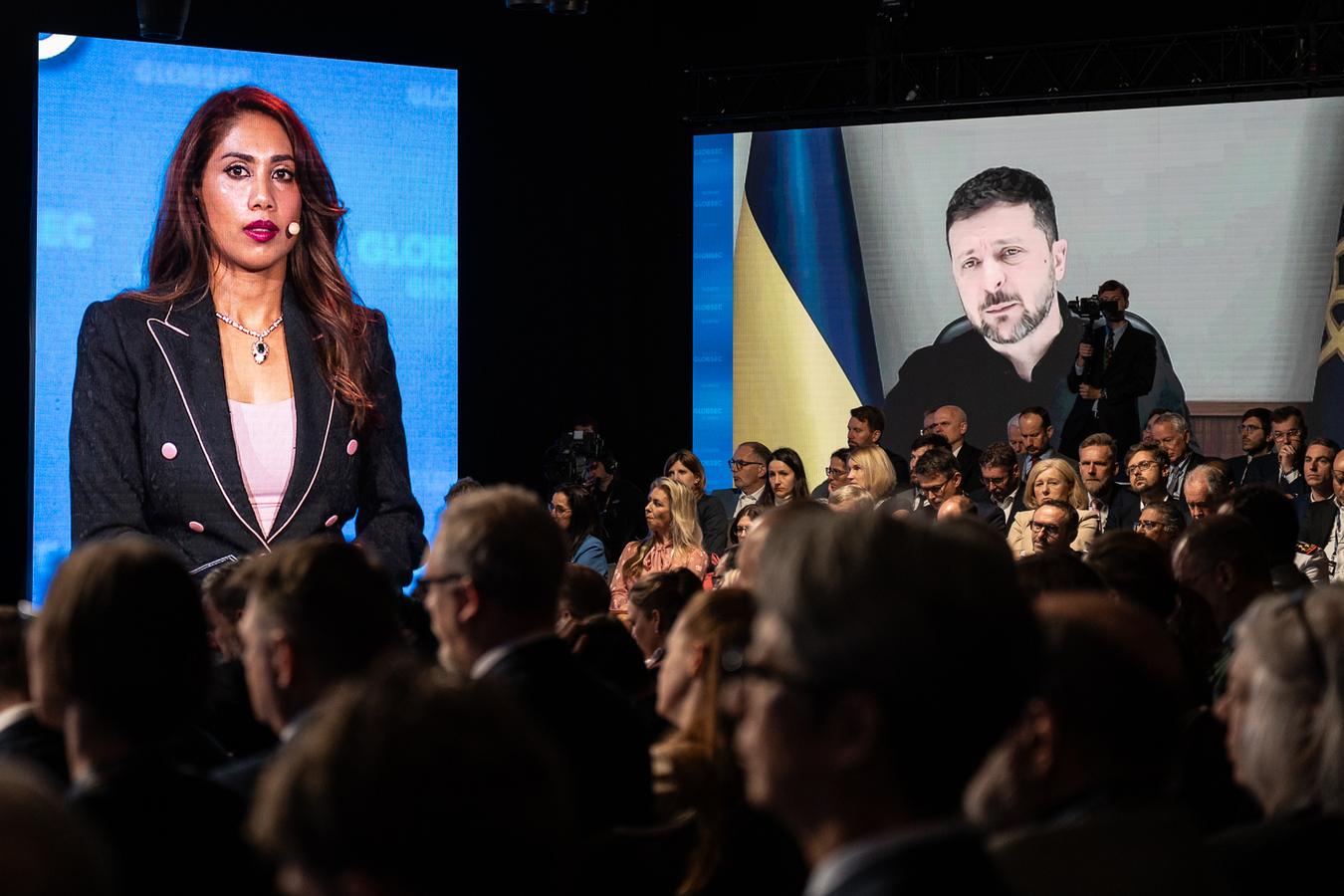
Why Trump's plan serves Russia
Russia has long used disinformation to create strategic ambiguity, offering the West four different tales—all unpleasant, all with different costs, with one designed to look like an "easy way out." I've tracked them since 2014.
- The first tale—"the choice of the people"—started with Crimea and an eight-year low-intensity war in Luhansk and Donetsk. Green men, "separatists," illegal referendums, false genocide claims. If given Crimea and all of Luhansk, Donetsk, Zaporizhzhia, and Kherson, Russia hints at peace. This is Trump's plan. It is a trap.
- The second tale—"historical Russian lands"—expands the claim to Novorossiya: Crimea, Kharkiv, Luhansk, Donetsk, Dnipropetrovsk, Zaporizhzhia, Kherson, Mykolaiv, and Odesa. On 14 January 2026, Russian Foreign Minister Lavrov stated that "nothing will work without settling the issue of the people living in Crimea, Novorossiya, and Donbas." Russia's objectives already exceed what Trump offers—and the Trump administration ignores it.
- The third tale—"one people, one nation"—claims all of Ukraine.
- The fourth tale—"the Russian World"—is the only one formalised in Russian strategic documents. Putin's imperial concept encompasses "former territories of Kyivan Rus, the Kingdom of Muscovy, the Russian Empire, the Soviet Union, and the contemporary Russian Federation." Russia seeks strategic parity with the US and China, Great Power status, and hegemony over the post-Soviet space—including parts of NATO territory. Its ultimatum of 17 December 2021 demanded the US leave the European continent.
Trump insists on negotiating "peace" based on the first tale—the notion that Russia will accept a small part of Ukraine after twelve years of war, over 1.2 million casualties, 11,500 destroyed tanks, 23,800 APCs, 36,100 artillery pieces, and the Black Sea Fleet.
When asked why US-led talks have failed, Trump replied: "Zelenskyy." He blamed Ukraine because Ukraine's submission is what his plan requires. He does not blame Russia because he is not pressuring Russia to compromise. He wants to give Putin what Putin demands. Zelenskyy—supported by Europe—is blocking his surrender.

Europe's complicity
The desire to improve a devastating US-Russia plan is understandable. The result, however, is that Europe's participation lends it credibility.
At best, European efforts make an unacceptable plan marginally less so. Europe's involvement effectively kills other options—including closer European-Ukrainian coordination that excludes the two countries undermining international security.
Worse, Europe's proposed security guarantees expose its own weakness.
According to reports, Europe is discussing a deployment of 10,000–15,000 troops. Financial Times reports that this deployment is "fundamentally dependent upon US security guarantees." A European official stressed that without US approval, implementing the multinational forces previously promised by the UK and France would be impossible.
At best, European efforts make an unacceptable plan marginally less so.
Trump will not both fulfil Putin's demands and guarantee Ukraine's security. The two are in direct contradiction. This explains why Europe remains unsure what guarantees the US will provide. There will be none.
According to Denmark's Defense Intelligence Service assessment from February:
- If the Ukraine war stops or freezes and NATO does not rearm at the same pace as Russia, Moscow could launch a local war against a neighbouring country within six months.
- A regional war against NATO Baltic states: two years.
- A large-scale European war without US involvement: five years.
Europe is negotiating its security with the two countries that threaten it most. Russia openly seeks hegemony over post-Soviet space, including NATO territory. The Trump administration has demonstrated contempt for European allies, openly deplores the EU, agrees with Putin's vision of a multipolar world governed by the US, China, and Russia, and is actively undermining NATO—where a likely US annexation of or attack on Greenland may mark the end of one of history's most successful alliances. Trump's trade war undercuts Europe's efforts to rearm before the window closes.
It is strategically absurd to allow Europe's two strategic adversaries to negotiate European security.
The way forward
It is time for Europe to show some backbone.
That means returning to the 2024 framework—a just and lasting peace based on the UN Charter, built with Ukraine, not imposed upon it. It means excluding the US and Russia from a process both are exploiting to undermine European security. It means Europe defining the premises for its own security rather than accepting terms dictated by adversaries.
A Coalition of Like-Minded European Countries—those willing to defend the principles they claim to hold—could present Russia with European ultimatums rather than accepting Russian ones laundered through Washington.
Europe built a framework for peace in 2024. It should return to it—or explain to its citizens why it abandoned international law to help negotiate its own strategic defeat.
Editor's note. The opinions expressed in our Opinion section belong to their authors. Euromaidan Press' editorial team may or may not share them.
Submit an opinion to Euromaidan Press


