

American forces may deploy to eastern Ukraine as ceasefire monitors—but only if Kyiv agrees to withdraw from cities Russian forces have not captured. That's the gap between what the United States is offering and what Russia is demanding.
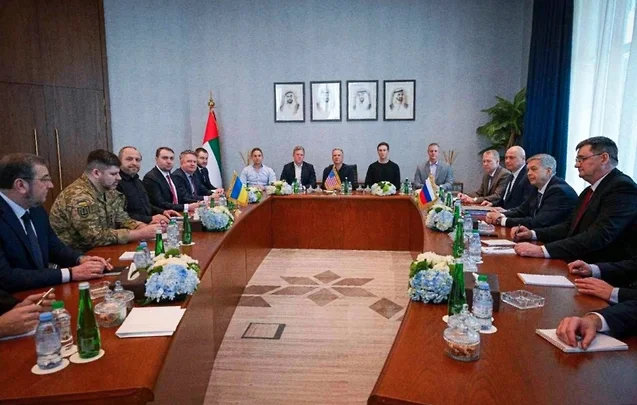
Two days of trilateral talks in Abu Dhabi ended 25 January with both sides calling the discussions "constructive." Ukrainian President Volodymyr Zelenskyy said delegations discussed "American monitoring and control of the process of ending the war." Another round is scheduled for 1 February.
But "constructive" masks a familiar problem—one that has defined every negotiation since August 2025: Russia demands territory at the table that it hasn't taken on the battlefield.
What Russia wants—and what it would mean
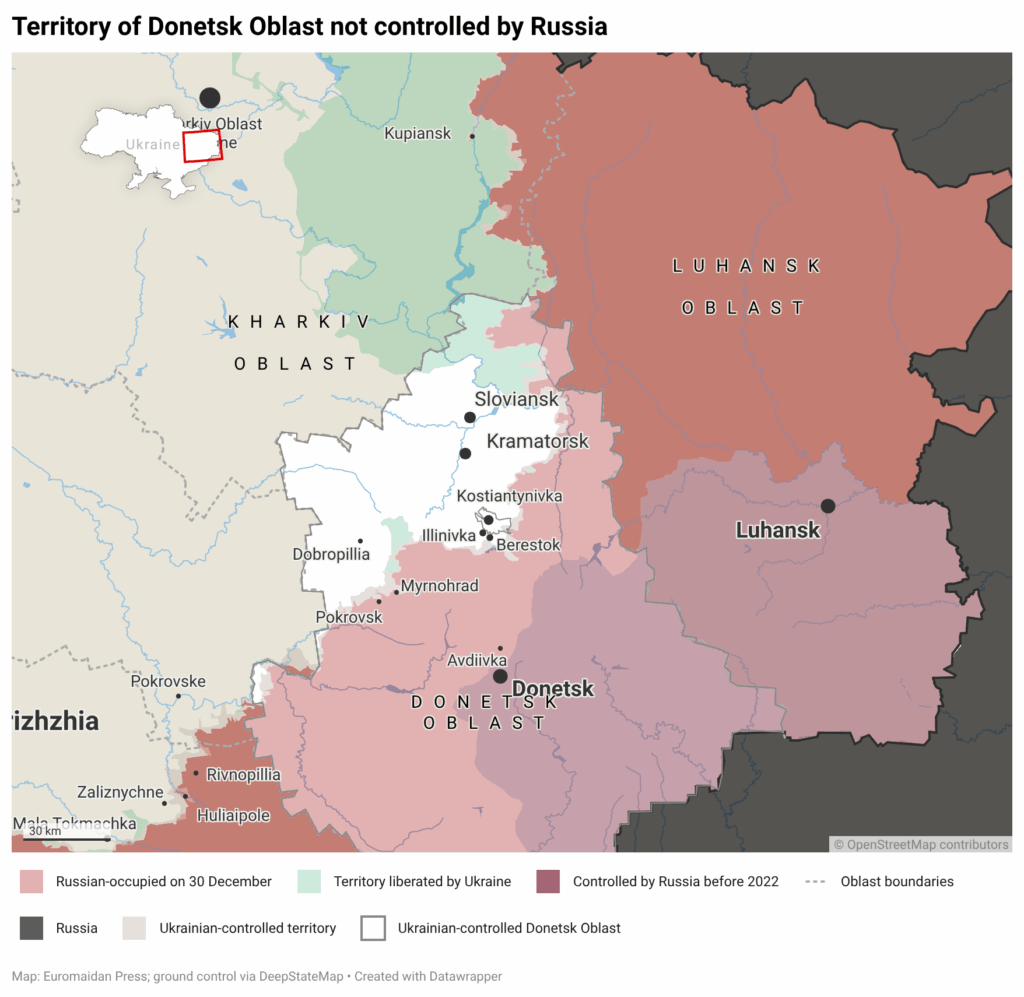
The Kremlin's position—articulated repeatedly since the Trump-Putin summit in Alaska—requires Ukraine to withdraw from all of Donetsk Oblast. That includes Sloviansk, Kramatorsk, and Kostiantynivka: three cities with a combined prewar population of roughly 370,000 that form what military analysts call the "fortress belt."
"Ukraine and the Ukrainian Armed Forces must leave the territory of Donbas," Kremlin spokesman Dmitry Peskov said after the Abu Dhabi talks. "This is a very important condition."
Kramatorsk has served as the de facto capital of Ukrainian-controlled Donbas since 2014. Kostiantynivka anchors the southern end of 50 kilometers of fortified positions—defenses Ukrainian soldiers have held through nearly four years of war.
Moscow frames its demand as completing the "liberation" of territory it claims as Russian. The Kremlin has insisted since the Alaska summit that any settlement must align with "understandings" reached there—understandings the US has never publicly confirmed.
Russian officials have dubbed this the "Anchorage formula." As EP reported last week, Deputy Foreign Minister Sergei Ryabkov warned that Moscow would reject any deal departing from what it claims Trump and Putin agreed in Alaska. The formula reportedly requires Ukraine to surrender all of Donetsk and Luhansk oblasts—including territory Russian forces have never controlled.
Battlefield situation
What Ukraine faces
From Kyiv's perspective, the demand amounts to surrender without defeat.
Zelenskyy has repeatedly stated that Ukraine will not cede territory Russia hasn't captured: "Neither de jure nor de facto will we recognize Donbas—its temporarily occupied part—as Russian."
Polls back him. A December 2025 survey found 75% of Ukrainians oppose any peace plan requiring withdrawal from Kramatorsk and Sloviansk.
The 20-point framework under discussion—developed through months of US-Ukraine-Europe negotiations—covers security guarantees, prisoner exchanges, and reconstruction. But as Zelenskyy noted in December, the plan is "90% ready"—with territorial issues making up most of the remaining 10%.
The American role—and its limits
Zelenskyy indicated the US delegation raised "potential formats for formalizing the parameters for ending the war, as well as the security conditions required." A US official described the proposed security protocols as "very, very strong."
But American peacekeepers can only monitor a line that both sides accept.
Moscow has rejected any deployment of NATO troops on Ukrainian territory. And Russia's stated position—withdrawal from all of Donetsk, including unoccupied cities—represents a demand Ukraine has refused since negotiations began.
The US has floated compromise proposals, including a "special economic zone" in contested areas. Zelenskyy has expressed openness—provided it remains under Ukrainian administration. Russia has not accepted.
Where this leaves talks
Putin faces real pressure. Russia's economy is straining under wartime spending. The White House has demanded an end to fighting before broader engagement.
But the Kremlin continues to insist on territorial gains beyond what its forces control—a position analysts say is designed to secure through diplomacy what Russia couldn't take militarily.
"Without solving the territorial issue, there is no hope of achieving a long-term settlement," Putin adviser Yuri Ushakov said after talks with US envoys.
Another round of talks begins 1 February. Military officers have prepared lists of technical issues. The question is whether technical progress can bridge a political gap that has remained unchanged since August.
Read also
-
Russia invokes mysterious “Anchorage formula”, as trilateral Ukraine talks begin in Abu Dhabi
-
50-kilometer fortress: Why Ukraine’s Donetsk defense belt matters more than territory
-
Kostiantynivka: How a city dies without surrendering
-
75% of Ukrainians oppose “peace plan,” which includes withdrawal of troops from Donbas
-
ISW: Give up your fortress belt shield, take nothing in return—Putin’s ceasefire pitch to Ukraine


