

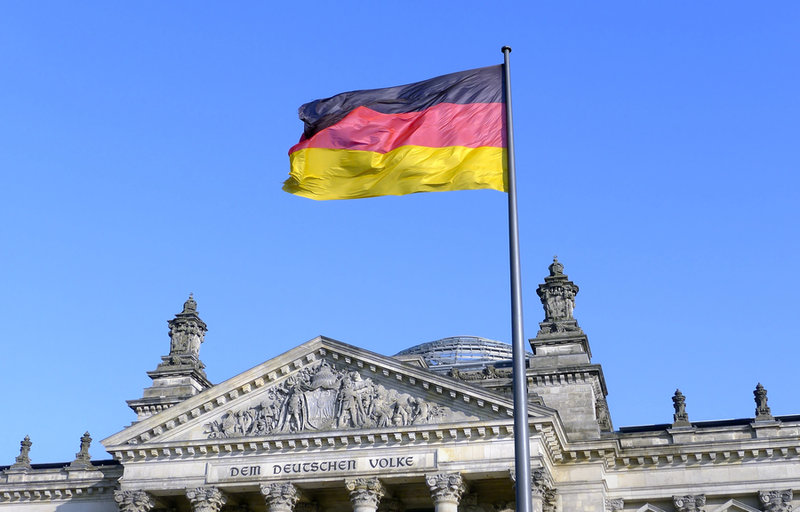
A new poll reveals that 61% of Germans view US President Donald Trump as a threat to Germany, with just a quarter still considering him an ally, amid escalating tensions over Greenland and Washington's increasingly aggressive foreign policy stance.
The survey, conducted by INSA (Institute for New Social Answers), a German market and social research institute, for the mass-circulation Bild newspaper on 22-23 January among 1,004 respondents, found that only 24% of Germans still see Trump as an ally. The remaining 15% declined to answer.
America, long seen as Europe's protector, is increasingly viewed as a threat. The poll lands as European leaders—after four years defending Ukraine from Russian aggression—now find themselves defending Denmark's sovereignty from their own ally across the Atlantic.
Russian state media has been having a field day. Russian Foreign Minister Sergey Lavrov noted that Crimea is as strategically important to Russia as Greenland is to the United States—echoing Moscow's pretext for launching the Russo-Ukrainian War in 2014.
Meanwhile, the Russian government newspaper Rossiyskaya Gazeta praised Trump's push for Greenland, comparing it to "such planetary events as Abraham Lincoln's abolition of slavery."
"61% of Germans said they perceive Trump more as a threat to Germany. Only a quarter are not afraid of Trump."—INSA poll for Bild
Germans want Berlin to push back
The poll also asked how Chancellor Friedrich Merz's government should handle relations with Washington. A majority—52%—favor a tougher, more decisive approach towards the US, while just 31% called for increased cooperation. Seventeen percent abstained.
This sentiment reflects a broader collapse in German confidence toward America. A separate survey by the Allensbach Institute found that 46% of Germans now believe the United States poses the greatest threat to world peace—nearly double the 24% who said so in 2024.
"52% spoke in favor of a tougher and more decisive course."
Trending Now
Increasing American aggression on the world stage
The shift in German attitudes tracks the Trump administration's increasingly aggressive foreign policy. After US forces captured Venezuelan President Nicolás Maduro on 3 January, Trump turned his attention to Greenland, refusing to rule out military force against a NATO ally and threatening tariffs on eight European countries that deployed troops to the Arctic island.
Danish Prime Minister Mette Frederiksen warned that any US military assault on Greenland would instantly end NATO.
For Ukraine, the implications are direct: a transatlantic alliance fractured by American aggression cannot coherently support Kyiv against Russian aggression. When the defender becomes indistinguishable from the aggressor, Europeans must ask which threats to prioritize—and Moscow watches, satisfied.


