

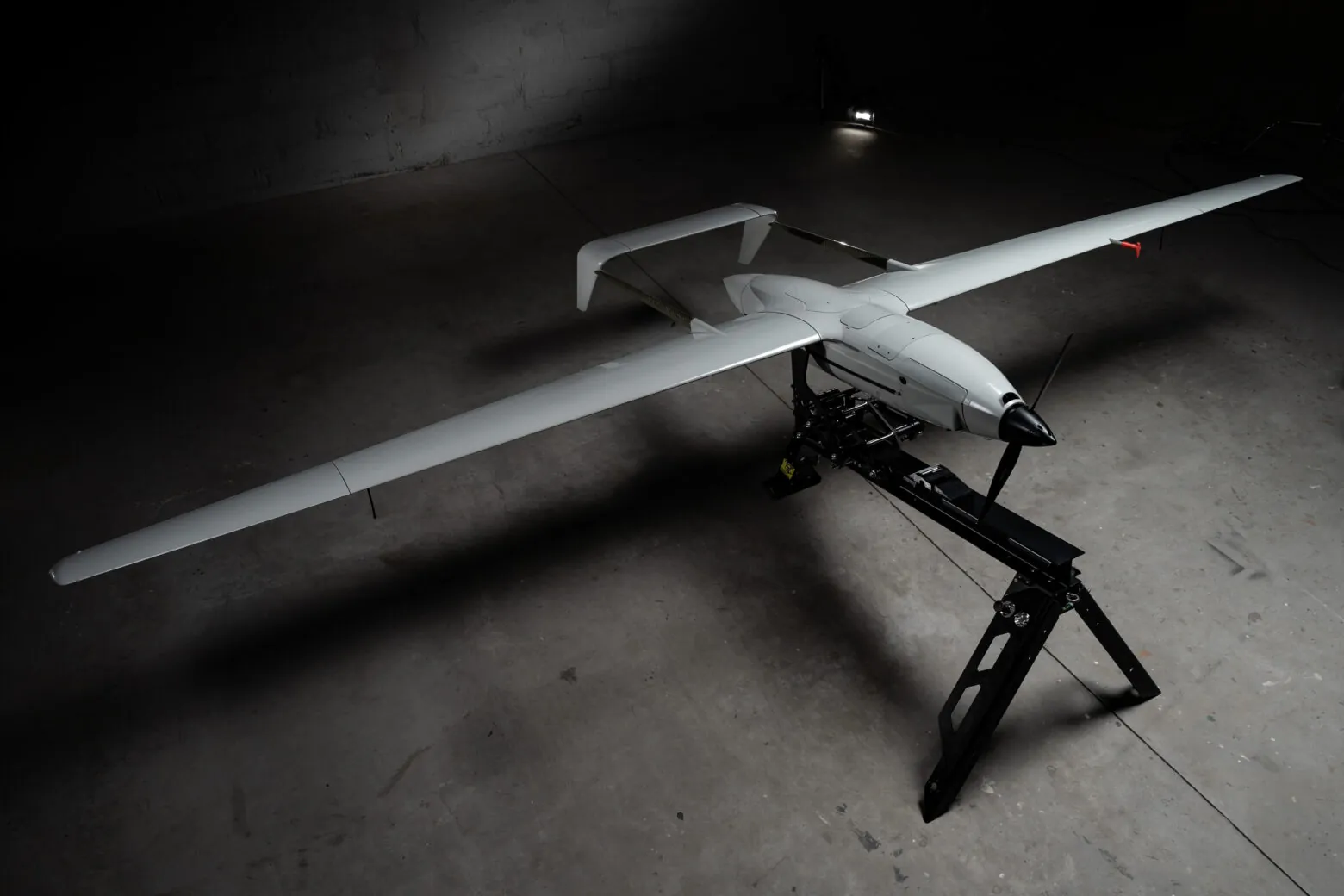
After two years of research and development, hydrogen-powered long-range recon drones, which run cool and quiet, have begun to serve with the Ukrainian military.
Ukrainian developer Skyeton made an alternate variant of its Raybird fixed-wing UAV, normally fitted with an internal combustion engine. The new, hybrid version runs on an electric motor powered by hydrogen fuel cells.
While this cuts its flight endurance from a maximum of 28 hours to 12, it generates less noise and heat than the standard engine variant. The hydrogen fuel cell version also has a higher operational ceiling than the older model.
The Raybird’s missions, which involve intelligence, surveillance, target acquisition, and reconnaissance, typically last over 10 hours, according to the company.
Pros and cons of hydrogen
Hydrogen fuel cells work by reacting hydrogen and oxygen to produce electricity.
These cells have better energy density than the commonly-used lithium-ion batteries, and are more efficient than internal combustion engines. Their only waste products are water and heat.
However, there are tradeoffs. Hydrogen is hard to contain and tends to leak. It is also highly flammable. Skyeton had to develop a new airframe architecture for the Raybird to accommodate this fuel.
Trending Now
Producing hydrogen also takes a great deal of energy, and the catalysts used in the fuel cells require rare and expensive metals.
Read Also
-
Ukraine’s Swedish radar planes have flown inside Russian missile range for six months. None has been shot down.
-
Ukraine is running short of its best missiles for hunting Russia’s jet drones. Now MiG-29s are firing 1970s weapons
-
Ukraine is taking 1980s Leopards from across Europe and giving them radar-guided anti-drone guns and gunner-less turrets


