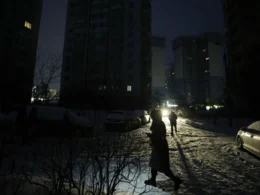
Ukraine has deployed 24 high-capacity generators on Kyiv's left bank and opened over 1,300 warming centers across the capital as the city struggles through an ongoing energy emergency, Prime Minister Yulia Svyrydenko announced on 16 January following an emergency meeting ordered by President Volodymyr Zelenskyy.
Russia has launched repeated mass strikes on Ukraine's energy infrastructure over the past week, plunging the capital into its worst heating crisis of the war. The 9 January attack left half the city without heating as temperatures dropped to -15°C.
Generators, kitchens, warming centers
The generators are now powering 17 transformer substations. Fifty mobile kitchens reportedly began serving hot food on 16 January in neighborhoods where the situation remains critical.
Repair work continues around the clock but is hampered by freezing temperatures, Svyrydenko said.
The government also relaxed curfew rules in areas under energy emergency, allowing residents to move to warming centers at night.
Heating mostly restored, blackouts continue
Heating has been restored to most of Kyiv - only 100 apartment buildings remain without heat as of 16 January, down from 6,000 after the 9 January strike, Mayor Vitali Klitschko reported. Utility workers have been repairing damaged infrastructure around the clock, he said.
But the city remains on emergency blackout schedules and the energy situation is "very difficult," Klitschko said.
City goes dark to protect grid
To ease pressure on the grid, Kyiv's Defense Council on 16 January ordered architectural and decorative lighting switched off entirely and streetlights reduced to 20% intensity.
Where dimming isn't technically possible, only half of streetlights will operate. Illuminated advertisements and building facades face similar restrictions.
The city has asked residents to conserve electricity, saying reduced consumption helps prevent network overloads and speeds restoration work.