
From juice factories to pizzerias, veterans aren't waiting for government help—they're building businesses and sending supplies back to the front.
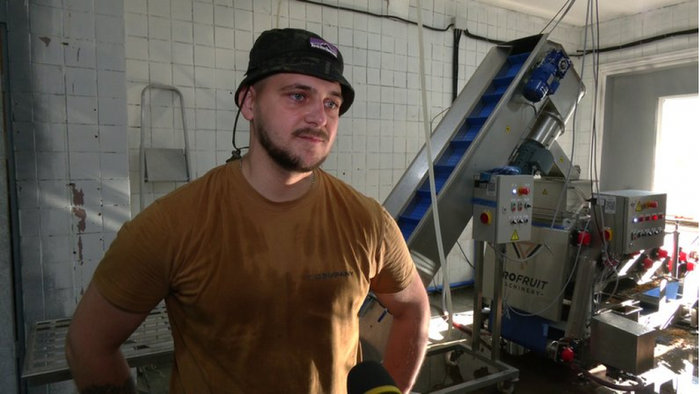
Yaroslav Kozachuk spent nearly a decade at war. First in 2015 with the Ukrainian Volunteer Corps, rotating through Shyrokyne and Volnovakha. Then again on 24 February 2022, when he rejoined the army hours after Russia's full-scale invasion began.
By 2024, after rising from rifleman to platoon sergeant with the 67th Mechanized Brigade, Kozachuk was discharged. His solution to civilian life: open a juice processing business in Khmelnytskyi.
"We didn't hesitate," Kozachuk told Army FM. "Our brothers-in-arms are good people, we're not afraid of risks, and something needs to be done."
Kozachuk's story reflects a broader pattern. According to a January 2024 poll by the Ukrainian Veterans Foundation, roughly 50% of Ukrainian veterans aspire to launch their own businesses. But over 30% of those no longer serving face unemployment.
In November 2025, Prime Minister Yuliia Svyrydenko projected that Ukraine would have 5 to 6 million veterans and their family members after the war, exposing a growing national gap between aspiration and opportunity.
Kozachuk's story reflects a broader pattern. According to a January 2024 poll by the Ukrainian Veterans Foundation, roughly 50% of Ukrainian veterans aspire to launch their own businesses. But over 30% of those no longer serving face unemployment.
Where the state lags, civil society acts
Ukraine's veteran reintegration system is being built during an active war, with no international model to follow.
Civil society organizations have moved to fill the void. Go2Agro, a program helping veterans transition to agricultural careers, has enrolled 400 participants. One of them, Mykola Salamakha, enlisted on day one of the full-scale invasion, spent 18 months fighting, and returned home to unemployment.
"Agriculture is challenging, but it is also cool," Salamakha said. He now runs a small blackberry-growing business.
Veteran-led businesses as a reintegration tool
The template was established before the full-scale invasion. In December 2015, Leonid Ostaltsev and Rafail Agaiev—both Donbas veterans—opened Pizza Veterano in Kyiv, hiring veterans and offering free meals to soldiers.
"People finally saw war veterans becoming successful," Ostaltsev said.
The model spread. More recently, Serhii Petchenko—who lost three limbs in combat—opened Vrazhaie restaurant in Lviv. His wife Anna credits the business with transforming his mental health.
But structural barriers persist. The Ukrainian Veterans Foundation found that 63% of veterans cite society's lack of understanding as their primary obstacle.
Kozachuk isn't waiting for policy solutions. His "Juice for the Front" initiative has sent over 400 liters of apple juice to soldiers still fighting—donated by community members, processed by veterans, shipped free.
"Something needs to be done," he said. For now, veterans are doing it themselves.
But structural barriers persist. The Ukrainian Veterans Foundation found that 63% of veterans cite society's lack of understanding as their primary obstacle.