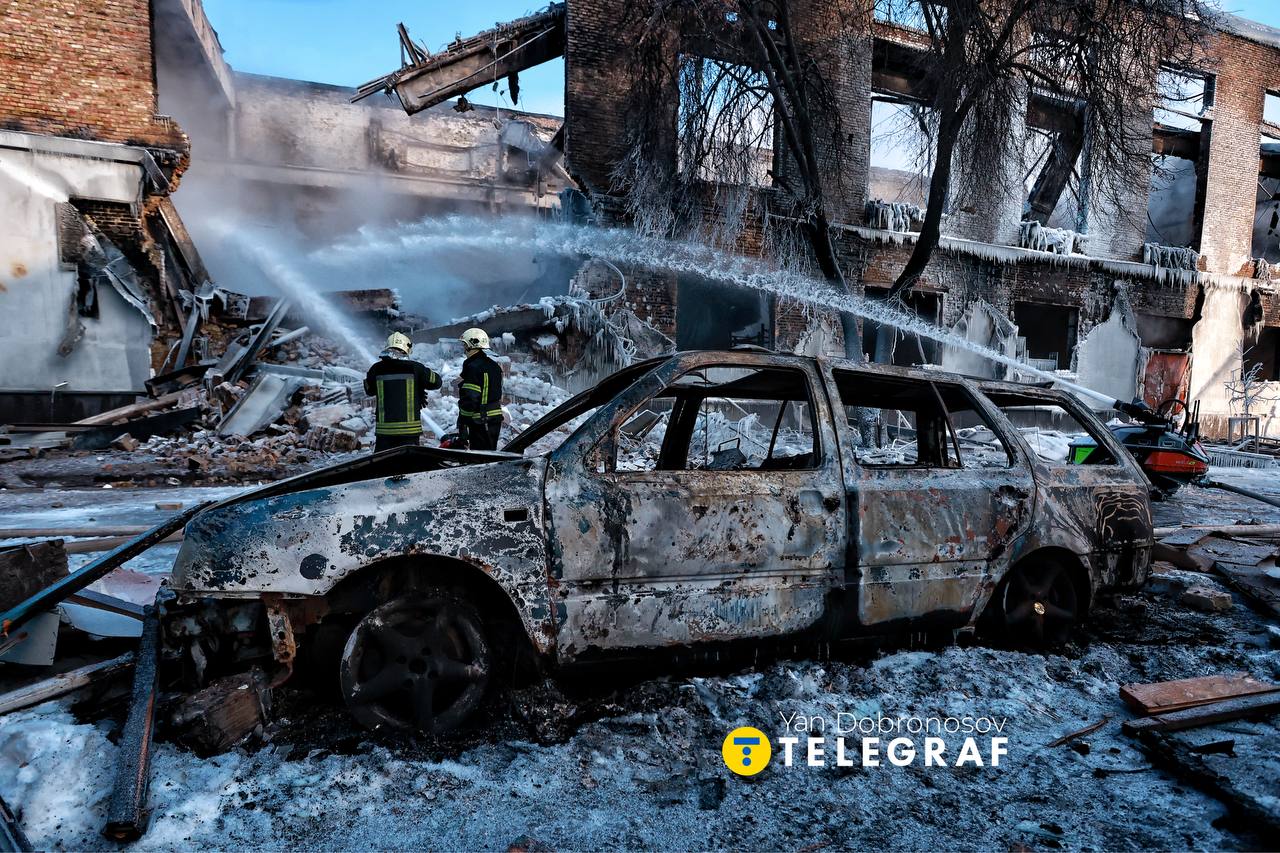
While the UN Security Council convened in New York to discuss Russia's Oreshnik missile strike on Lviv Oblast, bordering NATO member Poland, Moscow struck Ukraine once again. It is an open disregard for the entire global security system, says Ukrainian Foreign Minister Andrii Sybiha, commenting on the attacks.
However, immediately after the security guarantees for Ukraine were coordinated, Russia responded with the intercontinental ballistic strike and additional attacks on the energy sector, plunging the country into cold.
Russia likely aims to show that Western partners cannot prevent its attacks and that they should stop supporting Ukraine.
Cold as a Russian weapon of genocide
Russia’s strikes on Ukraine’s energy infrastructure during extremely low temperatures have a clear purpose of creating conditions incompatible with civilian survival.
"Russia is deliberately trying to inflict conditions of life calculated to bring about physical destruction of the Ukrainian people, which falls exactly under the definition of Article II (c) of the Genocide Convention," says Sybiha.
Targeting basic living conditions, not military objects
The foreign minister highlights the symbolic and cynical timing of the attack. It occurs when the temperature in Ukraine falls below –15°C, and any power outages automatically mean the loss of heat, water, and communications.
According to him, the scale and nature of the attack leave no doubt about its true purpose — to maximize civilian suffering through the collapse of life-support systems.
Russia's actions as the highest-level international crime
The foreign minister directly links Moscow’s actions to the legal definition of genocide under international law:
“Russia is deliberately trying to inflict conditions of life calculated to bring about physical destruction of the Ukrainian people which falls exactly under the definition of Article II(c) of the Genocide Convention,” he emphasizes.
Ukrainian diplomacy thus clearly articulates the legal qualification of Russia’s actions, framing the mass attacks on energy infrastructure not merely as “war crimes” but as genocide.
No illusions, no pauses
Sybiha stresses that the international community must have no illusions regarding Moscow’s intentions. Russia is not seeking compromise and does not demonstrate a readiness for peace. It consciously continues a genocidal war while masquerading as diplomacy.
In this context, according to Sybiha, there can be no pauses in supporting Ukraine, and pressure on Russia must only intensify militarily, through sanctions, and with politically-legal measures.