
The speaker of the Czech Chamber of Deputies, Tomio Okamura, used his New Year's address to attack Ukraine's leadership as "thieves" building "toilets out of gold" while calling the war "completely senseless," reported Czech news outlet ČTK on 1 January.
The attack marks a new low in Czech-Ukraine relations since the Freedom and Direct Democracy (SPD) party entered government. Prague's role as one of Kyiv's most reliable European allies now hangs in the balance.
Under President Petr Pavel's leadership, the Czech Republic supplied 850,000 artillery shells to Ukraine in 2025 alone. But the new coalition has already silenced its own defense minister for expressing support for Kyiv.
Okamura echoes Kremlin talking points
In his ten-minute Facebook address, Okamura called for halting weapons deliveries to Ukraine and accused European allies of driving toward "World War III."
"We cannot use money that belongs to Czech pensioners or disabled citizens and families with children to buy weapons and send them to perpetuate a completely senseless war," he said.
The SPD leader reserved his sharpest words for Ukraine's president: "Western companies and governments, as well as Ukrainian thieves around the Zelensky junta, who are building toilets out of gold. Let them steal, but not from ours, and let such a country not be in the European Union."
Okamura made headlines in November when he personally held the ladder while workers removed Ukraine's flag from the Czech parliament building on his first day as speaker.
Ukraine's ambassador responds
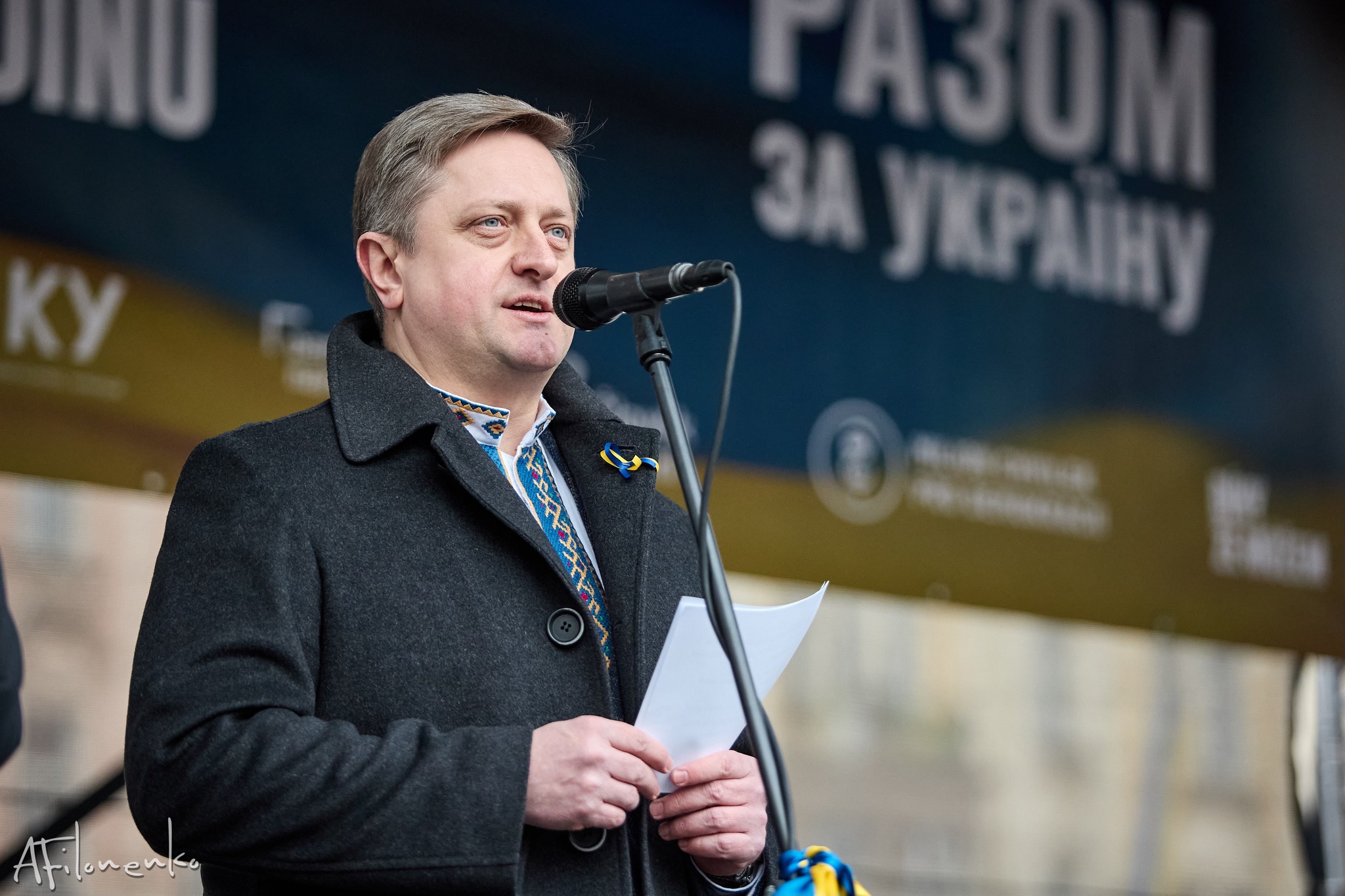
Ukrainian Ambassador Vasyl Zvarych did not stay silent. In a Facebook post, he called Okamura's remarks "offensive and hateful" and said they were "clearly formed under the influence of Russian propaganda."
"The words he dared to use against my compatriots and Ukraine, including the democratically elected leadership of the Ukrainian state, are undignified and completely unacceptable," Zvarych wrote.
"They contradict the principles of a democratic society and the values on which the Czech Republic, as an integral part of the European community, is founded."
The ambassador called on Czech authorities and civil society to evaluate whether such statements are appropriate for someone holding high state office.
Czech government backs Okamura over Ukraine
Rather than distancing itself from Okamura's rhetoric, the Czech government rallied to his defense. Foreign Minister Petr Macinka told ČTK that he does not consider it "appropriate for an ambassador of a foreign state to publicly evaluate the statements of one of the highest constitutional officials in the Czech Republic."
SPD deputy chairman Radim Fiala echoed this on X, arguing that "a diplomat should not publicly evaluate the internal politics of the country where he works."
"It is especially sensitive when a diplomat publicly accuses a representative of the host country of spreading foreign (Russian) propaganda," Fiala wrote. "Such an accusation is not neutral, it is a political judgment."
Ukraine's foreign minister defends his ambassador
Ukrainian Foreign Minister Andrii Sybiha pushed back, stating that Ambassador Zvarych "was absolutely right to respond to Speaker Okamura's infuriating insults toward Ukraine and its leadership."
"All of our ambassadors are instructed to protect Ukraine's dignity," Sybiha wrote. "I therefore reject such lecturing—and instead, I urge my new Czech colleague to constructive dialogue for the sake of strengthening the mutually beneficial Ukrainian-Czech strategic partnership."
The silencing of pro-Ukraine voices
The diplomatic clash follows weeks of turmoil within the new Czech government over Ukraine policy.
When Defense Minister Jaromír Zůna told Czech outlet CT24 on 19 December that "support for Ukraine will continue; we stand with Ukraine," his remarks angered the SPD. The party was "put out" by statements that "failed to reflect the SPD's stance," reported Radio Prague International.
The party leadership summoned Zůna for a three-hour meeting and banned him from speaking publicly about Ukraine. The coalition agreed that only Prime Minister Andrej Babiš would communicate on foreign policy matters.
At a subsequent press conference, Okamura announced that Zůna had "declined" an invitation to visit Ukraine. He added that his ministry would prepare documents to end Czech participation in the ammunition initiative.
The fate of the program, which aims to deliver up to 1.8 million shells by the end of 2025, will be decided at a National Security Council meeting on 7 January, Babiš told Reuters.
The shift represents a stark reversal for a country that, under Pavel's presidency, had become a leading voice for European support to Ukraine. Czech intelligence confirmed in 2024 that Ukrainian refugees contribute more to the Czech economy than they receive in aid.
But SPD, polling at 12.5% before joining government, built its base on anti-Ukraine messaging. That platform now shapes Czech foreign policy.
The question is no longer whether Czech-Ukraine relations will deteriorate, but how far.