

Ukraine's Foreign Intelligence Service (SZRU) warned on 2 January that Russian security services are preparing a false flag attack designed to kill civilians and blame Ukraine — with the likely timing around Orthodox Christmas celebrations on 7 January 2026.
The warning comes as part of what SZRU describes as a broader Kremlin operation to derail US-mediated peace negotiations.
Russia has already deployed the first phase: fabricated claims that Ukrainian drones attacked Vladimir Putin's residence on 29 December. Western intelligence agencies, EU officials, and local residents near the alleged target all dispute Moscow's account.
Now, Ukrainian intelligence says, Russia is escalating from information warfare to preparing actual bloodshed.
How Russia's false flag provocation would work
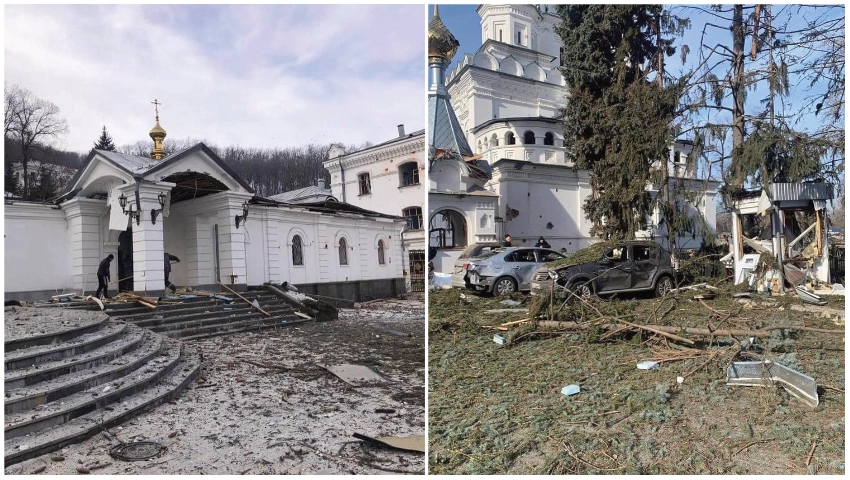
SZRU outlined the mechanics of the planned false flag operation. Russian security services would stage an attack on a highly symbolic target — a church or other site with religious or cultural significance — either inside Russia or in temporarily occupied Ukrainian territories.
The timing would coincide with Orthodox Christmas celebrations, maximizing both civilian casualties and propaganda impact.
To fabricate evidence of Ukrainian involvement, Russian operatives plan to transport wreckage from Western-manufactured strike drones collected from active combat zones to the attack site. The debris would then be presented to domestic and international media as proof of Ukrainian responsibility for the attack.
The intelligence agency noted that "exploitation of fear and committing terrorist acts with human casualties under a 'false flag' fully corresponds to the style of Russian special services."
SZRU warned that the Kremlin's goal is to create a justification for escalating attacks on Ukraine — including strikes on Kyiv and government buildings — while undermining international support for Ukraine during ongoing peace talks.
Russia's history of false flag attacks under Putin
The warning carries particular weight given Russia's documented history of false flag operations under Vladimir Putin.
In September 1999, apartment bombings killed 300 people across Russia. The attacks were blamed on Chechen rebels and used as a pretext for the Second Chechen War — a conflict crucial in promoting Putin's takeover of the Russian presidency.
Evidence shows the FSB had advanced knowledge that the bombings would take place. Those who tried to investigate paid with their lives: liberal Duma deputy Sergei Yushenkov was gunned down in Moscow in April 2003, and investigative journalist Yuri Shchekochikhin died suddenly that July — many suspect he was poisoned.
The pattern of Russian false flag operations continued into the current war. In the days before the full-scale invasion, Russian forces staged false flag operations in the Donbas — including faked evacuations and fabricated chemical attack claims — to manufacture pretexts for the 24 February 2022 assault.
More recently, Russia and Hungary coordinated a disinformation campaign accusing Ukraine of planning drone strikes on NATO countries — a narrative that appeared simultaneously in Hungarian pro-government media and Russian Foreign Ministry statements.
False flag timing: derailing Trump-Zelenskyy peace negotiations
The SZRU intelligence warning fits into the broader context of recent diplomatic developments between Ukraine, the United States, and Russia.
On 28 December, President Trump met with Ukrainian President Volodymyr Zelenskyy at Mar-a-Lago, where both leaders announced progress on peace negotiations.
Within hours, Russia announced the alleged attack on Putin's residence, threatened retaliation, and claimed its "negotiating position" would harden. Foreign Minister Sergei Lavrov provided no evidence. Local residents told Russian independent media they heard nothing unusual that night.
EU foreign policy chief Kaja Kallas called the allegation a "deliberate distraction." The CIA assessed that Ukraine was not targeting Putin or his residence — contrary to the Kremlin's claims.
SZRU's appeal to international media
The Ukrainian intelligence service ended its warning with a direct appeal to international journalists: question and carefully verify any materials the Kremlin releases, and do not spread Russian disinformation.
The cost of failing to do so could be measured in lives — of the civilians who might die in a staged false flag attack, and of the Ukrainians who would face Russian "retaliation" for an atrocity they did not commit.


