

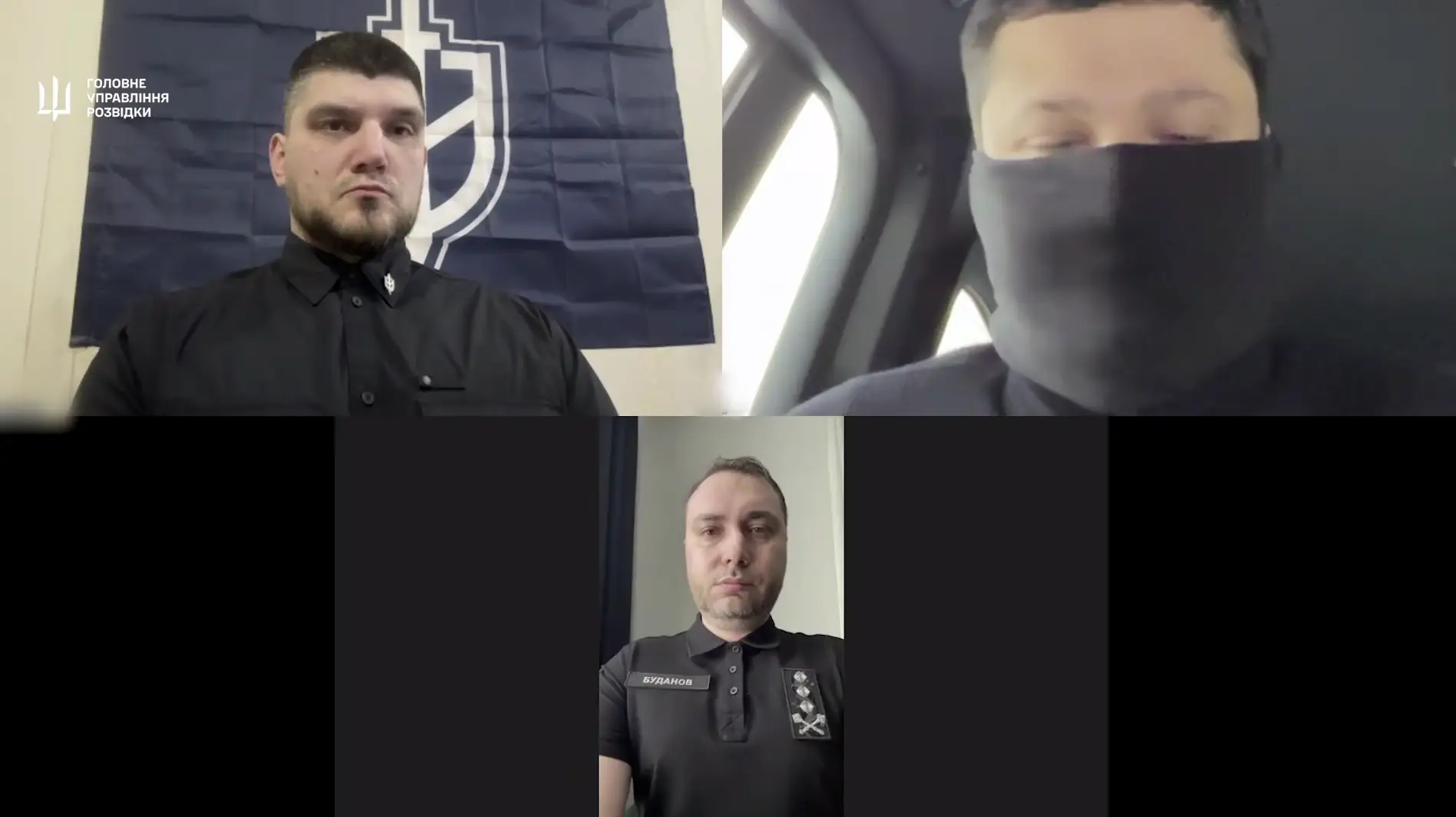
Denis Kapustin, the controversial commander of the Russian Volunteer Corps who was reported killed by an FPV drone on 27 December, is alive. His death was an elaborate intelligence operation that fooled Russian security services, exposed their assassination network, and diverted half a million dollars of Kremlin money to Ukrainian special forces.
"Welcome back to life. It's always pleasant," GUR chief Kyrylo Budanov told Kapustin via video link on 1 January, according to footage released by Ukraine's military intelligence. "I'm glad that the money received for ordering your elimination went to support our struggle."
The operation, which lasted over a month, identified the Russian intelligence officers who ordered the hit and the operatives who were supposed to carry it out. Russian dictator Vladimir Putin considered Kapustin a "personal enemy," according to GUR's statement.
A controversial playbook, perfected
This is not the first time Ukrainian intelligence has staged a Kremlin target's death. In May 2018, the SBU faked the murder of Arkady Babchenko, a Russian journalist and fierce Putin critic living in Kyiv. Police announced he had been shot three times in the back. His wife found him bleeding on the floor. He was pronounced dead in an ambulance.
Twenty-four hours later, Babchenko walked into a press conference.

That operation drew sharp criticism. Reporters Without Borders condemned the "distressing simulation" of his murder. The OSCE's media freedom representative deplored "the decision to spread false information." Critics warned Ukraine had handed Russia ammunition to cry "fake news" whenever real assassinations occurred.
Babchenko was unapologetic. "I was thinking about my survival, not journalistic ethics," he told reporters. "Journalistic standards are the last thing I was thinking about at this moment."
The Kapustin operation followed the same template but with two crucial differences. First, the stakes were higher: the price on his head was more than ten times greater at $500,000. Second, Ukrainian intelligence didn't just expose the plot. They collected the bounty.
From exposure to profit
In the Babchenko case, Ukraine caught a middleman who had received a $15,000 deposit toward the $40,000 contract. The focus was on saving the journalist and exposing the network. This time, GUR went further.
"Our side also received the corresponding sum of money allocated by Russian intelligence services for the realization of this crime," the commander of GUR's "Tymur Special Unit" reported to Budanov. "As of now, the RDK commander is on Ukrainian territory and is preparing to continue carrying out assigned tasks."
The full $500,000 is now funding Ukrainian special operations against the Kremlin that ordered it.
Kapustin himself reported that his temporary absence had not affected the quality or success of combat operations. "Ready to move out to the area of operations and continue commanding the RDK unit," he said.
The RDK had announced Kapustin's death on 27 December, claiming he was killed by an FPV drone strike on the Zaporizhzhia front. The unit, which operates under GUR's command, has conducted some of the war's most audacious cross-border raids into Russian territory, including a May 2023 incursion that penetrated 40 kilometers into Belgorod Oblast.
Who is Denis Kapustin and what is the Russian Volunteer Corps?

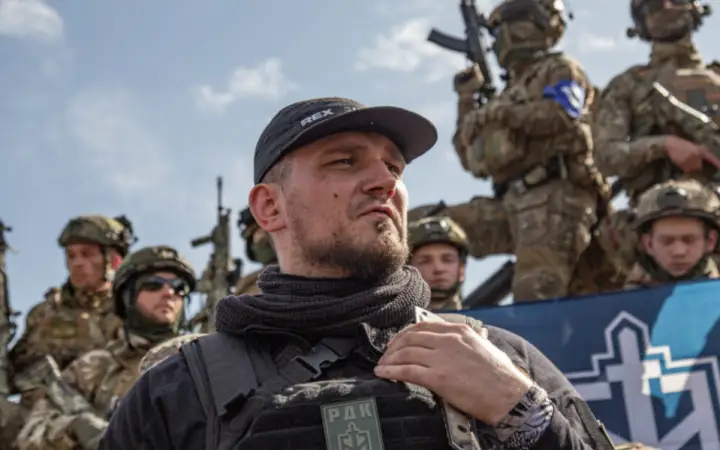
Kapustin founded the Russian Volunteer Corps in 2022 after Ukraine's military intelligence permitted him to form a unit of anti-Putin Russians. The corps grew to over a thousand fighters, drawing recruits from Russian emigrants and prisoners of war whom Kapustin personally convinced to switch sides.
The unit has conducted some of the war's most audacious operations. In May 2023, the RDK crossed into Belgorod Oblast with tanks and armored vehicles, captured several border villages, and penetrated 40 kilometers into Russian territory — the deepest incursion since the full-scale invasion began. The raid proved Putin's "red lines" were bluffs.
Kapustin's past complicated his image. Before the war, he was associated with far-right movements in Europe. After Russia's invasion, he framed his fight as atonement. "When someone asks how a Russian can atone for this, I answer: with my life," he said. Ukrainian commanders praised his effectiveness at "reprogramming" Russians to fight against Moscow.
He vowed to “atone” for Russia’s sins. Ukraine’s most controversial Russian commander died fighting against Putin
Turning assassinations into funding
Moscow's security services have repeatedly attempted assassinations on Ukrainian soil. Pavel Sheremet was killed by a car bomb in 2016. Denis Voronenkov, a defected Russian MP, was shot dead in central Kyiv in 2017. These were successes for Russian intelligence.
The Babchenko operation in 2018 showed Ukraine could turn such plots against their architects. But the criticism stung: press freedom groups called it dangerous manipulation, warning that it undermined trust in institutions.
Seven years later, Ukraine has answered those critics with results. The same playbook that drew condemnation in 2018 just saved a major combat commander and extracted half a million dollars from the Kremlin's coffers. The money that was supposed to eliminate one of Putin's most effective opponents will now fund operations against him.
Budanov thanked "Tymur and the team of military intelligence officers for the successful and excellent execution of the special operation."


