
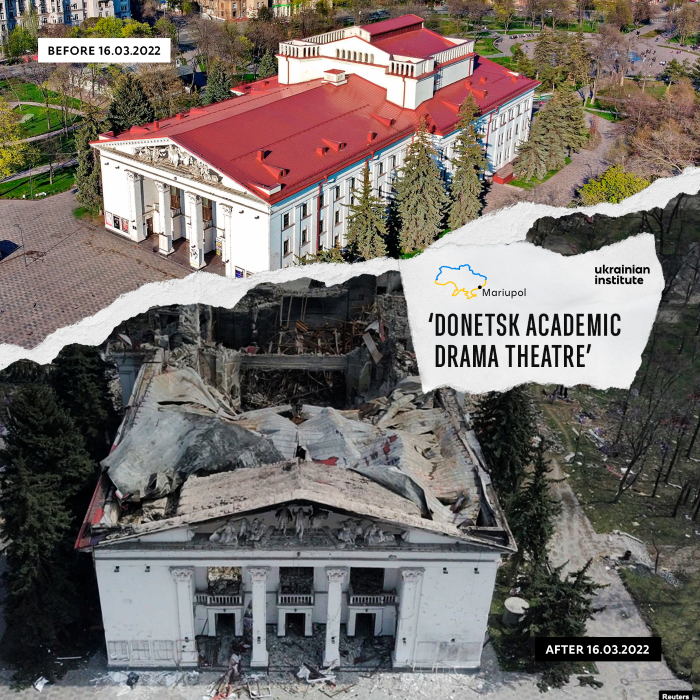
Russia officially reopened Mariupol's Drama Theatre on 28 December 2025—the building where Russian bombs killed an estimated 600 civilians sheltering inside in March 2022.
Denis Pushilin, a former pyramid scheme promoter who became a member of Putin's United Russia party in 2021 and whom leaked emails showed reporting directly to Kremlin supervisor Vladislav Surkov, presided over the ceremony alongside Russian actor Vladimir Mashkov and St. Petersburg Governor Aleksandr Beglov.

"The opening of today is a statement to the whole world that our culture cannot be destroyed," Mashkov declared.
A Christmas tree stands inside the reconstructed building, the first since the bombing. The theater has begun selling tickets for performances, including The Scarlet Flower, a Russian fairy tale, and plans children's holiday events at the site where families with children were killed.
For Mariupol residents who fled after the occupation, the reopening carries a different meaning. They call it "the theater on the bones" or "the theater on the blood."
When asked to respond to Ukrainian criticism, the theater's Russian-appointed director Igor Solonin dismissed it: "Aren't Berlin, Paris, and Warsaw built on someone else's bones?"
What happened on 16 March 2022
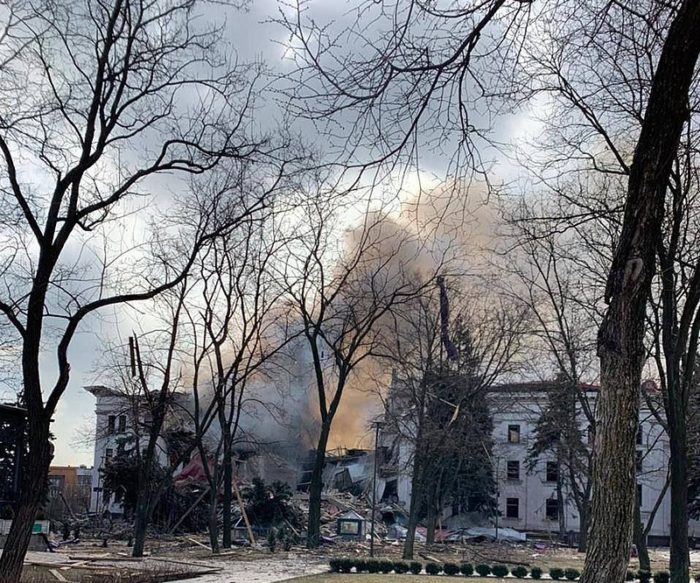
On 16 March 2022, Russian forces struck the Donetsk Academic Regional Drama Theatre twice while hundreds of civilians sheltered inside. The word "CHILDREN" had been painted in large letters on the ground in front of the building—in Russian, so Russian pilots could read it.
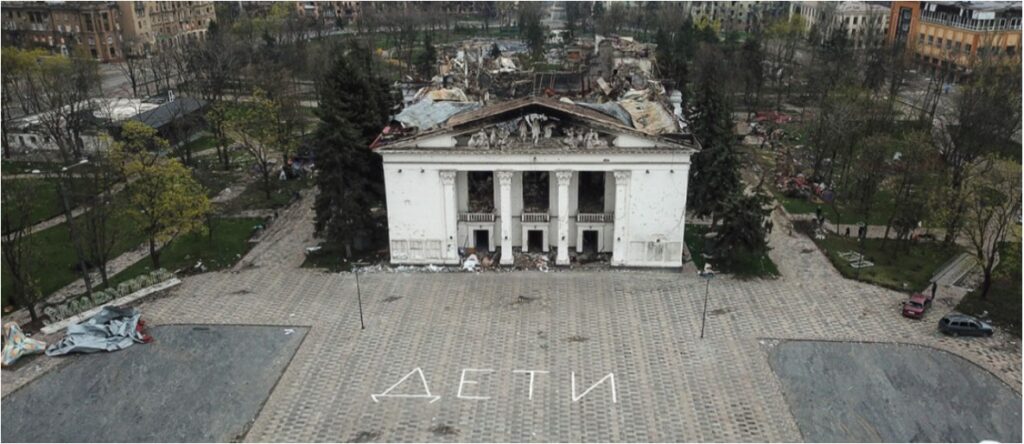
They bombed it anyway.
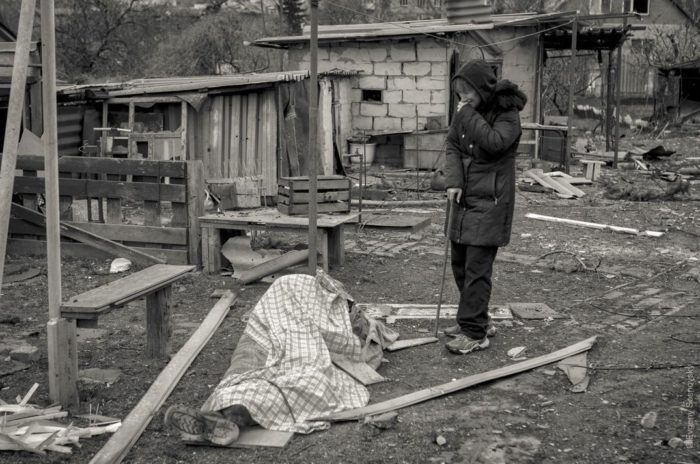
Survivors described people buried alive under collapsed walls and ceilings, children watching parents and siblings die, the injured crying for help. Amnesty International classified the bombing as "a clear war crime."
The exact death toll remains unknown. As Ukrainian human rights lawyer and 2022 Nobel Peace Prize recipient Oleksandra Matviichuk has noted, Russian occupation authorities have refused to allow any international organization access to the site since Mariupol fell in May 2022.
Russian officials deny responsibility. Maria Zakharova, spokesperson for the Russian Foreign Ministry, claimed the Russian Army did not bomb the theater. Official Russian statements blame Ukrainian fighters from the Azov regiment.
Rebuilding over a mass grave
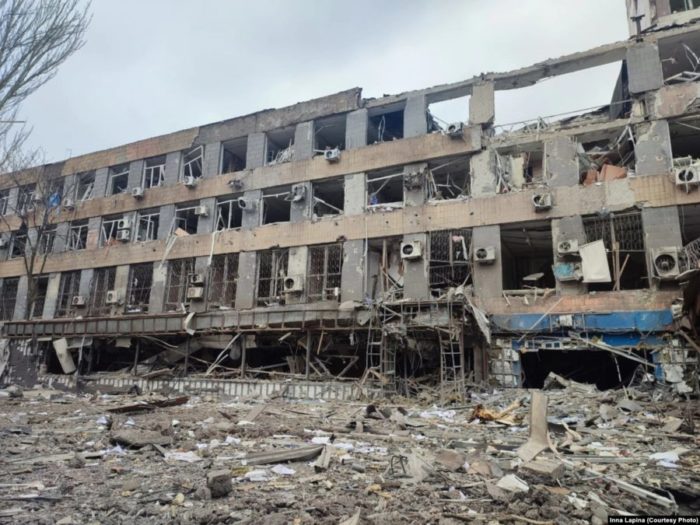
It took three years to rebuild the façade. What happened during that time reveals how Russia handles evidence of its crimes.
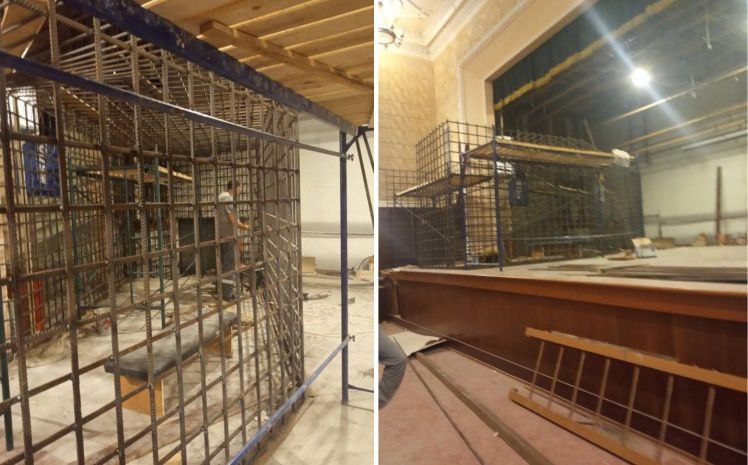
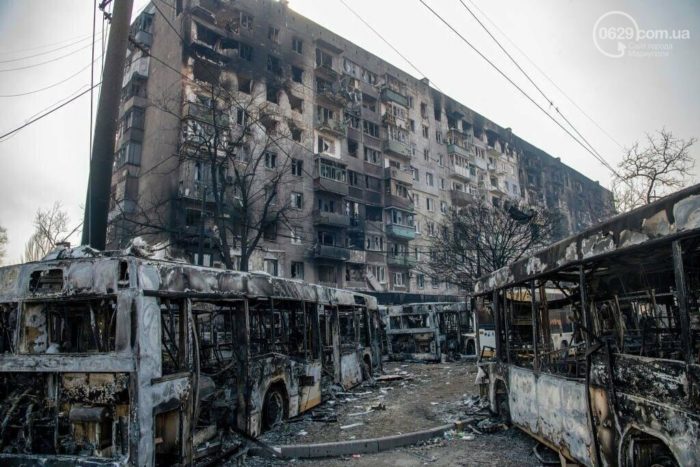
According to Petro Andriushchenko, former Mariupol mayoral advisor, the theater was demolished to its foundation. Workers used chlorine bleach to suppress the odor of decaying bodies as construction vehicles cleared the ruins—likely containing human remains.
Ukrainian journalist Yuriy Butusov published intercepted communications revealing how the removal of bodies from the theater was organized. Russian forces requested a tractor with a flatbed and equipment for transporting "200s"—military slang for the dead.
In July 2022, occupation authorities announced the results of their so-called investigation. According to this account, the explosion had originated from inside the building—caused, they claimed, by Ukrainian forces—and only 14 people had perished. The odor of decomposing bodies, meanwhile, was attributed not to the victims of the Russian airstrike but to a hidden stockpile of rotting fish.
Mariupol city council dismissed the findings: "As expected, the occupiers claimed the explosion was from inside by the Ukrainian army, and that only 14 people died. This is another lie that will be used for propaganda purposes."
The investigation disregarded survivor testimony, satellite imagery, and radar data recorded immediately before and after the attack. Amnesty International, having conducted its own inquiry, concluded that Russian forces deliberately targeted the theater with full knowledge that hundreds of civilians were sheltering inside—likely dropping two 500-kilogram bombs that detonated simultaneously.
Before reconstruction began, occupation authorities surrounded the site with a screen featuring portraits of Russian cultural figures: Pushkin, Tolstoy. The screen also included Ukrainians—Taras Shevchenko and Mykola Hohol (Nikolai Gogol)—presented as part of Russian heritage.
The screen became a symbol of what was happening beneath it: Russian culture as a banner concealing mass death.
Erasing the crime
The theater has been renamed the Mariupol Republican Academic Russian Drama Theater (Order of the "Badge of Honor")—incorporating a reference to the so-called Donetsk People's Republic, which has no international legal recognition.
The theater's website features Pushkin's portrait prominently and contains no mention of the March 2022 bombing. The photo gallery shows a well-maintained building throughout, as if the theater never stopped operating.
A brief note on the history page states only: "The events of 2022 became a severe trial for the city and for the theater. And once again, as has happened more than once before, the theater is being revived together with Mariupol."
Trending Now

The website announces that "Russian and Soviet classics have returned to the stage—productions based on the works of Pushkin, Chekhov, Bulgakov, Vampilov, and Tvardovsky." Ukrainian history and culture have been erased.
In the lead-up to the reopening, local visitors did not mention the bombing, Andriushchenko reported. The memory of those killed is being erased. The impression: it never happened.
Performers on the bones
Russian celebrities have visited the ruins to perform and assign blame to Ukraine. Shaman, a singer whose popularity rose with his pro-Kremlin anthem "We Will Rise" (Vstanem), performed in front of a crowd waving Russian flags. Singer Nadezhda Babkina, filmed in front of the theater, spoke of helping "our people"—"Russian people."
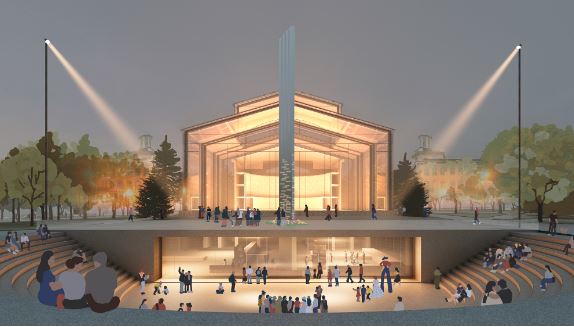
Former members of the theater company have sharply criticized the reopening. Ihor Kytrysh, an actor who performed at the Mariupol theater since 2000 and whose apartment was destroyed in the siege, now works with a troupe in western Ukraine. He told CBC News the theater should never be reopened, but replaced with a monument to the victims.
Mariupol photographer Yevhen Sosnovskyi, who moved to Kyiv after the occupation, called the reopening an act of cynicism. Former actress Vira Lebedynska, now living in Uzhhorod, said she cannot imagine songs being sung or performances staged at the site.
The 2024 Academy Award-winning documentary 20 Days in Mariupol, directed by Mstyslav Chernov, briefly returned international attention to the city. But the film was shot before the theater bombing, and since its release, there has been no significant international media coverage of the ongoing erasure.

After killing tens of thousands and erasing Mariupol, Russia now seeks to resurrect statue of its butcher in city’s center
The template
Mariupol is being transformed into a Russian resort destination, exploited for its location on the Sea of Azov. Russians are relocating to the city despite ongoing danger. A similar process has unfolded in Crimea since 2014.
In November 2022, President Putin welcomed Mariupol as "a very famous, ancient, one might say, Russian city" that "finally returned home." He cited Peter I's first military flotilla, Suvorov's campaigns, and Catherine II as evidence of the city's Russian character—erasing its Ukrainian identity and the people who lived there.
"These objects of material culture," Putin said, referring to museums and theaters, are important "for people who have lived for 30 years in some kind of crazy, absolutely idiotic nationalist propaganda so that they understand where they come from."
When Putin announced the annexation of Zaporizhzhia, Kherson, Luhansk, and Donetsk oblasts in September 2022, he quoted his favorite philosopher, Ivan Ilyin—a Russian fascist thinker who fled the Soviet Union and later supported Nazi Germany:
"If I consider Russia my Motherland, then this means that I love as a Russian, contemplate and think, sing and speak in Russian; that I believe in the spiritual strength of the Russian people. Their spirit is my spirit; their fate is my fate; their suffering is my grief; their flowering is my joy."

Putin declared that residents of the occupied territories would become Russian citizens "forever."
The theater reopening enacts this vision: Russian culture as a tool for erasing Ukrainian identity, reconstruction as a means of covering up war crimes, celebration built on mass graves—and Ilyin's words made concrete in the ruins of Mariupol.
The Christmas tree inside the theater is the first since 2022. It stands where the word "CHILDREN" was once written on the ground.
Edited by Alya Shandra