

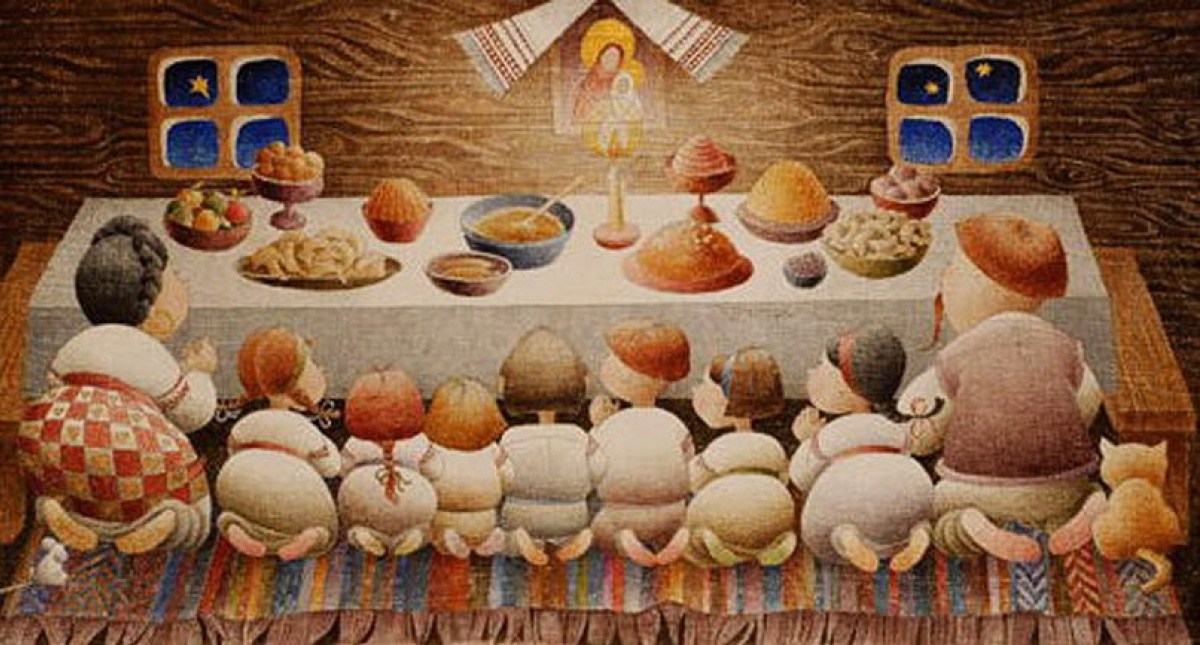
Picture this: It's dusk on 24 December. A child presses her face to the window, scanning the darkening sky. The moment she spots the first star, she shouts—and a household of adults, who've been fasting all day, finally sits down for the Holy Supper.
This is how Christmas begins in Ukraine and in the homes of diaspora Ukrainians.
Sviat Vechir, the Holy Evening, is one of the oldest traditions in Europe that has been continuously observed. Long before the Christmas tree, before Santa Claus, and before gift-wrapped boxes appeared under the tree, Ukrainians were gathering around a table laid with twelve meatless and dairy-free dishes, a sheaf of wheat standing in the corner, and an empty place setting for the ancestors.
The meal has roots that reach back thousands of years—some scholars argue the rituals predate Christianity entirely, originating in winter solstice celebrations when ancient Slavs honored the "rebirth" of the sun and invited ancestral spirits to feast alongside the living. Christianity later absorbed these customs, reinterpreting them as the celebration of Christ's birth.
The result is something uniquely Ukrainian: a ritual meal that is simultaneously a fast, a family reunion, a communion with the dead, and a prayer for abundance in the year ahead.
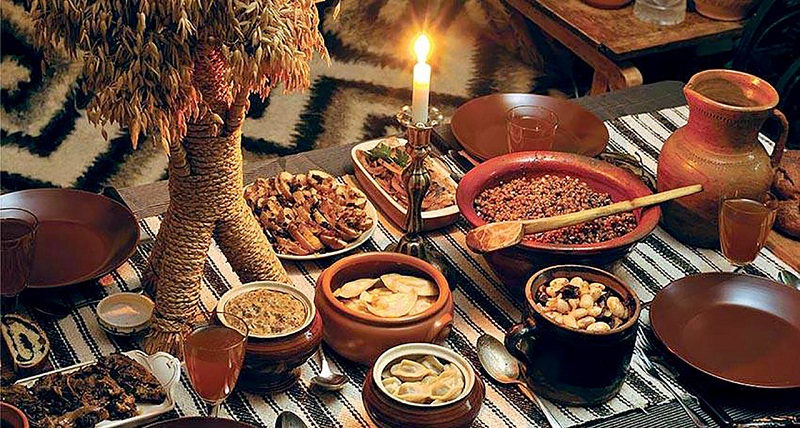
Setting the table
The preparations are precise. At the table's center stands the kolach—a braided ceremonial loaf whose name comes from kolo, meaning "circle," symbolizing eternity and the endless cycle of life. In many households, three kolachi are stacked to represent the Holy Trinity, decorated with evergreen branches, and crowned with a single candle representing the Star of Bethlehem.
Beneath the embroidered tablecloth, families scatter wisps of hay—a reminder that Jesus was born in a manger. The Didukh, a decorated sheaf of wheat, stands in the place of honor. Its name translates roughly as "grandfather spirit," and it represents the souls of ancestors who are believed to return on this night.
And there is always one extra place set at the table.
Last year, our journalists recalled how their families had preserved these traditions – through the dark years of the Soviet regime and on the other side of the world, in Canada. But, in all cases, the empty dish is for the ancestors, or simply for anyone who might be alone on this night—a wandering stranger, a lost soul. In Ukrainian folk belief, the barriers between worlds grow thin on Sviat Vechir. The dead are present. The living make room for them.
Why twelve dishes—and why no meat?
The number twelve represents the Twelve Apostles (some say the twelve months of the year). The absence of meat honors the strict fast that precedes Christmas, commemorating the hardships Mary endured traveling to Bethlehem. Every dish is prepared without meat, dairy, eggs, or animal fat—only vegetable oil.
This is not deprivation. The table is plentiful. "Whoever first sees the star will be happy the whole year," explains anthropologist Tetiana Poshyvailo . "Afterward, relatives and friends fill the house with the aroma of fragrant herbs, light a candle, and pray for their deceased relatives. Then they pray for the living, wishing everyone good health and happiness until next Christmas."
Only then does the eating begin.
The twelve traditional dishes
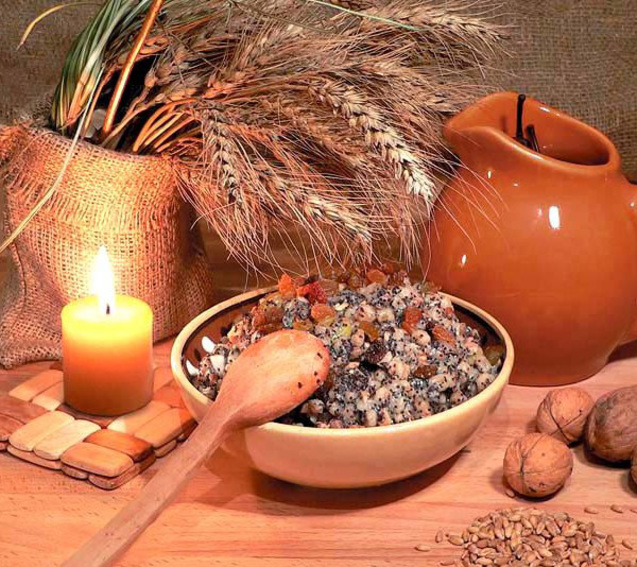
1. Kutia (Кутя)
Everything begins here. Kutia is the soul of the Holy Supper—a sweet porridge of wheat berries, poppy seeds, honey, and walnuts that may date back to prehistoric times. It symbolizes prosperity, ancestral remembrance, and hope. Whatever remains is left on the windowsill overnight—for the spirits.
2. Lenten borshch (Пісний борщ)
Ukraine's iconic beet soup, served on this night without the usual sour cream. Simmered with cabbage, carrots, dried mushrooms, and often beet kvass, the Christmas Eve version is typically accompanied by vushka—tiny mushroom-stuffed dumplings shaped like ears.
3. Mushroom soup or gravy (Грибова юшка)
Dried forest mushrooms are soaked and simmered into a rich, earthy broth. Mushrooms represent the forest's gifts, fertility, and humanity's bond with nature.
4. Holubtsi (Голубці)
Cabbage rolls, but not the meat-stuffed kind foreigners might expect. The Christmas Eve version is filled with rice, mushrooms, and sautéed vegetables, then simmered in tomato sauce. The name comes from holub—dove—symbolizing peace.
5. Varenyky (Вареники)
If you've had pierogies, you know the idea. These boiled dumplings are stuffed with mashed potatoes, sautéed cabbage, mushrooms, or fruit, then dressed with vegetable oil and caramelized onions. On Christmas Eve, the fillings stay lean—no cheese, no meat. Varenyky represent prosperity, comfort, and abundance.
6. Fish (Риба)
An ancient Christian symbol. The fish might be pickled herring with onions, baked carp, or pike—depending on the region and what's available. In coastal areas, the options expand.
7. Jellied fish (Заливна риба)
Fish poached with vegetables, then set in aspic and served cold. Visually striking, it adds elegance and variety to the table.
8. Pampushky (Пампушки)
Small yeast buns, sometimes plain, sometimes filled with poppy seeds or fruit preserves. They symbolize joy within restraint—a reminder that even fasting has its pleasures.
9. Beans or legumes (Квасоля)
White beans or peas, cooked simply and sometimes mixed with mushrooms or onions. They symbolize fertility and the promise of renewal.
10. Stewed cabbage (Капуста)
Fresh cabbage braised slowly with onions and herbs. Humble, earthy, essential—a staple at Christmas and throughout the year.
11. Kolach (Колач)
The ceremonial bread at the table's center is counted among the twelve dishes but typically eaten only on Christmas Day. Its braided circle represents the sun and eternity.
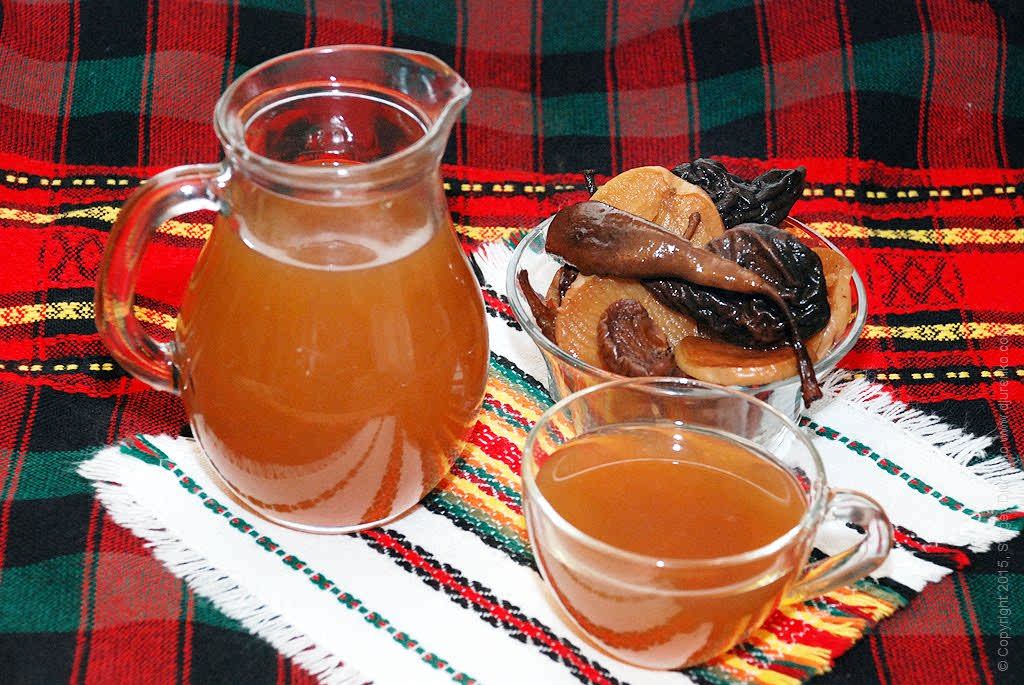
12. Uzvar (Узвар)
The meal ends as it began—with something sweet. Uzvar is a compote of dried apples, pears, and plums, gently simmered and sweetened with honey. Traditionally, a sip of uzvar follows the first bite of kutia.
Garlic is usually placed under the tablecloth in the corners of the table—a folk tradition believed to ward off evil spirits—but it doesn't count among the twelve dishes.
A tradition that wouldn't die
The Holy Supper has survived more than most Christmas traditions have ever faced.
Under Soviet rule, Christmas was banned. Religious practice was dangerous. Teachers stood outside churches writing down the names of those who entered. But the ritual persisted—quietly, in private homes, with the symbolism preserved even when its religious meaning couldn't be spoken aloud. In western Ukraine, where Soviet control came later and weaker, the tradition survived more intact. Elsewhere, families whispered to their children that these were simply "Ukrainian traditions, passed down from our ancestors."
The dishes themselves vary by region. In the Carpathian west, dried forest mushrooms dominate, and kutia is strictly obligatory. In central Ukraine, grains and legumes are the primary focus. In the south, where fish and fruit are more abundant, the table reflects the influence of the Black Sea. But everywhere, the core ritual remains: the first star, the twelve dishes, the empty dish, the prayers for the dead, and the hope for the year ahead.
A ritual preserved through war
This year, the Holy Supper carries a heavier weight.
Thousands of Ukrainian soldiers will spend Christmas Eve not at family tables, but in trenches, observation posts, and forward positions along a 1,000-kilometer front line. Many families will set an empty place not only for ancestors who have passed away, but also for fathers, sons, daughters, and mothers who cannot be present—and some for those who will never return.

Empty chairs, folded uniforms — and spirits that will forever sit among us.
Ukraine remembers.
Photo: Ivanka Jacyk/te
The tradition endures, as it endured under Soviet repression and centuries of foreign rule before that. In cities without electricity, families gather by candlelight—which, as it happens, is how the supper was always meant to be lit. Households under fire prepare their twelve dishes as generations before them did. The Didukh still stands in the corner. The first star still signals the meal to begin.
For Ukrainians at home and abroad, Sviat Vechir this year is both an act of remembrance and an act of defiance—a quiet declaration that no empire, no occupation, no war can extinguish what has been passed down for millennia.
From the first spoonful of kutia to the final sip of uzvar, the Holy Supper affirms what it has always affirmed: continuity, resilience, and light in the darkest season.


