


While serving at Supreme Headquarters Allied Powers Europe (SHAPE) between 2010-14, I watched member states slash their force structure and fail to provide military units to NATO-led operations. They became increasingly dependent upon an Alliance based upon the force structure of its member states.
NATO's dysfunctionality became increasingly clear after the war started in 2014. Instead of stepping forward to protect the security of the Alliance, NATO stepped back and allowed the weakest point to set its highest level of ambition: Non-military assistance to the only country that protects European security. Fortunately, a coalition of like-minded NATO members decided to fill the gap left by the Alliance.
Europe needs strategic autonomy: the ability to decide its own destiny. It needs credible deterrence based on a Coalition of Like-Minded (CALM) European countries—a military alliance akin to the NATO that won the Cold War. An alliance with shared understanding of the threat, unified commitment to a common strategy to deter and defeat strategic opponents.
This is not a radical proposition. It is a necessary one. NATO no longer guarantees Europe's security. The continent can either accept this truth and build something that works, or cling to hope that a broken alliance will miraculously repair itself.
Europe must establish a proactive alliance committed to responding to all provocations, reducing the risk of strategic miscalculations. An opponent must never again be led to believe that Europe lacks political will or military capabilities to respond to violations of its sovereignty or territorial integrity. An attack on one—whether through hybrid warfare or a conventional military assault—must trigger collective defense.
Why NATO no longer guarantees security

The Alliance is presently achieving the opposite of its purpose: ensuring insecurity and instability.
NATO deterrence is not decided in Washington, Brussels, or any member capital. It is decided in the Kremlin and Beijing. If strategic opponents believe deterrence works, they act accordingly. They do not. If NATO deterred Russia, Moscow would never have started a full-scale war in Ukraine and an ever-escalating hybrid war against the Alliance. Nor would Russian military planners be preparing for open conflict with Europe within the next three to five years.
Deterrence failed for compounding reasons. The Alliance failed to invest in peace. Si vis pacem, para bellum—"If you want peace, prepare for war"—is an ancient Roman proverb meaning that a strong military deters aggression, making peace more likely through strength. European governments ignored this wisdom. Defence budgets shrank. Military readiness withered. The signal to Moscow was clear.
But underinvestment alone did not kill deterrence. Internal discord finished the job. Over the last decade, the Alliance has suffered from lack of political will, disagreement over the threat from Russia, discord over strategy for both NATO itself and Ukraine support, and European and American failure to meet commitments. The Alliance's ability to respond has been emasculated by an impotent decision-making process and enemies within—pro-Russian member states who block collective action.
Since early 2025, the United States has turned from ally to strategic opponent. The Trump administration negotiates European security over the heads of Europeans while pursuing rapprochement with a country that poses an existential threat to the continent. Washington seeks to undermine the EU, divide Europe, threatens territorial appropriations, wages trade war, and has ended defence support for Ukraine—and therefore its European allies.
Europe cannot base its security on hope that NATO will protect it when the Alliance is no longer united by shared democratic values.
The cost of failure
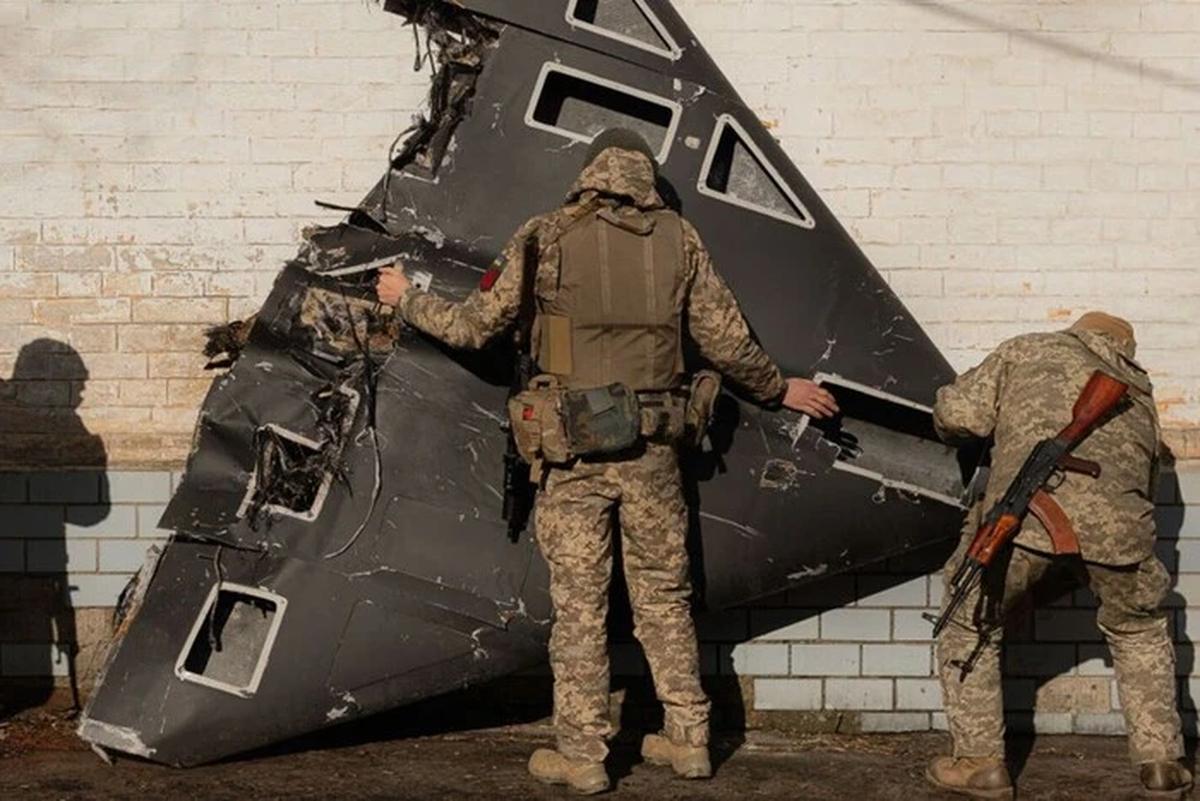
Consider what happens if Russia defeats Ukraine due to Western exhaustion or forced capitulation. Moscow absorbs Ukrainian territory, armed forces and defence industry, and repositions along a vastly expanded NATO border. Russian confidence grows. Hybrid warfare against the Baltics, Poland, and Nordic states intensifies. Every provocation tests whether NATO will respond. Every non-response confirms the Alliance is a paper tiger.
At some point—perhaps during a political crisis, perhaps during a transition between American administrations—Moscow calculates that limited military action against a NATO member would not trigger Article 5. A "minor" incursion into Estonian territory. An "accidental" strike on Polish infrastructure. A "liberation" of Russian-speaking populations in Latvia. A pre-emptive occupation of Svalbard. Each scenario seems improbable until it happens.
The question is not whether Russia will test European resolve. The question is whether Europe will have structures in place to respond.
The paradox of European dependence

It is, as Poland's Prime Minister Donald Tusk observed, a paradox "that 500 million Europeans are asking 300 million Americans to defend them against 140 million Russians."
The questions that should have been asked decades ago now demand answers: Which countries do not share common values and principles? Which are flawed democracies or hybrid regimes? Which seek to appease Russia? Which persistently fail to invest in security and defence? Which fail to support Ukraine and, therefore, European security? Which lack political resolve? Which undermine unity?
The answers are uncomfortable. They exclude founding NATO members. They exclude current EU states. But Europe has the potential to become a global military power if it builds a new alliance based on genuine unity rather than the lowest common denominator.
Strength lies not in numbers but in unity. To avoid the mistakes undermining both NATO and the EU, not all member states would qualify as founding nations. When CALM demonstrates credibility, however, most of Europe would seek admissibility—and that is precisely the point. The coalition creates incentives for reform.
It is a paradox that 500 million Europeans are asking 300 million Americans to defend them against 140 million Russians.
Polish Prime Minister Donald Tusk
What CALM would look like
Europe needs a Coalition of Like-Minded Countries—an alliance representing the same unity and commitment that made NATO succeed during the Cold War, before success bred complacency.
CALM's primary purpose would be to safeguard the freedom and security of its members through collective defence. Like NATO was designed to be, the coalition would be a community of nations united by shared values: democracy, individual liberty, and the rule of law.
The organization's three core tasks:
- Deterrence and defence: Maintaining military capability sufficient to prevent aggression. This means European command structures, European logistics chains, and European decision-making—capable of operating without dependence on American forces or American political will.
- Crisis prevention and management: Using political and military tools to manage crises before they escalate. Unlike NATO, which has struggled to classify Russian hybrid warfare as attacks requiring collective response, CALM would operate on a pro-active doctrine. Provocations would be met with proportional responses, denying opponents the strategic ambiguity they exploit.
- Cooperative security: Working with a global network of partners—including Australia, Canada, Japan, New Zealand, and the United States—to enhance security beyond Europe's borders. CALM would not be anti-American; it would be pro-European. When interests align, cooperation continues. When they diverge, Europe retains capacity to act independently.
CALM would operate on collective defence: an attack against one member is an attack against all. But all members must share the burden. No free riders.
CALM must become a permanent military alliance outside but fully interoperable with NATO. To ensure strategic autonomy, it must establish military headquarters capable of planning and executing operations independently.
A CALM Council of heads of government would provide political direction. A Military Committee of chiefs of defence would provide military advice. A Supreme Allied Commander Europe—a European officer rotating among major members—would command CALM forces. Regional commands would cover the Baltic, Nordic, Central European, and Atlantic theatres.
Unlike NATO, where American officers have historically dominated senior positions, CALM command would be entirely European. This is not anti-American posturing; it is the prerequisite for genuine strategic autonomy. Europe cannot depend on American leadership when American leadership may not be available—or may be actively hostile to European interests.
The relationship with NATO would be complementary, not competitive. CALM would follow NATO standards for interoperability. Joint exercises with American and Canadian forces would continue when mutually beneficial. Intelligence sharing would persist where interests align. But CALM would maintain independent planning capability, independent logistics chains, and independent political authority. When America is a reliable partner, CALM works alongside NATO. When America is not, CALM operates independently.
Membership requirements
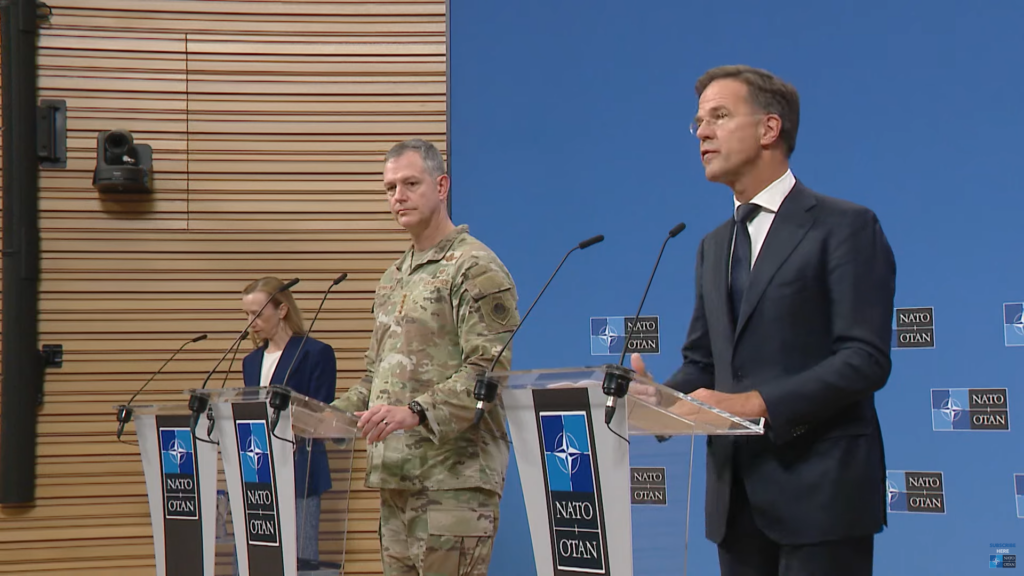
Member states must be liberal democracies willing to urgently increase defence spending and put their defence industries on war footing. This is not preparation for a distant contingency. Norway's Chief of Defense has warned of a short window to strengthen defences. Estonia's intelligence services assess that Russia will threaten NATO borders within three years.
As Finland's Defense Minister Antti Häkkanen stated: "There is a war going on in Ukraine for the future of the whole of Europe."
CALM cannot operate on consensus—the mechanism that has paralyzed NATO. A three-quarters majority would enable rapid decision-making and expedited accession or expulsion of member states. Members failing to fulfill commitments would be dismissed immediately. Countries meeting all requirements would be admitted quickly.
Members must meet absolute criteria:
- Democratic credentials: Members must be assessed as full democracies, sharing common values of individual liberty, democracy, human rights, and the rule of law. Democratic backsliding would trigger review and potential expulsion.
- Recognition of the threat: Members must acknowledge they are in a state of hybrid war with Russia. Countries maintaining that Russia can be a partner or that avoiding "provocation" constitutes strategy would not qualify.
- Support for Ukraine: Members must acknowledge that Ukraine is protecting European security. Countries that have undermined Ukraine support have demonstrated they will undermine collective defence.
- Defence spending: Members must meet a minimum of 4% of GDP for "hard defence"—troops, recruitment, military education, procurement of air defence systems, tanks, drones, long-range missiles, force generation, command and control, and investment in next-generation military technology.
- Closing capability gaps: Members must address critical vulnerabilities—air and missile defence, strategic enablers, military mobility, artillery, cyber and electronic warfare, missiles and ammunition, drones and counter-drone systems, ground combat capabilities, and maritime power. They must enhance European readiness by improving military mobility, stockpiling, and fostering operational cooperation.
- Defence industrial coordination: Members must pursue collaborative procurement in line with the EU target of at least 40%, while diversifying globally to prevent strategic dependency on countries outside CALM.
- Strategic autonomy: Members must acknowledge that the US is presently no longer a trusted ally and may, in worst-case scenarios, function as a strategic opponent. This is not anti-Americanism; it is recognition of demonstrated behaviour. Members should support strategic autonomy to ensure future cooperation is based on genuine partnership and mutual respect—including the ability to decline American requests that run contrary to European interests.
Nuclear deterrence

CALM must establish nuclear deterrence based on existing capabilities—primarily French and British arsenals.
France possesses approximately 290 nuclear warheads deliverable by submarine-launched ballistic missiles and air-launched cruise missiles. The United Kingdom maintains around 225 warheads, primarily submarine-based. Combined, this represents a credible second-strike capability—the ability to inflict unacceptable damage on any attacker even after absorbing a first strike.
These are not American weapons on European soil. They are European weapons under European control.
Possessing nuclear weapons and extending deterrence to allies are different matters. Currently, French nuclear doctrine emphasizes national survival; British nuclear forces are assigned to NATO.
CALM would require new frameworks: France and the UK would need to explicitly extend deterrence commitments to CALM members.
The political barriers are significant. France has historically resisted subordinating its nuclear forces to alliance structures—Charles de Gaulle withdrew from NATO's integrated command precisely to maintain independent nuclear control. Britain's nuclear relationship with the United States complicates independent European postures.
The present security situation, however, is a strong incentive to find solutions to the historic political barriers. This year, French President Macron proposed opening a strategic discussion about extending France's nuclear deterrence to protect European allies.
Without credible nuclear deterrence, conventional superiority is insufficient against a nuclear-armed adversary willing to threaten escalation. Russia has made nuclear threats routine—over 100 since February 2022—precisely because it believes Europe lacks independent nuclear credibility.
The Kremlin calculates that European conventional strength is irrelevant if Europe will always back down when Moscow raises nuclear stakes. CALM must change that calculation.
The founding nations
Strength lies not in numbers but in unity. To avoid the mistakes undermining both NATO and the EU, not all member states would qualify as founding nations. When CALM demonstrates credibility, however, most of Europe would seek admissibility—and that is precisely the point. The coalition creates incentives for reform.
Democracy, shared values, and investment in security cannot be voluntary or open to interpretation. Fulfilling the defined criteria should be prerequisite for both becoming and remaining a member.
Members should be vetted based on demonstrated commitment: political will, level of support for Ukraine and European security, commitment to NATO's 2% target as baseline, bilateral relationship with Russia, democracy index scores, and strategic coherence.
The founding nations would likely include Czechia, Denmark, Estonia, Finland, France, Germany, Iceland, Latvia, Lithuania, the Netherlands, Norway, Poland, Sweden, Ukraine, and the United Kingdom.
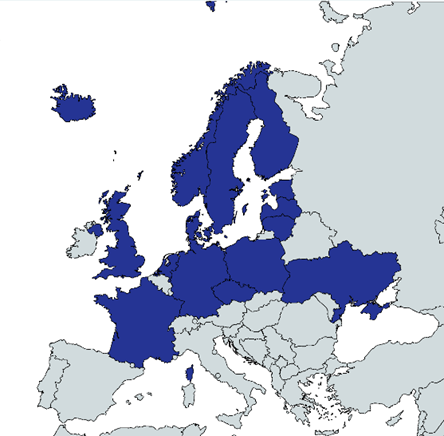
The selection reflects demonstrated commitment to NATO, current defence budgets, and support for Ukraine. More than half share a border with Russia. All possess intimate understanding of Russian foreign policy and strategic culture.
The Nordic-Baltic Cooperation (NB8), which regularly cooperates with the UK, Poland, Czechia, and Ukraine, would provide institutional foundation. The NB8 aims to strengthen Nordic-Baltic security dialogue, maintain unwavering support for Ukraine, and promote global support for the rules-based order.
The potential member states represent the size and numbers needed to command attention:
|
|
GDP ($ Billion) |
Population (2025) |
Armed Forces (2025, all personnel) |
|
CALM |
15,411.5 |
360,126,337 |
3,182,710 |
|
Russia |
2,021.4 |
144,139,774 |
1,500,000 |
|
USA |
27,720.7 |
346,947,501 |
2,132,750 |
Combined GDP exceeding $15 trillion—more than seven times Russia's economy. Population of 360 million. Armed forces totaling over 3 million personnel. CALM would not be a supplicant begging for protection. It would be a global power capable of independent action.
Why Ukraine belongs—and others do not
The majority of NATO and EU member states would initially be excluded from CALM. Some are flawed democracies or hybrid regimes. Some do not share liberal democratic values. Some maintain Russian affiliations that compromise collective security. Some have persistently failed to meet NATO's 2% target. Some have failed to commit aid to Ukraine.
Ukraine would be a founding member, while several long-standing NATO and EU members would not.
After NATO's deterrence failed, Ukraine is presently the only country guaranteeing European security.
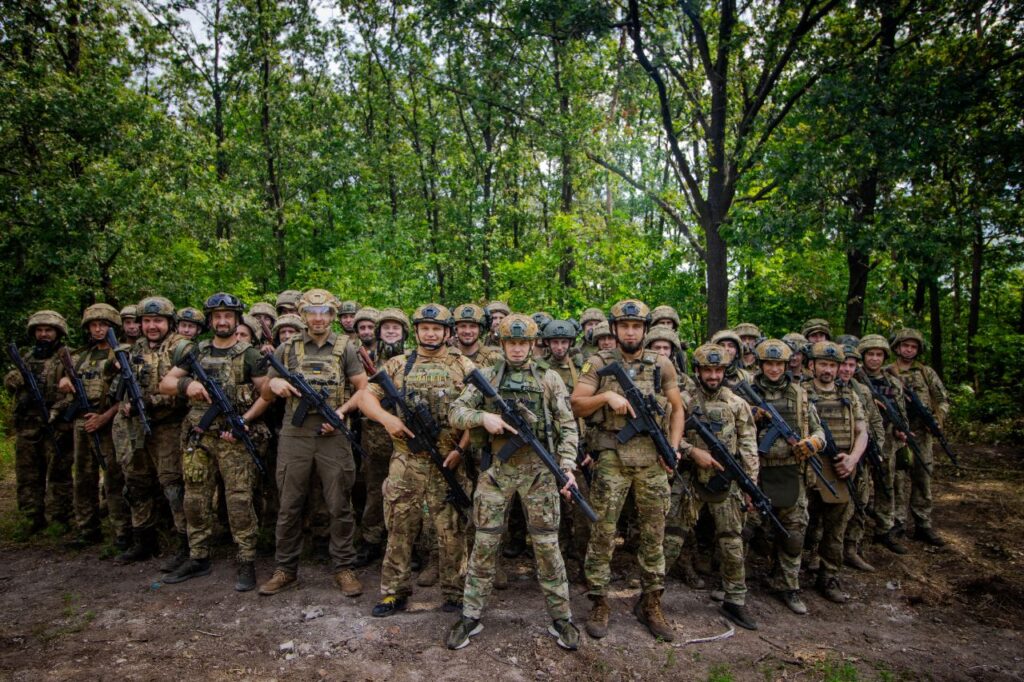
The nation is protecting Europe's way of life at extreme cost. It represents the strongest and most battle-hardened military power on the continent. While Ukraine is not a perfect democracy, it is probably more democratically aware than most European countries—its citizens have twice risen in revolution to defend democratic governance. Ukraine has made the transition needed to establish credible deterrence. The rest of Europe must follow its lead.
Ukraine needs CALM as much as CALM needs Ukraine. CALM provides Ukraine the security guarantees NATO has refused. Ukraine provides CALM combat-tested military capability, strategic depth, and demonstrated commitment to collective defence.
After NATO's deterrence failed, Ukraine is presently the only country guaranteeing European security.
The window is closing
Europe cannot preserve democracy and its way of life with soft power alone.
European governments have long acknowledged their armed forces no longer provide credible defence. Yet their security policy remains fundamentally rooted in the assumption that NATO guarantees collective security. If they acknowledge reality, the illusion shatters. This explains why European heads of state insist the Alliance "has never been stronger," that "NATO is the cornerstone of European security," that "NATO is more united than ever."
These statements are not analysis. They are incantation.
Fortunately, leading European politicians have begun discussing alternatives. Friedrich Merz, Emmanuel Macron, Donald Tusk, Keir Starmer, Kaja Kallas, and Ursula von der Leyen have all stressed the need for European strategic autonomy.
Manfred Weber, head of the European People's Party, stated the emerging consensus directly: "We must turn the EU into a European NATO. We can no longer rely unconditionally on the United States."
German Defense Minister Boris Pistorius captured the strategic reality: "The geopolitical chessboard is changing rapidly. Alliances are shifting faster than would have been conceivable before. We must redefine our position, because we don't know which alliances we can still rely on."
The diagnosis is correct. The prescription remains incomplete.
How long would establishing such an alliance take? It is hard to estimate, but the urgency is pressing. NATO no longer deters Russia; we can either try (and potentially fail) or accept defeat today.
Every day Europe fails to act, the possibility of strategic autonomy withers as Ukraine is being destroyed. Russia is not waiting for Europe to organize itself. Moscow is building military capacity and positioning forces while Europe debates.
CALM offers a path from recognition to action—from acknowledging NATO's failure to building something that works. The discussion is long overdue. It must start now.
Editor's note. The opinions expressed in our Opinion section belong to their authors. Euromaidan Press' editorial team may or may not share them.
Submit an opinion to Euromaidan Press


